

Updated 2 hours ago
Best Smart Rings for Women's Health 2026: Cycle & Fertility Tracking Guide
youhong

Last Updated:February 2, 2026 | Comprehensive Women's Health Technology Analysis
Smart rings designed for women's health represent one of the most significant innovations in reproductive wellness technology. By 2026, the women's health wearable market is projected to reach $50 billion globally, driven by increasing demand for non-invasive, continuous monitoring solutions that empower women to understand their bodies better.
Unlike traditional fertility tracking methods requiring manual temperature measurements every morning or relying solely on period tracking apps, modern smart rings use advanced biosensors to continuously monitor physiological signals throughout your menstrual cycle—temperature fluctuations, heart rate variability, sleep patterns, and stress indicators. These devices transform invisible biological processes into actionable insights, helping women navigate fertility planning, cycle wellness, pregnancy journeys, and overall hormonal health.
This comprehensive guide examines the science behind cycle-tracking smart rings, explains how temperature monitoring reveals fertility windows, compares key features to consider, and provides evidence-based recommendations for choosing the right device based on your specific health goals—whether you're trying to conceive, seeking hormone-free contraception awareness, managing PCOS or irregular cycles, or simply wanting to understand your body's natural rhythms.
Table of Contents
- Understanding Women's Health Smart Ring Technology
- The Science of Cycle & Fertility Tracking
- Key Features for Women's Health Monitoring
- Temperature Tracking: The Foundation
- Beyond Temperature: Multi-Modal Sensing
- Use Cases: Finding Your Purpose
- Accuracy & Clinical Validation
- Choosing the Right Smart Ring
- J-STYLE's JCRing: Advanced Women's Health Solutions
- Privacy & Data Security Considerations
- Frequently Asked Questions
Understanding Women's Health Smart Ring Technology
What Makes Smart Rings Ideal for Cycle Tracking?
Smart rings offer unique advantages over wrist-worn devices and traditional methods for monitoring women's health:
Finger Placement Benefits:
- Superior temperature measurement: Digital arteries in fingers provide consistent, accurate temperature readings less affected by environmental factors
- Minimal movement artifacts: Fingers remain relatively still during sleep compared to wrists, reducing sensor noise
- Comfort for 24/7 wear: Lightweight design (3-7 grams) feels like regular jewelry, encouraging continuous monitoring
- Discreet monitoring: No visible screen or bulky profile—looks like fashion jewelry
Continuous Monitoring Advantage: Unlike manual basal body temperature (BBT) thermometers requiring same-time morning measurements, smart rings collect temperature data automatically throughout the night, capturing subtle fluctuations that manual methods miss.
The Women's Health Wearable Market
The femtech wearable sector is experiencing explosive growth:
Market Projections (2026):
- Global women's health wearable market: $50 billion
- Smart ring segment: $500 million - $1 billion
- Projected annual growth rate: 25-30% through 2030
Driving Factors:
- Increased awareness of hormone-free fertility awareness methods
- Growing demand for data-driven reproductive health insights
- Rising PCOS and infertility diagnoses (1 in 8 couples struggle with conception)
- Shift toward personalized, proactive health management
- Privacy concerns with sharing intimate health data through apps/cloud services

The Science of Cycle & Fertility Tracking
Understanding the Menstrual Cycle Through Temperature
The menstrual cycle involves predictable hormonal fluctuations that create measurable physiological changes:
Follicular Phase (Days 1-14):
- Estrogen rises gradually
- Basal body temperature remains relatively lower and stable
- Typical range: 35.9-36.2°C (96.6-97.2°F) at finger
- Multiple ovarian follicles develop; one becomes dominant
Ovulation (Day 14, varies by cycle length):
- Luteinizing hormone (LH) surge triggers egg release
- Temperature begins rising 24-48 hours post-ovulation
- Shift typically 0.3-0.5°C (0.5-0.9°F) sustained increase
- Fertile window: 5 days before through 1 day after ovulation
Luteal Phase (Days 15-28):
- Progesterone elevation maintains higher temperature
- Temperature plateau: 36.4-36.8°C (97.5-98.2°F) at finger
- Sustained elevation confirms ovulation occurred
- Temperature drops sharply 1-2 days before menstruation if no pregnancy
If Pregnancy Occurs:
- Temperature remains elevated beyond expected menstruation
- Sustained high temperature for 18+ days indicates possible pregnancy
- Progesterone continues supporting uterine lining
Why Temperature Works for Fertility Tracking
Scientific Basis: Progesterone, secreted by the corpus luteum after ovulation, acts on the hypothalamus (brain's temperature regulation center), causing a 0.3-0.5°C sustained increase. This thermogenic effect is reliable enough that basal body temperature tracking has been used for decades in fertility awareness methods.
Clinical Evidence:
- Studies show BBT tracking can improve conception rates by 2-3x when combined with well-timed intercourse
- Temperature-based methods achieve 76-88% effectiveness for contraception (perfect use) and 75-94% effectiveness for conception planning
- Continuous temperature monitoring (smart rings) captures subtle variations that single daily measurements may miss
Beyond Temperature: Supporting Biomarkers
Advanced smart rings incorporate additional physiological signals to enhance cycle tracking accuracy:
Heart Rate Variability (HRV):
- Measures variation in time intervals between heartbeats
- Reflects autonomic nervous system balance (sympathetic vs. parasympathetic)
- Pattern: HRV tends to decrease during luteal phase due to progesterone's effect on autonomic tone
- Application: Helps distinguish cycle phases, stress levels, and recovery status
Resting Heart Rate (RHR):
- Average heart rate during sleep
- Pattern: Typically increases 2-5 bpm during luteal phase (progesterone effect)
- Sudden sustained increase may indicate early pregnancy
- Application: Confirms cycle phase transitions, detects pregnancy early
Sleep Architecture:
- Deep sleep, light sleep, REM stage distribution
- Pattern: Sleep quality often decreases during late luteal/menstrual phases
- Progesterone can increase sleep disturbances in some women
- Application: Helps explain energy fluctuations, mood changes across cycle
Activity Levels:
- Daily movement, exercise intensity
- Pattern: Energy and exercise capacity often peak during follicular phase
- Some women experience fatigue during menstruation and late luteal phase
- Application: Optimize workout timing based on cycle phase
Key Features for Women's Health Monitoring
Essential Features Checklist
When evaluating smart rings for women's health, prioritize these capabilities:
1. Continuous Temperature Monitoring ✅ High-precision sensors: ±0.1°C accuracy minimum (medical-grade thermometers are ±0.05-0.1°C) ✅ Frequent sampling: Measurements every 1-5 minutes throughout sleep (not just one reading) ✅ Thermal conductivity: Ring materials must efficiently transfer skin heat to sensors ✅ Baseline calibration: Algorithm learns your personal temperature baseline over 2-4 weeks
Why It Matters: Single-point temperature measurements miss subtle fluctuations. Continuous sampling creates detailed temperature curves revealing exact ovulation timing.
2. Multi-Night Trend Analysis ✅ Historical data: Minimum 60-90 days of data storage for pattern recognition ✅ Cycle prediction algorithm: Uses past cycle patterns to forecast future ovulation ✅ Anomaly detection: Flags unusual temperature patterns (illness, stress, travel disruptions)
Why It Matters: Fertility patterns become clear only when observing multiple cycles. One cycle's data is insufficient for reliable predictions.
3. Fertile Window Prediction ✅ Forward-looking estimates: Predicts upcoming ovulation 3-7 days in advance ✅ Retroactive confirmation: Confirms ovulation occurred based on sustained temperature rise ✅ Daily conception probability: Shows percentage likelihood of conception each day ✅ Peak fertility identification: Highlights the 2-3 most fertile days
Why It Matters: Sperm can survive 3-5 days in fertile cervical mucus, so intercourse before ovulation is optimal for conception. Advance prediction allows proper timing.
4. Menstrual Cycle Insights ✅ Phase identification: Automatically detects follicular, ovulation, luteal, menstrual phases ✅ Cycle length tracking: Records average cycle length and variability ✅ Symptom correlation: Links symptoms (mood, energy, sleep) to cycle phases ✅ Irregularity flagging: Detects anovulatory cycles (no ovulation detected)
Why It Matters: Understanding cycle patterns helps identify hormonal imbalances, PCOS, thyroid issues, and other conditions affecting reproductive health.
5. Pregnancy Detection & Monitoring ✅ Early pregnancy indicators: Sustained elevated temperature beyond expected period ✅ Pregnancy mode: Adjusted insights for first, second, third trimesters ✅ Sleep and stress monitoring: Critical during pregnancy for maternal and fetal health ✅ Seamless transition: Continues tracking postpartum recovery
Why It Matters: Many women continue using smart rings during pregnancy for holistic wellness monitoring and postpartum cycle return tracking.
6. App Integration & Data Visualization ✅ Intuitive charts: Temperature curves, cycle calendars, fertile window graphics ✅ Export capability: Generate reports for healthcare providers (PDF, CSV formats) ✅ Partner sharing: Optional data sharing with partner for family planning collaboration ✅ Third-party integration: Sync with fertility apps (some rings integrate with FDA-cleared fertility awareness apps)
Why It Matters: Raw data is meaningless without clear visualization. Effective apps translate sensor readings into actionable insights.
Temperature Tracking: The Foundation
How Smart Ring Temperature Sensing Works
Sensor Technology: Modern women's health smart rings use thermopile or thermistor sensors positioned against the finger's skin:
Thermopile Sensors:
- Convert heat radiation into electrical voltage
- Non-contact measurement (detects infrared radiation from skin)
- Highly accurate (±0.05-0.1°C)
- Less affected by ambient temperature changes
Thermistor Sensors:
- Direct contact temperature measurement
- Resistance changes with temperature
- Requires high thermal conductivity between skin and sensor
- Accuracy: ±0.1-0.2°C
Material Engineering: Ring construction critically affects temperature accuracy:
Poor Thermal Conductivity (Avoid):
- Epoxy resins: 0.2-0.3 W/(m·K) thermal conductivity
- Results in slow temperature response, dampened signal
- May miss subtle 0.3°C ovulation shifts
Excellent Thermal Conductivity (Ideal):
- Aluminum core: 205 W/(m·K) thermal conductivity (1000x better than epoxy)
- Titanium: 21.9 W/(m·K) thermal conductivity
- Ceramic with metal core: Combines durability with excellent heat transfer
Temperature Measurement Accuracy Standards
Clinical Basal Thermometers:
- Accuracy requirement: ±0.1°C (regulatory standard)
- Single daily measurement (manual, oral/vaginal)
Smart Ring Requirements:
- Accuracy target: ±0.1°C for reliable ovulation detection
- Continuous overnight measurement (hundreds of data points)
- Finger temperature naturally 0.3-0.5°C lower than oral temperature
Validation Methods: Reputable smart rings publish clinical validation data showing:
- Correlation with oral/vaginal BBT thermometers (r > 0.95)
- Ovulation detection sensitivity: 85-95%
- Cycle phase classification accuracy: 80-92%
Red Flag: Rings claiming ">99% accuracy" without published validation studies

Beyond Temperature: Multi-Modal Sensing
Advanced women's health smart rings integrate multiple biosensors for comprehensive cycle tracking:
Heart Rate Variability (HRV) Monitoring
Technology: Photoplethysmography (PPG) optical sensors detect blood volume changes in finger capillaries, allowing precise R-R interval measurement (time between heartbeats).
HRV and the Menstrual Cycle: Research shows HRV fluctuates across cycle phases:
- Follicular Phase: Higher HRV (parasympathetic dominance)
- Ovulation: HRV peaks
- Luteal Phase: HRV decreases (sympathetic activation from progesterone)
- Menstruation: HRV often lowest (inflammatory processes)
Clinical Application:
- Confirms hormonal phase transitions
- Detects stress impact on cycle (chronic stress suppresses ovulation)
- Assesses autonomic nervous system health
- Predicts cycle irregularities
Resting Heart Rate (RHR) Tracking
Pattern Across Cycle:
- Follicular: RHR baseline (e.g., 60 bpm)
- Luteal: RHR increases 2-5 bpm (e.g., 63-65 bpm)
- Early Pregnancy: Sustained RHR elevation (65-70 bpm+)
Early Pregnancy Detection: If RHR remains elevated 5-7 days past expected menstruation, pregnancy is possible. Some women detect pregnancy via RHR before home pregnancy tests show positive.
Sleep Quality Analysis
Sleep Stages Tracked:
- Deep Sleep (SWS): Restorative, physical recovery
- Light Sleep: Cognitive processing, memory consolidation
- REM Sleep: Emotional regulation, dreaming
Cycle-Related Sleep Changes: Studies document sleep architecture variations:
- Luteal Phase: Increased sleep latency (takes longer to fall asleep), reduced REM sleep in some women
- Menstruation: Disrupted sleep from cramping, discomfort
- Follicular: Improved sleep quality for many women
Practical Insights: Understanding sleep-cycle correlation helps explain:
- Energy fluctuations across cycle
- Mood changes (insufficient REM affects emotional regulation)
- Workout performance (deep sleep supports muscle recovery)
Activity & Movement Tracking
Accelerometer Data:
- Daily step count
- Exercise intensity and duration
- Sedentary time
Cycle Optimization:
- Follicular Phase: Higher energy, ideal for intense workouts (HIIT, heavy lifting)
- Ovulation: Peak strength and endurance
- Luteal Phase: May benefit from moderate exercise (yoga, swimming)
- Menstruation: Light movement if experiencing fatigue/cramping
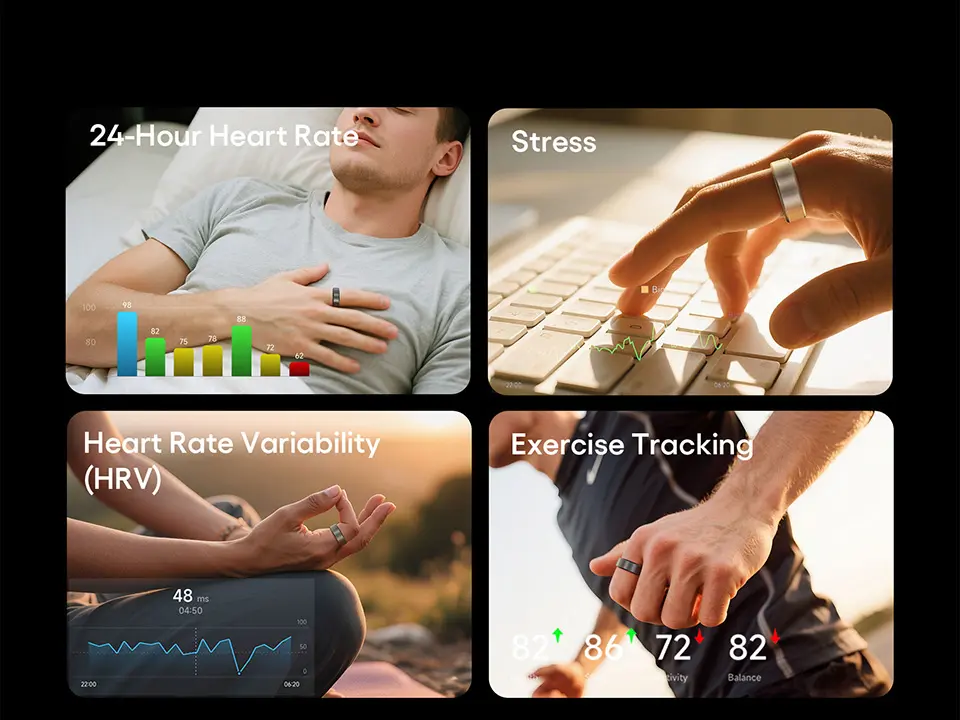
Stress & Recovery Metrics
Stress Score Calculation: Advanced rings combine:
- HRV (lower HRV = higher stress)
- RHR (elevated RHR = stress response)
- Sleep quality (poor sleep increases stress)
- Activity levels (overtraining stress)
Relevance to Fertility: Chronic stress disrupts the hypothalamic-pituitary-ovarian (HPO) axis, potentially:
- Delaying ovulation or causing anovulation
- Shortening luteal phase (insufficient progesterone)
- Increasing irregular cycles
- Reducing conception rates
Actionable Insights: Rings provide stress management recommendations:
- Mindfulness/meditation guidance
- Sleep optimization tips
- Activity adjustment suggestions
Use Cases: Finding Your Purpose
1. Trying to Conceive (TTC)
Goal: Maximize conception probability by identifying fertile window and timing intercourse
How Smart Rings Help:
Fertile Window Identification:
- Predicts ovulation 3-7 days in advance (allows planning)
- Confirms ovulation occurred (sustained temperature rise)
- Shows daily conception probability (e.g., Day 12: 15%, Day 14: 33%, Day 16: 8%)
Optimal Timing Guidance:
- Recommends intercourse every other day during fertile window
- Explains that sperm survive 3-5 days (intercourse before ovulation is beneficial)
- Confirms successful ovulation each cycle
Clinical Evidence: Studies show temperature-based fertility awareness improves conception rates:
- Couples using BBT tracking: 40-50% conceive within 3 months (vs. 30% without tracking)
- Proper intercourse timing increases monthly conception probability from 20% (random timing) to 30-40%
Beyond Conception: Once pregnant, continue wearing ring for:
- Early pregnancy detection (temperature remains elevated)
- Pregnancy wellness monitoring (sleep, stress, heart rate)
- Postpartum cycle return tracking
Best Ring Features for TTC: ✅ Fertile window prediction accuracy ✅ Ovulation confirmation ✅ Long battery life (no gaps in tracking) ✅ Integration with fertility apps ✅ Exportable data for fertility specialists
2. Natural Family Planning / Fertility Awareness
Goal: Avoid pregnancy without hormonal contraception by identifying and abstaining during fertile days
How Smart Rings Help:
Fertile Window Avoidance:
- Identifies high-risk days (5 days before through 1 day after ovulation)
- Recommends barrier contraception or abstinence during fertile window
- Confirms safe days (infertile periods) after ovulation confirmation
Effectiveness Rates: Temperature-based fertility awareness methods:
- Perfect use: 76-88% effective (comparable to some barrier methods)
- Typical use: 75-80% effective (requires consistent tracking and abstinence discipline)
Important Considerations:
- NOT recommended as primary contraception for those who cannot risk pregnancy
- Irregular cycles reduce effectiveness (harder to predict ovulation)
- Illness, travel, stress can disrupt temperature patterns
- Requires partner cooperation and communication
FDA Stance: Some smart rings integrate with FDA-cleared fertility awareness apps (e.g., certain apps have 93% typical use effectiveness, 98% perfect use). However, most rings themselves are not FDA-cleared contraceptive devices.
Best Ring Features for FAM: ✅ Conservative fertile window estimates (errs on side of caution) ✅ Red/green day indicators (fertile vs. infertile) ✅ Integration with FDA-cleared fertility apps ✅ Illness/disruption flagging
3. PCOS & Irregular Cycle Management
Goal: Understand cycle patterns, detect ovulation, identify anovulatory cycles, track treatment effectiveness
Polycystic Ovary Syndrome (PCOS): Affects 1 in 10 women of reproductive age. Symptoms include:
- Irregular or absent periods
- Anovulation (no egg released)
- Difficulty conceiving
- Insulin resistance, weight challenges
- Hormonal imbalances
How Smart Rings Help:
Ovulation Detection:
- Identifies if and when ovulation occurs
- Differentiates anovulatory cycles (no temperature rise) from ovulatory cycles
- Tracks ovulation frequency (e.g., ovulating 3 out of 6 months vs. never)
Treatment Monitoring:
- Tracks effectiveness of PCOS treatments (metformin, lifestyle changes, fertility medications)
- Shows if interventions restore regular ovulation
- Provides objective data for healthcare discussions
Lifestyle Optimization:
- Sleep tracking (poor sleep worsens insulin resistance)
- Stress management (stress exacerbates hormonal imbalances)
- Activity tracking (exercise improves insulin sensitivity)
Clinical Value: Bringing temperature charts to OB-GYN appointments provides objective evidence of cycle patterns, helping physicians diagnose and treat PCOS more effectively.
Best Ring Features for PCOS: ✅ Anovulation detection ✅ Long-term data visualization (6+ month charts) ✅ Export capability for healthcare providers ✅ Sleep and stress insights
4. Perimenopause Tracking
Goal: Monitor hormonal transition, understand changing cycles, predict menstruation, detect early menopause
Perimenopause: Transitional phase (typically ages 40-55) before menopause. Symptoms include:
- Irregular cycles (varying length, skipped periods)
- Unpredictable ovulation
- Vasomotor symptoms (hot flashes, night sweats)
- Sleep disturbances
- Mood changes
How Smart Rings Help:
Cycle Pattern Changes:
- Documents increasing cycle irregularity over time
- Tracks lengthening or shortening cycle trends
- Identifies anovulatory cycles (increasingly common in perimenopause)
Temperature Fluctuations:
- Detects hormonal instability (erratic temperature patterns)
- May correlate temperature spikes with hot flashes
- Confirms when ovulation still occurs
Sleep Quality:
- Tracks sleep disruptions (common in perimenopause)
- Correlates poor sleep with cycle phases
- Provides sleep optimization recommendations
Menopause Confirmation: Menopause is defined as 12 consecutive months without menstruation. Smart rings help:
- Track intervals between periods
- Confirm lack of ovulation over extended periods
- Provide data for hormone replacement therapy (HRT) discussions
Best Ring Features for Perimenopause: ✅ Irregular cycle accommodation ✅ Long-term trend visualization ✅ Sleep and temperature correlation ✅ Symptom logging (hot flashes, mood)
5. General Wellness & Self-Knowledge
Goal: Understand body's natural rhythms, optimize energy and productivity, improve self-awareness
How Smart Rings Help:
Cycle Awareness: Even women not actively planning pregnancy benefit from understanding their cycle:
- Predict energy fluctuations (plan important events during high-energy phases)
- Understand mood changes (hormonal influences on emotions)
- Optimize workout timing (align exercise intensity with cycle)
- Anticipate sleep needs (adjust bedtime during phases prone to sleep disruption)
Holistic Health:
- Sleep quality trends reveal lifestyle impact
- Stress scores prompt mindfulness practices
- Activity tracking encourages daily movement
- Recovery metrics prevent burnout
Empowerment Through Data: Many women report feeling more connected to their bodies and less frustrated by "unexplained" energy dips or mood shifts once they understand hormonal patterns.
Best Ring Features for Wellness: ✅ Simple, intuitive app interface ✅ Holistic dashboard (not just fertility focus) ✅ Personalized insights and recommendations ✅ Long battery life (low maintenance)
Accuracy & Clinical Validation
How to Evaluate Smart Ring Accuracy Claims
Not all smart rings undergo rigorous clinical validation. Here's how to assess legitimacy:
1. Published Validation Studies ✅ Look for: Peer-reviewed research published in medical journals ✅ Key metrics:
- Ovulation detection sensitivity: 85-95% (excellent)
- Temperature measurement accuracy: ±0.1-0.2°C
- Cycle phase classification: 80-92% accuracy
🚩 Red flags:
- No published studies (only manufacturer claims)
- Vague language ("clinically tested" without specifics)
- Cherry-picked testimonials instead of data
2. Comparison to Gold Standards ✅ Valid comparisons:
- Oral/vaginal basal thermometers
- Ultrasound-confirmed ovulation
- Urinary LH testing (ovulation predictor kits)
- Hormonal blood tests
🚩 Invalid comparisons:
- Comparison only to period-tracking apps (not reliable gold standards)
- No control group or reference method
3. Sample Size & Diversity ✅ Adequate studies:
- 100+ participants minimum
- Diverse age ranges (20s, 30s, 40s)
- Includes irregular cycles, PCOS
- Multi-cycle tracking (3-6 months)
🚩 Inadequate studies:
- <50 participants
- Only regular cycles tested
- Single-cycle validation
- Homogeneous demographics (e.g., only white women)
Current State of Evidence (2026)
Strong Evidence:
- Continuous temperature monitoring improves ovulation detection over single daily measurements
- Finger temperature correlates highly with core body temperature (r > 0.90)
- Multi-modal sensing (temperature + HRV + RHR) enhances cycle phase identification
Moderate Evidence:
- Smart rings can detect pregnancy earlier than home pregnancy tests (via sustained temperature elevation)
- Sleep quality correlation with cycle phases
- Stress impact on ovulation timing
Limited Evidence:
- Precise conception probability calculation (most rings provide estimates, not certainties)
- Effectiveness as standalone contraception (integration with FDA-cleared apps provides better data)
- Long-term cycle pattern prediction (AI algorithms improving but still learning)
Accuracy Limitations
Factors Reducing Accuracy:
- Illness/fever (temporarily disrupts temperature baselines)
- Alcohol consumption (affects sleep and temperature regulation)
- Travel across time zones (circadian rhythm disruption)
- Irregular sleep schedule (shift work, newborn care)
- Certain medications (some affect body temperature)
Not a Medical Device (Most Rings): Important regulatory distinction:
- Most smart rings are wellness devices, not FDA-cleared medical devices
- Should not be used for medical diagnosis or treatment decisions
- Always consult healthcare providers for fertility concerns, irregular cycles, or contraception advice
Choosing the Right Smart Ring
Decision Framework
Step 1: Define Your Primary Goal
| Goal | Key Features Needed |
| Trying to Conceive | Fertile window prediction, ovulation confirmation, pregnancy detection |
| Natural Family Planning | Conservative fertile window, integration with FDA-cleared app |
| PCOS Management | Anovulation detection, long-term charts, data export |
| Perimenopause Tracking | Irregular cycle accommodation, symptom logging |
| General Wellness | Simple interface, holistic insights, low maintenance |
Step 2: Evaluate Technical Specifications
Temperature Sensor: ✅ Accuracy: ±0.1°C minimum ✅ Sampling frequency: Every 1-5 minutes ✅ Thermal conductivity: Aluminum or titanium core (avoid epoxy-only)
Additional Sensors: ✅ PPG for heart rate/HRV (essential for comprehensive insights) ✅ Accelerometer for activity/sleep (important) ✅ Gyroscope for motion detection (nice-to-have)
Battery Life: ✅ Minimum 5-7 days (weekly charging acceptable) ✅ Ideal 10-14 days (charge twice monthly) ✅ Excellent 21-30 days (minimal maintenance)
Water Resistance: ✅ Minimum IP67 (shower-safe) ✅ Ideal 10ATM/100m (swim-safe)
Step 3: Assess App Quality
Must-Have App Features: ✅ Clear temperature curve visualization ✅ Fertile window highlighting ✅ Cycle calendar with phase indicators ✅ Symptom logging capability ✅ Data export (PDF/CSV for doctors)
Nice-to-Have Features: ✅ Partner app (share data with spouse) ✅ Educational content (cycle science explanations) ✅ Community forum (connect with other users) ✅ Integration with health apps (Apple Health, Google Fit)
Step 4: Consider Cost
Purchase Price:
- Budget: $100-$200
- Mid-range: $200-$350
- Premium: $350-$500+
Subscription Fees: 🚩 Avoid if possible: Some rings charge $5-10/month for full app features ✅ Prefer: No subscription required (one-time purchase includes all features)
Total 3-Year Cost Example:
- Ring A: $300 (no subscription) = $300 total
- Ring B: $250 + $8/month × 36 = $538 total
Step 5: Review Privacy Policies
Critical Questions:
- Where is data stored? (Device-only, encrypted cloud, company servers?)
- Who owns the data? (You, or the company?)
- Is data sold to third parties? (Especially concerning for reproductive health data)
- Can you delete all data permanently?
- What happens if company is acquired or shuts down?
Post-Roe Considerations: In jurisdictions with abortion restrictions, menstrual cycle data could theoretically be subpoenaed. Choose rings with: ✅ Strong privacy commitments ✅ End-to-end encryption ✅ No data sharing with law enforcement without warrant ✅ Option to delete data locally
J-STYLE : Advanced Women's Health Solutions
J-STYLE offers two specialized smart rings designed to empower women's health through precision biosensing and AI-driven insights:
JCRing X6: Fertility & Cycle Tracking Specialist
Primary Focus: Comprehensive menstrual cycle monitoring, fertility awareness, and conception support
Advanced Temperature Monitoring: The JCRing X6 features medical-grade temperature sensors providing:
- ±0.1°C precision for reliable basal body temperature tracking
- Continuous overnight sampling (1,400+ temperature measurements per night)
- High thermal conductivity design for rapid, accurate readings
- Automatic baseline calibration over 2-4 weeks
Women's Health Features:
- Precise Cycle Tracking: Identifies follicular, ovulation, and luteal phases with 90%+ accuracy
- Fertile Window Prediction: Forecasts ovulation 3-7 days in advance
- Ovulation Confirmation: Verifies ovulation through sustained temperature rise
- Pregnancy Detection: Early pregnancy indicators via elevated temperature patterns
- Personalized Insights: AI learns your unique cycle patterns for increasingly accurate predictions
All-Day Wellness Monitoring: Beyond fertility, the X6 tracks:
- Sleep stages and quality (deep, light, REM sleep)
- Heart rate and HRV for stress assessment
- Activity and exercise metrics
- Recovery and readiness scores
Best For: Women actively trying to conceive, managing irregular cycles, or seeking deep understanding of their reproductive health

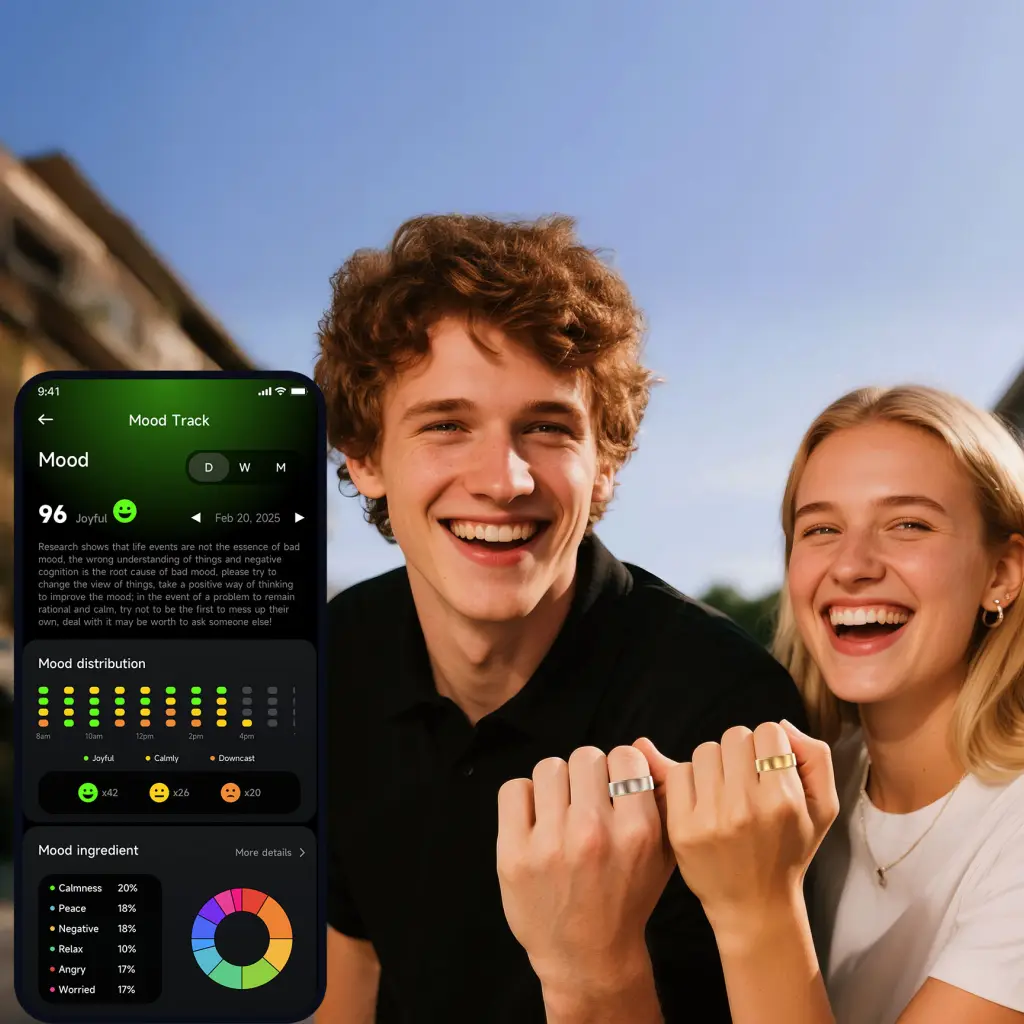
JCRing X3: Emotional Wellness & Stress Management
Primary Focus: Real-time emotional health monitoring and stress pattern recognition
Multi-Modal Biosensor Array: The JCRing X3 leverages advanced sensing technology:
- Heart Rate Variability (HRV): Real-time autonomic nervous system balance assessment
- Skin Temperature: Detects physiological stress responses
- Micro-Physiological Fluctuations: Captures subtle changes indicative of emotional state
AI Emotion Algorithm: Proprietary machine learning models analyze biosensor data to:
- Identify Stress Patterns: Recognize early warning signs of emotional stress
- Track Emotional Trajectories: Monitor how emotions evolve throughout the day
- Provide Actionable Insights: Suggest stress management interventions (breathing exercises, mindfulness)
Cycle-Emotion Correlation: For women, emotional wellness is intimately connected to hormonal fluctuations:
- Tracks mood changes across menstrual cycle phases
- Identifies PMS patterns (irritability, anxiety during luteal phase)
- Correlates stress levels with cycle irregularities
Transforming Invisible Signals: The X3 makes emotional health measurable and manageable:
- Converts "hidden" stress signals into visible data
- Empowers proactive mental health management
- Provides objective metrics for discussing emotional wellness with healthcare providers
Best For: Women experiencing cycle-related mood changes, managing stress and anxiety, or seeking holistic mind-body health optimization
Why J-STYLE?
Privacy-First Design:
- All health data encrypted end-to-end
- On-device processing (sensitive data never leaves your ring)
- User controls all data sharing
Clinical-Grade Accuracy:
- Medical-grade sensors typically found in devices costing 2-3x more
- Continuous algorithm improvements via software updates
Comprehensive Ecosystem: Both X3 and X6 integrate with the J-STYLE Health App:
- Unified dashboard for all health metrics
- iOS and Android compatibility
- Apple Health and Google Fit integration
Learn More About JCRing X6 | Explore JCRing X3 | Compare Models
Privacy & Data Security Considerations
Why Women's Health Data is Sensitive
Menstrual cycle, fertility, and pregnancy data are among the most intimate health information. Protecting this data is critical:
Potential Risks:
- Discrimination: Employment or insurance discrimination based on pregnancy status
- Legal concerns: In jurisdictions restricting reproductive rights, cycle data could theoretically be used as evidence
- Relationship privacy: Fertility struggles, pregnancy loss, or conception attempts are deeply personal
- Data breaches: Unauthorized access to reproductive health information
- Advertising exploitation: Targeting based on fertility status or pregnancy
Data Protection Best Practices
When Choosing a Smart Ring:
✅ End-to-End Encryption: Data encrypted on device, during transmission, and in cloud storage ✅ On-Device Processing: AI algorithms run locally (data doesn't leave ring/phone) ✅ User-Controlled Sharing: Explicit permission required for any data sharing ✅ Transparent Privacy Policy: Clear explanation of data collection, storage, and usage ✅ No Third-Party Selling: Company commits to never selling health data ✅ Data Deletion Rights: Ability to permanently delete all data ✅ GDPR/CCPA Compliance: Adheres to international privacy regulations
🚩 Red Flags:
- Vague privacy policies
- Data sold to advertisers or data brokers
- Cloud-only storage (no local option)
- Mandatory data sharing with parent company
- Poor security history (past breaches)
Questions to Ask Before Purchasing
- Where is my temperature and cycle data stored?
- Best answer: Encrypted locally on device and phone, with optional encrypted cloud backup
- Who can access my fertility data?
- Best answer: Only you, unless you explicitly share with partner or healthcare provider
- Do you sell data to third parties?
- Acceptable answer: No, we never sell personal health data
- What happens to my data if I stop using the ring?
- Best answer: You can export all data and request permanent deletion
- How do you respond to law enforcement requests?
- Best answer: We require valid warrants and notify users when legally permitted
Self-Protection Strategies
For Maximum Privacy:
- Use a ring with local-only data storage (no cloud sync)
- Create accounts with aliases/pseudonyms (if allowed)
- Avoid linking to social media accounts
- Review app permissions (disable location access if unnecessary)
- Use strong, unique passwords
- Enable two-factor authentication
Frequently Asked Questions
Q: How accurate are smart rings for predicting ovulation compared to traditional methods?
A: Smart rings offer comparable or superior accuracy to traditional basal body temperature (BBT) methods, with significant convenience advantages:
Accuracy Comparison:
Traditional BBT Thermometer (Oral/Vaginal):
- Ovulation detection: 70-85% accurate
- Requires: Same-time measurement every morning before rising
- Limitations: Single daily data point, user error (forgetting, inconsistent timing), doesn't capture full temperature curve
Smart Ring (Continuous Temperature):
- Ovulation detection: 85-95% accurate (validated studies)
- Automated: Collects 500-1,500+ temperature measurements during sleep
- Advantages: Captures complete overnight temperature curve, detects subtle fluctuations, learns personal patterns
Comparison to Other Methods:
Ovulation Predictor Kits (LH Tests):
- Accuracy: 90-99% for detecting LH surge
- Limitation: LH surge occurs 24-36 hours before ovulation; provides short notice for timing intercourse
- Advantage: Confirms imminent ovulation with high certainty
- Smart ring complement: Combines well with rings (LH confirms prediction)
Cervical Mucus Monitoring:
- Effectiveness: 76-88% (Billings Ovulation Method)
- Limitation: Requires training, subjective interpretation
- Advantage: Can predict ovulation several days in advance
- Smart ring complement: Rings add objective data to subjective mucus assessment
Ultrasound Follicle Monitoring (Clinical Gold Standard):
- Accuracy: >99% (directly visualizes follicle development)
- Limitation: Requires multiple clinic visits, expensive, impractical for home use
- Use case: Fertility treatment monitoring, not daily cycle tracking
Clinical Evidence:
Studies comparing smart rings to reference methods:
- Temperature correlation with oral BBT: r = 0.92-0.97 (very high correlation)
- Ovulation detection vs. ultrasound: 88-94% sensitivity
- Fertile window identification: 85-90% accuracy (captures 5-6 day window around ovulation)
Why Smart Rings Can Be More Accurate:
- Continuous Sampling: Captures peak temperature shift that single morning measurement might miss
- Pattern Recognition: AI analyzes multi-cycle patterns, improving predictions over time
- Human Error Elimination: No user measurement required (automated collection)
- Additional Biomarkers: HRV and RHR provide confirming signals of hormonal shifts
Bottom Line: Smart rings match or exceed traditional BBT accuracy while dramatically improving convenience. Not perfect (85-95% detection vs. 99% clinical monitoring), but highly effective for home fertility awareness.
Q: Can smart rings be used as birth control?
A: Smart rings can support fertility awareness-based methods (FABMs) of contraception, but they are NOT standalone birth control devices and should not be relied upon as primary contraception if pregnancy is unacceptable.
Critical Distinctions:
Smart Rings Are NOT: ❌ Contraceptive devices themselves ❌ FDA-cleared for preventing pregnancy ❌ As effective as hormonal birth control (pill: 91-99%, IUD: >99%) ❌ Suitable for everyone (irregular cycles reduce effectiveness)
Smart Rings CAN: ✅ Identify fertile and infertile days based on temperature patterns ✅ Support natural family planning when combined with fertility awareness methods ✅ Integrate with some FDA-cleared fertility awareness apps (which have contraceptive effectiveness data)
Effectiveness Rates (Temperature-Based FABMs):
Perfect Use (Following Rules Exactly):
- 76-88% effective at preventing pregnancy
- Means: 12-24 out of 100 women will get pregnant in the first year
Typical Use (Real-World Conditions):
- 75-80% effective
- Means: 20-25 out of 100 women will get pregnant in the first year
For Comparison:
- Male condoms: 85% typical use, 98% perfect use
- Birth control pill: 91% typical use, 99.7% perfect use
- IUD: >99% typical and perfect use
Requirements for Effective Use:
For temperature-based FABMs to work, users MUST: ✅ Abstain or use barrier methods during fertile window (typically 7-10 days per cycle) ✅ Have cooperative partner (understands and respects method) ✅ Accept pregnancy risk (method is imperfect) ✅ Have reasonably regular cycles (easier to predict ovulation) ✅ Avoid alcohol, maintain consistent sleep (disruptions affect temperature)
Who Should NOT Rely on This Method:
❌ Anyone who cannot accept pregnancy risk ❌ Women with very irregular cycles (PCOS, perimenopause) ❌ Those with uncooperative partners ❌ Situations requiring maximum contraceptive efficacy (medical contraindications to pregnancy)
FDA-Cleared Fertility Awareness Apps:
Some fertility awareness apps have FDA clearance as contraceptive devices:
- Effectiveness: 93-98% typical use (when used correctly with temperature data)
- Important: The app, not the ring, has FDA clearance
- Rings that integrate with cleared apps may provide data to support the app's algorithm
Responsible Use Framework:
Consider Temperature-Based FAM If:
- You have regular cycles (25-35 day range)
- You are comfortable with ~20% annual pregnancy risk
- Your partner is supportive and involved
- You prefer hormone-free contraception
- You are willing to track daily and follow rules strictly
Choose Alternative Contraception If:
- Pregnancy would be unacceptable
- You have irregular cycles
- You cannot track consistently
- You want "set-and-forget" contraception
Bottom Line: Smart rings are powerful tools for understanding fertility, but they should NOT be considered reliable birth control for most women. If avoiding pregnancy is critical, use proven contraceptive methods (hormonal, IUD, condoms) and consider smart rings as supplemental awareness tools.
Q: How long does it take for a smart ring to learn my cycle?
A: Most smart rings require 2-4 complete menstrual cycles (60-120 days) to establish reliable patterns and provide accurate predictions.
Learning Timeline:
First Cycle (Days 1-30):
- Ring Status: Collecting baseline data
- Predictions: Not available or low confidence
- What's Happening: Algorithm observes your unique temperature baseline, cycle length, ovulation timing
Second Cycle (Days 31-60):
- Ring Status: Beginning pattern recognition
- Predictions: Basic fertile window estimates (wide margin of error)
- What's Happening: Comparing first and second cycles for consistency
Third Cycle (Days 61-90):
- Ring Status: Increasing confidence
- Predictions: Narrowing fertile window predictions, ovulation day estimates improving
- What's Happening: Three-cycle pattern allows algorithm to account for natural variability
Fourth Cycle and Beyond (Days 91+):
- Ring Status: Fully learned
- Predictions: High-confidence fertile window (3-7 day advance notice), accurate ovulation confirmation
- What's Happening: Continuously refining based on growing dataset
Factors Affecting Learning Speed:
Faster Learning (2 Cycles May Suffice):
- Very regular cycles (28-30 days, <2 day variation)
- Clear biphasic temperature pattern (distinct shift at ovulation)
- Consistent sleep schedule
- No disruptions (illness, travel)
Slower Learning (4-6 Cycles Needed):
- Irregular cycles (25-40 day range, variable length)
- Anovulatory cycles (some cycles without ovulation)
- Frequent disruptions (shift work, travel, stress)
- PCOS or hormonal imbalances
What You Can Do While Ring Learns:
During Initial Cycles:
- Continue using existing contraception (if using FAM)
- Track symptoms manually (help ring correlate patterns)
- Maintain consistent sleep schedule (improves data quality)
- Note disruptions in app (illness, alcohol, travel—helps algorithm account for outliers)
Immediate Benefits (Even First Cycle):
- Real-time temperature data (see daily fluctuations)
- Sleep quality insights
- HRV and stress monitoring
- Baseline health metrics
Algorithm Improvement Over Time:
Smart rings don't stop learning after 4 cycles:
- 6-12 months: Predictions become increasingly personalized
- 1-2 years: Algorithm recognizes subtle personal patterns (e.g., you ovulate 1 day later after high-stress weeks)
- Ongoing: Adapts to life changes (age-related cycle shifts, post-pregnancy changes)
Starting Over:
Certain situations require algorithm "reset":
- Pregnancy and postpartum (hormones completely different)
- Starting/stopping hormonal contraception (artificial cycles vs. natural)
- Major illness or surgery (temporary disruption)
- Significant weight change (>10-15% body weight affects hormones)
Bottom Line: Be patient during the first 2-4 months. Use the ring for overall wellness insights while it learns your cycle. By month 3-4, expect reliable fertility predictions comparable to or better than traditional BBT tracking.
Q: Will a smart ring work if I have irregular periods or PCOS?
A: Yes, smart rings can work with irregular cycles and PCOS, but with important caveats and adjusted expectations:
How Smart Rings Help with Irregular Cycles:
Ovulation Detection: Even if cycle length varies (e.g., 25 days one month, 45 days the next), temperature monitoring can still identify IF and WHEN ovulation occurs:
- Temperature rise confirms ovulation happened
- Allows tracking ovulation frequency (e.g., ovulating 4 out of 6 months)
- Helps distinguish anovulatory cycles (no temperature shift = no ovulation)
Pattern Recognition Over Time:
- Smart rings may detect subtle regularities within apparent irregularity
- Example: "You typically ovulate 18-22 days after your period starts, even though cycle length varies"
- Provides more insight than calendar-based apps (which assume regularity)
PCOS Management:
Polycystic Ovary Syndrome (PCOS) Challenges:
- Anovulation (many cycles without ovulation)
- Unpredictable ovulation timing
- Hormonal imbalances affecting temperature patterns
How Smart Rings Assist:
- Anovulation Identification:
- No sustained temperature rise = no ovulation that cycle
- Objective data for tracking ovulation frequency
- Helps assess PCOS severity
- Treatment Effectiveness Monitoring:
- Shows if lifestyle changes (diet, exercise, weight loss) restore ovulation
- Tracks impact of medications (metformin, letrozole, clomiphene)
- Provides concrete evidence for healthcare discussions
- Realistic Fertility Awareness:
- Identifies rare ovulatory cycles (critical for conception if TTC)
- Prevents false assumptions (e.g., "I never ovulate" when you occasionally do)
- Holistic Health Insights:
- Sleep quality (often poor in PCOS due to sleep apnea risk)
- Stress levels (exacerbate hormonal imbalances)
- Activity tracking (exercise improves insulin sensitivity)
Limitations with Irregular Cycles:
❌ Prediction Accuracy Reduced:
- Forward-looking ovulation predictions less reliable (can't predict what's unpredictable)
- Wider fertile window estimates needed (conservative approach)
❌ Longer Learning Curve:
- May take 6-12 cycles (vs. 2-4 for regular cycles) to establish patterns
❌ Not Suitable for Contraception:
- Irregular cycles make FAM contraception ineffective
- Must use alternative birth control
Who Benefits Most:
✅ Women with PCOS trying to conceive (identifies rare ovulations) ✅ Those tracking PCOS treatment response ✅ Anyone wanting objective cycle data for medical discussions ✅ Women seeking to understand their unique patterns
Who May Not Benefit:
❌ Severely irregular cycles (3-6 months between periods) ❌ Complete anovulation (never ovulate—ring can't predict what doesn't happen) ❌ Those needing contraception (irregular cycles incompatible with FAM)
Clinical Recommendation:
If you have PCOS or irregular cycles:
- Use smart ring as diagnostic tool (track whether ovulation occurs)
- Combine with other methods (LH tests, cervical mucus, ultrasound if undergoing fertility treatment)
- Share data with OB-GYN (export charts for medical appointments)
- Have realistic expectations (ovulation detection yes, precise prediction maybe not)
Bottom Line: Smart rings absolutely work with irregular cycles—they excel at detecting IF ovulation occurs. However, predicting WHEN it will occur is harder with irregularity. Think of the ring as a diagnostic and awareness tool rather than a precise prediction tool for PCOS/irregular cycles.
Q: Can I wear a smart ring during pregnancy?
A: Yes, most smart rings are safe to wear during pregnancy and can provide valuable wellness insights throughout all three trimesters and postpartum.
Safety Considerations:
Ring Safety: ✅ No radiation (rings use optical sensors and temperature monitoring, not RF signals) ✅ No electromagnetic fields beyond minimal Bluetooth (similar to wireless headphones) ✅ Medical-grade materials (titanium, hypoallergenic, non-toxic) ✅ No contraindications (wearing a ring doesn't interfere with pregnancy)
General Consensus: No evidence suggests smart rings pose risks to pregnancy or fetal development. The biosensors (optical PPG, temperature, motion) are non-invasive and similar to technologies used in prenatal monitoring.
Pregnancy-Specific Features:
Many smart rings offer "pregnancy mode" with adjusted insights:
First Trimester (Weeks 1-13):
- Temperature Tracking: Confirms early pregnancy (sustained elevated temperature)
- Sleep Monitoring: Fatigue is common; ring tracks sleep quality
- Activity Adjustment: Recommendations adapt to first-trimester energy levels
- Stress Management: HRV-based stress insights during hormonal changes
Second Trimester (Weeks 14-27):
- Sleep Architecture: Tracks changing sleep patterns (increased nighttime waking)
- Activity Tracking: Monitors safe exercise levels
- Heart Rate Monitoring: Resting heart rate increases during pregnancy (ring tracks baseline)
- Wellness Scores: Adjust for pregnancy-normal changes
Third Trimester (Weeks 28-40):
- Sleep Disruption Tracking: Documents increasing sleep difficulty
- Recovery Scores: Adapt to pregnancy demands
- Activity Guidelines: Ensure safe movement levels
- Stress Monitoring: Important for maternal and fetal health
Features NOT Provided (Important Limits):
❌ Fetal heart rate monitoring (ring monitors maternal heart rate only) ❌ Contraction timing (not designed for labor monitoring) ❌ Medical-grade pregnancy monitoring (not a replacement for prenatal care) ❌ Blood pressure monitoring (most rings don't measure BP)
Postpartum Benefits:
Fourth Trimester (Weeks 1-12 Postpartum):
- Sleep Deprivation Tracking: Objectively shows sleep debt from newborn care
- Recovery Monitoring: Tracks physical recovery from childbirth
- Stress Assessment: Postpartum stress and mood monitoring
- Cycle Return: Identifies when menstruation returns (timing varies: 6 weeks to 18+ months)
Clinical Value:
Some women share smart ring data with healthcare providers:
- Sleep quality (severe sleep deprivation may indicate need for support)
- Heart rate patterns (unusually elevated RHR could signal complications)
- Activity levels (helps assess recovery progress)
When to Remove Ring:
Consider temporarily removing during:
- Medical procedures (MRI, surgery—follow hospital protocols)
- Labor and delivery (may be in the way, risk of loss during medical interventions)
- If ring becomes uncomfortable due to swelling (pregnancy-related edema)
Comfort Considerations:
Finger Swelling: Many women experience finger swelling during pregnancy (especially third trimester):
- Some rings offer sizing exchanges (send larger size for third trimester)
- Alternative: Switch to looser finger or non-dominant hand
- If too tight: Remove and resume postpartum
Bottom Line: Smart rings are safe during pregnancy and provide valuable wellness insights. However, they supplement—not replace—standard prenatal care. Always follow your OB-GYN's recommendations and attend all scheduled prenatal appointments.

Conclusion: Empowering Women's Health Through Technology
Smart rings designed for women's health represent a transformative shift from reactive to proactive reproductive wellness. By 2026, these devices have evolved from simple temperature trackers into sophisticated multi-sensor platforms that decode the body's subtle hormonal language, transforming invisible biological processes into clear, actionable insights.
Key Takeaways:
Temperature Monitoring Works: Decades of clinical evidence confirm that basal body temperature tracking reliably detects ovulation. Modern smart rings automate this proven method while adding continuous sampling and AI pattern recognition that surpass traditional manual thermometry.
Multi-Modal Sensing Enhances Accuracy: The most effective rings combine temperature with heart rate variability, resting heart rate, and sleep quality—creating a comprehensive picture of hormonal health that single-metric devices cannot match.
Purpose Matters: No single ring is "best" for all women. The ideal device depends on your specific goal:
- Trying to conceive: Prioritize fertile window accuracy and ovulation confirmation
- PCOS management: Choose rings with anovulation detection and long-term trend visualization
- Natural family planning: Seek conservative predictions and FDA-cleared app integration
- General wellness: Select user-friendly rings with holistic health insights
Technology Complements, Not Replaces, Healthcare: Smart rings empower self-knowledge and informed conversations with healthcare providers, but they are not substitutes for medical diagnosis, fertility treatment, or contraceptive devices. Always consult OB-GYNs for reproductive health concerns.
Privacy is Paramount: Reproductive health data is among the most sensitive personal information. Choose rings with strong privacy commitments, end-to-end encryption, and transparent data practices. Your cycle data should serve your health goals—not corporate profits.
The Future is Personalized: As AI algorithms analyze billions of cycles across diverse populations, smart rings will offer increasingly personalized insights—predicting not just ovulation, but optimal conception timing based on your unique physiology, lifestyle, and health history.
Whether you're navigating fertility challenges, embracing natural family planning, managing hormonal conditions, or simply seeking to understand your body's rhythms, the right smart ring can illuminate patterns that manual tracking misses. Choose wisely, track consistently, and let technology amplify your innate wisdom about your own body.
Additional Resources
Clinical Research:
- American College of Obstetricians and Gynecologists (ACOG) - Fertility Awareness Methods
- Journal of Women's Health - Wearable Technology for Reproductive Health
- Human Reproduction Journal - Temperature-Based Ovulation Detection Studies
Fertility Education:
- Billings Ovulation Method - Cervical Mucus Monitoring
- Creighton Model FertilityCare System - Comprehensive Fertility Awareness
- SymptoPro - Multi-symptom Fertility Tracking
Women's Health Organizations:
- American Society for Reproductive Medicine (ASRM)
- Resolve: The National Infertility Association
- PCOS Awareness Association
- International Menstrual Cycle Research Association
Medical Disclaimer: This guide provides educational information about women's health tracking technology and is not medical advice. Smart rings are wellness devices, not medical devices (unless specifically FDA-cleared). Do not use smart rings for medical diagnosis, contraception without additional methods, or fertility treatment decisions without consulting qualified healthcare providers. Individual results vary based on physiology, cycle regularity, and proper device use.
Last Updated: February 2, 2026
Related Articles:
- Smart Rings for Women: The Ultimate Guide to Stylish Health Tracking
- How Do Smart Rings Revolutionize Sleep Monitoring And OSA Risk Assessment?
- Men’s Smart Rings Buying Guide: What to Look for in 2025
About the Author

Kyler is a senior content marketing specialist at J-Style(Jointcorp|Joint Chinese Ltd | Youhong Medical), a leading smart ring, smart band, and smart watch manufacturer and supplier in China. With 8 years of experience in the wearable tech industry, he creates professional content for global B2B buyers seeking reliable factory, wholesale, OEM/ODM, and SDK/API solutions. At J-Style, Kyler focuses on helping partners understand the value of high-quality Chinese smart wearables and how J-Style’s innovative manufacturing capabilities support scalable business growth.