

Updated 13 hours ago
Fitness Tracker Manufacturers: Global Industry Analysis & OEM/ODM Guide 2026
youhong
Last Updated:February 3, 2026 | Comprehensive Manufacturing Industry Overview
The global fitness tracker manufacturing industry represents a dynamic intersection of consumer electronics, health technology, and precision engineering. Valued at $60.94 billion in 2024 and projected to reach $323.47 billion by 2034 (18.04% CAGR), this sector encompasses established technology giants, specialized OEM/ODM manufacturers, and emerging innovators reshaping how millions monitor their health daily.
Understanding the fitness tracker manufacturing landscape is critical for businesses seeking to launch their own branded wearables, distributors evaluating supply partners, or investors analyzing market opportunities. This comprehensive guide examines the major manufacturing players, production hubs, industry trends, and the increasingly important OEM/ODM (Original Equipment Manufacturer/Original Design Manufacturer) ecosystem that enables brands worldwide to bring fitness tracking products to market.
Whether you're an entrepreneur launching a fitness tech startup, a healthcare provider seeking customized patient monitoring solutions, or a corporate wellness program manager evaluating bulk procurement options, navigating the complex manufacturer landscape requires understanding both the branded leaders and the specialized contract manufacturers powering the industry.
Table of Contents
- Understanding the Manufacturing Landscape
- Leading Branded Manufacturers
- OEM/ODM Manufacturing Ecosystem
- Geographic Manufacturing Hubs
- Technology & Innovation Trends
- Quality Standards & Certifications
- Choosing the Right Manufacturing Partner
- Market Trends & Future Outlook
- Frequently Asked Questions
Understanding the Manufacturing Landscape
Two Distinct Manufacturing Models
The fitness tracker industry operates through two primary manufacturing approaches:
1. Vertical Integration (Brand Manufacturers)
Established consumer technology brands that design, manufacture, and market products under their own names:
Characteristics:
- Own brand equity and customer relationships
- Control entire value chain (design → manufacturing → retail → service)
- Significant R&D investment in proprietary technology
- Premium pricing supported by brand recognition
- Direct-to-consumer and retail distribution
Examples: Companies producing fitness trackers under their established brand names while maintaining manufacturing facilities or close partnerships with contract manufacturers.
Market Position: These brands typically target mass-market consumers and leverage ecosystem integration (smartphones, apps, accessories) to create switching barriers.
2. Contract Manufacturing (OEM/ODM Model)
Specialized manufacturers producing devices for other brands or offering white-label solutions:
OEM (Original Equipment Manufacturer):
- Client provides complete specifications and designs
- Manufacturer produces according to exact requirements
- Client's brand appears on final product
- Manufacturer does not own intellectual property
ODM (Original Design Manufacturer):
- Manufacturer owns existing designs/products
- Client selects from catalog and customizes branding
- Faster time-to-market (designs already developed)
- More cost-effective (development costs amortized across multiple clients)
White Label:
- Pre-designed, fully functional products
- Client adds logo/branding only
- Minimal customization
- Fastest market entry
Market Role: OEM/ODM manufacturers enable smaller brands, startups, corporate wellness programs, healthcare providers, and distributors to offer fitness tracking products without massive capital investment in R&D and tooling.
Market Segmentation by Product Type
Fitness Bands (Activity Trackers):
- Market share: 35-40% of units sold
- Price range: $30-$150
- Primary features: Step counting, sleep tracking, heart rate monitoring
- Battery life: 7-21 days typical
- Target market: Budget-conscious consumers, general wellness users
Smartwatches with Fitness Features:
- Market share: 45-50% of units sold
- Price range: $150-$1,200
- Primary features: Comprehensive health tracking + smartphone integration
- Battery life: 18 hours - 7 days (varies dramatically)
- Target market: Tech enthusiasts, active lifestyles, premium segment
Smart Rings:
- Market share: 2-3% of units sold (rapidly growing)
- Price range: $200-$500
- Primary features: Sleep, recovery, temperature monitoring
- Battery life: 4-14 days
- Target market: Sleep optimization, women's health, discreet monitoring
Smart Clothing & Accessories:
- Market share: <2% (emerging category)
- Embedded sensors in apparel (shirts, sports bras, socks)
- Target market: Professional athletes, medical monitoring
Leading Branded Manufacturers
The global fitness tracker market is dominated by a mix of consumer electronics giants and specialized health technology companies.
Global Market Leaders:
Based on shipment volumes and market research data, the leading brands include:
Tier 1: Mass Market Leaders
1. Huawei
- Market Position: Leading global market share in fitness bands (2025-2026)
- Key Products: Huawei Band series, Watch GT series
- Strength: HarmonyOS ecosystem integration, competitive pricing
- Geographic Focus: Strong in China, Asia-Pacific, Europe
- Manufacturing: Primarily China-based production
- Innovation: Advanced health algorithms, long battery life
2. Apple
- Market Position: Dominant in smartwatch segment, strong in premium fitness tracking
- Key Products: Apple Watch Series (fitness tracking subset of smartwatch features)
- Strength: iOS ecosystem lock-in, brand prestige, health app integration
- Geographic Focus: North America, Europe, developed markets
- Manufacturing: Contracted to partners (primarily Foxconn, others)
- Innovation: ECG, blood oxygen, temperature sensing
3. Xiaomi
- Market Position: Global leader in affordable fitness bands
- Key Products: Mi Band series (most popular globally by units sold)
- Strength: Exceptional value proposition ($30-60 price point), massive distribution
- Geographic Focus: China (dominant), India, Southeast Asia, expanding globally
- Manufacturing: Partner Zepp Health (Huami) historically; now diversified
- Innovation: AMOLED displays, NFC payments, SpO2 at budget prices
4. Samsung
- Market Position: Strong in smartwatch category, Android ecosystem leader
- Key Products: Galaxy Watch series, Galaxy Fit bands
- Strength: Android integration, diverse product range, health platform
- Geographic Focus: Global, particularly strong in North America, Asia
- Manufacturing: In-house and contract manufacturing
- Innovation: Body composition analysis, advanced sleep tracking, rotating bezel UX
Tier 2: Specialized & Performance Brands
5. Garmin
- Market Position: Leader in GPS fitness wearables, premium sport segment
- Key Products: Forerunner (running), Fenix (multisport), Vivosmart (fitness bands)
- Strength: Superior GPS accuracy, professional-grade training metrics, long battery life
- Geographic Focus: Global, strong with serious athletes and outdoor enthusiasts
- Manufacturing: Vertically integrated (owns factories), some contract manufacturing
- Innovation: Solar charging, advanced performance analytics, diving/aviation features
6. Fitbit (Google/Alphabet)
- Market Position: Established brand with loyal user base, now Google-owned
- Key Products: Fitbit Charge series, Sense smartwatch, Inspire bands
- Strength: Large historical user base, health coaching platform
- Geographic Focus: North America, Europe
- Manufacturing: Contract manufacturers in Asia
- Status: Transitioning under Google ownership; future product strategy evolving
Tier 3: Emerging & Regional Players
Other Notable Manufacturers:
- Amazfit (Zepp Health): Affordable smartwatches and bands, strong online presence
- Polar: Performance-focused for endurance athletes, heritage in heart rate monitoring
- Whoop: Subscription-based recovery tracking, professional athlete market
- Withings: Hybrid watches, medical-grade focus, European design
- Suunto: Outdoor adventure watches, diving computers
- Fossil Group: Fashion-forward smartwatches and hybrids
Manufacturing Capabilities by Brand Type
In-House Manufacturing (Rare):
- Very few brands fully own manufacturing
- Most brands have transitioned to contract manufacturing for cost efficiency
Hybrid Model (Common):
- Strategic partnership with specific contract manufacturers
- Co-development of proprietary components
- Quality control through on-site teams
Fully Contracted (Most Common):
- Brand focuses on design, software, marketing
- Contract manufacturer handles all hardware production
- Examples: Most smartwatch brands, emerging fitness tech startups
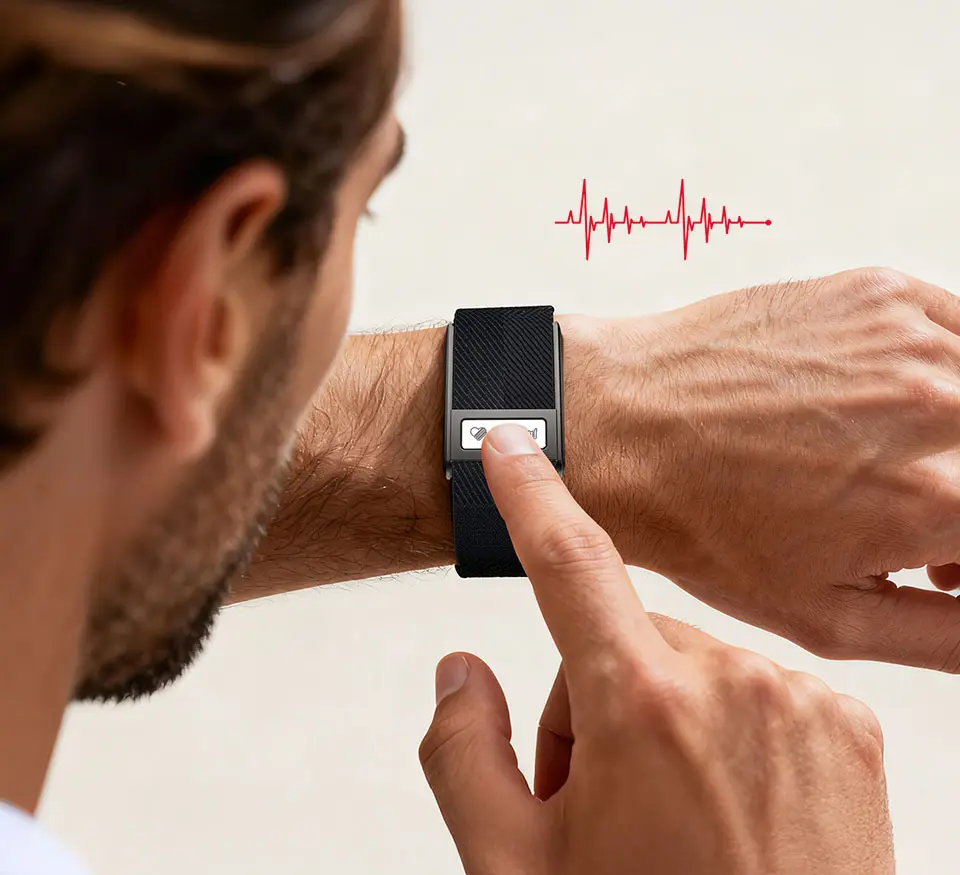
OEM/ODM Manufacturing Ecosystem
The contract manufacturing sector is the backbone of the fitness tracker industry, enabling hundreds of brands to compete without building factories.
What OEM/ODM Manufacturers Provide
Full-Stack Services:
1. Product Design & Development
- Industrial design (form factor, ergonomics, aesthetics)
- Mechanical engineering (housing, buttons, straps, water sealing)
- Electrical engineering (PCB layout, sensor integration)
- Firmware development (embedded systems, Bluetooth connectivity)
- Mobile app development (iOS and Android applications)
- Cloud platform integration (data storage, analytics, API)
2. Hardware Customization
- Sensor selection and integration:
- PPG optical heart rate sensors (2-LED, 5-LED arrays)
- Accelerometers and gyroscopes (motion tracking)
- GPS modules (single or dual-frequency)
- SpO2 blood oxygen sensors
- ECG electrodes (medical-grade)
- Temperature sensors (thermopile or thermistor)
- Bioimpedance sensors (body composition)
- Display options (AMOLED, LCD, e-ink, or screenless)
- Battery capacity selection
- Charging solutions (USB, wireless, magnetic pogo pins)
3. Software & Firmware Customization
- Custom watch faces and UI themes
- Branded mobile apps (whitelabel or custom-built)
- Health algorithm customization
- Multi-language support
- Cloud backend setup
- API/SDK provision for third-party integration
4. Branding & Packaging
- Logo engraving or printing on hardware
- Custom packaging design and production
- User manuals and warranty cards
- Retail-ready boxed units
5. Certifications & Compliance
- FCC (United States radio frequency)
- CE (European conformity)
- RoHS (restriction of hazardous substances)
- FDA clearance consultation (if medical claims)
- IP rating testing (water/dust resistance)
- Battery safety (UN38.3 for lithium batteries)
6. Manufacturing & Quality Control
- Component sourcing and procurement
- PCB assembly (SMT surface-mount technology)
- Final assembly and testing
- QC inspection (typically 3-5% sampling or 100% for critical tests)
- Burn-in testing (operating devices under load to detect early failures)
- Water resistance testing (pressure chambers)
7. Logistics & Fulfillment
- Warehousing
- Global shipping (ocean freight, air freight)
- Customs documentation
- Drop-shipping services (direct to customers)
OEM vs. ODM: Choosing the Right Model
| Factor | OEM (Original Equipment Mfg) | ODM (Original Design Mfg) |
| Design Ownership | Client owns design | Manufacturer owns design |
| Customization | Fully custom (ground-up) | Select from catalog + customize |
| Development Time | 6-12 months | 1-3 months |
| Minimum Order Qty | Higher (5,000-10,000+ units) | Lower (500-3,000 units) |
| Tooling Costs | $50,000-$200,000+ | $0-$20,000 (shared tooling) |
| Unit Cost | Potentially lower (optimized) | Slightly higher (shared R&D costs) |
| Intellectual Property | Client retains full IP | Manufacturer retains design IP |
| Time to Market | Longer (full development cycle) | Faster (existing designs) ⭐ |
| Differentiation | Maximum (unique product) | Moderate (limited to branding/software) |
| Best For | Established brands, unique vision | Startups, quick market testing, budget constraints |
White Label Solutions
Fastest Market Entry:
White label represents the most turnkey approach:
Process:
- Select from manufacturer's finished product catalog
- Approve product specifications (already fixed)
- Provide logo and branding artwork
- Confirm minimum order quantity (often 500-1,000 units)
- Receive finished, branded products ready for sale
Advantages:
- Extremely fast (30-60 days from order to delivery)
- Minimal upfront investment (no tooling costs)
- Proven product quality (existing designs)
- Low MOQ (accessible for small businesses)
Disadvantages:
- Zero differentiation (competitors may sell identical hardware)
- Limited customization (logo/packaging only)
- Commodity pricing pressure (no unique value proposition)
Ideal For:
- Retailers testing market demand
- Corporate wellness programs (employee gifts)
- Promotional products
- Small fitness studios/gyms offering branded merchandise
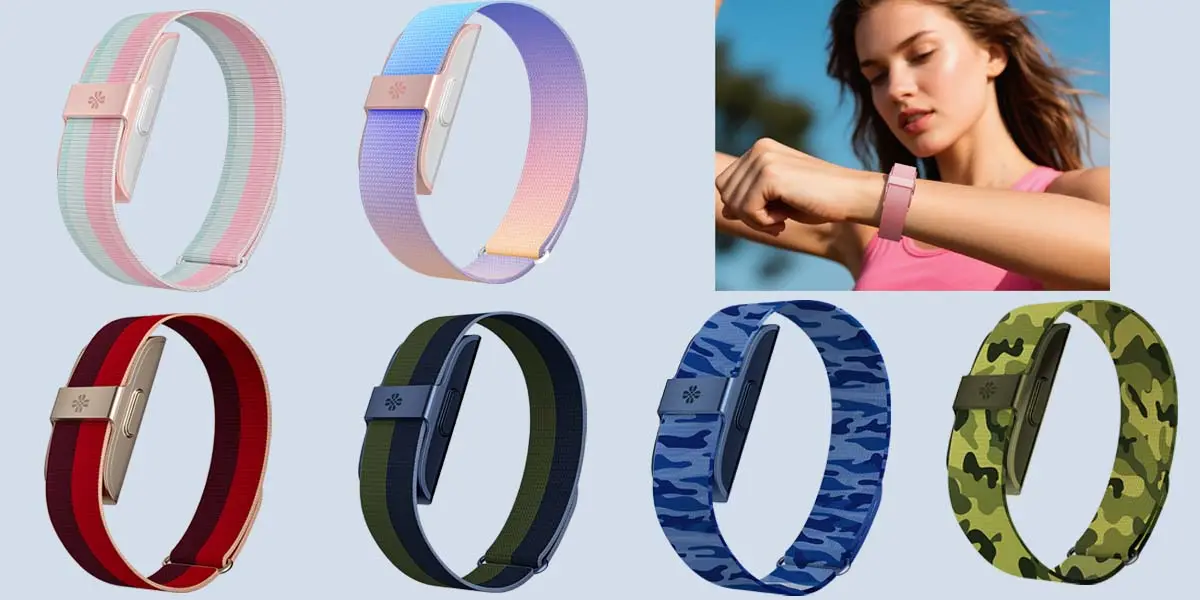
Geographic Manufacturing Hubs
The Chinese mainland : The Global Manufacturing Epicenter
Dominance Statistics:
- 80-90% of global fitness tracker production occurs in China
- Concentration in Guangdong Province (Shenzhen, Dongguan, Guangzhou)
- Complete supply chain ecosystem (components, assembly, packaging)
Why China Leads:
1. Complete Supply Chain:
- All electronic components available locally:
- PCB fabrication
- Display panels (OLED, LCD)
- Sensors (accelerometers, optical HR sensors)
- Batteries (lithium polymer)
- Charging components
- Same-city sourcing reduces lead times and logistics costs
- Strong supplier networks enable rapid prototyping
2. Manufacturing Expertise:
- Decades of consumer electronics experience
- Skilled labor force trained in precision assembly
- Advanced automation (SMT lines, automated testing)
- Established quality management systems (ISO 9001, etc.)
3. Economies of Scale:
- Massive production volumes drive component cost reduction
- Shared tooling and equipment across manufacturers
- Competitive pricing due to industry clustering
4. Infrastructure:
- Shenzhen Bao'an International Airport (air freight hub)
- Shenzhen/Guangzhou ports (ocean freight)
- Excellent domestic logistics (rail, trucking)
Major Manufacturing Cities:
Shenzhen :
- "Silicon Valley of Hardware"
- Highest concentration of wearable tech manufacturers
- Home to component markets (Huaqiangbei Electronics Market)
- Strong startup ecosystem and rapid prototyping services
Dongguan :
- Large-scale production facilities
- Many contract manufacturers for international brands
- Specialized in high-volume assembly
Guangzhou :
- Trade and logistics hub
- Canton Fair (largest trade show, biannual)
- Strong export infrastructure
Taiwan,China: Precision Manufacturing & Components
China Taiwan's Role:
- High-end component manufacturing
- Semiconductor fabrication (chips for wearables)
- Precision mechanical components
- Contract manufacturing for premium brands
Strengths:
- Superior quality control standards
- Advanced semiconductor technology
- Strong intellectual property protection
- Skilled engineering workforce
Typical Products:
- Premium smartwatches
- Medical-grade wearables
- High-reliability components
Other Manufacturing Regions
India:
- Growing assembly presence (government incentives for local manufacturing)
- Primarily serving domestic market
- Some international brands establishing production to diversify from China
- Cost advantages but less mature supply chain
Vietnam:
- Emerging alternative to China (geopolitical diversification)
- Several electronics manufacturers expanding capacity
- Lower labor costs than China
- Improving infrastructure but incomplete supply chain
United States/Europe:
- Minimal fitness tracker manufacturing (high labor costs)
- Some final assembly for "Made in USA/EU" marketing
- R&D and design centers (engineering teams)
- Quality control and testing facilities
Technology & Innovation Trends
Current Technological Advancements
1. Sensor Miniaturization & Accuracy
Optical Heart Rate Sensors:
- Evolution from 2-LED arrays to 5-9 LED arrays
- Multi-wavelength PPG (green, red, infrared)
- Improved algorithms reducing motion artifacts
- Clinical-grade accuracy (approaching medical devices)
New Biosensors:
- ECG electrodes (FDA-cleared for AFib detection)
- Bioimpedance sensors (body composition analysis)
- Continuous glucose monitoring (experimental, non-invasive)
- Hydration sensors (skin conductivity)
- Cortisol detection (stress hormone monitoring via sweat)
2. AI & Machine Learning Integration
On-Device AI:
- Edge computing (processing on wearable, not cloud)
- Personalized health insights (algorithms learn individual baselines)
- Activity auto-detection (automatically recognize exercise types)
- Anomaly detection (flag unusual health patterns)
Cloud-Based AI:
- Population-level analytics (aggregating anonymous data)
- Predictive health alerts (illness prediction before symptoms)
- Coaching and recommendations (personalized fitness plans)
3. Extended Battery Life
Power Optimization:
- Low-power Bluetooth 5.0+ (reduced energy consumption)
- Efficient ARM Cortex processors
- Dynamic sensor sampling (faster during activity, slower at rest)
- Solar charging integration (extending battery between charges)
Current Performance:
- Budget fitness bands: 10-21 days
- Premium smartwatches: 1-7 days (except Garmin's solar models)
- Smart rings: 4-14 days
4. Advanced Materials
Housing Materials:
- Titanium (lightweight, hypoallergenic, premium)
- Ceramic (scratch-resistant, non-conductive)
- Stainless steel (durable, mid-range)
- Aerospace aluminum (lightweight, affordable)
Display Technology:
- AMOLED (vibrant colors, deep blacks, power-efficient)
- MicroLED (emerging, superior brightness and efficiency)
- Always-on displays with ultra-low power consumption
Water Resistance:
- Industry standard: 5ATM (50m, swim-safe)
- Advanced: 10ATM (100m, diving-safe)
- Specialty: 40m+ diving certification
Emerging Market Trends
1. Return of Budget Fitness Bands
Market Shift: After years of smartwatch dominance, affordable fitness bands ($30-80) are resurging, particularly in:
- China (led by Huawei, Xiaomi)
- India (price-sensitive market)
- Latin America and Southeast Asia
Consumer Drivers:
- Economic uncertainty (consumers prioritize value)
- Single-purpose preference (just want fitness tracking, not smartwatch complexity)
- Superior battery life (2-3 weeks vs. daily charging)
- Good-enough accuracy for casual users
2. Medical-Grade Certifications
FDA & Regulatory Clearances: Growing number of fitness trackers seeking medical device status:
- FDA-cleared ECG for AFib detection
- Blood pressure monitoring (pending regulatory approval)
- Sleep apnea detection (clinical validation studies)
Healthcare Integration:
- Devices sharing data with electronic health records (EHR)
- Remote patient monitoring for chronic diseases
- Insurance incentives for wearable use (health premium discounts)
3. Specialized Verticals
Corporate Wellness:
- Bulk orders for employee wellness programs
- Custom corporate branding
- Integration with workplace health platforms
- Compliance tracking (activity challenges, health screenings)
Healthcare Providers:
- Post-surgical recovery monitoring
- Cardiac rehabilitation tracking
- Diabetes management (activity + glucose correlation)
- Mental health monitoring (stress, sleep, HRV patterns)
Senior Care:
- Fall detection and emergency alerts
- Medication reminders
- Remote monitoring by family/caregivers
- Simplified interfaces for elderly users
Quality Standards & Certifications
Essential Certifications for Fitness Trackers
Regulatory Compliance:
1. FCC (Federal Communications Commission) - United States
- Required for: Devices with Bluetooth, Wi-Fi, or other RF transmission
- Testing: Electromagnetic interference, radio frequency emissions
- Certification ID: Visible on device or packaging
- Compliance: Mandatory for U.S. market sale
2. CE (Conformité Européenne) - European Union
- Required for: All electronic devices sold in EU
- Standards: Safety, health, environmental protection
- Self-Certification: Manufacturer declares conformity
- Marking: CE logo on device and packaging
3. RoHS (Restriction of Hazardous Substances)
- Required for: EU, adopted by many other regions
- Limits: Lead, mercury, cadmium, hexavalent chromium, certain flame retardants
- Testing: Material analysis of components
- Purpose: Environmental protection and user safety
4. IP Rating (Ingress Protection)
- First Digit: Dust protection (0-6 scale)
- Second Digit: Water protection (0-9 scale)
- Common Ratings:
- IP67: Dust-tight, water immersion up to 1m for 30 min
- IP68: Dust-tight, continuous immersion (depth varies by manufacturer)
- Testing: Third-party lab pressure chambers
5. FDA Clearance (Food and Drug Administration) - U.S. Medical Devices
- Required for: Devices making medical claims (ECG, blood pressure, etc.)
- Process: 510(k) premarket notification or De Novo classification
- Validation: Clinical studies proving safety and efficacy
- Examples: ECG-enabled smartwatches for AFib detection
6. Battery Safety Certifications
- UN38.3: Transportation safety for lithium batteries
- UL (Underwriters Laboratories): Electrical safety standards
- IEC 62133: Battery safety performance
Manufacturing Quality Standards
ISO Certifications:
ISO 9001 (Quality Management):
- International standard for quality management systems
- Ensures consistent product quality
- Continuous improvement processes
- Most reputable manufacturers hold this certification
ISO 13485 (Medical Devices):
- Specific to medical device manufacturing
- Required for manufacturers producing medical-grade wearables
- Stricter quality and traceability requirements
Production Quality Control:
Incoming Quality Control (IQC):
- Inspection of raw materials and components upon delivery
- Testing samples from each batch
- Rejection of sub-standard materials
In-Process Quality Control (IPQC):
- Monitoring during production stages
- SMT (surface-mount technology) inspection
- Assembly checkpoints
- Continuous process monitoring
Final Quality Control (FQC):
- Comprehensive testing of finished products
- Functional testing (all features operational)
- Cosmetic inspection (scratches, defects)
- Packaging verification
Quality Assurance (QA) Testing:
Burn-In Testing:
- Operating devices at elevated temperatures (48-72 hours)
- Identifies early-life failures before shipping
- Typical for premium/medical-grade products
Drop Testing:
- Simulates accidental drops from typical heights (1-1.5m)
- Ensures structural integrity
- MIL-STD-810G military standard (optional, for rugged products)
Water Resistance Testing:
- Pressure chambers simulating underwater conditions
- Duration and depth per IP rating claims
- Before and after functional testing
Battery Cycle Testing:
- Charging and discharging hundreds of cycles
- Validates battery lifespan claims
- Ensures safety under extreme conditions
Choosing the Right Manufacturing Partner
Evaluation Criteria for OEM/ODM Partners
✅ Production Capacity:
- Daily/monthly production volume
- Scalability (can they grow with your demand?)
- Lead time (from order to delivery)
✅ Technical Expertise:
- Years in wearable manufacturing
- Engineering team size and qualifications
- R&D investment and innovation track record
✅ Quality Systems:
- ISO certifications
- Quality control processes
- Defect rates and reliability data
2. Product Range & Customization
✅ Catalog Diversity:
- Number of existing designs (ODM options)
- Form factors (bands, watches, rings, clips)
- Feature sets (basic to advanced sensors)
✅ Customization Depth:
- Hardware modifications possible?
- Firmware customization capabilities
- App development services
✅ Intellectual Property:
- Who owns designs (OEM vs. ODM clarity)
- Patent portfolio (avoid IP infringement risks)
- NDA and confidentiality practices
3. Certifications & Compliance
✅ Regulatory Support:
- Assistance with FCC/CE/RoHS testing
- Experience with target market regulations
- Medical device pathway knowledge (if applicable)
✅ Existing Certifications:
- ISO 9001, ISO 13485
- Factory audit reports (available for review)
4. Pricing & Terms
✅ Cost Structure:
- Unit price at various volumes (MOQ, 1K, 5K, 10K units)
- Tooling and NRE (non-recurring engineering) costs
- Payment terms (deposit, balance on shipment)
✅ Total Cost of Ownership:
- Shipping and logistics
- Import duties and taxes
- Warranty and after-sales support
5. Communication & Support
✅ Language & Responsiveness:
- English proficiency of sales/engineering teams
- Response time to inquiries
- Time zone compatibility
✅ Project Management:
- Dedicated account manager
- Regular progress updates
- Transparent timelines
6. References & Track Record
✅ Client Portfolio:
- Existing brands served (can they share references?)
- Case studies or success stories
- Longevity of client relationships
✅ Reputation:
- Online reviews and industry feedback
- Trade show presence (CES, Mobile World Congress)
- Industry awards or recognition
Red Flags to Avoid
🚩 Unrealistic Promises:
- "We can deliver 10,000 units in 2 weeks" (normal is 4-8 weeks)
- "Lowest price guaranteed" (quality costs money)
- "No MOQ required" (production efficiency requires minimums)
🚩 Lack of Transparency:
- Refusing factory visits or video tours
- Unwilling to share certifications or test reports
- Vague answers about production processes
🚩 Poor Communication:
- Slow email responses (>48 hours)
- Frequent misunderstandings
- No dedicated contact person
🚩 Payment Risk:
- Demanding 100% upfront payment (standard is 30-50% deposit)
- Unwilling to use escrow or trade assurance
- No refund/warranty terms

J-STYLE: Specialized OEM/ODM Solutions for Wearable Health Technology
J-STYLE represents a specialized category of fitness tracker manufacturers focusing on advanced health monitoring devices—particularly smart rings, screenless smart bands, and fitness trackers with medical-grade sensor arrays.
Manufacturer Specialization:
Product Focus:
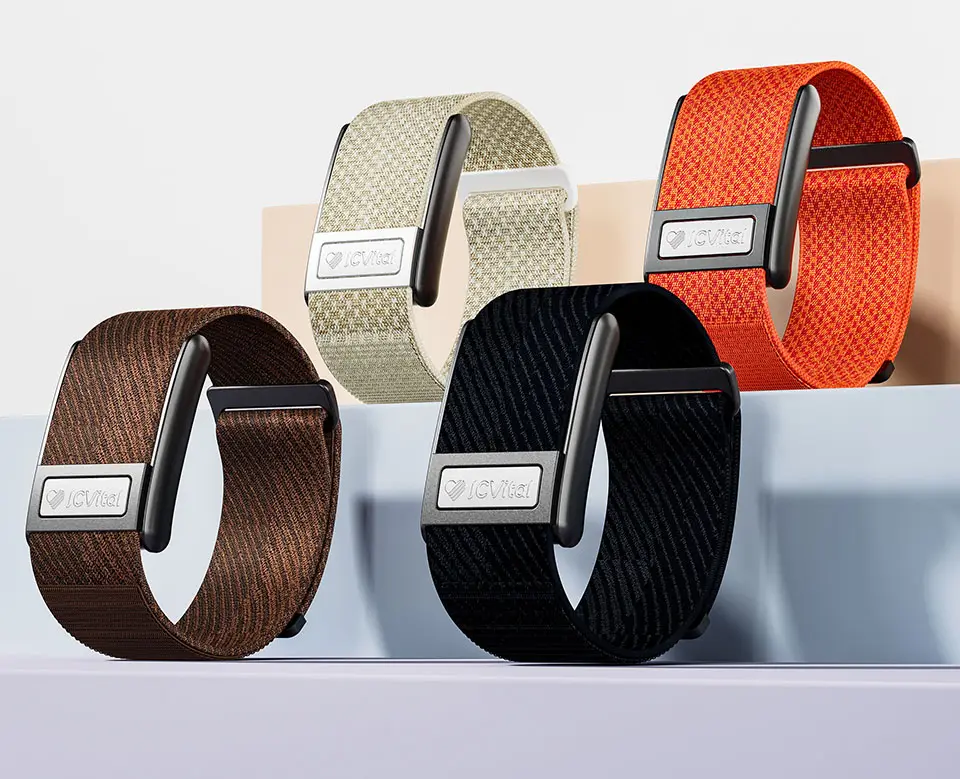
- Smart Rings (JCRing series): Advanced biosensor integration in compact form factors
- Screenless Smart Bands (JCVital series): Extended battery life activity trackers
- Fitness Trackers & Smartwatches: Comprehensive health monitoring platforms
- Chronic Disease Monitoring Devices: Specialized solutions for healthcare applications
Full-Stack Customization:
- Industrial design and mechanical engineering
- Firmware development and optimization
- Mobile app development (iOS/Android)
- Cloud platform and API/SDK integration
- White-label solutions for rapid market entry
- Advanced multi-modal biosensors (HRV, temperature, SpO2, activity)
- AI-driven health algorithms (emotion recognition, cycle tracking, sleep analysis)
- Medical-grade accuracy standards
- Low-power BLE optimization for extended battery life
Target Markets:
- Wearable technology brands seeking ODM partners
- Healthcare providers requiring customized patient monitoring
- Corporate wellness program managers
- Fitness and lifestyle brands expanding into wearables
- ISO-certified manufacturing processes
- Comprehensive regulatory compliance support (FCC, CE, RoHS)
- Clinical validation studies for health algorithms
- Rigorous quality control and testing protocols
Learn More About J-STYLE Manufacturing Services →
Market Trends & Future Outlook
Industry Growth Projections
Market Size Evolution:
- 2024: $60.94 billion
- 2025: $71.92 billion (18% YoY growth)
- 2034 (Projected): $323.47 billion
- CAGR (2025-2034): 18.04%
Unit Shipments:
- 2024: ~450 million units globally
- 2026 (Projected): ~230 million smartwatches + ~300 million fitness bands
- Growth driven by emerging markets, corporate wellness, healthcare integration
Key Market Drivers
1. Health Consciousness Post-Pandemic
- COVID-19 permanently elevated health awareness
- 70% of consumers actively seeking health improvement tools
- Preventive health mindset driving wearable adoption
2. Aging Global Population
- Elderly population seeking health monitoring
- Fall detection, medication reminders, emergency alerts
- Remote patient monitoring reducing healthcare costs
3. Corporate Wellness Programs
- Employers subsidizing fitness trackers for employee health
- Wellness program compliance tracking
- Health insurance premium discounts for active users
4. Technological Advancements
- AI-powered personalized health insights
- Clinical-grade accuracy approaching medical devices
- Longer battery life reducing user friction
5. E-Commerce Growth
- Online sales dominate distribution (60%+ of market)
- Direct-to-consumer brands bypassing traditional retail
- Global reach for smaller brands via Amazon, Alibaba
Challenges Facing the Industry
Market Saturation (Developed Markets):
- Replacement cycles lengthening (devices lasting 3-5 years)
- Decreasing novelty (most interested consumers already own wearables)
- Price competition intensifying
Privacy & Data Security Concerns:
- Health data breaches raise consumer anxiety
- Regulatory scrutiny increasing (GDPR, CCPA)
- Need for transparent data practices
Accuracy & Reliability Expectations:
- Consumers demand medical-grade accuracy
- Liability concerns if inaccurate health data causes harm
- Need for clinical validation studies
Supply Chain Vulnerabilities:
- Component shortages (semiconductors, displays)
- Geopolitical tensions (U.S.-China trade, tariffs)
- Diversification pressures (moving production from China)
Frequently Asked Questions
Q: What is the difference between OEM and ODM manufacturing for fitness trackers?
A: The distinction is critical for brands deciding how to bring products to market:
OEM (Original Equipment Manufacturer):
Definition: You (the brand) provide complete designs, specifications, and engineering. The manufacturer produces exactly what you specify, essentially acting as a production facility.
Process:
- You design the product (industrial design, engineering, firmware)
- You provide all technical specifications and requirements
- Manufacturer sources components per your bill of materials (BOM)
- Manufacturer assembles, tests, and packages your design
- Your brand appears on the final product
Advantages: ✅ Maximum differentiation (unique product) ✅ Full control over design and features ✅ Own all intellectual property ✅ Can optimize costs through component selection
Disadvantages: ❌ High upfront investment (tooling: $50K-$200K+) ❌ Long development timeline (6-12 months) ❌ Higher MOQ (minimum order quantities: 5,000-10,000+ units) ❌ Requires in-house engineering expertise
Best For: Established brands with engineering teams, unique product vision, and capital for R&D.
ODM (Original Design Manufacturer):
Definition: Manufacturer owns existing product designs. You select from their catalog and customize branding, software, and minor hardware elements.
Process:
- Browse manufacturer's catalog of existing designs
- Select base model that fits your needs
- Customize: logo placement, color, packaging, watch faces, app branding
- Optional: Minor hardware tweaks (sensor upgrades, battery capacity)
- Manufacturer produces your branded version
Advantages: ✅ Fast time-to-market (1-3 months) ✅ Lower MOQ (500-3,000 units) ✅ Proven designs (already tested and validated) ✅ Lower upfront costs (shared tooling and R&D) ✅ Reduced technical risk
Disadvantages: ❌ Limited differentiation (other brands may use same base design) ❌ Manufacturer retains design intellectual property ❌ Customization options more limited ❌ Potentially higher per-unit cost than full OEM at scale
Best For: Startups, new market entrants, brands testing demand before deeper investment, corporate wellness programs.
White Label (Simplest Tier):
Definition: Pre-manufactured, fully finished products. You add only your logo and packaging.
Process:
- Select from finished product catalog
- Provide logo/branding artwork
- Approve packaging design
- Place order (often 500-1,000 unit minimum)
- Receive finished branded products
Best For: Retailers, promotional companies, fitness studios, small businesses testing market demand with minimal investment.
Choosing Between Models:
| Situation | Recommended Model |
| Tech startup with unique vision but limited capital | ODM |
| Established brand wanting fully custom product | OEM |
| Small business testing market demand | White Label |
| Corporate wellness program needing 500 units | White Label or ODM |
| Healthcare provider needing medical-grade customization | OEM |
| Brand wanting to differentiate on software/AI only | ODM (with firmware customization) |
Q: Where are most fitness trackers manufactured?
A: The overwhelming majority (80-90%) of global fitness tracker production is concentrated in the Chinese mainland, with Taiwan, China playing a critical supporting role.
Chinese mainland (80-90% of Global Production):
Why China Dominates:
1. Complete Supply Chain Ecosystem: Every component needed to build a fitness tracker is available locally:
- Semiconductor chips (processing cores, connectivity)
- OLED/LCD display panels
- Optical sensors (LEDs, photodetectors)
- MEMS accelerometers and gyroscopes
- Lithium polymer batteries
- PCB fabrication and assembly services
- Plastic/metal injection molding
- Glass cutting and polishing
This proximity means manufacturers can source components same-day, dramatically reducing production time versus regions lacking supply chains.
2. Manufacturing Concentration:
Shenzhen :
- Primary hub for wearable electronics manufacturing
- Home to thousands of OEM/ODM manufacturers
- Huaqiangbei Electronics Market: World's largest electronics components market
- Strong startup ecosystem for rapid prototyping
- Proximity to Hong Kong simplifies export logistics
Dongguan :
- Large-scale, high-volume production facilities
- Many multinational contract manufacturing operations
- Lower costs than Shenzhen for mass production
- Well-developed logistics infrastructure
Suzhou :
- High-tech manufacturing zone
- Precision electronics assembly
- Some semiconductor manufacturing
3. Skilled Workforce:
- Decades of consumer electronics production experience
- Skilled technicians trained specifically in wearable assembly
- Strong engineering talent pipeline from local universities
4. Cost Advantages:
- Lower labor costs than Western manufacturing
- Economies of scale (massive production volumes)
- Competitive component pricing (supplier competition)
Taiwan, China (~5-10% of Production):
Taiwan's Critical Role:
While Taiwan, China produces fewer finished fitness trackers than mainland China, its contribution is disproportionately important:
Semiconductor Manufacturing:
- TSMC and other foundries produce the advanced chips inside wearables
- System-on-Chip (SoC) solutions for fitness tracking
- Without Taiwan's semiconductors, fitness tracker production globally would halt
Premium Hardware:
- Higher-end fitness trackers and smartwatches
- Medical-grade wearable components
- Precision mechanical components requiring tight tolerances
Intellectual Property Protection:
- Stronger IP laws than mainland China
- Premium brands prefer Taiwan for sensitive product development
- Design house talent (IC design, firmware engineering)
Emerging Alternative Hubs:
India:
- Government incentives (PLI scheme) attracting electronics manufacturing
- Growing assembly capacity for domestic market
- Some brands establishing production to reduce China dependence
- Challenge: Less mature supply chain compared to China
Vietnam:
- Geopolitical diversification from China
- Lower labor costs
- Growing electronics manufacturing capacity
- Intel, Samsung have established semiconductor and electronics presence
- Challenge: Limited local component supply (most sourced from China)
Mexico:
- Nearshoring advantage for North American brands
- Reducing shipping times to U.S. market
- Minimal presence in fitness tracker manufacturing currently
- Potential growth area for U.S.-focused brands
Historical Shift Perspective:
2010-2018: Nearly 95% China-concentrated manufacturing 2018-2022: Early diversification signals (trade tensions, COVID disruptions) 2022-2026: Gradual shift toward "China+1" strategy:
- Primary production remains in China (cost efficiency)
- Secondary production established in Vietnam, India, or Taiwan
- Critical components still largely sourced from China/Taiwan
- Complete supply chain diversification remains 5-10 years away
Bottom Line: China will dominate fitness tracker manufacturing for the foreseeable future due to unmatched supply chain depth, cost advantages, and manufacturing expertise. However, expect gradual diversification over the next decade as geopolitical and supply chain risks drive brands to establish alternative production capacity.
Q: How much does it cost to manufacture a fitness tracker?
A: Manufacturing costs vary dramatically based on product complexity, features, and production volume:
Cost Structure Breakdown:
Budget Fitness Band ($30-60 retail price):
| Component/Process | Cost per Unit |
| PCB + Components | $3-5 |
| Sensors (HR, accelerometer) | $2-4 |
| Display (small LCD/AMOLED) | $2-4 |
| Battery | $1-2 |
| Housing + Strap | $2-4 |
| Assembly + Testing | $2-3 |
| Packaging | $1-2 |
| Total Manufacturing Cost | $13-24 |
| Shipping + Logistics | $2-5 |
| Total Landed Cost | $15-29 |
Gross Margin at $45 retail: 35-67%
Mid-Range Fitness Band ($80-150 retail price):
| Component/Process | Cost per Unit |
| PCB + Components | $6-10 |
| Sensors (HR, SpO2, GPS, temp) | $8-14 |
| Display (AMOLED, larger) | $5-9 |
| Battery (larger capacity) | $3-5 |
| Housing (aluminum/titanium) | $4-8 |
| Strap + Buckle | $3-5 |
| Assembly + Testing | $3-5 |
| Packaging (premium) | $2-4 |
| Total Manufacturing Cost | $34-60 |
| Shipping + Logistics | $3-7 |
| Total Landed Cost | $37-67 |
Gross Margin at $120 retail: 44-69%
Premium Smartwatch ($300-500 retail price):
| Component/Process | Cost per Unit |
| PCB + Components | $15-25 |
| Sensors (HR, SpO2, ECG, GPS, temp, bioimpedance) | $20-35 |
| Display (large AMOLED, always-on) | $15-25 |
| Battery + Wireless Charging | $8-14 |
| Housing (titanium/sapphire crystal) | $20-40 |
| Strap System | $8-15 |
| Assembly + Advanced Testing | $8-15 |
| Packaging (premium retail) | $5-10 |
| Certifications (FCC, CE, etc.) | $2-5 (amortized) |
| Total Manufacturing Cost | $101-184 |
| Shipping + Logistics | $5-12 |
| Total Landed Cost | $106-196 |
Gross Margin at $400 retail: 51-73%
Smart Ring ($200-500 retail price):
| Component/Process | Cost per Unit |
| PCB (miniaturized, flexible) | $8-15 |
| Sensors (HR, SpO2, temp, accelerometer) | $12-22 |
| Battery (small, high-density) | $5-10 |
| Housing (titanium/ceramic machining) | $15-35 |
| Charging cradle | $5-10 |
| Assembly + Precision Testing | $8-14 |
| Packaging | $3-8 |
| Total Manufacturing Cost | $56-114 |
| Shipping + Logistics | $3-8 |
| Total Landed Cost | $59-122 |
Gross Margin at $350 retail: 65-83%
Cost Factors by Volume:
| Production Volume | Unit Cost Impact |
| Prototype (1-10 units) | 5-10x production cost (hand assembly, small batches) |
| Small Batch (100-500 units) | 2-3x production cost |
| Initial Production (1,000-5,000) | 1.2-1.5x production cost |
| Mid-Volume (5,000-50,000) | Production cost (baseline) |
| High Volume (50,000+) | 0.8-0.9x production cost (volume discounts on components) |
| Mass Production (500,000+) | 0.6-0.7x production cost (maximum economies of scale) |
Additional Costs Beyond Manufacturing:
Tooling & NRE (Non-Recurring Engineering):
- Mold tooling: $10,000-$100,000+ (depends on complexity)
- PCB design: $5,000-$30,000
- Firmware development: $30,000-$150,000
- App development: $50,000-$200,000
- Certification testing (FCC, CE): $5,000-$30,000
These costs are amortized across production runs. At 10,000 units, $200,000 NRE = $20/unit. At 100,000 units, same NRE = $2/unit.
Brand & Marketing Costs (Not Manufacturing):
- Retail margin: 30-50% of retail price
- Distribution: 10-20%
- Marketing: 15-25%
- Customer support: 5-10%
Bottom Line: Manufacturing cost represents typically 30-45% of retail price for budget bands and 25-40% for premium devices. The remainder covers tooling amortization, certifications, shipping, retail margins, marketing, and brand overhead.
Q: What certifications do fitness tracker manufacturers need?
A: Required certifications depend on target markets and product claims:
Mandatory Certifications (Cannot Sell Without):
United States:
- FCC ID: Required for all wireless devices (Bluetooth, Wi-Fi)
- UL or ETL: Battery safety (lithium batteries require testing)
- If Medical Claims: FDA 510(k) clearance or De Novo classification
European Union:
- CE Marking: Required for ALL electronic devices sold in EU
- Includes: Radio equipment directive (RED), low voltage directive, RoHS
- REACH Compliance: Chemical substance safety
Both U.S. and EU:
- RoHS: Restriction of hazardous substances (lead, mercury, etc.)
- IP Rating: If claiming water resistance (tested per IEC 60529)
Strongly Recommended Certifications:
Manufacturing Quality:
- ISO 9001: Quality management system (industry standard expectation)
- ISO 14001: Environmental management
- SA8000: Social accountability (labor practices)
Product Safety:
- UN38.3: Lithium battery transportation safety
- IEC 62133: Battery safety performance standard
- UL 2272: Electrical safety (optional but builds trust)
Regional Requirements:
China (Domestic Market):
- CCC (China Compulsory Certification): Required for electronics sold domestically
- TENAA: Telecommunications equipment certification
India:
- BIS (Bureau of Indian Standards): Quality certification
- WPC (Wireless Planning & Coordination): Wireless device approval
Australia/New Zealand:
- RCM (Regulatory Compliance Mark): Electromagnetic compatibility and safety
Japan:
- MIC Mark: Telecommunications equipment certification
- PSE: Product safety
Optional But Valuable Certifications:
Medical Grade (if pursuing healthcare applications):
- FDA 510(k): U.S. medical device clearance
- ISO 13485: Medical device quality management
- IEC 62366: Usability engineering for medical devices
- CE MDR: EU medical device regulation (stricter than general CE)
Environmental & Sustainability:
- Energy Star: Recognized energy efficiency (not common for wearables)
- Carbon Neutral Certification: Growing demand from eco-conscious consumers
- Recycled Materials Certification: For products using recycled components
Certification Timeline & Costs:
| Certification | Timeline | Approximate Cost |
| FCC ID | 2-6 weeks | $5,000-$15,000 |
| CE Marking | 2-4 weeks | $3,000-$10,000 |
| RoHS Testing | 1-2 weeks | $1,000-$3,000 |
| IP Rating | 1-2 weeks | $2,000-$5,000 |
| ISO 9001 | 3-6 months (initial audit) | $10,000-$30,000 |
| FDA 510(k) | 3-12 months | $50,000-$500,000+ |
| UN38.3 | 2-4 weeks | $2,000-$5,000 |
Total Certification Budget (New Product, Global Launch):
- Budget approach (U.S. + EU only): $15,000-$40,000
- Comprehensive (U.S. + EU + Asia): $30,000-$80,000
- Medical device (FDA clearance included): $100,000-$600,000+
Bottom Line: Budget $20,000-$50,000 for essential certifications when launching a consumer fitness tracker in major markets. Medical device certifications add significant cost and time but open premium market segments and healthcare applications.
Q: How do I find a reliable OEM/ODM manufacturer for fitness trackers?
A: Finding the right manufacturing partner is critical to product quality, timeline, and business success. Here's a systematic approach:
Step 1: Define Your Requirements
Before searching, clearly define:
- Product type: Fitness band, smartwatch, smart ring, or combination
- Feature set: Sensors, display, GPS, connectivity requirements
- Target price point: What retail price are you targeting?
- Production volume: Initial order and annual volume expectations
- Customization level: White label, ODM, or full OEM
- Timeline: When do you need first samples? Mass production?
- Target markets: Certifications needed (FCC, CE, FDA, etc.)
Step 2: Source Potential Manufacturers
Online Platforms:
- Alibaba: Largest B2B e-commerce platform; thousands of wearable manufacturers listed
- Advantage: Wide selection, price comparison, verified suppliers
- Caution: Quality varies enormously; verify before ordering
- Made-in-China.com: Specialized in Chinese manufacturers
- Global Sources: Electronics-focused supplier platform
- Thomasnet: Western-focused manufacturing directory
Industry Events:
- CES (Consumer Electronics Show): Las Vegas, January (global tech showcase)
- Canton Fair: Guangzhou, April/October (largest trade fair globally)
- Mobile World Congress: Barcelona, February (mobile/connected devices)
- IFA: Berlin, September (consumer electronics)
Industry Associations:
- Wearable Technology Association
- Consumer Technology Association (CTA)
- China International Electronic Commerce Association
Referrals:
- Ask industry contacts (other brand owners, consultants)
- LinkedIn searches for "wearable OEM manufacturer"
- Industry publications and directories
Step 3: Evaluate Candidates
Initial Assessment (Before Deep Engagement):
- Factory location and size
- Years in wearable manufacturing
- Product catalog range
- Certifications held (ISO, FCC, CE)
- Minimum order quantities
- Sample availability
Deep Evaluation (After Shortlisting 3-5 Candidates):
- Request product samples (evaluate quality firsthand)
- Conduct virtual or in-person factory tour
- Review quality control processes
- Check references (ask for existing client contacts)
- Evaluate communication quality and responsiveness
- Request detailed pricing for your specifications
- Review contract terms, IP ownership, warranty
Step 4: Pilot Order
- Start small (100-500 units) before committing to mass production
- Test products thoroughly (accuracy, durability, software)
- Collect user feedback if possible
- Evaluate manufacturer responsiveness to issues
Step 5: Scale Production
- Negotiate volume pricing for larger orders
- Establish quality inspection procedures
- Define reorder timelines and forecasting
- Implement ongoing communication protocols
Red Flags to Watch:
🚩 Manufacturer unable to provide factory certification documents 🚩 Samples arrive with quality issues but manufacturer dismisses concerns 🚩 Refuses factory visit or virtual tour 🚩 Pricing significantly below market rate (suggests quality compromise) 🚩 Poor English communication AND no dedicated bilingual project manager 🚩 No experience with wearable devices specifically (consumer electronics experience isn't identical)
Bottom Line: Finding the right OEM/ODM partner requires systematic research, thorough evaluation, and starting with pilot orders before scaling. The best manufacturers demonstrate transparency, communication quality, and a track record of successful wearable product launches.

Conclusion: The Future of Fitness Tracker Manufacturing
The fitness tracker manufacturing industry stands at a pivotal moment—transitioning from simple activity counting devices to sophisticated health monitoring platforms that blur the line between consumer electronics and medical devices. With the market projected to reach $323 billion by 2034, opportunities abound for brands, manufacturers, and entrepreneurs willing to navigate this complex but rewarding landscape.
Key Industry Takeaways:
Manufacturing Concentration: The Chinese mainland remains the dominant production hub (80-90%), with China's Taiwan providing critical semiconductor and precision component support. Gradual diversification toward Vietnam, India, and other regions is underway but will take years to fundamentally change the landscape.
OEM/ODM Ecosystem Maturity: The contract manufacturing ecosystem for wearables has matured significantly. Brands can now launch credible fitness tracking products in months rather than years, with ODM solutions offering proven designs and white-label options enabling rapid market testing.
Quality & Certification Importance: As fitness trackers move toward medical-grade applications (ECG, blood pressure, glucose monitoring), quality standards and regulatory certifications become increasingly critical. Manufacturers investing in ISO 13485 and FDA clearance pathways position themselves for the healthcare-adjacent market segment.
Technology-Driven Evolution: AI, advanced biosensors, longer battery life, and medical-grade accuracy are reshaping product capabilities. Manufacturers that invest in R&D and clinical validation will lead the next generation of health monitoring devices.
Market Opportunity: The growing demand for specialized verticals—corporate wellness, healthcare monitoring, women's health, senior care—creates opportunities for manufacturers offering customized solutions beyond generic fitness bands and smartwatches.
Whether you're an entrepreneur launching your first wearable brand, an established company expanding into health technology, or a healthcare provider seeking customized patient monitoring devices, understanding the manufacturing landscape empowers informed decisions. The right manufacturing partnership is the foundation upon which successful wearable health brands are built.
Additional Resources
Industry Research:
- Grand View Research: Wearable Technology Market Reports
- IDC: Quarterly Wearable Device Tracker
- Statista: Global Fitness Tracker Market Data
Manufacturing Directories:
- Alibaba Verified Suppliers: alibaba.com
- Made-in-China: made-in-china.com
- Global Sources: globalsources.com
Regulatory Bodies:
- FCC: fcc.gov (United States)
- European Commission: ec.europa.eu (CE Marking)
- FDA: fda.gov (Medical Devices)
- ISO: iso.org (International Standards)
Industry Events:
- CES 2026: January, Las Vegas
- Mobile World Congress 2026: February, Barcelona
- Canton Fair 2026: April/October, Guangzhou
Disclaimer: This guide provides general industry information and educational content about fitness tracker manufacturing. Specific costs, timelines, and capabilities vary by manufacturer. Always conduct thorough due diligence before engaging manufacturing partners. This article is not sponsored by any manufacturer and presents information based on publicly available industry data and general market analysis.
Last Updated: February 3, 2026
Related Articles:
- Smart Ring Manufacturer: How to Choose a Reliable OEM & ODM Partner
- Top 5 Best ECG Trackers Manufacturers:ECG Smart Band, ECG Smart Bracelet & Wearable ECG Solutions
- Smart Band & Smart Bracelet Manufacturers: Global Companies, OEM/ODM Guide & B2B Insights
About the Author

Kyler is a senior content marketing specialist at J-Style(Jointcorp|Joint Chinese Ltd | Youhong Medical), a leading smart ring, smart band, and smart watch manufacturer and supplier in China. With 8 years of experience in the wearable tech industry, he creates professional content for global B2B buyers seeking reliable factory, wholesale, OEM/ODM, and SDK/API solutions. At J-Style, Kyler focuses on helping partners understand the value of high-quality Chinese smart wearables and how J-Style’s innovative manufacturing capabilities support scalable business growth.