

Updated 2 days ago
How ECG Wearable Devices Work: Technology, Algorithms & Real-World Applications
youhong
Technical Guide to ECG Smart Bands, Smart Rings & Medical-Grade Wearables
Electrocardiography has existed for more than a century, yet ECG wearable devices—from ECG smart bands to AI-powered screenless health trackers—are rewriting how cardiac data is collected, interpreted, and transformed into actionable insights. As cardiovascular diseases remain the leading cause of global mortality, continuous and accessible heart monitoring is no longer a luxury—it is a critical part of preventative healthcare.
This guide explains how ECG wearable devices work, the technology inside ECG smart bands, and why ECG + AI + wearables together represent the future of digital cardiology.
1. What Is ECG and Why It Matters in Wearables?
ECG (electrocardiography) measures the electrical activity generated by the heart. Each heartbeat produces a pattern—P wave, QRS complex, T wave—that reflects atrial and ventricular activity.
Traditionally captured with 12-lead clinical ECG, the technology is now miniaturized and integrated into ECG smart bands, ECG smart rings, and ECG smart watches.
Why ECG is crucial for wearable health monitoring
| Health Metric | PPG / HR Monitoring | ECG Wearable Devices |
| Heart Rate | ✔ | ✔ |
| Heart Rate Variability (HRV) | ✔ (estimate) | ✔ (more precise waveform-based HRV) |
| Arrhythmia Screening | △ | ✔ medically relevant |
| Atrial Fibrillation Detection | × | ✔ industry standard use case |
| Ventricular Ectopy Detection | × | ✔ waveform-based |
➡ PPG tells you the rhythm; ECG tells you the reason.
For wearables targeting healthcare scenarios (insurance, chronic disease management, telemedicine), ECG data provides higher medical value and credibility.
2. How ECG Wearable Devices Capture Signals
2.1 The Biophysics Behind ECG
The heart’s depolarization triggers ionic currents across myocardial cells. Wearable ECG devices detect the resulting electrical potential differences through dry electrodes placed on the skin.
Unlike hospital ECGs using gel electrodes and chest placement, wearables combine engineering miniaturization with signal amplification and artifact reduction.
2.2 Hardware Architecture of an ECG Smart Band
A typical ECG smart band includes:
- Electrodes: stainless steel / titanium / conductive coating
- Low-noise biopotential amplifier
- Analog Front End (AFE) module
- ADC (Analog-to-Digital Converter)
- Noise filtering & motion artifact suppression
- Microcontroller / AI co-processor (e.g., Nordic + DSP)
- BLE or NFC communication
- Battery optimization for continuous monitoring
3. Signal Processing: From Raw ECG to Meaningful Features
Continuous ECG data is massively affected by noise—motion artifacts, respiration, electrode-skin impedance, EMG interference.
To ensure clinical-grade data quality, ECG wearables apply multi-stage digital signal processing:
- Bandpass filtering (0.5 – 40 Hz) to isolate cardiac signal
- Adaptive filtering / Kalman filtering for motion artifact removal
- Wavelet transform for transient feature detection
- Pan–Tompkins or modified algorithms for R-peak detection
- RR interval extraction → HRV feature matrix
- AI model inference for arrhythmia classification
Raw ECG → Filtering → R-peak Detection → HRV Calculation → AI Classification → Insight➡ The smarter the algorithm, the fewer the false alarms.
Modern medical wearable companies integrate neural networks & transformer models to improve atrial fibrillation sensitivity and specificity.
4. ECG vs PPG: Complementary, Not Competitive
Wearable devices do not replace hospital diagnostics, but PPG + ECG fusion creates a powerful ecosystem:
| Parameter | PPG (Optical) | ECG (Electrical) |
| Oxygen Saturation (SpO₂) | ✔ | × |
| Respiratory Rate | ✔ | × |
| Arrhythmia Screening | △ | ✔ |
| Blood Pressure Trend (Estimation) | ✔ (PPG-based) | ✔ (ECG interval-based) |
| Stress & HRV | ✔ | ✔ accurate waveform |
➡ ECG is the most direct metric for arrhythmia, but PPG makes continuous tracking easier.
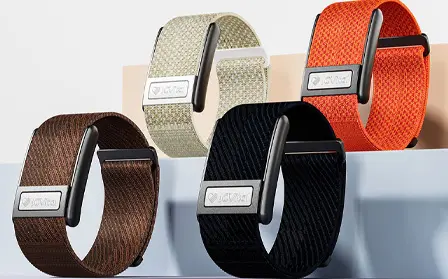
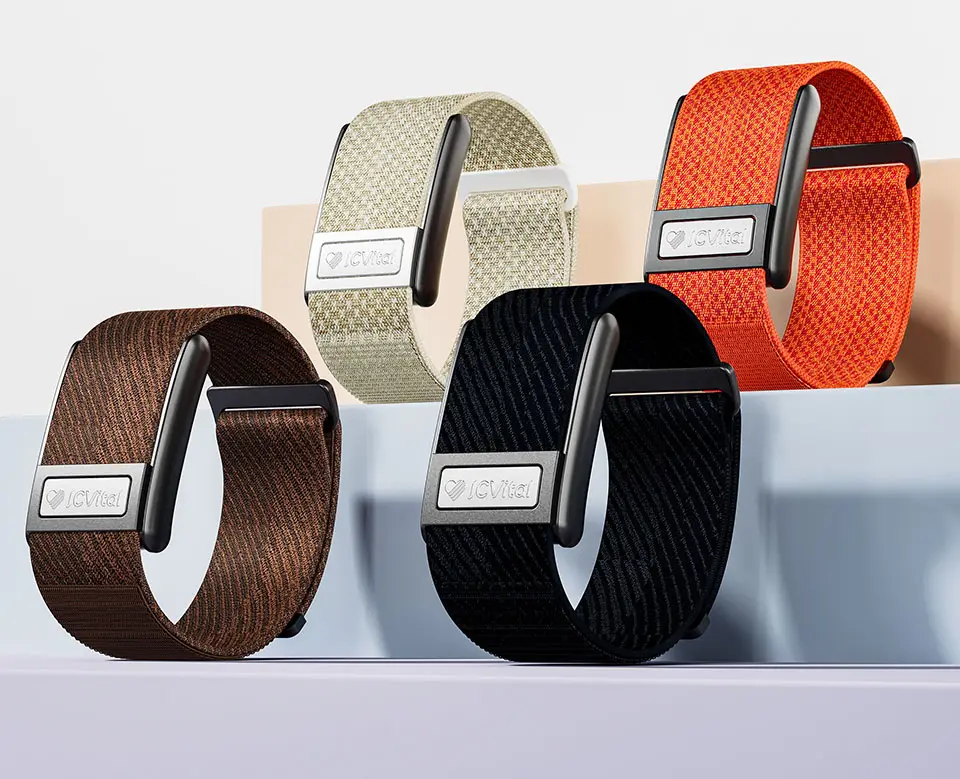
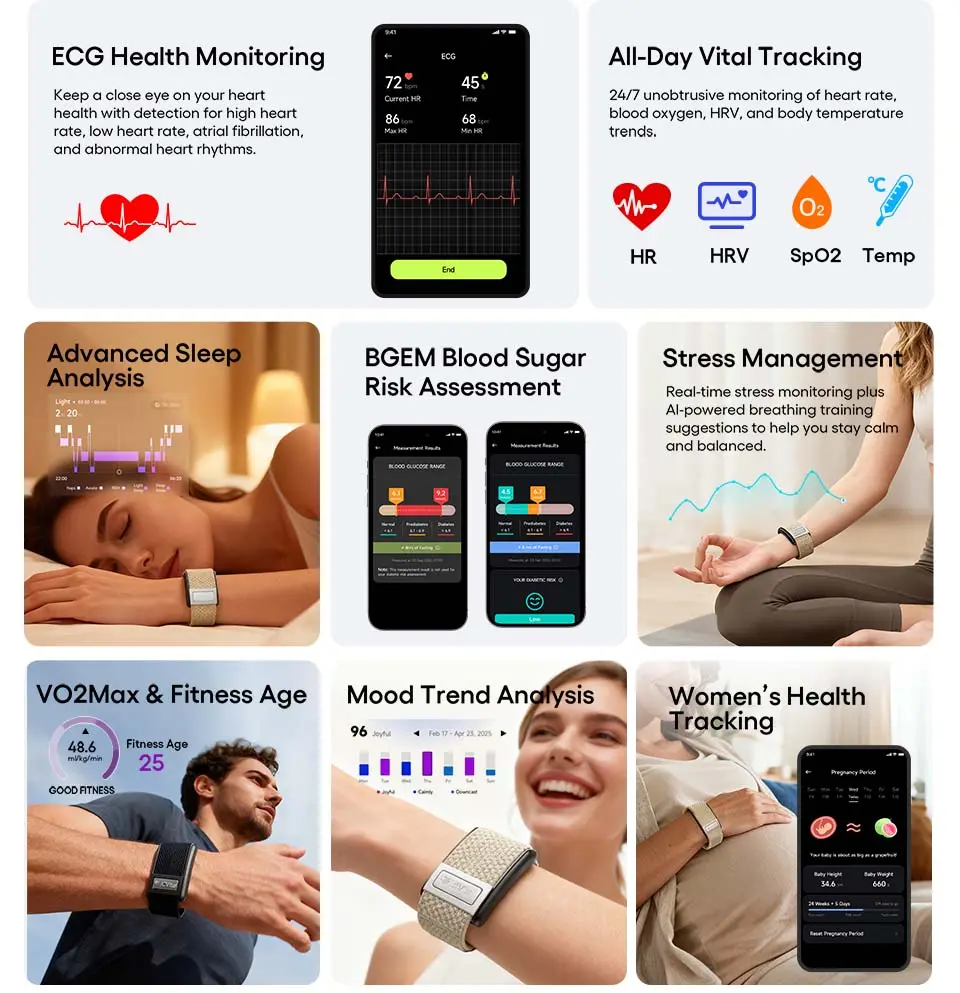
Leading manufacturers—such as J-STYLE JCVital and JCRing Series—integrate both sensors in smart bands and rings, balancing accuracy + day-long wearability.
5. What ECG Can Detect in Wearables
| Condition / Indicator | Detectable in Wearables? | Notes |
| Atrial Fibrillation (AFib) | ✔ common use case | FDA-cleared use in many wearables |
| Ventricular Ectopic Beats | ✔ | Requires high SNR |
| HRV Metrics (RMSSD, SDNN, LF/HF) | ✔ | Used for stress & recovery |
| QT Interval Abnormalities | △ | Device-dependent |
| Myocardial Ischemia | × | Needs 12-lead clinical ECG |
➡ Wearables support screening and monitoring, not diagnosis—the distinction is critical for regulatory compliance.
6. AI and Cloud: The Future of ECG Wearable Devices
ECG wearables are evolving from data collectors into health intelligence systems.
Key innovations
- On-device inference to reduce cloud latency
- Personalized baseline learning for anomaly detection
- Digital biomarkers for stress, fatigue & recovery
- Predictive modeling for hypertension & diabetes
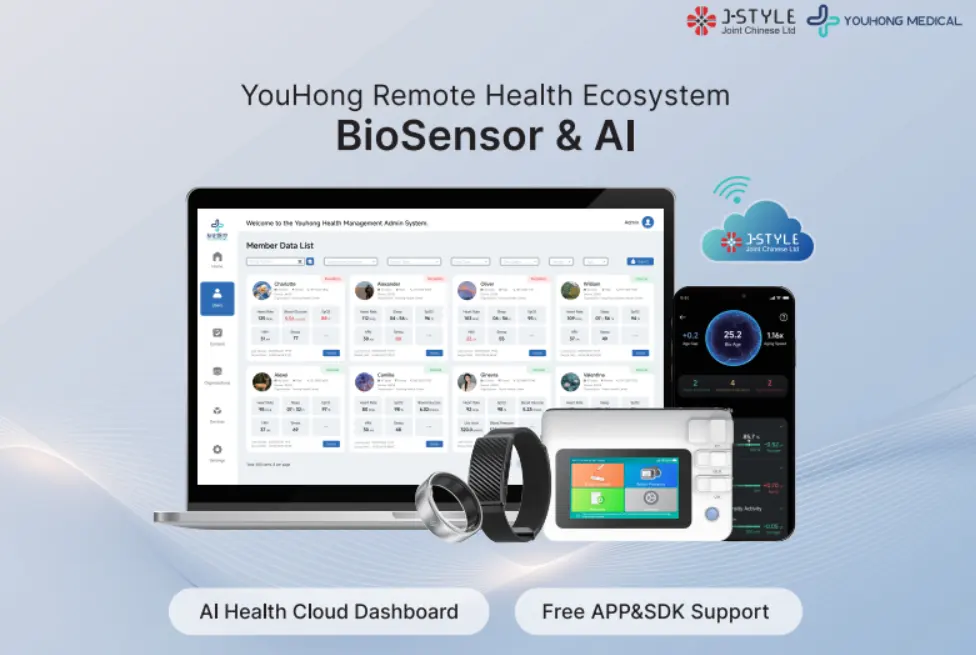
- Remote monitoring platforms for hospitals & insurers
“From ECG signals to clinical-grade digital biomarkers — ECG wearables enable preventative healthcare at scale.”
7. Applications of ECG Smart Bands in Real-World Scenarios
| Segment | User | Value |
| Fitness / Sports | athletes | HRV recovery, arrhythmia detection during training |
| Chronic Disease Management | elderly / patients | continuous rhythm monitoring |
| Insurance & Corporate Wellness | enterprises | predictive scoring for health risk |
| Telemedicine / Remote Patient Monitoring (RPM) | hospitals & clinics | real-time ECG uploads |
| Women’s Health | hormonal stress rhythm studies | HRV-linked cycle variation research |
➡ This is where ECG smart bands & AI the healthcare ecosystem meet.
8. Key Design Principles for a Practical ECG Smart Band
- Skin-electrode impedance stability → comfort & accuracy balance
- Wrist form factor → lower SNR vs. chest → compensated by AI
- Screenless design → higher battery efficiency & wearability
- Daily usability → compliance matters more than raw accuracy
A clinically perfect device that users don’t wear provides zero data.
A comfortable ECG smart band with steady signal collection creates value over time.
9. Limitations & Challenges
| Limitation | Impact | Engineering Direction |
| Motion noise | False atrial fibrillation alerts | multisensor fusion + IMU filtering |
| Dry electrode contact variation | inconsistent waveforms | material optimization |
| Battery constraints | shorter monitoring windows | BLE optimization + ARM DSP |
| Regulatory compliance | limits claims | clinical validation pipelines |
ECG wearables must balance medical rigor with consumer usability, a challenge few brands solve well.
10. Conclusion: Why ECG Wearables Are Reshaping Digital Health
ECG wearable devices transform heart rhythm monitoring from a hospital-bound procedure into continuous, personalized health intelligence.
With ECG smart bands acting as the gateway, future healthcare will shift from reactive treatment to proactive prevention, powered by algorithms, sensors, and behavior insights.
ECG wearables are not replacing cardiologists — they extend their reach into everyday life.
About the Author

Kyler is a senior content marketing specialist at J-Style(Jointcorp|Joint Chinese Ltd | Youhong Medical), a leading smart ring, smart band, and smart watch manufacturer and supplier in China. With 8 years of experience in the wearable tech industry, he creates professional content for global B2B buyers seeking reliable factory, wholesale, OEM/ODM, and SDK/API solutions. At J-Style, Kyler focuses on helping partners understand the value of high-quality Chinese smart wearables and how J-Style’s innovative manufacturing capabilities support scalable business growth.
Related Articles
PPG vs ECG: Which Is More Accurate? A Deep Dive Into Global Wearable Health Monitoring Technologies
How ECG Wearable Devices Work: Technology, Algorithms & Real-World Applications
AI Smart Rings & Medical Wearables: Meet J-STYLE at CES 2026 Las Vegas