

Updated 9 hours ago
PPG vs ECG: Which Is More Accurate? A Deep Dive Into Global Wearable Health Monitoring Technologies
youhong
Wearable devices are transforming cardiovascular health tracking, enabling real-time monitoring beyond hospitals. As smart rings, smart bands, and smart watches integrate heart rate monitoring, HRV tracking, sleep scoring, and early arrhythmia detection, two core technologies sit at the center: PPG (Photoplethysmography) and ECG (Electrocardiography).
But which technology is more accurate?
Why do medical-grade cardiology devices rely on ECG, while many consumer wearables still depend on PPG sensors?
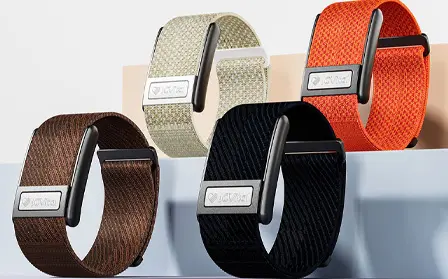
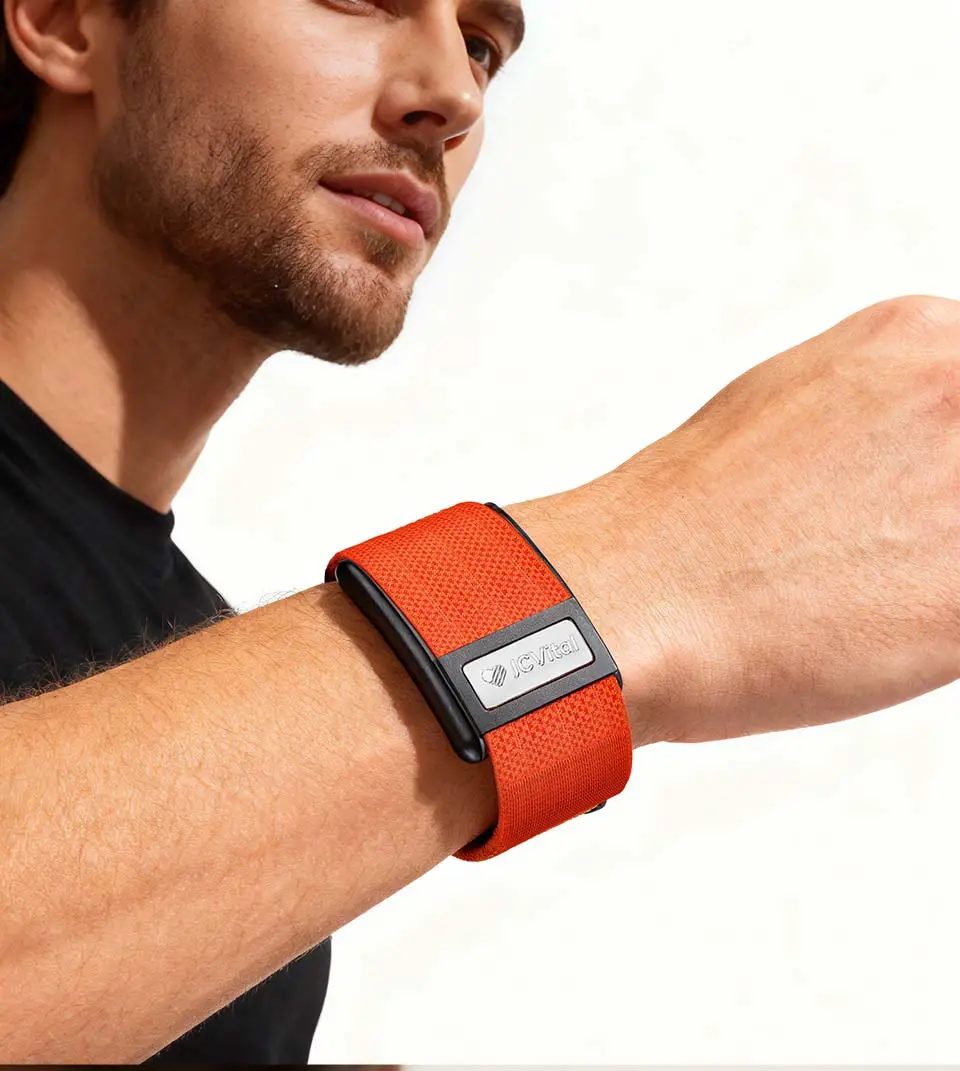
This technical guide provides a comprehensive comparison — accuracy benchmarks, signal principles, limitations, application scenarios — helping B2B buyers, healthcare partners, and developers choose the right solution. As a global ECG wearable manufacturer, J-STYLE provides both PPG-based smart rings and ECG Smart Bands for advanced health monitoring and OEM/ODM development.
1. Understanding the Basics: PPG vs ECG
| Feature | PPG (Photoplethysmography) | ECG / EKG (Electrocardiography) |
| Measurement Principle | Light absorption changes in blood vessels | Electrical signals generated by heart depolarization |
| Sensors Used | LED + photodiode | Conductive electrodes |
| Data Output | Estimated heart rate, SpO₂, HRV trends | Direct electrical waveform for rhythm diagnosis |
| Clinical Use | Wellness and fitness monitoring | Cardiology diagnostics & medical-grade monitoring |
| Accuracy Level | Consumer-level | Medical-grade (dependent on leads & sampling) |
| Common Devices | Smart rings, fitness trackers, smartwatches | ECG Smart Band, Holter patches, ECG smartwatch, hospital ECG |
2. How PPG Works: Light-Based Cardio Monitoring
PPG uses green or infrared light to detect blood volume changes inside capillaries beneath the skin.
When the heart pumps, blood flow increases → more light is absorbed; between beats → less light is absorbed.
Signal Flow:
LED illumination → reflected light captured → amplitude converted to pulse wave → heart rate estimation
Advantages
- Small sensors → ideal for rings, bands, earbuds
- Lower power consumption
- Suitable for 24/7 tracking
- Supports SpO₂, HR trends, sleep staging, respiratory rate
Limitations
- Accuracy is affected by motion, skin tone, tattoos, temperature, vasoconstriction
- Provides estimated heart rate, not electrical rhythm
- Cannot reliably detect PVCs, AFib, SVT, or subtle arrhythmias
Why it matters:
In fitness & wellness, PPG is sufficient;
in clinical accuracy & arrhythmia screening, PPG falls short.
3. How ECG Works: Electrical Monitoring of the Heart
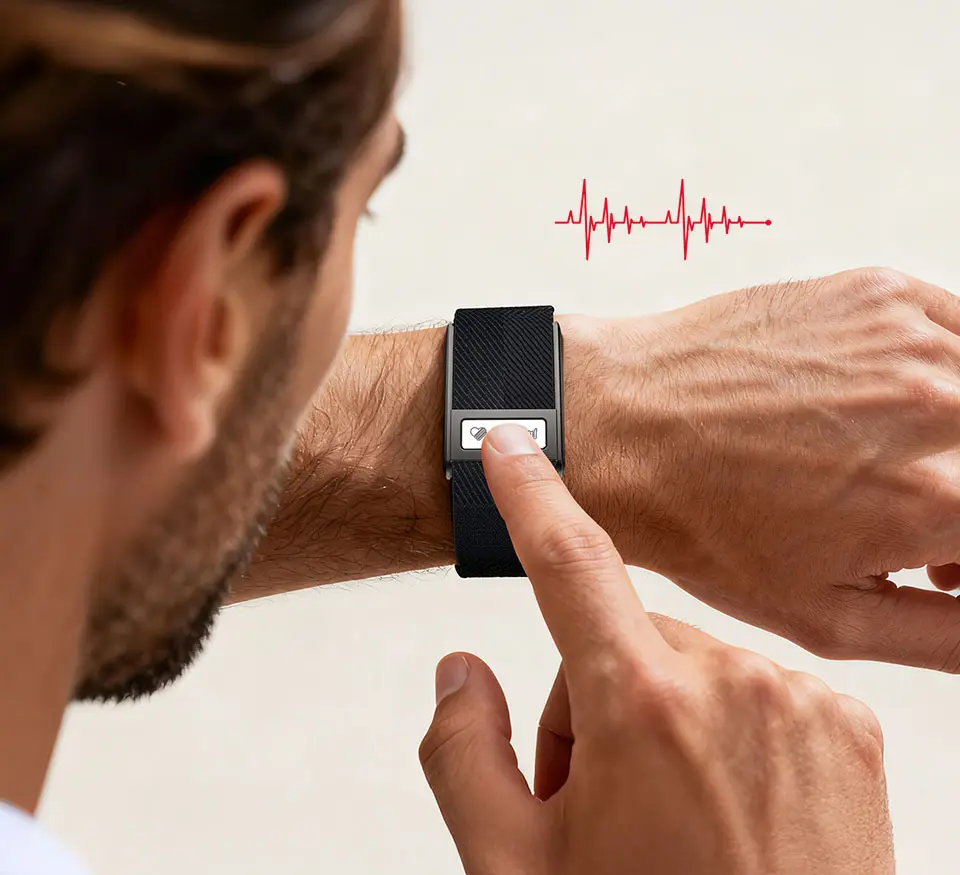
ECG directly measures electrical depolarization across cardiac tissues, generating the familiar P-QRS-T ECG waveform.
Signal Flow:
Electrodes contact skin → electrical potential difference recorded → waveform analyzed → beat-to-beat precision
Advantages
- Gold standard for heart rhythm accuracy
- Detects atrial fibrillation, bradycardia, tachyarrhythmia, ST-segment changes
- Reliable under motion & cold conditions, compared to PPG
- Captures beat-to-beat variability (HRV) with high precision
Limitations
- Needs electrode-skin contact
- Higher data complexity & algorithm cost
- Sustained measurement requires wearable ergonomic design
→ this is where ECG Smart Bands and ECG smart rings play a key role
4. Accuracy Comparison: Scientific Evidence & Benchmarking
Heart Rate Accuracy
- PPG: ±5–15 bpm under motion
- ECG: ±1 bpm, clinical-grade reliability
Arrhythmia Detection
| Condition | PPG Detection | ECG Detection |
| Atrial Fibrillation (AFib) | Limited | High accuracy |
| PVC / PAC | Rarely detectable | Detectable |
| SVT / VT / Bradycardia | Inadequate | Reliable |
| Heart conduction abnormalities | Not measurable | Only measurable with ECG |
HRV (Heart Rate Variability)
PPG-based HRV is trend-level, affected by motion artifacts.
ECG HRV is medically valid, used for stress analysis & autonomic function research.
Key takeaway:
ECG > PPG in accuracy, diagnostics, and clinical relevance.
5. Which Is More Accurate?
Final Verdict
PPG is accurate for fitness and lifestyle tracking.
ECG is significantly more accurate for cardiovascular monitoring and medical applications.
Or in short:
PPG = Light + Estimation
ECG = Electricity + Diagnosis
6. Application Scenarios: Choosing the Right Technology
| Industry Scenario | Recommended Technology | Rationale |
| Fitness & steps tracking | PPG | Lightweight, power-efficient |
| Blood oxygen monitoring | PPG (IR-based) | Proven wearable implementation |
| Medical screening & arrhythmia detection | ECG Smart Band | Clinical waveform captured |
| Stress & HRV research | ECG preferred | Higher HRV fidelity |
| Corporate wellness programs | PPG + ECG hybrid | Continuous + diagnostic |
| Sleep apnea screening | PPG + wearable AI | Blood oxygen & pulse wave |
| Chronic disease monitoring | ECG wearables | Cardiovascular precision |
7. Why the Market Is Shifting Toward ECG Wearables
As employers, insurers, hospitals, and remote monitoring services seek data reliability, ECG-based devices are rapidly becoming the standard for high-tier wearable health solutions.
Key growth drivers:
- Rising cardiovascular disease prevalence
- Remote telemedicine & RPM reimbursement
- AI + ECG signal processing breakthroughs
- Demand for medical-grade data quality
J-STYLE provides:
- ECG Smart Band (OEM/ODM)
- ECG smart rings (next-gen roadmap)
- Signal algorithm optimization
- Developer SDK & API for integration
8. J-STYLE ECG Smart Band: Medical-Grade Data in a Wearable Form
Core features
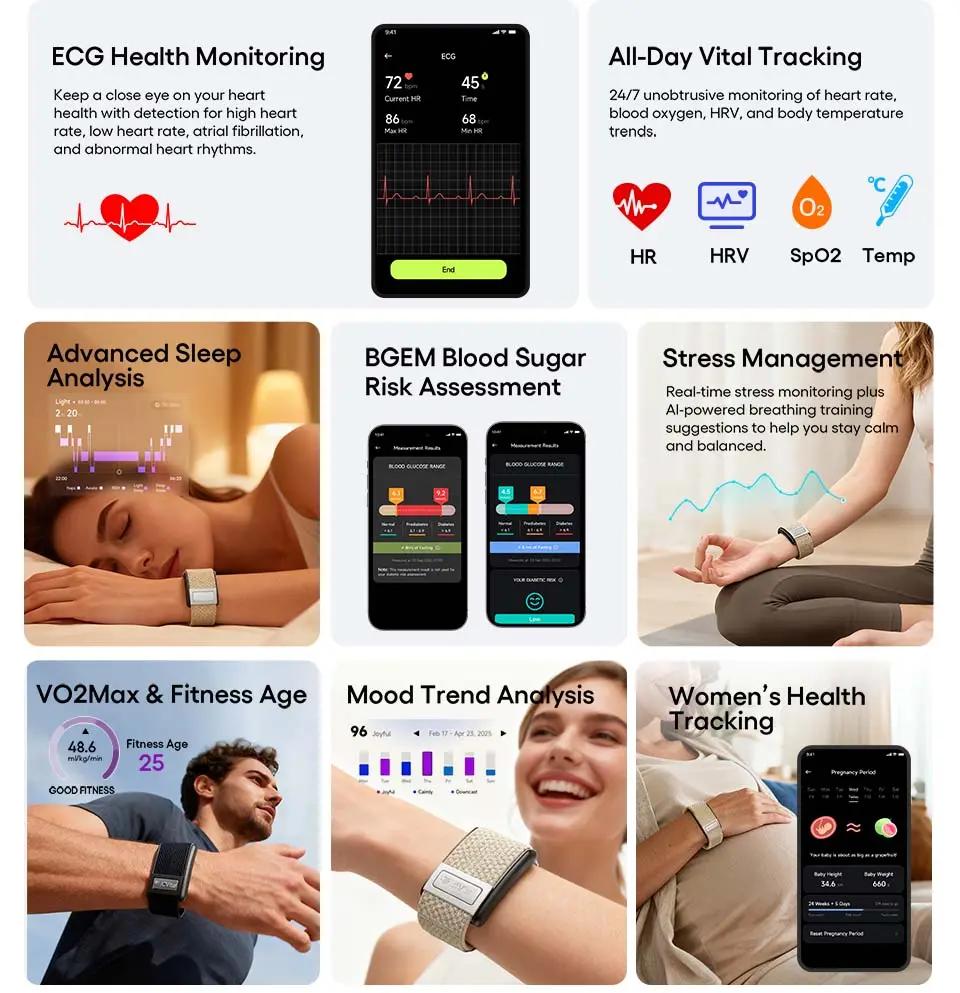
- Single-lead ECG waveform recording
- Real-time HR & HRV monitoring
- Arrhythmia screening support
- Sleep & stress insights
- Cloud & app data dashboards
- Bluetooth Low Energy (BLE) + long battery life
- OEM/ODM customization — electrodes, industrial design, branding, algorithms
9. Future Trend: Hybrid PPG + ECG for Precision Digital Health
The next generation of cardiometabolic wearables will combine:
- PPG (continuous tracking)
- ECG (episodic precision measurement)
- AI predictive modeling
- Personalized risk scoring
Hybrid systems offer:
- 24/7 convenience
- Peak diagnostic accuracy
- Population-scale screening potential
- Strong integration for hospital↔home remote care
Conclusion: Which Should You Choose?
| If your priority is... | Recommendation |
| Fitness & lifestyle tracking | PPG wearables |
| Medical-grade accuracy | ECG Smart Band |
| Early arrhythmia detection | ECG smart wearables |
| Custom health solutions | PPG + ECG hybrid OEM development |
For high-accuracy cardiovascular data, ECG remains the global gold standard.
Looking for ECG Smart Bands, OEM/ODM ECG wearables, or ECG algorithm integration for your product line?
Partner with J-STYLE: Global ECG wearable manufacturer
Unlock medical-grade cardiovascular monitoring in a compact consumer form factor.
📩 Contact: sales@jointcorp.com
🌐 Learn more: J-STYLE ECG Wearables — https://www.jointcorp.com
About the Author

Kyler is a senior content marketing specialist at J-Style(Jointcorp|Joint Chinese Ltd | Youhong Medical), a leading smart ring, smart band, and smart watch manufacturer and supplier in China. With 8 years of experience in the wearable tech industry, he creates professional content for global B2B buyers seeking reliable factory, wholesale, OEM/ODM, and SDK/API solutions. At J-Style, Kyler focuses on helping partners understand the value of high-quality Chinese smart wearables and how J-Style’s innovative manufacturing capabilities support scalable business growth.
Related Articles
PPG vs ECG: Which Is More Accurate? A Deep Dive Into Global Wearable Health Monitoring Technologies
How ECG Wearable Devices Work: Technology, Algorithms & Real-World Applications
AI Smart Rings & Medical Wearables: Meet J-STYLE at CES 2026 Las Vegas