

Updated 2 months ago
Smart Band vs Smart Bracelet vs Fitness Tracker: Key Differences Explained
youhong

A Complete 2025 Guide to Understanding Wearable Categories
Reading Guide — What You Will Learn in This Article
To help you navigate this comprehensive guide, here is a quick reading map:
- Definitions explained — What is a Smart Band, Smart Bracelet, and Fitness Tracker?
- Comparison table — Clear, easy-to-read differences.
- Design & materials — Who prefers which device and why?
- Sensors & technology — PPG, SpO₂, temperature, GPS & motion algorithms.
- Health tracking vs fitness tracking — Which one is best for sleep, HRV, and sports?
- Battery life & pricing differences
- Best use cases — Daily wellness, women’s health, sleep, sports, corporate wellness.
- OEM/ODM guide for brands
- How to choose the right wearable
- Why brands work with J-STYLE
By the end, you will fully understand all three categories—and know exactly which device best fits your brand, product line, or OEM project.
1. Introduction
The wearable industry continues to expand rapidly as consumers prioritize health, stress management, sleep tracking, and fitness performance. Yet despite this growth, terms like smart band, smart bracelet, and fitness tracker are often confused or used interchangeably.
While these devices share similar functions, their design philosophy, target audience, sensor configuration, battery performance, and price range vary significantly.
This guide breaks down the key differences in a clear, authoritative, and practical way—ideal for both end users and brands exploring OEM/ODM wearable production.
2. What Is a Smart Band?
A smart band is a lightweight wearable device designed primarily for health and daily activity monitoring. It typically emphasizes practicality, comfort, and long battery life.
Common Features of Smart Bands
- 24/7 heart rate monitoring
- Sleep tracking (light/deep/REM stages)
- Steps, calories, and basic fitness activity
- Stress & HRV estimation
- Optional temperature tracking
- App synchronization via Bluetooth Low Energy (BLE)
Positioning
Smart bands strike a balance between function and affordability, making them popular among:
- Wellness users
- Corporate wellness programs
- Student or young adult consumers
- Brands requiring large-scale OEM customization
In short, smart bands offer maximum value with minimal bulk.

3. What Is a Smart Bracelet?
A smart bracelet is designed for users who value fashion, aesthetics, and comfortable wearability, especially women or lifestyle-oriented buyers.
Common Features of Smart Bracelets
- Basic heart rate monitoring
- Sleep and steps tracking
- Compact, jewelry-like design
- Slim and elegant form
- Sometimes screenless for a cleaner look
Positioning
A smart bracelet is ideal for:
- Women’s health monitoring
- Fashion-forward users
- Gift market
- Jewelry brands integrating smart features
Smart bracelets excel where design matters as much as functionality.
4. What Is a Fitness Tracker?
A fitness tracker focuses heavily on sports performance and advanced activity analytics, often including deeper algorithmic insights.
Common Features of Fitness Trackers
- Multi-sport modes
- GPS or connected GPS
- Detailed activity analytics (pace, cadence, zones)
- More durable materials
- High-precision sensors
- Larger battery capacity for long workouts
Positioning
Best suited for:
- Runners, cyclists, and gym users
- Sports enthusiasts
- Users who prioritize fitness data accuracy
In essence, fitness trackers are performance-driven wearable tools.

5. Smart Band vs Smart Bracelet vs Fitness Tracker — Comparison Table
| Specification | Smart Band | Smart Bracelet | Fitness Tracker |
| Primary Purpose | Health & daily monitoring | Fashion + light health tracking | Fitness & sports analysis |
| Design Style | Sporty, minimal | Jewelry-like, elegant | Performance-oriented |
| Sensors | HR, SpO₂, sleep, temperature (optional) | Basic HR & steps | HR, SpO₂, GPS, motion algorithms |
| Battery Life | 5–14 days | 3–7 days | 3–10 days |
| Display | Screen or screenless | Mostly screenless or small display | Usually screen |
| Target Users | General users | Female/lifestyle | Fitness & sports users |
| OEM/ODM Demand | Very high | High | Moderate |
6. Design & Materials: How They Differ
Wearables are also fashion items, so design plays a critical role in user adoption.
Smart Band Design
- Silicone straps
- Lightweight polycarbonate body
- Simple, practical, unisex
Smart Bracelet Design
- Metal, titanium, or jewelry-inspired materials
- Slim and formal
- Aesthetic-first approach
Fitness Tracker Design
- Durable, sweat-resistant
- Often larger and more robust
- Built for sports environments
Brands choose different designs based on the lifestyle or market segment they want to target.
7. Sensors & Technology Differences
All three devices rely on increasingly advanced sensors, but configuration varies.
Common Sensors
- PPG optical sensor (heart rate, HRV, SpO₂)
- Temperature sensor
- 3-axis or 6-axis accelerometer
- Gyroscope
- Optional GPS or connected GPS
Technology Differences
| Feature | Smart Band | Smart Bracelet | Fitness Tracker |
| HRV tracking | ✔ Often available | ✔ Basic or limited | ✔ Advanced |
| SpO₂ | ✔ Common | ✔ Limited | ✔ Standard |
| Temperature | ✔ Optional | ✔ Optional | ✔ Optional |
| GPS | ✖ Not common | ✖ Rare | ✔ Very common |
8. Health Tracking Capabilities
Health monitoring is now the core function of modern wearables.
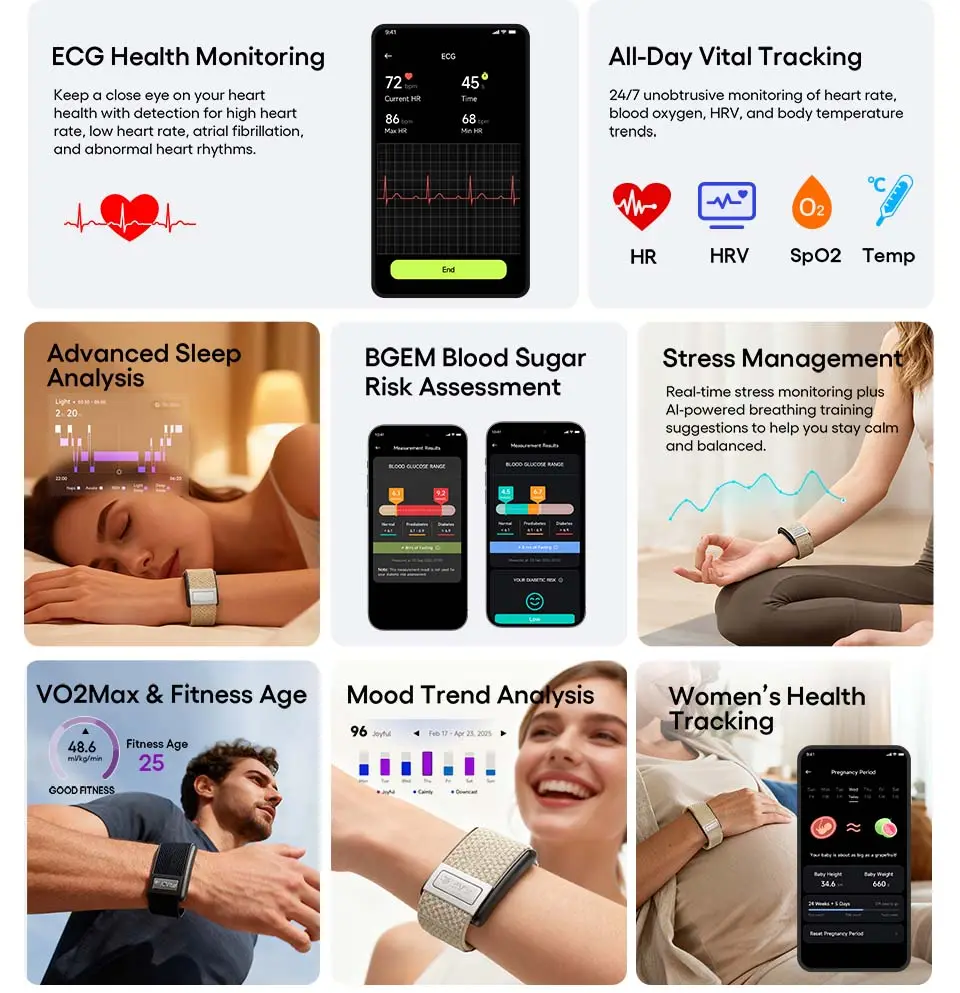
Smart Bands — Best for Daily Health
- Detailed sleep analysis
- Stress & HRV insights
- Real-time heart rate
- Resting HR trends
Smart Bracelets — Light Health Tracking
- Focus on basic daily wellness
- Ideal for casual users
Fitness Trackers — Best for Athletes
- Workout-level heart rate accuracy
- Recovery indicators
- Energy expenditure metrics
9. Fitness & Activity Tracking Differences
Smart Band
- Steps, calories, basic workouts
- Suitable for walking & casual exercise
Smart Bracelet
- Limited activity tracking
- Ideal for lifestyle movements
Fitness Tracker
- GPS-enabled workouts
- Running, cycling, swimming
- Advanced fitness algorithms
Perfect for users who care about performance and precise metrics.
10. Battery Life & Power Efficiency
Smart Band
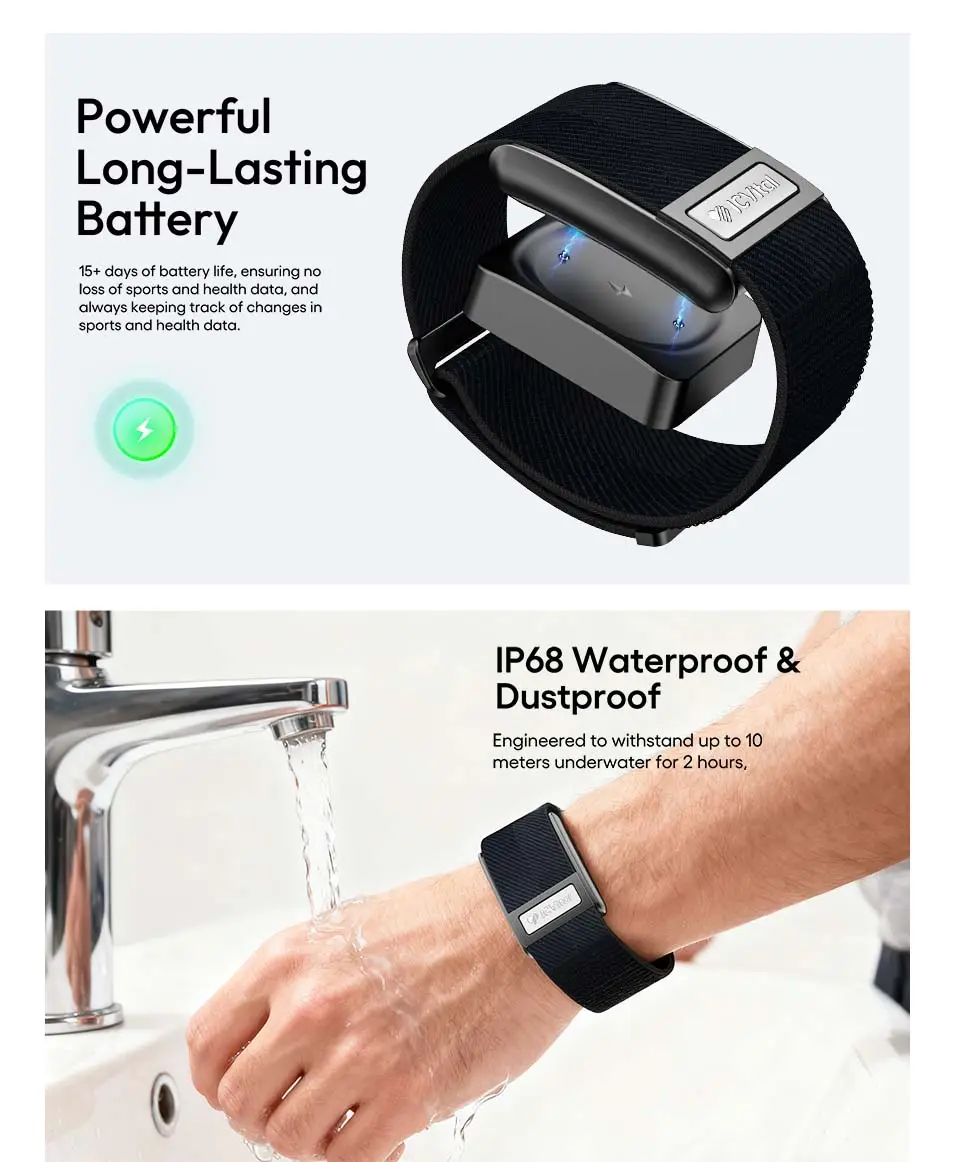
- 7–14 days typical
- BLE optimization
- Many screenless models offer ultra-long battery life
Smart Bracelet
- Smaller batteries
- Typically 3–7 days
Fitness Tracker
- More features → more consumption
- 3–10 days depending on GPS usage
Screenless smart bands are the battery efficiency champions.
11. Pricing & Market Positioning
| Category | Typical Price |
| Smart Bracelet | $15-$40 |
| Smart Band | $20-$60 |
| Fitness Tracker | $40-$120 |
Pricing depends on:
- Sensor quantity
- GPS inclusion
- Display type
- Material and design
- OEM customization level
12. Best Use Cases for Each Device
Smart Band Use Cases
- Daily health monitoring
- Sleep tracking
- Corporate wellness gifts
- Family health management
Smart Bracelet Use Cases
- Women’s wellness
- Lifestyle markets
- Fashion + light health data
- Gift industry
Fitness Tracker Use Cases
- Running and cycling
- Gym users
- Sports enthusiasts
- Weight-loss programs
13. How to Choose the Right Device
When selecting among the three, consider:
✔ What is the main purpose?
Health? Fashion? Fitness?
✔ Who is the target audience?
Athletes? Office workers? Women? Seniors?
✔ What budget range?
$50, or $100+ devices?
✔ Does your brand need OEM/ODM customization?
If yes, smart bands and bracelets are more flexible.
14. For Brands: OEM/ODM Considerations
Brands planning custom wearable development should evaluate:
Key Customization Factors
- Sensor selection (PPG, SpO₂, HRV, temperature)
- Screen vs screenless
- Battery & BLE power optimization
- ID design & materials
- Logo engraving/printing
- Algorithm depth
- App integration
- Packaging & accessories
Smart bands and smart bracelets are the most in-demand categories for OEM/ODM, private label, wellness programs, gifting & retail.
15. Why Brands Choose J-STYLE (Jointcorp)
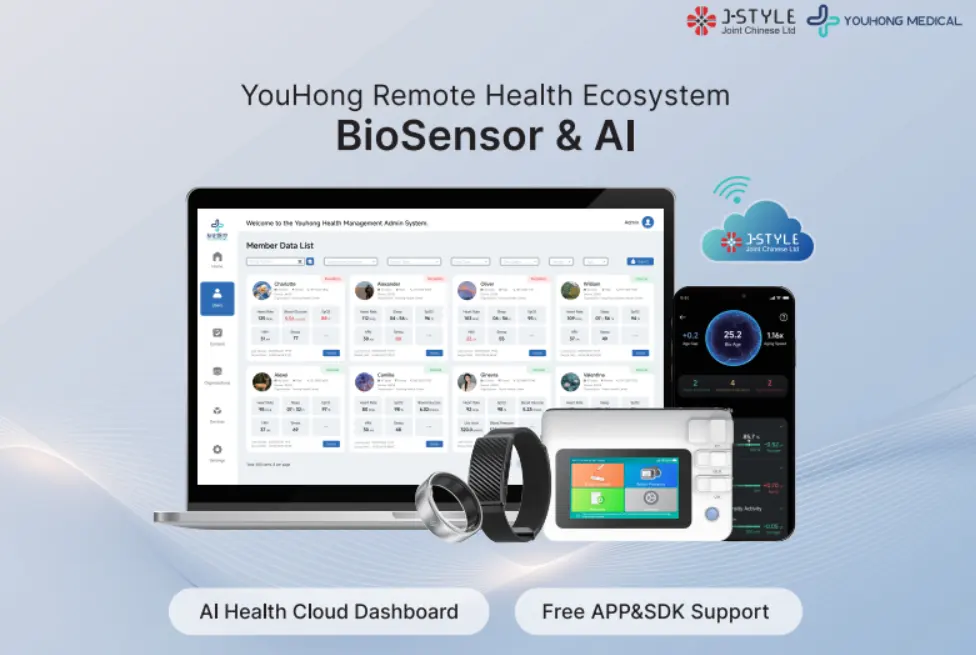
J-STYLE offers full-stack wearable solutions, including:
✔ Independent R&D + full in-house manufacturing
✔ Health algorithms: HRV, sleep, stress, recovery
✔ BLE ultra-low-power architecture
✔ Full OEM/ODM customization
✔ Screenless & smart band solutions
✔ Smart rings, bracelets, and fitness device families
✔ Proven quality for global brands, wellness programs & jewelry companies
Whether you are designing a fashion bracelet, a corporate smart band, or a performance-oriented tracker, J-STYLE provides end-to-end support.
16. Conclusion
Although smart bands, smart bracelets, and fitness trackers may appear similar, their purpose, design, and technology differ greatly.
- Smart bands deliver daily health value.
- Smart bracelets focus on elegance and lifestyle.
- Fitness trackers provide advanced sports analytics.
Understanding these differences helps users make better decisions—and helps brands choose the right path for OEM/ODM development.
About the Author

Kyler is a senior content marketing specialist at J-Style(Jointcorp|Joint Chinese Ltd | Youhong Medical), a leading smart ring, smart band, and smart watch manufacturer and supplier in China. With 8 years of experience in the wearable tech industry, he creates professional content for global B2B buyers seeking reliable factory, wholesale, OEM/ODM, and SDK/API solutions. At J-Style, Kyler focuses on helping partners understand the value of high-quality Chinese smart wearables and how J-Style’s innovative manufacturing capabilities support scalable business growth.