

Updated 4 hours ago
Smart Ring vs Fitness Tracker vs Smartwatch: Ultimate Comparison 2026
youhong
Last Updated: January 2026 | Comprehensive Analysis by Wearable Tech Experts
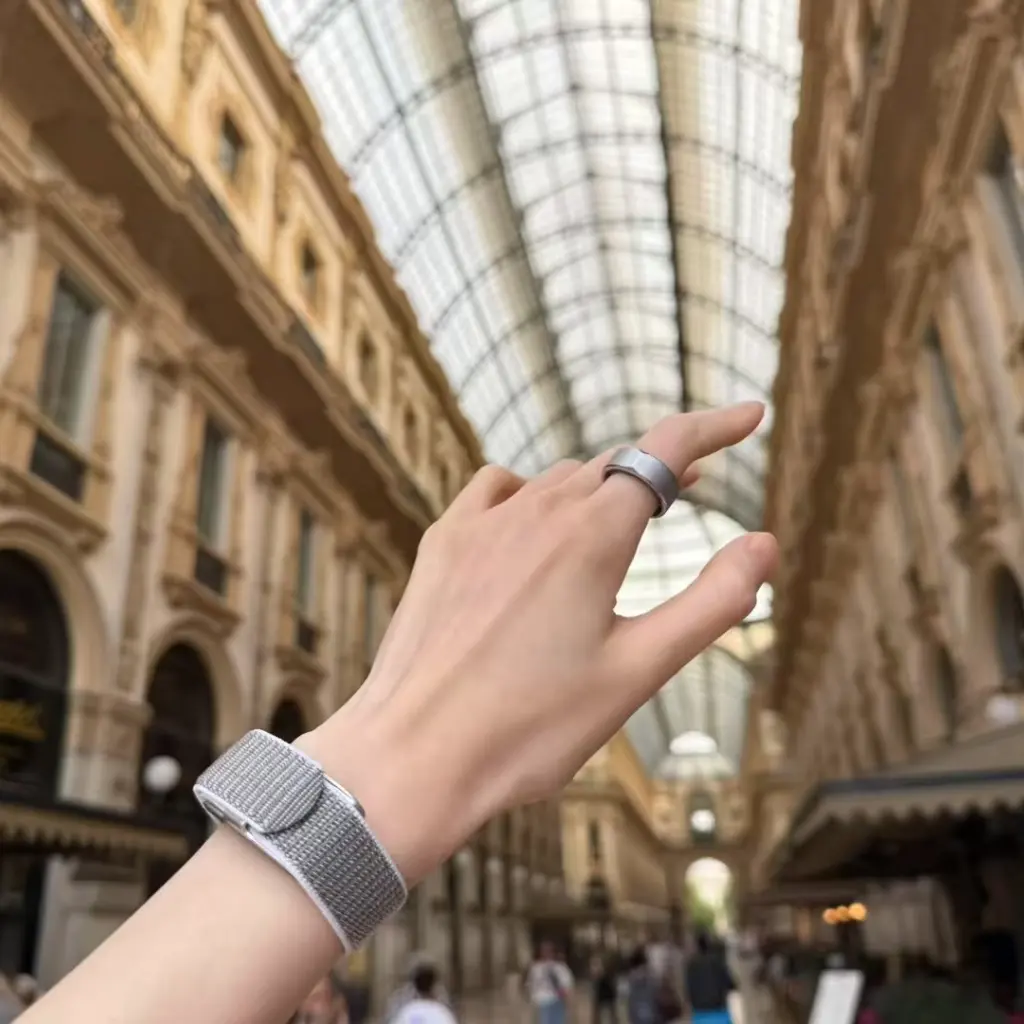
The wearable health technology market has evolved into three distinct device categories, each with unique strengths and limitations. Whether you're considering your first wearable purchase or upgrading from an existing device, understanding the fundamental differences between smart rings, fitness trackers (bands), and smartwatches is essential for making an informed decision.
This comprehensive guide examines all three categories through an objective lens—analyzing sensor technology, accuracy, battery life, use cases, and cost-effectiveness based on independent testing data and published research. Our goal is to help you identify which device type aligns with your health goals, lifestyle, and budget.
Quick Summary: Three Categories at a Glance
Smart Rings: The Discreet Sleep Specialist
- Form Factor: Worn on finger, typically 3-7 grams
- Primary Strength: Sleep tracking and recovery monitoring
- Battery Life: 4-12 days
- Price Range: $199-$499
- Best For: Sleep optimization, 24/7 comfort, wearing traditional watches
Fitness Bands: The Balanced All-Rounder
- Form Factor: Wrist band, typically 26-35 grams
- Primary Strength: Comprehensive fitness tracking with marathon battery
- Battery Life: 7-21 days
- Price Range: $50-$200
- Best For: Daily activity tracking, value-conscious buyers, active lifestyles
Smartwatches: The Feature-Rich Powerhouse
- Form Factor: Watch-style, typically 40-80 grams
- Primary Strength: Maximum features including smartphone integration
- Battery Life: 18 hours to 48 days (varies dramatically by type)
- Price Range: $200-$1,200
- Best For: All-in-one devices, serious athletes, tech enthusiasts
Table of Contents
- Understanding the Three Categories
- Sensor Technology Comparison
- Health Tracking Accuracy
- Battery Life Analysis
- Use Case Scenarios
- Price-to-Performance Evaluation
- Pros and Cons by Category
- Decision Guide: Which Should You Choose?
- Frequently Asked Questions
Understanding the Three Categories
What Defines Each Device Type?
The distinction between these three categories isn't just physical—it's philosophical, representing fundamentally different approaches to health monitoring:
Smart Rings = Passive Monitoring Philosophy
- Designed to disappear on your body
- Focus on recovery, sleep, and resting physiological metrics
- Minimal user interaction (no screen, limited controls)
- Jewelry-like discretion and comfort
Fitness Bands = Active-Passive Hybrid
- Purpose-built for health and fitness tracking
- Screen for glanceable real-time statistics
- Lightweight enough for continuous 24/7 wear
- Focused feature set (health-centric, limited smart features)
Smartwatches = Active Computing Platform
- Mini computer on your wrist
- Full smartphone companion (apps, calls, payments)
- Rich interactive display
- Fitness tracking is one of many functions
Market Size and Growth Trends
According to recent market research:
- Fitness Bands: Expected to reach $23.08 billion globally in 2026, with 462.65 million users
- Smartwatches: Held 48.5% market share in 2024, projected to reach 323.99 million users
- Smart Rings: Emerging category projected to grow at 26-29% CAGR, reaching $378-519 million by 2026
The wearable technology industry continues expanding as fitness tracking became the #1 fitness trend for consecutive years, driven by increasing health awareness and technological advancement.
Sensor Technology Comparison
Core Sensors: What's Inside Each Device
| Sensor Type | Smart Rings | Fitness Bands | Smartwatches |
| PPG Heart Rate | ✅ (finger placement) | ✅ (wrist placement) | ✅ (wrist placement) |
| Accelerometer | ✅ (limited utility) | ✅ (primary activity sensor) | ✅ (primary activity sensor) |
| Gyroscope | ❌ (rare) | ✅ (common) | ✅ (standard) |
| SpO2 Blood Oxygen | ✅ (common) | ✅ (mid-range+) | ✅ (common) |
| Skin Temperature | ✅ (common) | ⚠️ (premium models) | ⚠️ (premium models) |
| GPS | ❌ Never | ⚠️ Sometimes | ✅ Usually |
| Barometer/Altimeter | ❌ Never | ❌ Rare | ✅ Sport watches |
| ECG | ❌ (technology limitation) | ⚠️ (select premium models) | ✅ (premium models) |
Sensor Placement: Why Location Matters
Finger (Rings):
- Advantages: Abundant arterial blood flow, proximity to digital arteries, minimal movement during sleep
- Best For: Resting heart rate, HRV, sleep metrics, temperature trends
- Limitations: Poor for active exercise, no orientation sensing for activity classification
Wrist (Bands & Watches):
- Advantages: Larger device allows bigger sensors, accelerometer/gyroscope useful for movement, convenient for viewing
- Best For: Active workout tracking, step counting, exercise heart rate, GPS activities
- Limitations: Further from major arteries than fingers, more motion artifacts during exercise
Optical Heart Rate Monitoring: Finger vs. Wrist
Photoplethysmography (PPG) sensors measure heart rate by detecting blood volume changes through optical methods.
Finger-Based PPG (Rings):
- Signal Strength: Very strong due to digital arteries
- Resting Accuracy: 98-99%
- Active Exercise Accuracy: Not applicable (rings not designed for exercise tracking)
- Temperature Sensitivity: Low (fingers less affected by cold than wrist extremities)
Wrist-Based PPG (Bands & Watches):
- Signal Strength: Good (capillary blood flow)
- Resting Accuracy: 96-99%
- Active Exercise Accuracy: 90-97% (varies by intensity and device quality)
- Motion Artifact Challenge: Higher during intense movement
Clinical Validation: Independent studies comparing wearables to medical-grade ECG chest straps show:
- Resting measurements: Both finger and wrist achieve >96% accuracy
- Moderate exercise (120-150 bpm): Wrist devices 94-97% accurate
- High-intensity intervals (>160 bpm): Wrist devices 88-95% accurate
- Sleep measurements: Finger placement may offer slight advantage due to minimal movement
Health Tracking Accuracy Comparison
Sleep Tracking Performance
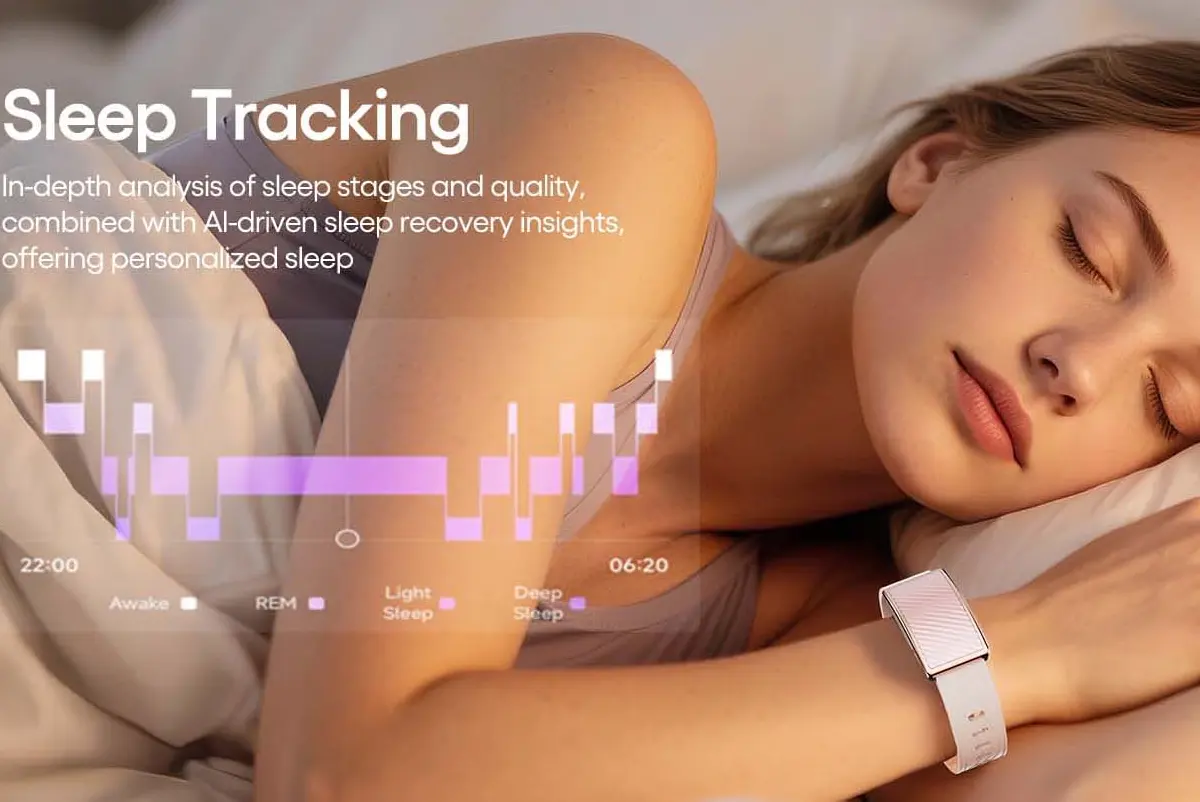
Sleep tracking combines multiple sensor inputs: movement (accelerometer), heart rate patterns, heart rate variability (HRV), respiratory rate, and skin temperature.
Independent Lab Testing Results (vs. clinical polysomnography):
| Metric | Smart Rings | Fitness Bands | Smartwatches |
| Sleep Duration | 95-97% | 93-96% | 90-94% |
| Sleep/Wake Detection | 93-95% | 90-93% | 88-91% |
| Sleep Stage Accuracy | 85-93% | 80-88% | 75-85% |
| Overall Sleep Score | 92-95% ⭐ | 88-91% | 84-88% |
Why Rings Excel at Sleep Tracking:
- Comfort: 98% of users wear rings consistently overnight vs. 67% for watches
- Minimal Movement: Fingers move less during sleep than wrists
- Temperature Sensing: More common in rings, skin temp drops during deep sleep
- Design Focus: Rings prioritize sleep over other metrics
Step Counting Accuracy
Step counting relies primarily on accelerometer pattern recognition.
Real-World Testing Results (vs. manual counting):
| Activity | Smart Rings | Fitness Bands | Smartwatches |
| Walking (steady pace) | 88-92% | 96-98% ⭐ | 95-98% ⭐ |
| Running | 85-90% | 94-97% ⭐ | 94-97% ⭐ |
| Hiking/Stairs | 80-85% | 93-96% ⭐ | 92-96% ⭐ |
| Daily Mixed Activity | 82-88% | 94-97% ⭐ | 93-96% ⭐ |
Why Wrist Devices Excel:
- Accelerometers on the wrist detect arm swing characteristic of walking/running
- Rings lack the movement pattern data that makes step detection reliable
- Wrist devices incorporate gyroscope data for improved accuracy
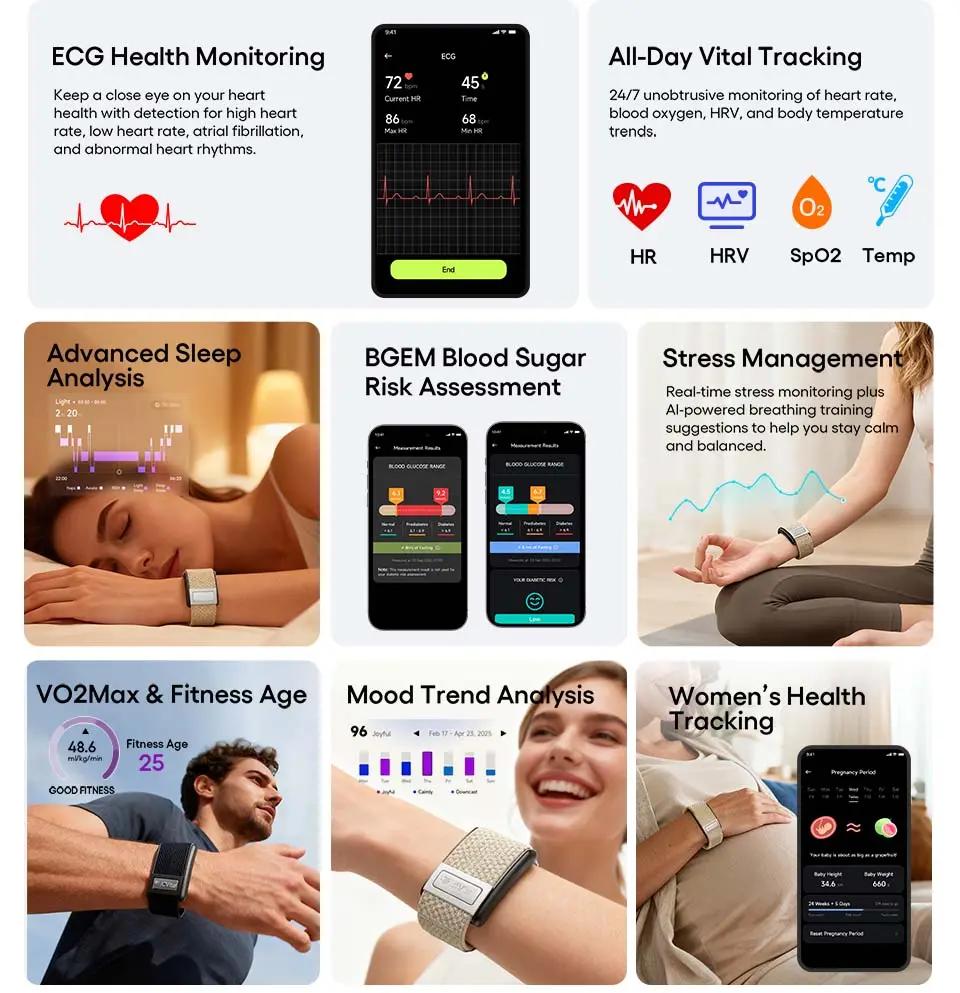
Heart Rate Monitoring During Exercise
Tested Against Medical Chest Straps:
| Exercise Type | Smart Rings | Fitness Bands | Smartwatches |
| Resting HR | 98-99% ⭐ | 97-98% | 97-98% |
| Steady Cardio | N/A* | 95-97% | 95-98% |
| Interval Training | N/A* | 90-94% | 91-96% |
| Strength Training | N/A* | 85-90% | 87-92% |
*Most rings are not designed for active workout heart rate tracking
Quality Factors Affecting Accuracy:
- LED count (2-LED vs. 5-LED arrays)
- Sensor sampling rate (50 Hz vs. 500 Hz)
- Algorithm sophistication (motion artifact filtering)
- Fit and contact pressure
Blood Oxygen (SpO2) Monitoring
SpO2 sensors use dual-wavelength LEDs (red + infrared) to measure oxygen saturation.
Accuracy vs. Medical Pulse Oximeters:
| Measurement Context | Smart Rings | Fitness Bands | Smartwatches |
| During Sleep (Still) | ±1-2% ⭐ | ±2-3% | ±2-3% |
| At Rest (Awake) | ±2-3% | ±2-3% | ±2-3% |
| During Activity | N/A | ±3-5% | ±3-5% |
Clinical Note: Wrist-based SpO2 is adequate for wellness tracking and trend monitoring but should not replace medical pulse oximeters for clinical decisions.
GPS Accuracy for Distance Tracking
GPS is rarely found in rings, sometimes in bands, and common in smartwatches.
Route Accuracy Testing (vs. surveyed 5K course):
| Device Type | Single-Frequency GPS | Dual-Frequency GPS |
| Budget Fitness Bands | ±15-25 meters | Not available |
| Premium Fitness Bands | ±10-18 meters | ±8-12 meters ⭐ |
| Basic Smartwatches | ±12-20 meters | ±8-15 meters |
| Sport Smartwatches | ±8-15 meters | ±5-10 meters ⭐ |
GPS Battery Impact:
- Continuous GPS drains battery 10-15x faster than normal tracking
- Bands with built-in GPS: 7-10 day battery drops to 7-18 hours GPS mode
- Sport watches with solar charging can achieve weeks of GPS usage
Battery Life Analysis
Real-World Battery Performance
Battery life is one of the most significant differentiators between categories.
| Device Type | Typical Range | Best-in-Class | Charging Frequency |
| Smart Rings | 4-12 days | 12 days | Weekly |
| Fitness Bands | 7-21 days | 21 days ⭐ | Bi-weekly to monthly |
| Tech Smartwatches | 18 hrs - 2 days | 2 days | Daily |
| Sport Smartwatches | 5-48 days | 48 days (solar) | Weekly to monthly |
Battery Life by Usage Pattern
Continuous Health Monitoring (No GPS):
- Smart Ring: 7-10 days (small battery, efficient sensors)
- Fitness Band: 14-21 days (optimized for this use case) ⭐
- Tech Smartwatch: 1-2 days (power-hungry display and processor)
- Sport Smartwatch: 10-21 days (larger battery, optimized firmware)
Daily GPS Workout (1 hour/day):
- Smart Ring: N/A (no GPS)
- Fitness Band: 7-10 days
- Tech Smartwatch: 8-16 hours (multiple daily charges needed)
- Sport Smartwatch: 7-14 days
Always-On Display:
- Smart Ring: N/A (no display)
- Fitness Band: N/A (screen activates on wrist raise)
- Tech Smartwatch: 12-24 hours (significant drain)
- Sport Smartwatch: 3-7 days (more efficient displays)
What Drains Battery?
Power Consumption by Component:
- GPS tracking: ~25-40 mAh/hour (highest drain)
- Always-on display: ~15-20 mAh/hour
- PPG heart rate sensor: ~2-4 mAh/hour
- Bluetooth connectivity: ~1-2 mAh/hour
- Accelerometer: ~0.5 mAh/hour (minimal)
Battery Optimization Strategies:
- Smart sensors (increased sampling rate only during activity)
- Dynamic LED intensity (adjust based on skin tone and signal quality)
- Motion-activated displays (vs. always-on)
- Efficient processors (ARM Cortex-M4 vs. full smartwatch CPUs)
Battery Life and Continuous Data Quality
Devices requiring daily charging create data gaps:
- Forget to charge = miss overnight sleep data
- Die mid-workout = incomplete activity tracking
- Inconsistent wear time = less accurate baseline establishment
Longer battery life (7-21 days) ensures:
- Continuous 24/7 data collection
- Better sleep tracking (no removal for nightly charging)
- More accurate trend analysis
- Lower user maintenance burden
Use Case Scenarios: Which Excels Where?
Scenario 1: Sleep Optimization
Goal: Understand sleep quality, identify sleep apnea risk, improve recovery
Best Choice: Smart Ring ⭐
Why:
- Superior sleep tracking accuracy (92-95% vs. polysomnography)
- Most comfortable for overnight wear (3-7g vs. 40-80g for watches)
- Skin temperature tracking (illness detection, cycle tracking)
- Recovery and readiness scores
- Won't disturb sleep (no screen light, no notifications)
Alternative: Premium fitness band (88-91% sleep accuracy, lighter than watches)
Avoid: Tech-focused smartwatches (bulky, poor overnight compliance)
Scenario 2: Marathon Training
Goal: Track runs with GPS, monitor heart rate zones, analyze training load
Best Choice: Sport Smartwatch or Premium Fitness Band ⭐
Why:
- Built-in GPS (track pace, distance, routes without phone)
- Real-time workout metrics visible during run
- Advanced training analytics (VO2 max, lactate threshold, recovery time)
- Long battery supports multi-hour training sessions
- Heart rate accuracy 95-98% during steady cardio
Band vs. Watch Trade-off:
- Fitness Band: Better battery (weeks vs. days), lower cost
- Sport Watch: Larger display, more detailed metrics, maps
Avoid: Smart rings (no GPS, poor for active exercise tracking)
Scenario 3: General Wellness & Daily Activity
Goal: Count steps, monitor heart rate, track general activity, stay motivated
Best Choice: Fitness Band ⭐
Why:
- Best value ($50-$200 vs. $200-$1,200 for watches)
- Excellent step counting accuracy (96-98%)
- Long battery means consistent wear (14-21 days)
- Lightweight and comfortable for 24/7 use
- Adequate sleep tracking (88-91%)
- No subscription fees required (many options)
Alternative: Budget smartwatch if you want notifications
Avoid: Premium sport watches (overkill for casual use), rings (poor step counting)
Scenario 4: Strength Training & CrossFit
Goal: Track HIIT workouts, count reps/sets, monitor intensity
Best Choice: Smartwatch (Sport-focused) ⭐
Why:
- Gyroscope enables exercise recognition (curl vs. press vs. squat)
- Real-time heart rate zone display
- Workout summaries with rep counting
- Larger screen for viewing workout stats
- Durability (sapphire crystal, reinforced cases)
Alternative: Premium fitness band (some offer strength tracking)
Avoid: Smart rings (no activity tracking during strength work)
Scenario 5: Swimming & Water Sports
Goal: Track laps, distance, stroke type, swimming efficiency
Best Choice: Waterproof Smartwatch or Fitness Band (5ATM/50m rating) ⭐
Why:
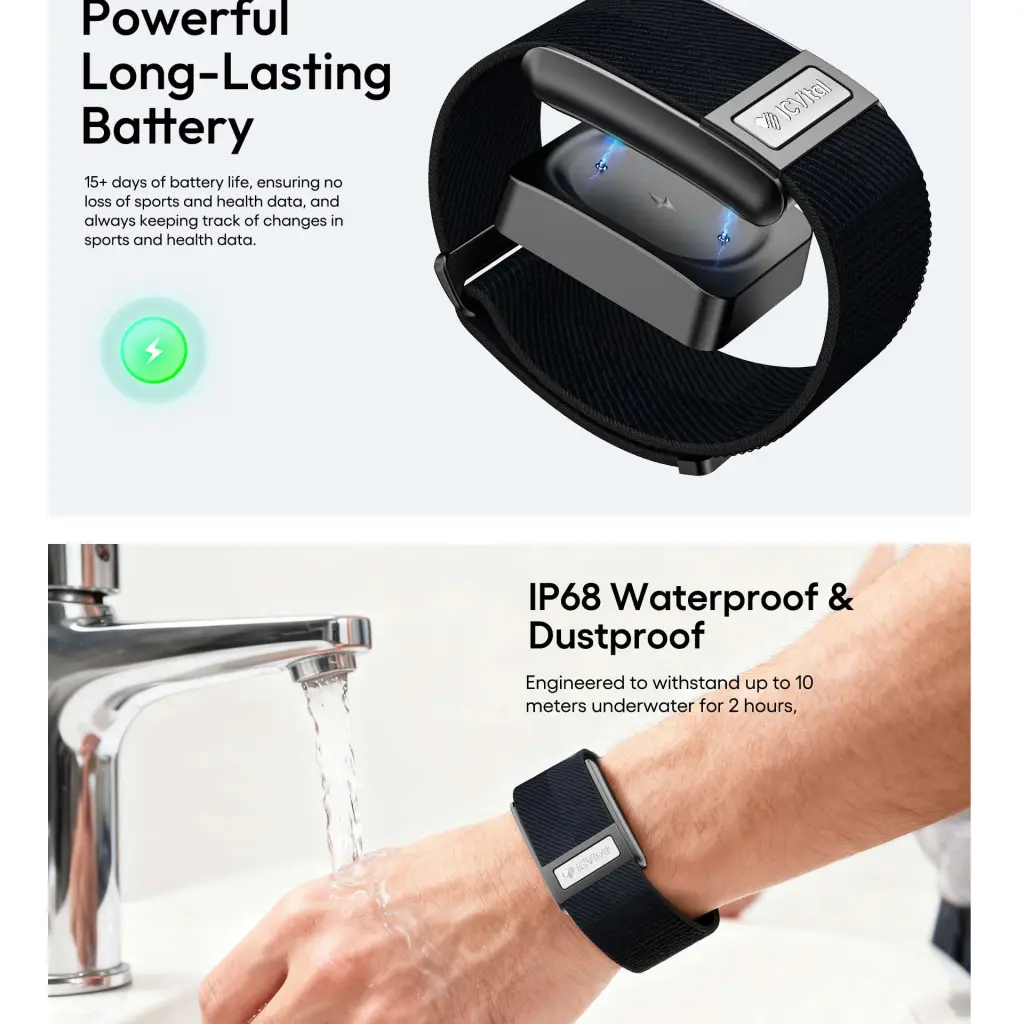
- 5ATM waterproofing handles swimming (vs. IP68 for rain/shower only)
- Stroke detection algorithms (freestyle, backstroke, breaststroke, butterfly)
- Lap counting via gyroscope (detects 180° turn at wall)
- SWOLF score (swim efficiency metric)
- Pool and open water modes
Key Specs to Check:
- Minimum 5ATM water resistance
- Dedicated swim mode
- Corrosion-resistant materials
Avoid: Devices with only IP67/IP68 rating (not designed for swimming)
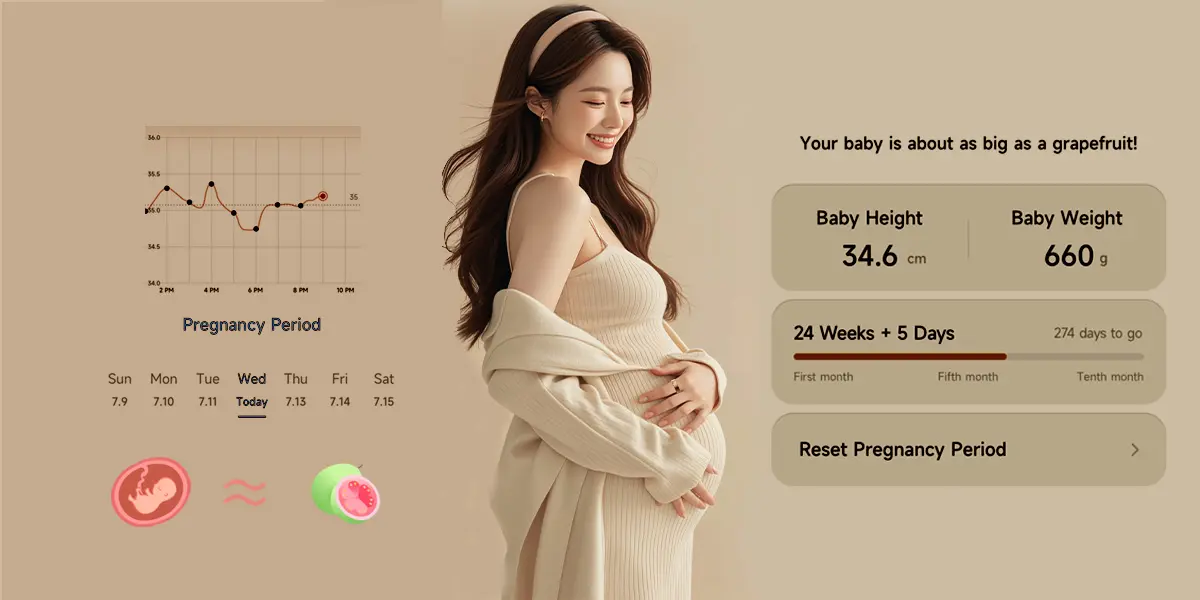
Scenario 6: Women's Health Tracking
Goal: Monitor menstrual cycle, predict ovulation, track pregnancy
Best Choice: Smart Ring or Premium Fitness Band ⭐
Why:
- Skin temperature monitoring (basal body temperature rises 0.3-0.5°C post-ovulation)
- Resting heart rate patterns (increases during luteal phase)
- Sleep quality changes across cycle
- HRV variations correlate with hormonal changes
- Pregnancy mode with trimester-specific insights
Ring Advantage: Superior temperature sensing (more common feature)
Band Advantage: Additional activity tracking, lower cost
Avoid: Budget devices without temperature sensors
Scenario 7: All-in-One Smart Features
Goal: Replace phone for quick tasks—calls, payments, apps, music
Best Choice: Tech-Focused Smartwatch ⭐
Why:
- App ecosystem (thousands of apps available)
- Mobile payments (NFC contactless)
- Phone calls and voice assistants
- Music streaming and storage
- Turn-by-turn navigation
- Smartphone notifications with response capability
Trade-offs:
- Daily charging required
- Expensive ($300-$800 typical)
- Fitness tracking secondary to smart features
- Bulkier and heavier
Avoid: Rings (no display), fitness bands (minimal smart features)
Scenario 8: Outdoor Adventures & Hiking
Goal: Navigation, altitude tracking, weather, route mapping
Best Choice: Outdoor Sport Smartwatch ⭐
Why:
- Topographic maps preloaded
- Barometric altimeter (elevation gain/loss)
- Multi-GNSS support (GPS + GLONASS + Galileo)
- ABC sensors (Altimeter, Barometer, Compass)
- Weather forecasts
- SOS/emergency features
- Multi-day battery (solar charging options)
Must-Have Features:
- Offline maps
- Route tracking and breadcrumb navigation
- Durable construction (sapphire crystal, titanium)
Avoid: Fashion smartwatches (poor battery, no maps), rings/basic bands (no navigation)
Price-to-Performance Analysis
Total Cost of Ownership (5-Year Comparison)
| Device Category | Device Cost | Subscription Fees* | 5-Year Total |
| Budget Fitness Band | $50-$100 | $0 | $50-$100 ⭐ |
| Premium Fitness Band | $150-$200 | $0-$400** | $150-$600 |
| Smart Ring (Sub Required) | $300-$500 | $360*** | $660-$860 |
| Smart Ring (No Sub) | $300-$400 | $0 | $300-$400 |
| Tech Smartwatch | $300-$500 | $0-$400 | $300-$900 |
| Premium Sport Watch | $600-$1,200 | $0 | $600-$1,200 |
*Subscription fees for premium app features
**Some brands charge $6-7/month for advanced insights
***Based on $6/month subscription requirement
Features per Dollar Spent
Best Value Categories:
Under $100:
- Winner: Budget fitness bands
- Delivers: Step counting, heart rate, basic sleep tracking, notifications
- Accuracy: 92-95% for core metrics
- Battery: 10-14 days typical
$100-$300:
- Winner: Premium fitness bands
- Delivers: Advanced sleep stages, SpO2, GPS (select models), stress tracking, 120+ sport modes
- Accuracy: 95-98% for core metrics
- Battery: 14-21 days
- Value Proposition: 80-90% of smartwatch health features at 30-50% of cost
$300-$500:
- Ring vs. Watch Decision Point
- Ring: Best sleep tracking, minimal design, limited exercise tracking
- Smartwatch: Versatile but daily charging, smart features
$500+:
- Premium Sport Watches: Justified for serious athletes
- Delivers: Professional training metrics, maps, multi-sport tracking, extreme durability
- Not Recommended: For casual users (features go unused)
Subscription Fee Considerations
Some wearables lock key features behind monthly subscriptions:
Subscription-Required Models:
- Full functionality costs device price + $6-20/month
- 5-year cost: Add $360-$1,200 to device price
- Locked features often include: Sleep insights, readiness scores, guided programs, trend analysis
No-Subscription Models:
- All features included with device purchase
- One-time cost only
- Updates and improvements delivered free
Consumer Advice: Calculate total 3-5 year cost before purchasing. A $350 device + $6/month subscription costs $566 over 3 years—more than many premium no-subscription alternatives.
Pros and Cons by Category
Smart Rings
Advantages: ✅ Most comfortable for 24/7 wear (especially sleep) ✅ Best sleep tracking accuracy (92-95%) ✅ Extremely discreet (jewelry-like appearance) ✅ Allows wearing traditional watches ✅ Excellent resting heart rate and HRV monitoring ✅ Temperature tracking (common feature) ✅ Good battery life (7-12 days) ✅ No screen = no distractions
Disadvantages: ❌ Poor for active exercise tracking ❌ No GPS or real-time workout stats ❌ No display (must check phone for data) ❌ Limited step counting accuracy (85-92%) ❌ Fixed sizing (can't adjust like watch band) ❌ Many require expensive subscriptions ($6-8/month) ❌ Proprietary charging solutions ❌ Higher price per feature ($300-$500)
Best For: Sleep optimization, recovery tracking, wearing with traditional watches, minimal aesthetic
Fitness Bands
Advantages: ✅ Best battery life category (14-21 days common) ✅ Excellent value ($50-$200 price range) ✅ Accurate step counting (96-98%) ✅ Lightweight for 24/7 comfort (26-35g) ✅ Good all-around health tracking ✅ Many include GPS at mid-price points ✅ Rarely require subscriptions ✅ Simple, focused interface (not overwhelming) ✅ Water resistant (5ATM common)
Disadvantages: ❌ No smartphone integration (apps, calls, payments) ❌ Smaller displays than smartwatches (1.0-1.8") ❌ Sleep tracking slightly less accurate than rings (88-91%) ❌ Limited third-party app ecosystems ❌ Less fashionable (sporty aesthetic) ❌ No advanced training metrics (unless premium models)
Best For: Daily fitness tracking, budget-conscious buyers, long battery life priority, active lifestyles
Smartwatches
Advantages: ✅ Maximum features (all-in-one device) ✅ Large, vibrant displays (1.3-1.9") ✅ Full smartphone integration (apps, payments, calls) ✅ Best for active workout tracking (real-time stats) ✅ Advanced training metrics (sport models) ✅ Navigation and maps ✅ Customizable watch faces and straps ✅ Extensive app ecosystems
Disadvantages: ❌ Poor battery life (18 hrs - 2 days for tech watches) ❌ Daily charging required (most models) ❌ Expensive ($300-$1,200) ❌ Bulky for sleep (67% overnight compliance vs. 98% for rings) ❌ Overwhelming features for casual users ❌ Overkill if only want fitness tracking ❌ Heavier (40-80g)
Best For: Tech enthusiasts, athletes needing advanced metrics, people wanting one device for everything, smartphone integration priority

Decision Guide: Which Category Should You Choose?
Choose a Smart Ring If:
✅ Sleep quality is your #1 priority
✅ You want the most comfortable 24/7 wearable
✅ You prefer wearing traditional watches during the day
✅ Recovery and readiness insights are important to you
✅ You don't do intense exercise workouts regularly
✅ Discretion and minimalist design appeal to you
✅ You're willing to pay premium for specialized sleep tracking
❌ Avoid if: You need workout tracking, GPS, step counting accuracy, or want visible real-time data
Choose a Fitness Band If:
✅ You want comprehensive health tracking at best value
✅ Battery life is important (charge every 2-3 weeks)
✅ You're active and need accurate step/activity tracking
✅ You exercise regularly but don't need pro athlete metrics
✅ You prefer lightweight, comfortable 24/7 wear
✅ You want solid sleep tracking without ring pricing
✅ You hate subscription fees
❌ Avoid if: You want smartwatch features (apps, payments, calls) or need advanced training analytics
Choose a Smartwatch If:
Tech-Focused Smartwatch: ✅ You want to leave your phone at home
✅ You need apps, payments, and calls on your wrist
✅ You're deeply invested in a smartphone ecosystem (iOS/Android)
✅ You prioritize convenience over battery life
✅ You want maximum screen real estate
Sport-Focused Smartwatch: ✅ You're training for endurance events (marathons, triathlons)
✅ You need professional training metrics (VO2 max, lactate threshold, training load)
✅ Maps and navigation are essential
✅ You do multi-sport activities
✅ You're willing to invest $600-$1,200 for best-in-class tracking
❌ Avoid if: Daily charging bothers you, you only do casual exercise, or budget is primary concern
Decision Matrix by Priority
| Your #1 Priority | Recommended Device Type | Runner-Up |
| Sleep tracking | Smart Ring ⭐ | Premium Fitness Band |
| Battery life | Fitness Band ⭐ | Smart Ring |
| Value/Price | Budget Fitness Band ⭐ | Mid-range Fitness Band |
| Step counting | Fitness Band/Watch ⭐ | Either (tie) |
| Workout tracking | Smartwatch ⭐ | Premium Fitness Band |
| Smart features | Tech Smartwatch ⭐ | No alternative |
| Comfort | Smart Ring ⭐ | Fitness Band |
| Training analytics | Sport Smartwatch ⭐ | No alternative |
| All-day tracking | Fitness Band ⭐ | Sport Smartwatch |
Frequently Asked Questions
Q: Can smart rings track exercise as well as fitness bands?
A: No. Smart rings are not designed for active exercise tracking and show significant limitations:
Exercise Tracking Comparison:
| Feature | Smart Rings | Fitness Bands | Smartwatches |
| Step Counting | 85-92% accuracy | 96-98% accuracy ⭐ | 95-98% accuracy ⭐ |
| Active Heart Rate | Not reliable | 90-97% accuracy ⭐ | 91-98% accuracy ⭐ |
| GPS Tracking | Never available | Sometimes (mid-range+) | Usually available ⭐ |
| Real-time Stats | No display | Yes ✓ | Yes ✓ |
| Workout Auto-detect | Poor (60-70%) | Good (85-94%) ⭐ | Good (85-94%) ⭐ |
Why Rings Struggle with Exercise:
- No GPS capability (can't track routes or distance accurately)
- Finger placement poor for detecting arm movements
- No display for viewing stats mid-workout
- Small size limits battery for continuous high-rate sampling
Ring Strengths:
- Resting heart rate: Excellent (98-99%)
- Sleep tracking: Best-in-class (92-95%)
- Recovery monitoring: Excellent
Bottom Line: If exercise tracking is important, choose a fitness band or smartwatch. Rings excel at sleep and recovery, not active workouts.
Q: Which has the longest battery life?
A: Fitness bands dominate battery endurance.
Battery Life Rankings:
1st Place: Premium Fitness Bands (14-21 days)
- Optimized for health tracking
- Efficient processors
- Smaller, lower-power displays
- No power-hungry features
2nd Place: Smart Rings (7-12 days)
- No display (major power savings)
- Small battery capacity limits duration
- Efficient sensors
2nd Place: Sport Smartwatches (7-48 days)
- Large batteries
- Solar charging extends dramatically (some models)
- Optimized firmware
- Variable by model (huge range)
Last Place: Tech Smartwatches (18 hours - 2 days)
- Always-on displays
- Powerful processors
- Constant connectivity
- Rich app ecosystems
Real-World Impact:
Weekly Charging (Ring, Band, Sport Watch):
- Minimal disruption to tracking
- Rare data gaps
- Set-and-forget user experience
Daily Charging (Tech Smartwatch):
- Must remember every night
- Miss sleep tracking if forgotten
- 7x more charging cycles (wear on battery)
Recommendation: If battery life is a top 3 priority, choose a fitness band (longest) or avoid tech-focused smartwatches (shortest).
Q: Are smart rings as accurate as wrist-based devices?
A: It depends on what you're measuring. Accuracy varies by metric:
Where Rings Excel:
Sleep Tracking: Rings Win ⭐
- Rings: 92-95% accuracy vs. polysomnography
- Bands: 88-91% accuracy
- Watches: 84-88% accuracy
Why: Finger placement + comfort = consistent overnight wear, minimal movement artifacts, better temperature sensing
Resting Heart Rate: Tie
- Rings: 98-99% accuracy
- Bands: 97-98% accuracy
- Watches: 97-98% accuracy
Why: All devices perform excellently when body is still
Where Wrist Devices Excel:
Step Counting: Wrist Wins ⭐
- Rings: 85-92% accuracy
- Bands: 96-98% accuracy
- Watches: 95-98% accuracy
Why: Wrist accelerometers detect characteristic arm swing; rings miss this signal
Active Exercise Heart Rate: Wrist Wins ⭐
- Rings: Not designed for this purpose
- Bands: 90-97% accuracy
- Watches: 91-98% accuracy
Why: Wrist devices engineered for motion artifact filtering during exercise
GPS Distance: Wrist Wins ⭐
- Rings: No GPS capability
- Bands: ±10-18 meters (select models)
- Watches: ±5-15 meters
Summary:
- Choose ring for sleep/recovery accuracy
- Choose wrist device for activity/exercise accuracy
Q: Do I need a subscription for any of these devices?
A: It varies by device, not by category. Here's what to watch for:
Subscription Models:
1. Required Subscriptions (All features locked without payment)
- Some premium smart rings: $6-8/month mandatory
- Some fitness platforms: $10-20/month
- Cannot access core insights without subscription
5-Year Cost Impact: $360-$1,200 added to device price
2. Optional Subscriptions (Basic features free, premium features paid)
- Many fitness bands/watches: $6-10/month for premium
- Free tier includes: Heart rate, steps, sleep duration, workout tracking
- Paid tier adds: Advanced sleep analysis, guided programs, detailed trends, coaching
3. No Subscription (All features included)
- Many fitness bands (especially mid-range)
- Most sport-focused smartwatches
- Some smart rings
- Everything included with device purchase
How to Identify Before Buying:
✅ Check: "Is a subscription required for basic features?"
✅ Read: Reviews mentioning "paywall" or "subscription"
✅ Calculate: Total 3-5 year cost (device + subscriptions)
Consumer Protection Tip: If core health metrics (sleep stages, readiness score, HRV analysis) require subscription, factor that into total cost. A $300 device + $7/month = $552 over 3 years.
Recommendation: If you prefer one-time purchases, many excellent no-subscription options exist across all categories. No-subscription doesn't mean lower quality—many premium sport watches and mid-range bands include all features for free.
Q: Which is best for sleep tracking?
A: Smart rings are objectively superior for sleep tracking, but premium fitness bands offer excellent performance at lower cost.
Sleep Tracking Accuracy (vs. Clinical Polysomnography):
Smart Rings: 92-95% overall accuracy ⭐
- Sleep duration: 95-97%
- Sleep stages: 85-93%
- Sleep/wake: 93-95%
Premium Fitness Bands: 88-91% overall accuracy
- Sleep duration: 93-96%
- Sleep stages: 80-88%
- Sleep/wake: 90-93%
Smartwatches: 84-88% overall accuracy
- Sleep duration: 90-94%
- Sleep stages: 75-85%
- Sleep/wake: 88-91%
Why Rings Win:
1. Overnight Wear Compliance
- Rings: 98% of users wear consistently overnight
- Bands: 94% overnight compliance
- Watches: 67% overnight compliance
Reason: Comfort. Many find watches too bulky for sleep; rings feel like jewelry.
2. Sensor Advantages
- Temperature sensing (more common in rings)
- Minimal movement artifacts (fingers move less than wrists during sleep)
- Better HRV measurement during sleep (less noise)
3. Design Focus Rings prioritize sleep over other metrics, optimizing algorithms and sensors for this specific use case.
Value Consideration:
If Budget Allows ($300-500): Smart ring offers 4-6% better sleep accuracy
If Budget Constrained ($100-200): Premium fitness band delivers 88-91% accuracy—still excellent for consumer use
Not Recommended for Sleep: Budget trackers (<$100) and tech-focused smartwatches (bulky, poor compliance)
Q: Can you wear a fitness tracker and a smartwatch together?
A: Yes, and it's increasingly common for users seeking specialized benefits from each device.
Popular Combinations:
Ring + Smartwatch ⭐ Most Common Hybrid
- Ring handles: Sleep, recovery, temperature, resting metrics
- Watch handles: Workouts, GPS, apps, notifications
- Benefits: Best-in-class for each domain
- Trade-off: Higher total cost ($600-900), two devices to manage
Ring + Fitness Band
- Ring handles: Sleep optimization
- Band handles: Daily activity, exercise tracking
- Benefits: More affordable than ring + watch ($450-650)
- Trade-off: Overlapping features (both track HR, both track activity)
Fitness Band + Smartwatch
- Band handles: 24/7 health tracking (better battery)
- Watch handles: Smart features, occasional workouts
- Benefits: Use watch only when needed (save battery)
- Trade-off: Looks excessive wearing both on same wrist
Data Integration:
Some ecosystems allow combining data from multiple devices:
- Certain brands sync ring + watch data into unified insights
- Shows combined "whole picture" health view
- Leverages strengths of each device type
Who Benefits from Dual Setup:
✅ Athletes optimizing recovery AND performance
- Ring tracks sleep and readiness
- Watch tracks training load and workouts
- Combined data prevents overtraining
✅ Professionals wanting discretion + functionality
- Ring for 24/7 health tracking (invisible)
- Watch for meetings/workouts (visible when appropriate)
✅ Sleep optimizers who also workout
- Ring provides superior sleep insights
- Watch/band handles exercise tracking
Who Should Stick with One Device:
❌ Casual users (extra complexity not worth it)
❌ Budget-conscious (doubled cost)
❌ Minimalists (prefer simplicity)
Q: Which is most accurate for calorie tracking?
A: All wearable devices struggle with calorie accuracy, but performance varies:
Calorie Burn Estimation Accuracy (vs. metabolic lab testing):
| Device Type | Resting/BMR | Walking | Running | Strength Training | Overall |
| Smart Rings | 90-95% | 75-85% | N/A* | 60-70% | 75-85% |
| Fitness Bands | 92-96% | 85-92% | 87-93% | 70-80% | 83-90% ⭐ |
| Smartwatches | 92-96% | 86-93% | 88-94% | 72-85% | 84-92% ⭐ |
*Rings not designed for active exercise
Why Wrist Devices Are More Accurate:
Heart Rate Integration: Combining accelerometer (movement) + heart rate (effort) improves estimates by 15-25% over movement-only tracking.
GPS Data: Distance + pace + terrain allows more precise outdoor activity calorie calculation.
Activity Classification: Correctly identifying activity type (running vs. cycling vs. weightlifting) enables activity-specific calorie formulas.
Factors Affecting Accuracy:
Personal Data Input:
- Age (metabolism decreases with age)
- Sex (men typically burn more, higher muscle mass)
- Weight (heavier = more calories for same activity)
- Height (affects stride length, BMR calculation)
Incorrect data = 20-40% calorie error
Activity Type:
Most Accurate (±10-15%):
- Steady-state cardio (running, cycling, swimming)
- Walking
Moderate Accuracy (±15-25%):
- Interval training (HIIT)
- Sports (tennis, basketball)
Least Accurate (±25-40%):
- Strength training (low movement, high effort)
- Yoga, Pilates (minimal heart rate elevation)
Best Practices for Better Calorie Tracking:
- Enter accurate personal data (age, sex, weight, height)
- Update weight regularly (calorie burn changes with weight)
- Use heart rate (more accurate than steps alone)
- Enable GPS for outdoor activities
- Track trends, not absolutes (use same device consistently)
Reality Check: No consumer wearable achieves >95% calorie accuracy. Focus on week-to-week trends rather than daily absolute numbers. If this week shows 500 fewer calories burned than last week (same device), that trend is meaningful even if absolute numbers are off by 15%.
Q: Are fitness trackers waterproof enough for swimming?
A: It depends on the water resistance rating—not all "waterproof" devices can handle swimming.
Water Resistance Ratings Explained:
IP67 (Not Swim-Safe)
- Protected against immersion up to 1 meter for 30 minutes
- Good for: Handwashing, rain, shower
- Not for: Swimming, surfing, diving
IP68 (Limited Swimming)
- Protected against continuous immersion beyond 1 meter (varies by manufacturer)
- Good for: Shower, rain, brief swimming
- Not for: Extended swimming, water sports
5ATM / 50 meters (Swim-Safe) ⭐
- Withstands pressure equivalent to 50 meters depth
- Good for: Swimming laps, snorkeling, surface water sports
- Not for: Scuba diving, high-diving, hot tubs
10ATM / 100 meters (Water Sports Safe)
- Designed for water sports
- Good for: Swimming, snorkeling, recreational diving (not scuba)
Swimming-Specific Features to Look For:
✅ Minimum 5ATM rating
✅ Swim mode (lap counting, stroke detection)
✅ Water lock (prevents accidental touch activation)
✅ Corrosion-resistant materials (titanium, stainless steel, ceramic)
Swimming Performance by Category:
Smart Rings:
- Typically 10ATM rated (excellent water resistance)
- Problem: No swim tracking features (no accelerometer/gyroscope for stroke detection)
- Use case: Safe to wear while swimming, but won't track workout
Fitness Bands:
- Varies: Budget models often IP68, Premium models 5ATM
- Swim tracking: Mid-range and up include lap counting, stroke detection
- Accuracy: 95-98% lap counting in standard pools
Smartwatches:
- Most sport watches: 5ATM or 10ATM
- Tech smartwatches: IP68 or 5ATM
- Swim tracking: Common feature in sport watches, rare in tech watches
- Accuracy: 96-99% lap counting, stroke type recognition

Swimming Limitations:
Heart Rate Monitoring: Water creates refractive barrier between sensor and skin. Accuracy drops to 85-92% during swimming (vs. 95-98% on land).
GPS: Doesn't work underwater. Tracks route during surface swimming (open water), relies on accelerometer for pool laps.
Touchscreen: Many become unresponsive underwater. Look for physical buttons for lap marking.
Post-Swim Care:
- Rinse with fresh water after ocean/pool (chlorine and salt corrode)
- Dry before charging
- Check water lock feature enabled
Q: How long do fitness trackers last before needing replacement?
A: Device lifespan varies by build quality and usage, but here are typical lifecycles:
Expected Lifespan by Category:
Smart Rings: 2-4 years
- Battery degradation: Main failure point (lithium batteries lose ~20% capacity per year)
- Physical wear: Scratches, dings (rings experience more contact than wrist devices)
- Water seal failure: Occasional issue after 2-3 years
Fitness Bands: 2-5 years
- Budget models ($50-100): 2-3 years typical
- Premium models ($150-200): 3-5 years typical
- Battery degradation: 18-24 months before noticeable capacity loss
- Band/strap wear: Replaceable, extends device life
Smartwatches: 3-6 years
- Tech smartwatches: 3-4 years (driven by software obsolescence as much as hardware)
- Sport smartwatches: 4-6 years (more durable construction, longer software support)
- Battery replacement: Sometimes available ($50-100), extends life 2-3 years
What Causes Failure:
1. Battery Degradation (80% of failures)
- Rechargeable lithium batteries degrade with charge cycles
- After 500-1000 cycles, capacity drops 20-40%
- Daily charging = 365 cycles/year (tech watches fail faster)
- Bi-weekly charging = 26 cycles/year (bands last longer)
2. Water Resistance Failure (10% of failures)
- Seals degrade over time
- Exposure to hot water (showers, hot tubs) accelerates degradation
- Sweat accumulation corrodes internal components
3. Physical Damage (5% of failures)
- Cracked displays (watches > bands > rings)
- Broken bands/straps (replaceable)
- Sensor damage from impacts
4. Software Obsolescence (5% of failures)
- Manufacturer stops updates after 3-5 years
- New features not available on old hardware
- Compatibility issues with newer phones
Extending Lifespan:
✅ Avoid extreme temperatures (don't leave in hot car or freezing conditions)
✅ Rinse after sweat/saltwater/chlorine
✅ Use official chargers (off-brand chargers damage batteries faster)
✅ Don't fully discharge battery (keep above 20% when possible)
✅ Update firmware (manufacturers optimize battery management)
✅ Replace bands/straps (breathable materials reduce corrosion)
When to Replace:
🔴 Battery lasts <50% of original (e.g., 10 days drops to <5 days)
🔴 Sensors give consistently inaccurate readings
🔴 Water resistance fails (moisture under display)
🔴 Physical damage affects functionality
🔴 Manufacturer discontinues software support
Value Perspective:
Fitness Band at $100 lasting 4 years = $25/year
Smartwatch at $400 lasting 4 years = $100/year
Smart Ring at $350 lasting 3 years = $117/year
Budget devices often have shorter lifespans but lower replacement cost. Premium devices last longer but cost more upfront.

Conclusion: Making Your Decision
The ideal wearable device depends entirely on your priorities, lifestyle, and budget. There is no universal "best" choice—only the best choice for your specific needs.
Key Takeaways:
Smart Rings excel at sleep optimization and discreet 24/7 monitoring but fall short for active exercise tracking. Choose if sleep quality is your top priority and you don't need workout features.
Fitness Bands offer the best balance of features, battery life, and value for the majority of users. They deliver comprehensive health tracking without smartwatch complexity or pricing. Choose if you want versatile, affordable, long-lasting fitness monitoring.
Smartwatches provide maximum functionality and features but require daily charging (tech-focused models) and premium pricing. Choose if you need smartphone integration or professional-grade training analytics.
Final Recommendations by User Profile:
- Sleep optimizer: Smart Ring
- Casual fitness enthusiast: Fitness Band (mid-range)
- Serious athlete: Sport Smartwatch or Premium Fitness Band
- Tech enthusiast: Tech-focused Smartwatch
- Budget-conscious: Budget Fitness Band ($50-100)
- Outdoor adventurer: Premium Sport Smartwatch
- Minimalist: Smart Ring
The wearable technology landscape continues evolving rapidly, with new sensors, improved algorithms, and innovative form factors emerging regularly. Whichever category you choose, focus on devices from reputable manufacturers with proven accuracy, strong customer support, and transparent data practices.
Your health data is valuable—choose a device that earns your trust and serves your goals.
Additional Resources
Scientific Research:
- Journal of Medical Internet Research (wearable accuracy studies)
- Sleep Medicine Reviews (sleep tracking validation)
- IEEE Transactions on Biomedical Engineering (sensor technology)
Industry Analysis:
- Global Wearable Technology Market Reports 2024-2026
- Consumer Wearable Device Accuracy Studies
- Clinical Validation of Fitness Tracking Devices
Regulatory Information:
Disclaimer: This article provides general information about wearable device categories and is not medical advice. Consult healthcare professionals for medical decisions. Accuracy percentages cited represent independent testing averages and may vary by specific device model, individual physiology, and usage conditions.
Related Technical Articles:
● Top 5 Best ECG Trackers Manufacturers:ECG Smart Band, ECG Smart Bracelet & Wearable ECG Solutions
● Smart Band vs Smart Bracelet vs Fitness Tracker: Key Differences Explained
● Smart Bands vs Traditional Fitness Trackers: Which One Is Right for You?
About the Author

Kyler is a senior content marketing specialist at J-Style(Jointcorp|Joint Chinese Ltd | Youhong Medical), a leading smart ring, smart band, and smart watch manufacturer and supplier in China. With 8 years of experience in the wearable tech industry, he creates professional content for global B2B buyers seeking reliable factory, wholesale, OEM/ODM, and SDK/API solutions. At J-Style, Kyler focuses on helping partners understand the value of high-quality Chinese smart wearables and how J-Style’s innovative manufacturing capabilities support scalable business growth.