

Updated 1 day ago
What Is a Smart Band | Smart Bracelet? A Complete Beginner’s Guide
youhong
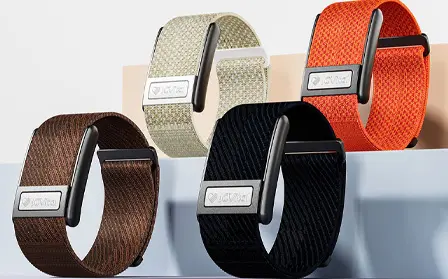
Smart bands—also commonly known as smart bracelets—have become one of the most popular and practical forms of wearable technology worldwide. From daily fitness tracking to medical-grade health monitoring, smart bands are now used by individuals, healthcare providers, and organizations alike.
But what exactly is a smart band or smart bracelet, and how does it work?
How is it different from a fitness tracker or a smartwatch?
And why are screenless and medical smart bands becoming increasingly important in healthcare?
This complete beginner’s guide explains everything you need to know about smart bands, including how they work, what they track, their accuracy, key use cases, and future trends—written in clear, non-technical language and optimized for search.
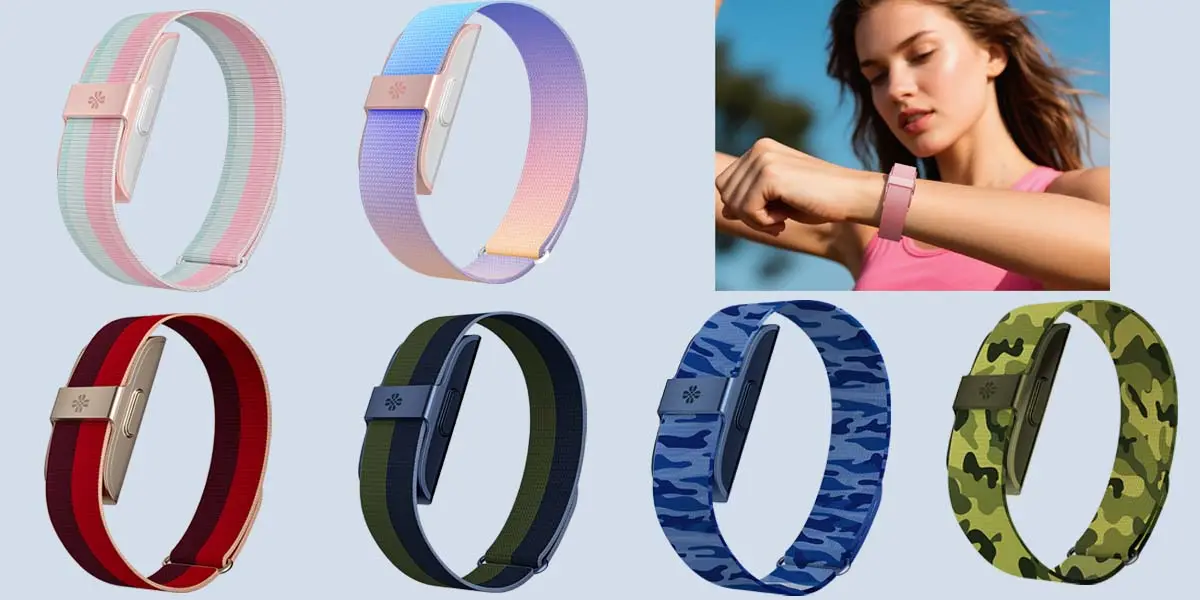
What Is a Smart Band or Smart Bracelet?
Definition of a Smart Band
A smart band is a lightweight wearable device designed to be worn on the wrist that continuously tracks health, fitness, and activity data using built-in sensors and algorithms.
The term smart bracelet is often used interchangeably with smart band, especially in Europe and parts of Asia. In practice, smart band and smart bracelet refer to the same category of wearable device.
Smart bands typically focus on:
- Health monitoring
- Activity tracking
- Sleep analysis
- Long-term wellness insights
Unlike smartwatches, most smart bands are designed to be simple, low-power, and comfortable for all-day wear, making them ideal for continuous health data collection.
Smart Band vs Smart Bracelet: Is There Any Difference?
From a functional perspective, there is no real technical difference between a smart band and a smart bracelet.
The distinction comes mainly from:
- Regional language preferences
- Marketing terminology
- Search behavior differences
For example:
- “Smart band” is more commonly used in B2B, medical, and technical contexts
- “Smart bracelet” is often used in consumer-facing markets
From an SEO standpoint, combining both terms in one guide ensures broader search coverage and better visibility across regions.
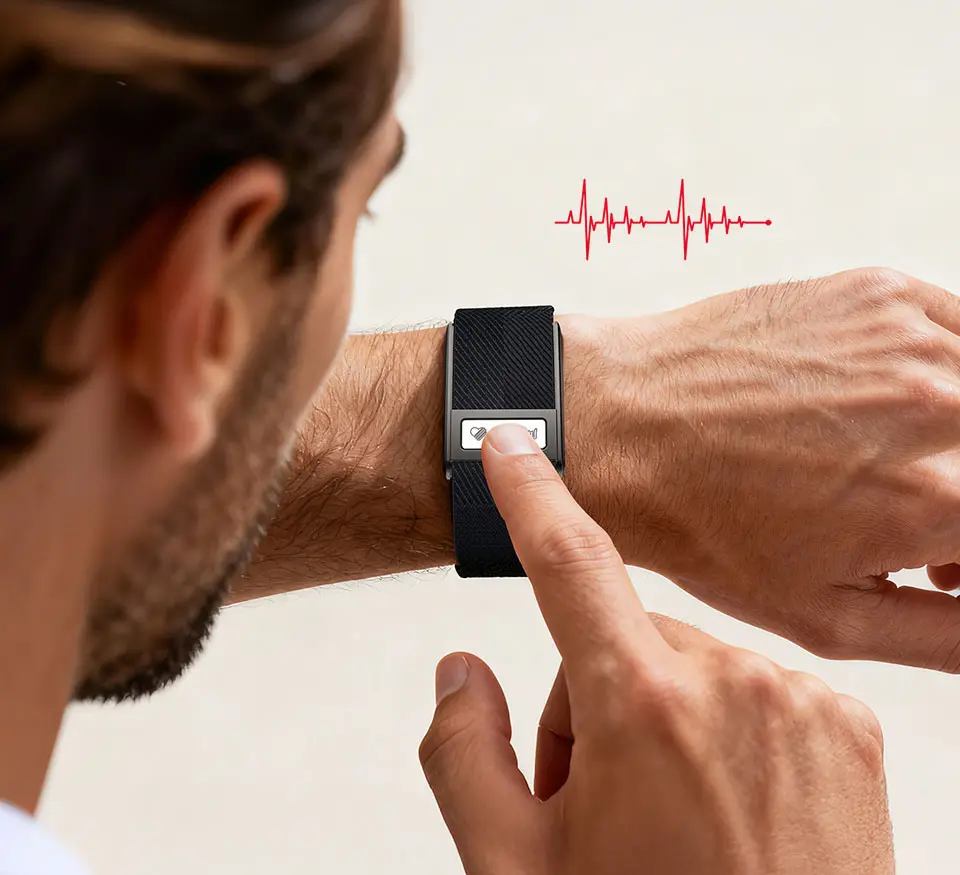
How Does a Smart Band Work?
Understanding how a smart band works requires looking at three core components: sensors, data transmission, and data analysis.
Core Sensors Inside a Smart Band
Despite their compact size, smart bands integrate multiple advanced sensors:
PPG Sensor (Photoplethysmography)
The PPG sensor uses light to measure changes in blood volume beneath the skin. It enables:
- Continuous heart rate monitoring
- Resting heart rate analysis
- HRV (Heart Rate Variability) estimation
- Blood oxygen (SpO₂) trend tracking in some models
PPG sensors form the foundation of most smart band health features.
ECG Sensor (in Advanced Smart Bands)
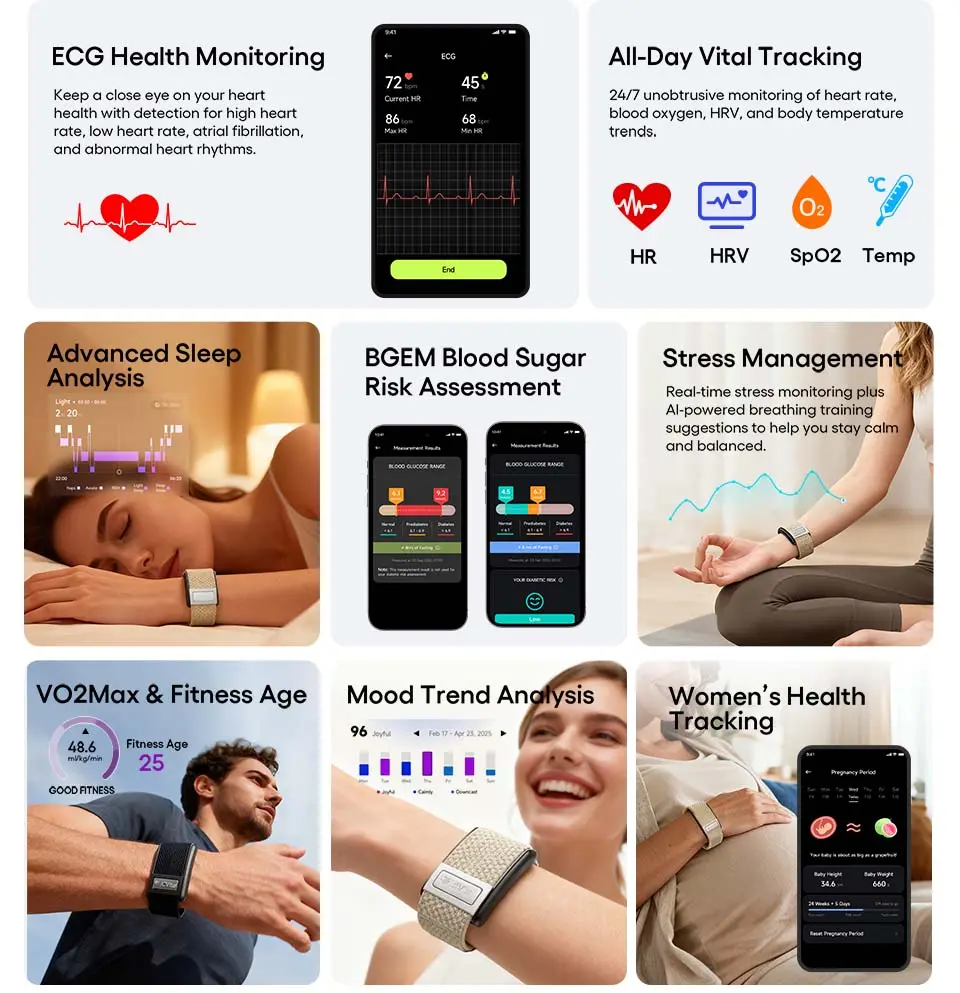
Some smart bands include ECG (Electrocardiogram) capability, allowing users to capture electrical heart signals.
ECG smart bands are used for:
- Heart rhythm analysis
- Early detection of irregular heart patterns
- Long-term cardiac trend monitoring
These features are increasingly relevant in healthcare and remote patient monitoring environments.
Accelerometer and Motion Sensors
Motion sensors track:
- Steps and movement
- Activity intensity
- Sleep posture and restlessness
Motion data helps smart bands differentiate between activity, rest, and sleep stages.
Additional Sensors
Depending on the model, smart bands may also include:
- Skin temperature sensors
- SpO₂ sensors
- Stress and recovery indicators
How Smart Bands Collect and Transmit Data
Smart bands continuously collect raw data from sensors while being worn on the wrist. This data is then:
- Pre-processed on the device
- Transmitted via Bluetooth Low Energy (BLE) to a smartphone or gateway
- Analyzed by mobile apps and cloud platforms
BLE technology allows smart bands to operate with extremely low power consumption, enabling long battery life and uninterrupted monitoring.
How Smart Band Algorithms Turn Data Into Insights
Raw sensor data alone is not meaningful. Smart bands rely on algorithms to:
- Filter noise and artifacts
- Detect patterns and trends
- Convert signals into health metrics
For example:
- Heart rate trends are calculated from PPG signals
- Sleep stages are estimated by combining motion, heart rate, and variability data
- Recovery scores are derived from HRV and resting heart rate patterns
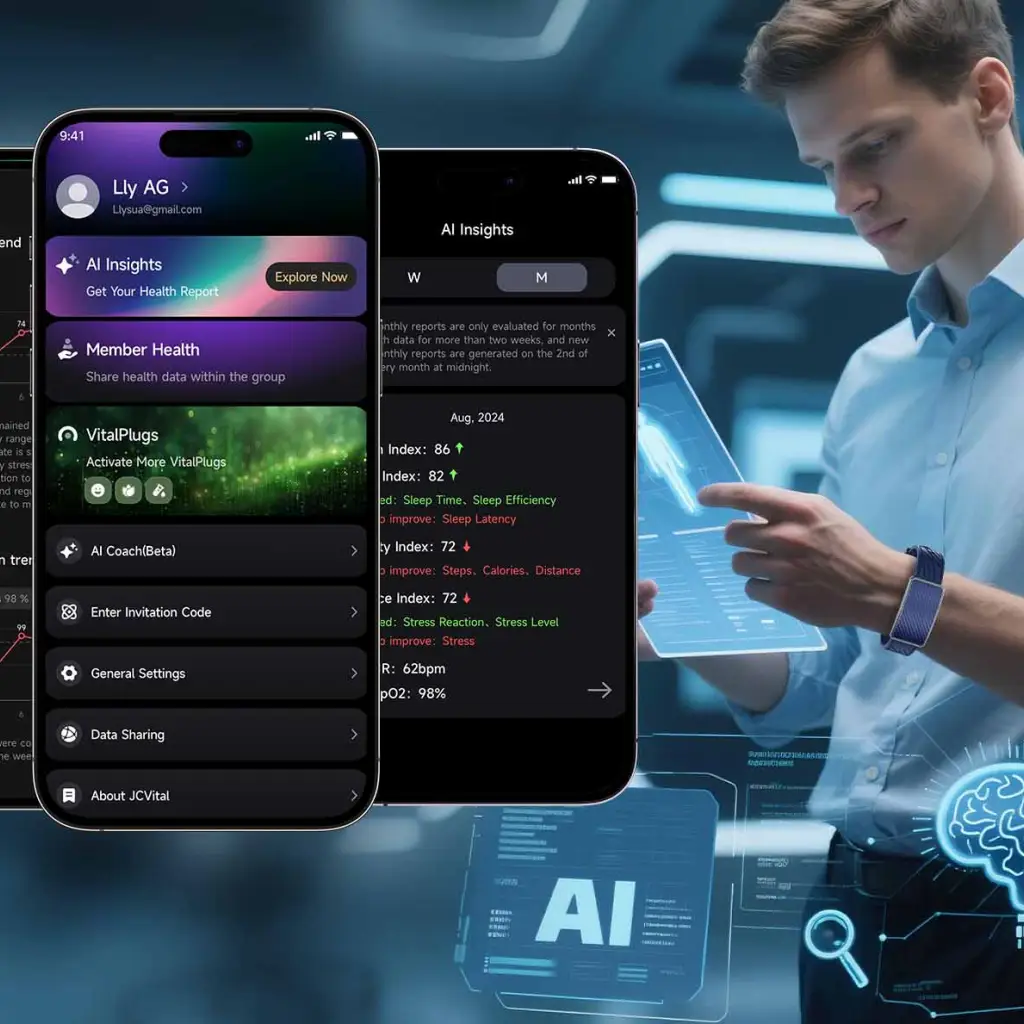
Advanced smart bands increasingly use AI-driven analytics to deliver personalized insights over time.
What Can a Smart Band Track?
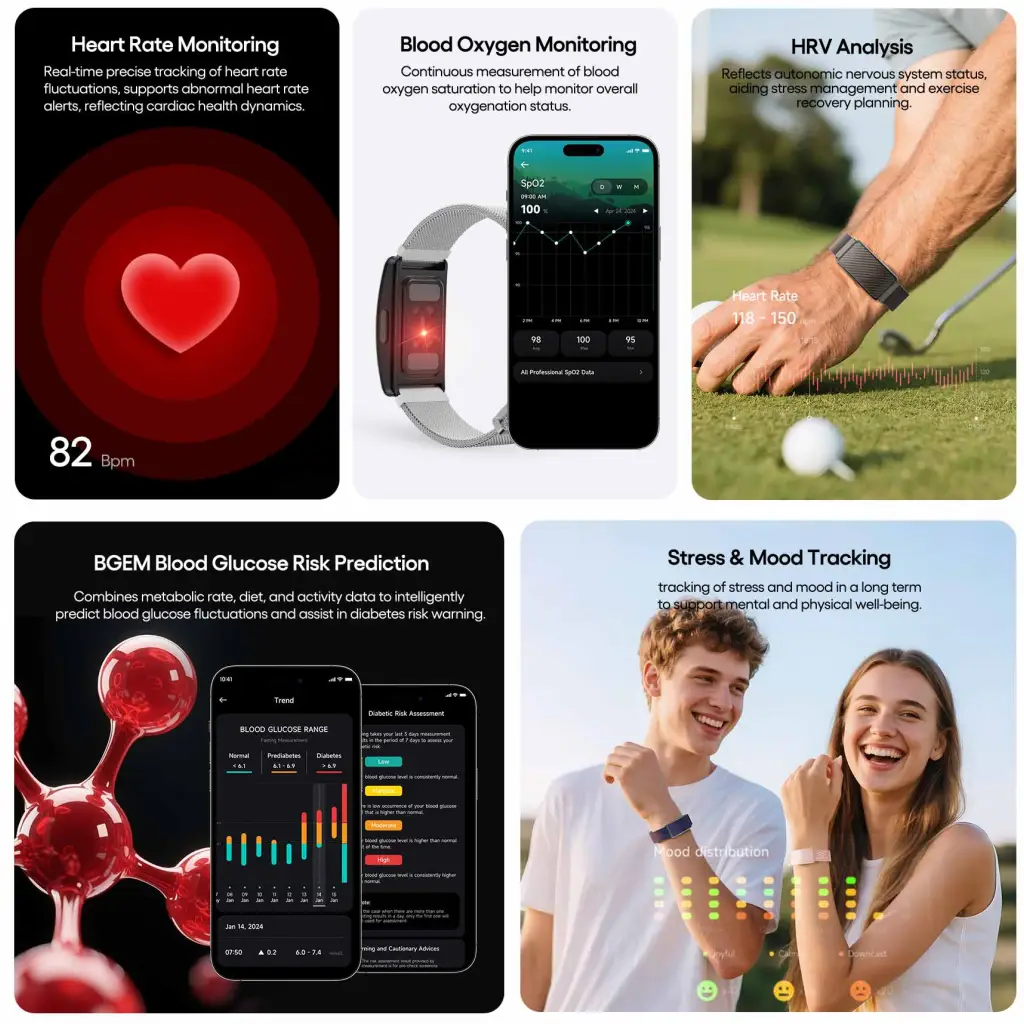
Smart bands are capable of tracking a wide range of health and wellness metrics.
Heart Rate Monitoring
Smart bands provide:
- Continuous heart rate tracking
- Resting heart rate measurement
- Nighttime heart rate trends
Resting heart rate is a widely recognized indicator of cardiovascular health and overall fitness.
ECG Monitoring (for Advanced Smart Bands)
ECG-enabled smart bands can record short ECG sessions to analyze heart rhythm.
Typical applications include:
- Long-term cardiac monitoring
- Post-treatment observation
- Preventive heart health programs
While most ECG smart bands are classified as wellness devices, they are increasingly used in clinical research and remote monitoring programs.
Sleep Tracking
Sleep tracking is one of the most valuable features of smart bands.
Smart bands can analyze:
- Total sleep duration
- Sleep stages (light, deep, REM)
- Sleep efficiency
- Nighttime heart rate
Because smart bands are lightweight and comfortable, users are more likely to wear them overnight, leading to more complete sleep data.
Activity and Fitness Tracking
Smart bands support:
- Step counting
- Calorie estimation
- Daily activity tracking
- Sedentary behavior detection
Rather than focusing on performance metrics, smart bands emphasize daily movement and long-term consistency.
SpO₂, Stress, and Recovery MetricsMany smart bands provide:
- Blood oxygen trend monitoring (SpO₂)
- Stress level estimation
- Recovery and readiness indicators
These metrics are especially useful in wellness programs and healthcare monitoring.
Medical Smart Band vs Consumer Fitness Band
Not all smart bands are designed for the same purpose.
Consumer Fitness Bands
Typically focus on:
- Steps and calories
- Basic heart rate
- Short-term activity feedback
They are designed for lifestyle and recreational fitness use.
Medical Smart Bands
Medical smart bands emphasize:
- Continuous data collection
- Higher sensor accuracy
- Data stability over time
- Integration with healthcare platforms
They are commonly used in:
- Remote patient monitoring (RPM)
- Elderly care
- Chronic condition management
- Post-discharge follow-up
The difference lies not only in hardware, but also in algorithms, validation, and data handling.
Smart Band vs Fitness Tracker vs Smart Watch
These devices often overlap, but their design philosophies differ.
| Feature | Smart Band | Fitness Tracker | Smart Watch |
| Screen | Small or none | Small | Large |
| Battery Life | Long | Moderate | Short |
| Comfort | Very high | High | Moderate |
| Sleep Tracking | Excellent | Good | Often limited |
| Medical Use | Common | Limited | Emerging |
Smart bands strike a balance between simplicity, comfort, and health-focused tracking.
Screenless Smart Band Explained
What Is a Screenless Smart Band?
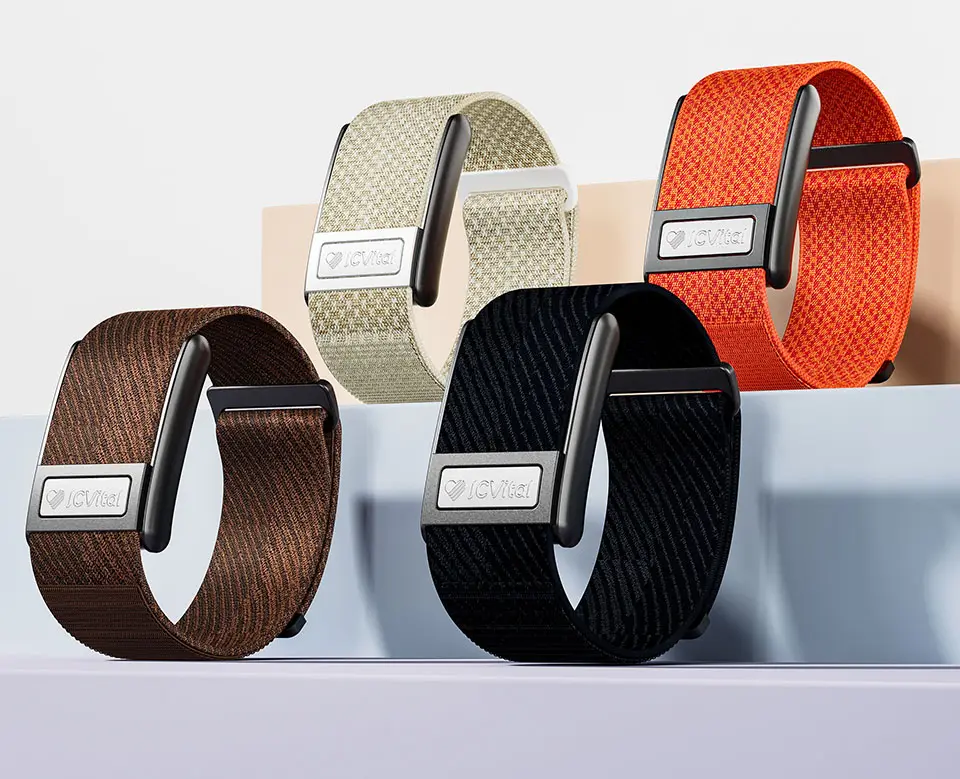
A screenless smart band is a smart band without a display. All data is accessed through a mobile app or platform.
Benefits of Screenless Smart Bands
Screenless smart bands offer several advantages:
- Longer battery life
- Lower power consumption
- Reduced distraction
- Higher durability
- Better suitability for medical and elderly users
Screenless designs are increasingly preferred in healthcare, sleep monitoring, and long-term wellness programs.
Are Smart Bands Accurate?
Factors Affecting Smart Band Accuracy
Accuracy depends on:
- Sensor quality
- Wrist fit and placement
- Algorithm design
- Consistency of wear
Smart bands are most reliable for trend-based monitoring, rather than single-point measurements.
Smart Bands in Healthcare Monitoring
In healthcare, smart bands are used to:
- Monitor long-term trends
- Identify deviations from baseline
- Support preventive care
They complement, rather than replace, traditional medical devices.
Who Should Use a Smart Band?Daily Health and Fitness Users
- Lifestyle improvement
- Sleep and stress awareness
- Activity consistency
Elderly Monitoring and Family Care
- Passive health tracking
- Fall risk indicators
- Remote family monitoring
Healthcare and Remote Patient Monitoring
- Chronic condition management
- Post-discharge follow-up
- Telehealth integration
Corporate Wellness and Insurance Programs
- Employee wellness initiatives
- Risk assessment programs
- Preventive health incentives
Battery Life, Comfort, and Design Considerations
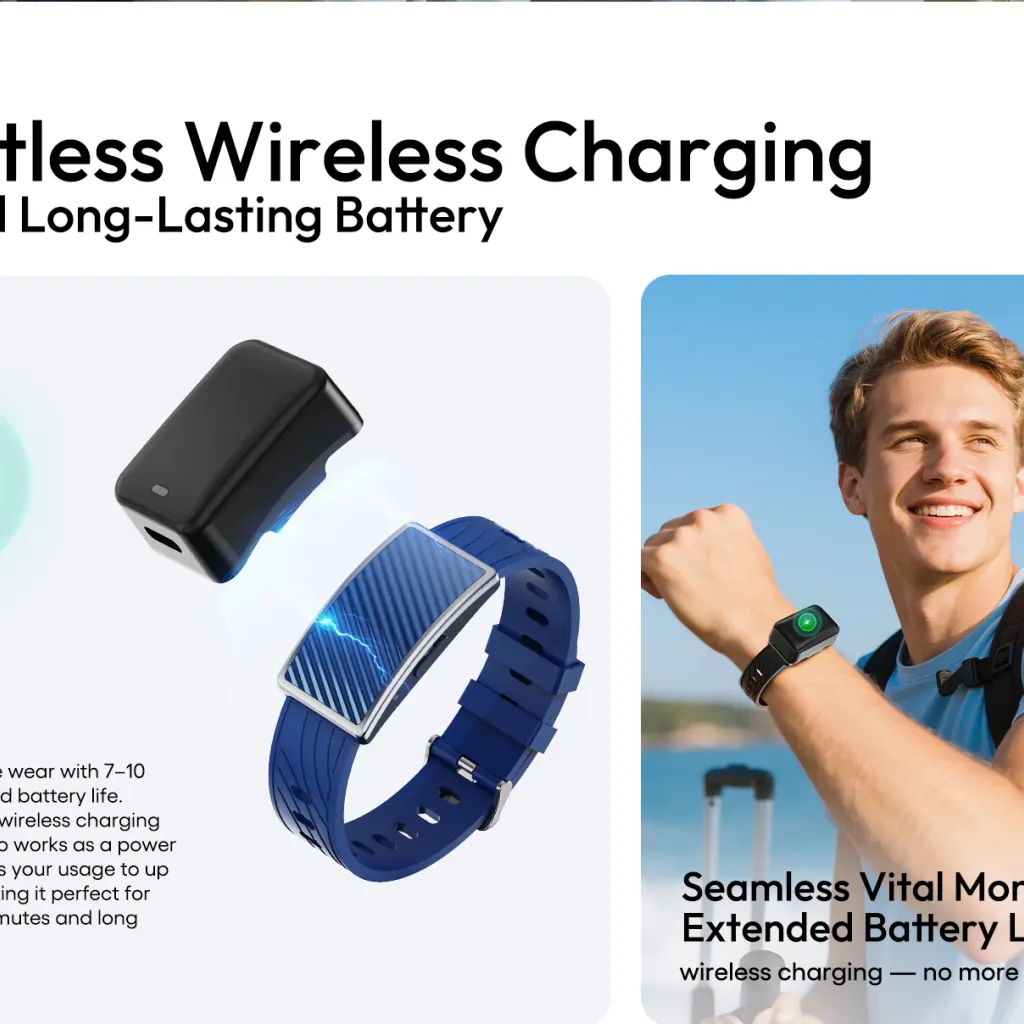
Smart bands are designed for long-term wear.
Key design factors include:
- Ultra-low-power BLE connectivity
- Medical-grade materials
- Water resistance
- Ergonomic wrist fit
Comfort is critical not only for user adoption, but also for data quality.
Smart Band OEM and Customization Guide
As demand grows, many brands choose smart band OEM or ODM solutions.
Why Brands Choose Smart Band OEM
- Faster time to market
- Lower R&D costs
- Access to proven technology
- Regulatory and manufacturing support
How to Choose a Smart Band Manufacturer
Key evaluation factors include:
- In-house R&D capabilities
- Medical wearable experience
- Quality and compliance systems
- Customization flexibility
- Scalable manufacturing
Manufacturers with medical-device backgrounds are better positioned to support healthcare-focused smart band projects.
The Future of Smart Bands in Healthcare
Smart bands are evolving toward:
- Deeper AI-driven analytics
- Integration with remote patient monitoring platforms
- Long-term preventive healthcare use
- Screenless and medical-grade designs
As healthcare shifts from reactive treatment to preventive care, smart bands will play a central role.
Conclusion: Why Smart Bands Matter More Than Ever
Smart bands and smart bracelets have become essential tools in modern health monitoring. By combining comfort, advanced sensors, and continuous data collection, they provide valuable insights into daily activity, sleep, and long-term wellness.
As technology advances and healthcare models evolve, smart bands will continue to expand beyond fitness into medical monitoring, preventive care, and digital health ecosystems.
Frequently Asked Questions (FAQ)
What is a smart band used for?
Smart bands are used to track health metrics such as heart rate, sleep, activity, and recovery.
Is a smart band the same as a smart bracelet?
Yes. Smart band and smart bracelet refer to the same type of wearable device.
How accurate are smart bands?
Smart bands are accurate for long-term trends and continuous monitoring when worn correctly.
Can smart bands be used for medical monitoring?
Many smart bands are used in healthcare and remote monitoring programs, especially for trend analysis.
What is a screenless smart band?
A screenless smart band has no display and focuses on long-term, low-power health tracking.
About the Author

Kyler is a senior content marketing specialist at J-Style(Jointcorp|Joint Chinese Ltd | Youhong Medical), a leading smart ring, smart band, and smart watch manufacturer and supplier in China. With 8 years of experience in the wearable tech industry, he creates professional content for global B2B buyers seeking reliable factory, wholesale, OEM/ODM, and SDK/API solutions. At J-Style, Kyler focuses on helping partners understand the value of high-quality Chinese smart wearables and how J-Style’s innovative manufacturing capabilities support scalable business growth.