

Updated 5 hours ago
How to Write a Smart Wearable Product Requirements Document
youhong
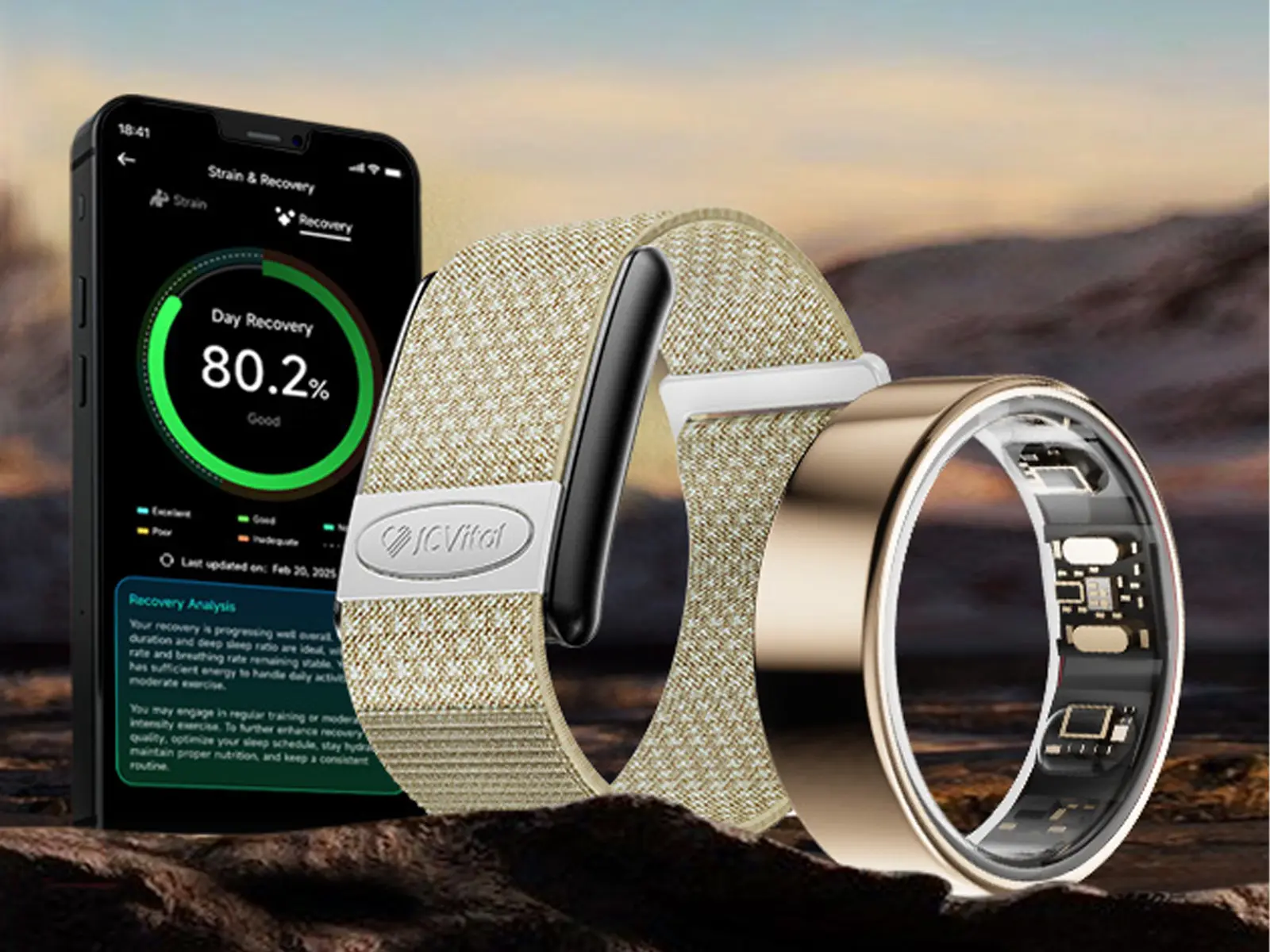
A smart wearable product requirements document (PRD) turns a business idea into a controlled, testable project baseline. It should define intended users, use conditions, device functions, data and integration needs, mechanical constraints, quality expectations, target markets, acceptance criteria, responsibilities and change control. The document should state what is required, why it matters and how each requirement will be verified—without assuming that every platform or model can support it.
For a smart ring, smart band or connected health wearable, a vague feature list is not enough. Hardware, firmware, algorithms, mobile applications, cloud services, packaging, market requirements and manufacturing decisions interact. A late change to one layer can affect battery life, enclosure design, data access, validation, certification, cost and schedule.
This guide explains how B2B product teams can build a practical wearable PRD before supplier selection, sample evaluation or deeper OEM/ODM development. It is a general planning framework, not a specification for any particular J-Style model.
What Is a Wearable Product Requirements Document?
A wearable PRD records the approved product problem, users, intended use, system boundaries and measurable requirements. It connects commercial objectives to engineering and acceptance decisions. A useful PRD does not simply say that a product should be “accurate,” “comfortable,” “long-lasting” or “easy to integrate.” It defines the conditions and evidence required to make those statements meaningful.
The requirements-engineering principles in ISO/IEC/IEEE 29148 emphasize structured requirements across the system life cycle. A wearable project can apply the same discipline even when it is not claiming formal conformance to that standard.
| Requirement level | Question it should answer | Typical output |
|---|---|---|
| Business | Why should this product exist? | Target market, channel, value proposition and commercial constraints |
| User and use case | Who will use it, where and for what purpose? | User groups, use environments, workflows and intended-use boundaries |
| System | What must the complete device-to-application system do? | Device, firmware, app, SDK/API, BLE, cloud and data requirements |
| Component | What must each subsystem provide? | Mechanical, electrical, sensing, charging and software specifications |
| Verification | How will the team decide whether it passes? | Test method, conditions, sample size, evidence and acceptance limit |
1. Start With the Business Decision
Begin with the decision the product must support. A distributor selecting a ready platform, a fitness-app company integrating a screenless band and a digital-health team developing a new device do not need the same PRD.
- What business model and sales or deployment channel will be used?
- Which countries or regions are in scope?
- Who is the buyer, user, administrator and data recipient?
- Is the project a standard product, private-label configuration, OEM customization or deeper ODM development?
- What decision must samples, a proof of concept or a pilot enable?
- Which requirements are essential for launch, and which can be deferred?
When approaching potential suppliers, use the PRD together with a structured smart wearable RFQ. The PRD defines the controlled product need; the RFQ adds supplier-response and quotation inputs.
2. Define Intended Users, Intended Use and Claim Boundaries
State who will wear the product, how frequently, under which conditions and what the resulting information will be used for. Separate consumer wellness, fitness, occupational, research, enterprise and healthcare-related scenarios. Tracking, estimation, trends, wellness insight, risk assessment, screening and diagnosis are not interchangeable.
If a project may be positioned as a medical device, its intended use and target market can change design-control, evidence and regulatory obligations. For example, the U.S. Food and Drug Administration describes design controls for applicable medical devices as including design inputs, outputs, reviews, verification, validation, transfer and change control. That framework should not be presented as applicable to an unspecified wellness product without a product-specific regulatory assessment.
3. Describe the Product and System Boundary
Define what is inside and outside the project. The “product” may include more than the wearable itself:
- wearable device and charging accessory;
- embedded firmware and supported update method;
- mobile application or customer application integration;
- BLE services and characteristics, SDK, API or cloud interface;
- account, data storage and administration functions;
- packaging, labeling, instructions and sizing tools;
- test fixtures, production programming and release records;
- technical, quality and market documentation.
Use a responsibility matrix to show which party owns, supplies, approves and maintains each layer. The device, firmware, app and cloud responsibility guide provides a practical starting point.
4. Convert Features Into Testable Requirements
Every important requirement should be clear enough to evaluate. Avoid adjectives without conditions. Define the operating state, environment, configuration, method and acceptance evidence.
| Vague statement | Better requirement structure |
|---|---|
| Long battery life | Define enabled functions, measurement schedule, sync frequency, notification behavior, temperature range, battery-aging state and minimum operating duration. |
| Reliable Bluetooth | Define phone and OS scope, pairing flow, reconnection time, distance and interference conditions, background behavior, packet handling and pass criteria. |
| Accurate health data | Name the metric, reference method, population or test condition, calculation method, exclusions, error treatment and required evidence. Do not use clinical language without an applicable basis. |
| Waterproof | Define the required ingress or use condition, applicable method, sample configuration, preconditioning and post-test inspection. |
| Comfortable | Define size range, contact surfaces, materials, weight target, wear duration, user group and evaluation method. |
5. Specify Sensing and Data Requirements by Layer
A sensor name does not prove a finished metric or health outcome. Write requirements across the full data path:
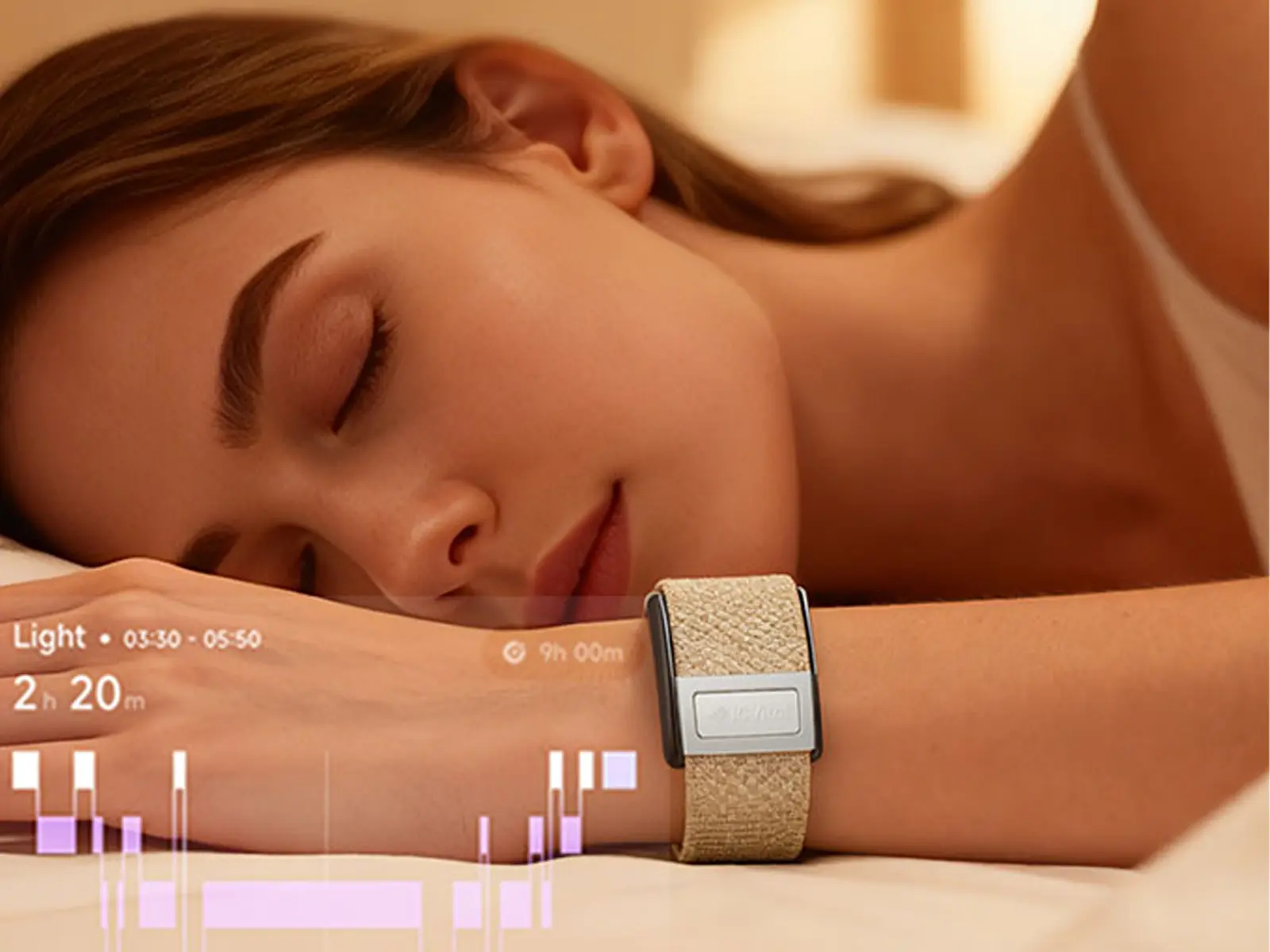
- Hardware: sensor type, placement, optical or electrical path and mechanical contact.
- Acquisition: sampling behavior, timing, resolution, operating modes and local storage.
- Signal processing: filtering, motion handling, quality flags and missing-data treatment.
- Algorithm: inputs, outputs, version, ownership, limitations and validation responsibility.
- Application: displayed metric, units, trends, alerts, export and interpretation language.
- Interface: raw or processed data availability, format, timestamp, sync behavior and permissions.
Do not assume that a company-level capability or a function available on one model applies to every product. Exact sensors, measurements, algorithms and interfaces must be confirmed for the selected platform.
6. Define BLE, SDK, API and Application Behavior
Integration requirements should describe the data path and operating behavior, not merely request an “open SDK.” The Bluetooth Core architecture distinguishes GAP functions such as discovery and connection from GATT services and characteristics used to discover, read, write and indicate data. Product teams should therefore define both connection behavior and application data behavior.
- supported mobile platforms and minimum OS versions;
- pairing, binding, unbinding and account rules;
- service, characteristic and permission requirements;
- real-time, stored and backfilled data;
- timestamps, time zones and clock synchronization;
- offline storage and data-loss behavior;
- reconnection, retries and duplicate handling;
- firmware and protocol version compatibility;
- SDK/API documentation, sample code and support boundaries;
- authentication, authorization, privacy and data retention responsibilities.
The wearable app integration readiness checklist can help convert these questions into an implementation plan.
7. Capture Mechanical, Power and User-Experience Constraints
Small wearables involve coupled constraints. Enclosure size affects battery volume, antenna performance, charging, sensor contact, thermal behavior and comfort. The PRD should state targets and priorities without prematurely locking an unverified design.
- form factor, approximate envelope and size strategy;
- wear location, orientation and expected daily wear duration;
- materials, finishes, colors and skin-contact considerations;
- button, LED, haptic and screenless interaction behavior;
- charging method, charge-state indication and accessory requirements;
- battery-use scenario rather than capacity alone;
- cleaning, sweat, water and environmental conditions;
- packaging, labeling, sizing tools and included accessories.
8. Plan Verification, Samples and Acceptance Evidence
Attach an acceptance method to every launch-critical requirement. State whether evidence will come from document review, inspection, functional testing, bench testing, user evaluation, external laboratory work, a pilot or another approved method. Identify the sample configuration, test owner, required record and decision authority.
Verification asks whether the output meets the requirement. Validation asks whether the resulting product supports the defined user need and intended use under appropriate conditions. The exact validation strategy depends on product scope and risk; it must not be replaced by general marketing claims. See the guide to wearable verification testing before a pilot for a staged framework.
9. Include Commercial and Delivery Assumptions Carefully
Volume, customization depth, variants, packaging and target markets affect feasibility. Record commercial assumptions separately from permanent product requirements so that changing forecasts do not silently alter the technical baseline.
- sample, pilot, first-order and annual volume ranges;
- number of sizes, colors, packaging versions and regional variants;
- required branding, artwork and approval responsibilities;
- target windows for feasibility, samples, pilot and launch;
- tooling, testing and certification responsibilities;
- ownership and licensing expectations for firmware, apps, interfaces and algorithms;
- change-notification, obsolescence and post-launch support expectations.
MOQ and schedule should be confirmed for the selected platform and scope. As an approved working commercial foundation, J-Style projects generally start around 1,000 units, while the actual MOQ varies by model and configuration. Standard-product OEM private-label projects can typically deliver a first batch in 4–8 weeks, while deep ODM projects commonly require 4–6 months. Final scope and timing must be confirmed during project planning; these ranges are not universal guarantees.
10. Baseline, Prioritize and Control Changes
Assign each requirement an identifier, owner, priority, source, status and verification method. A simple priority system—such as must, should, could and excluded—helps teams make tradeoffs without losing the launch baseline.
Once approved, record the PRD version and date. Proposed changes should describe the reason and expected effect on hardware, firmware, algorithms, app, tooling, testing, documentation, MOQ, cost and schedule. Approval should come from the people responsible for the affected decision, not from an informal message thread.
Wearable PRD Review Checklist
- Is the business objective and intended use explicit?
- Are users, use environments and target markets identified?
- Is the complete device-to-cloud system boundary clear?
- Are required, optional and excluded functions separated?
- Are sensing claims and data outputs described by layer?
- Are BLE, SDK, API, app and cloud responsibilities defined?
- Are mechanical, charging, battery and packaging constraints included?
- Does every critical requirement have an acceptance method?
- Are model, firmware, app and document versions controlled?
- Are commercial assumptions distinguished from technical requirements?
- Are ownership, approval and change-control responsibilities assigned?
- Have unsupported medical, performance or certification assumptions been removed?
From PRD to Wearable Project Discussion
A strong PRD does not guarantee that every requirement is feasible. It makes feasibility visible. A supplier can map requirements to an existing platform, identify conditional customization, explain evidence gaps and estimate the work needed for samples, integration, validation and production.
J-Style can discuss smart wearable product, OEM/ODM and SDK/API project requirements. Exact product functions, interfaces, data scope, customization, evidence, MOQ and schedule must be confirmed for the selected model and project.
Primary References
- ISO/IEC/IEEE 29148:2018 — Requirements engineering
- Bluetooth Core Specification — Architecture, GAP and GATT
- U.S. FDA — Design controls for applicable medical devices
Editorial note: This article provides general B2B product-planning information. It does not establish the specifications, regulatory status, certification, performance or availability of any particular product. Requirements and evidence must be confirmed for the exact product, configuration, intended use and target market.