

Updated 4 months ago
Women's Health Smart Ring OEM Guide: Building Femtech Wearable Solutions in 2026
youhong

Women's health has become one of the fastest-growing areas within the global digital health and wearable technology ecosystem. As consumers, healthcare organizations, and Femtech companies increasingly focus on personalized wellness, wearable devices are evolving from general activity trackers into more specialized platforms designed to support women's unique health journeys.
A Women's Health Smart Ring represents an emerging category within this transformation. Combining compact wearable hardware, biometric sensors, mobile applications, and AI-powered insights, smart rings provide Femtech platforms with new opportunities to develop continuous wellness experiences centered around sleep, recovery, activity patterns, physiological trends, and women's health-related insights.
For companies entering the Femtech market, selecting the right Smart Ring OEM partner is a critical step. Unlike traditional consumer electronics, women's health wearables require careful consideration of product design, sensor integration, firmware optimization, mobile app development, data interpretation, privacy considerations, and manufacturing consistency.
An experienced OEM manufacturer can support Femtech brands throughout the complete product development lifecycle, from industrial design and prototype development to firmware customization, application integration, SDK/API connectivity, and mass production.
According to the World Health Organization, digital health technologies continue to create new opportunities for improving health information access, personalized health management, and healthcare innovation. Wearable technology represents an important component of this broader digital health transformation.
Source: World Health Organization Digital Health Strategy
For Femtech platforms, smart rings offer several potential advantages:
- Compact and discreet wearable form factor
- Continuous biometric data collection
- Comfortable long-term wearing experience
- Integration with mobile health applications
- Personalized wellness insights
- Scalable digital health ecosystem development
However, building a successful Women's Health Smart Ring requires more than selecting hardware components. Brands need a manufacturing partner capable of combining wearable engineering expertise with software, AI, quality management, and global production capabilities.
This OEM guide explains the key considerations for Femtech companies developing Women's Health Smart Ring solutions, including product design, sensor technology, software integration, AI applications, manufacturing quality, and partnership evaluation.

What Is a Women's Health Smart Ring?
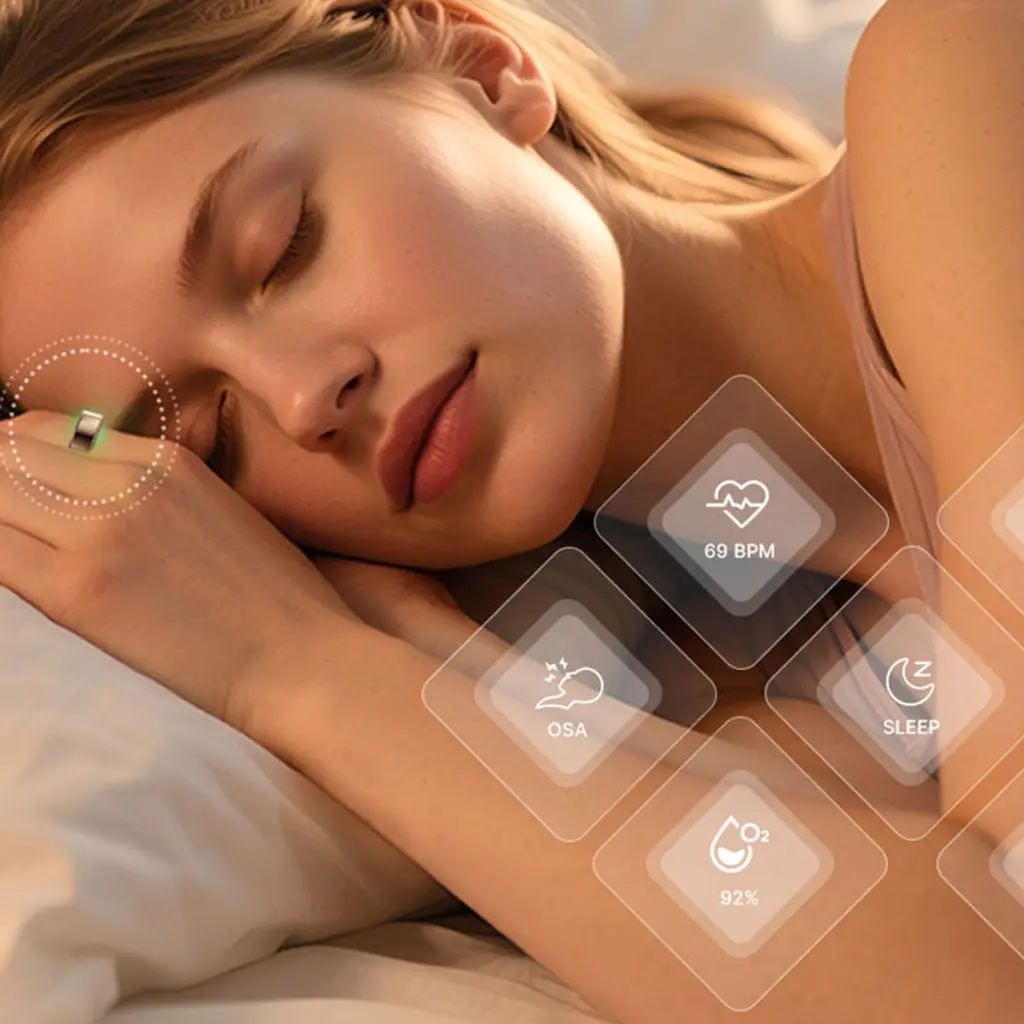
A Women's Health Smart Ring is a wearable device designed to collect and analyze physiological signals related to daily wellness, activity, sleep, recovery, and health trends.
Unlike traditional wearable devices focused primarily on notifications or basic activity tracking, smart rings are designed around continuous data collection through miniaturized sensors integrated into a compact ring structure.
For Femtech platforms, smart rings can serve as a hardware foundation for developing personalized women's wellness ecosystems.
Typical smart ring capabilities may include:
- Heart rate monitoring
- Heart rate variability (HRV) analysis
- Sleep tracking
- Activity monitoring
- Skin temperature trend analysis
- Recovery insights
- Women's wellness tracking
- Mobile application integration
- AI-supported wellness analysis
⚠️ Important Note: Wearable devices provide wellness information and trends. They are not intended to diagnose medical conditions or replace professional medical evaluation.
Why Femtech Platforms Are Exploring Smart Ring OEM Solutions
The Femtech industry has expanded rapidly as technology companies develop solutions addressing women's health and wellness needs.
According to industry research from McKinsey & Company, women's health represents a significant opportunity area within healthcare innovation, with increasing attention toward technology-enabled solutions.
Source: McKinsey Health Institute Women's Health Report
For Femtech companies, smart rings provide several development opportunities.
Continuous Wellness Data Collection
Women's health is influenced by multiple physiological and lifestyle factors. Continuous wearable data may help platforms analyze long-term trends related to:
- Sleep quality
- Recovery patterns
- Activity levels
- Daily routines
- Physiological changes
Longitudinal data can support more personalized wellness experiences when combined with appropriate algorithms and user-provided information.
Comfortable Long-Term Wear Experience
Wearability is especially important for women's health applications because many insights depend on consistent device usage.
A smart ring design offers:
- Lightweight form factor
- Discreet appearance
- Continuous wearing capability
- Compatibility with sleep tracking scenarios
For OEM development, comfort, materials, sizing options, and ergonomic design should be considered from the earliest product planning stage.
Building Digital Women's Wellness Ecosystems
Modern Femtech platforms often extend beyond hardware. A complete ecosystem may include:
- Smart ring hardware
- Mobile application
- Cloud platform
- AI analytics
- User dashboards
- Healthcare integrations
- SDK/API connections
For brands, the smart ring becomes one component of a larger digital health experience.

Key Considerations When Developing a Women's Health Smart Ring
Developing a smart ring for Femtech applications requires coordination across multiple technical areas.
Industrial Design and User Experience
A Women's Health Smart Ring must balance:
- Comfort
- Appearance
- Durability
- Sensor performance
- Battery capacity
- Manufacturing feasibility
Because users may wear the device continuously, industrial design decisions directly influence adoption and engagement.
Important design considerations include:
- Ring thickness
- Weight distribution
- Skin contact design
- Material selection
- Size range
- Daily comfort
Sensor Technology Integration
Smart rings rely on multiple sensors working together within a limited physical space.
Common wearable sensor technologies include:
PPG Sensors
Photoplethysmography (PPG) sensors use optical signals to capture physiological information related to blood volume changes. PPG technology is commonly used in wearable applications supporting metrics such as:
- Heart rate
- Heart rate trends
- HRV-related analysis
Temperature Sensors
Skin temperature trend monitoring can support wellness applications by identifying changes over time.
Motion Sensors
Accelerometers and motion sensors support activity recognition and movement analysis.
Women's Health Data Applications
Femtech platforms may develop applications around areas such as:
- Menstrual cycle tracking
- Lifestyle patterns
- Sleep trends
- Recovery awareness
- Fitness adaptation
- Personal wellness insights
The specific functionality depends on software design, algorithms, regulatory requirements, and intended market positioning.

Smart Ring Firmware and APP Development for Femtech Platforms
A successful Women's Health Smart Ring requires close integration between hardware and software.
Firmware Optimization
Firmware manages communication between:
- Sensors
- Bluetooth modules
- Battery systems
- Mobile applications
- Data processing components
Important firmware considerations include:
- Low-power operation
- Stable Bluetooth communication
- Sensor scheduling
- Data accuracy optimization
- Firmware update capability
Mobile APP Development
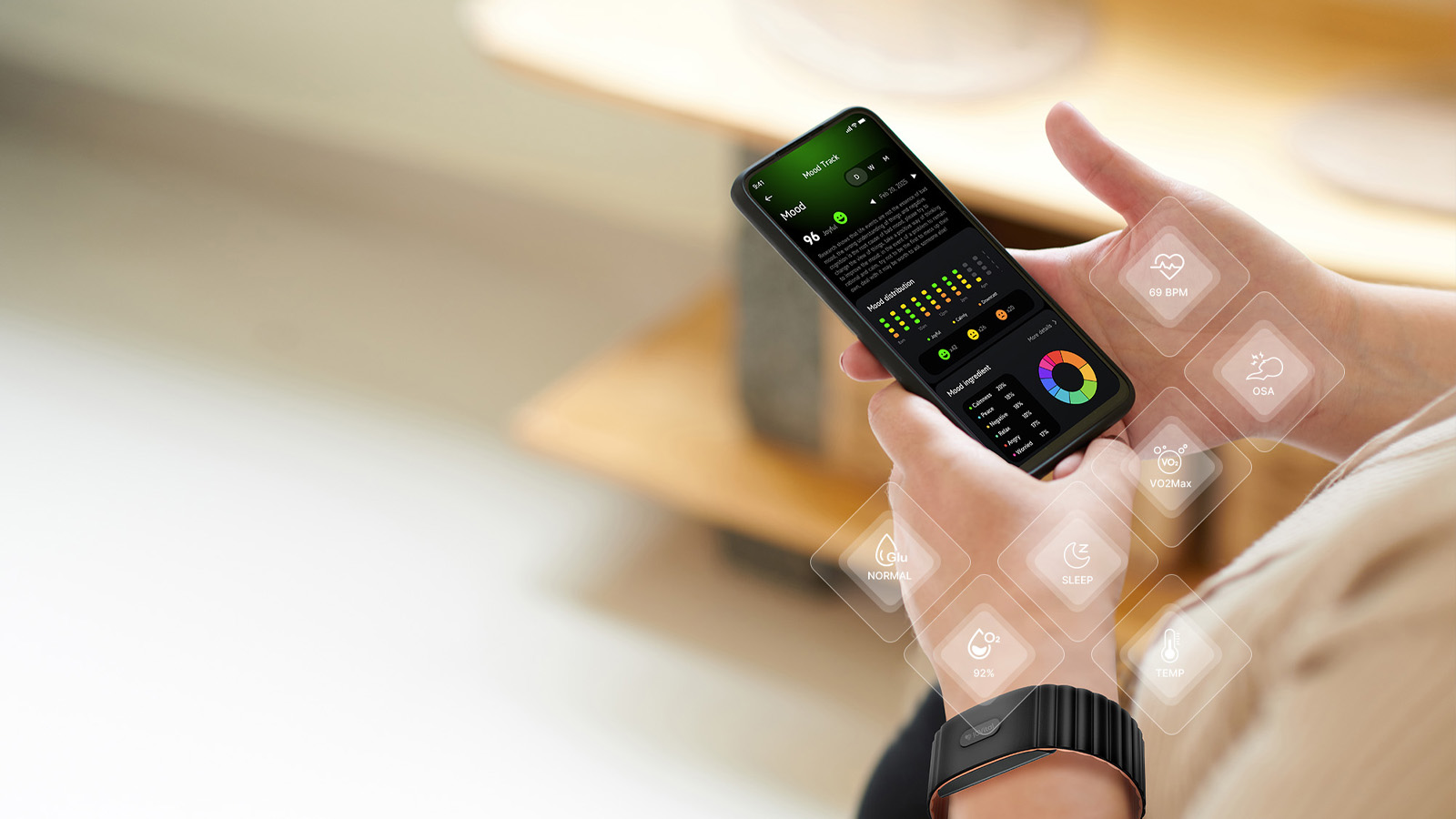
The mobile application is the primary user interface for many wearable platforms.
Femtech applications may include:
- Personalized dashboards
- Wellness trends
- Sleep reports
- Activity insights
- Device management
- User education content
App design should consider:
- User privacy
- Data security
- User experience
- Regional compliance requirements
AI, SDK, and Data Integration for Women's Health Smart Ring Platforms
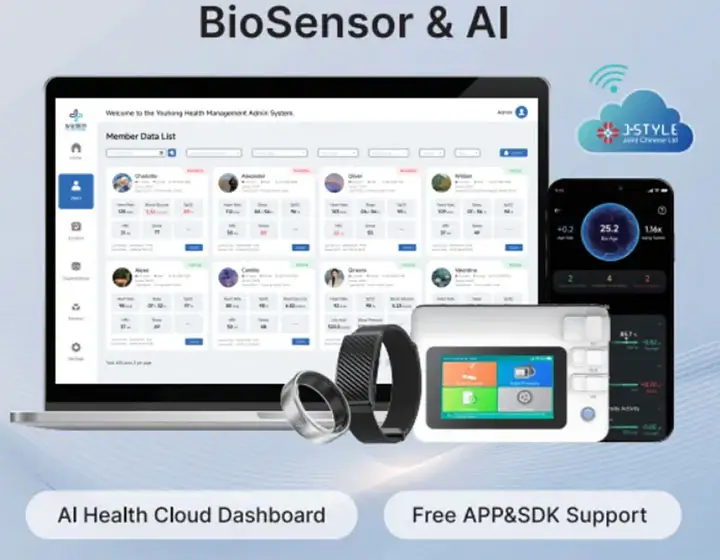
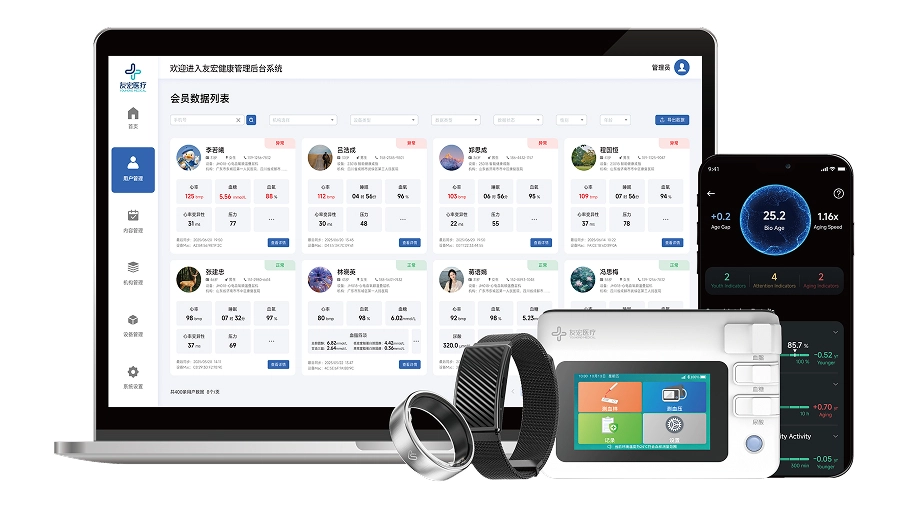
As Femtech platforms evolve, hardware alone is no longer the only consideration. Modern wearable ecosystems increasingly combine sensor technology, software platforms, cloud services, and artificial intelligence to transform raw biometric signals into meaningful wellness experiences.
For companies developing a Women's Health Smart Ring OEM solution, evaluating AI capability, data integration, and software flexibility is essential for creating scalable digital health platforms.
AI-Powered Wellness Insights
Artificial intelligence plays an increasingly important role in wearable technology by helping analyze complex datasets collected from multiple physiological signals.
For Women's Health Smart Ring platforms, AI technologies may support:
- Pattern recognition
- Trend analysis
- Personalized wellness recommendations
- Sleep and recovery interpretation
- Activity insights
- Lifestyle pattern analysis
Rather than focusing only on individual data points, AI systems can evaluate changes over time and provide users with broader wellness perspectives.
However, AI-generated insights should always remain within the intended scope of wellness support.
⚠️ Important Clarification: If a wearable platform provides blood glucose risk assessment, this refers to an algorithm-based assessment of potential risk trends based on available physiological data. It does not measure actual blood glucose values, cannot diagnose diabetes or other medical conditions, and should not replace professional medical advice or laboratory testing.
Clear communication of AI capabilities is important for maintaining user trust and meeting responsible technology development standards.
SDK and API Integration for Femtech Ecosystems
Many Femtech companies are not building standalone wearable products. Instead, they are creating connected health ecosystems that require integration between wearable devices and existing digital platforms.
A capable Smart Ring OEM partner should provide software integration options that allow brands to develop customized experiences.
Potential SDK and API applications include:
- Mobile application integration
- Cloud platform connectivity
- Enterprise wellness systems
- Digital health applications
- Research platforms
- Third-party software ecosystems
Why SDK Capability Matters for OEM Projects
SDK support allows brands to have greater flexibility in how wearable data is used within their own applications.
For example, Femtech companies may develop:
- Personalized women's wellness dashboards
- Health coaching platforms
- Lifestyle management applications
- Corporate wellness solutions
- Research-based health programs
Instead of developing every component from the beginning, SDK and API capabilities can help accelerate product development and ecosystem expansion.
Privacy and Responsible Data Management
Women's health data is highly personal, making privacy and responsible data management critical considerations for Femtech platforms.
OEM buyers should evaluate whether wearable solutions support:
- Secure data transmission
- User permission management
- Data protection practices
- Regional privacy requirements
- Transparent user communication
Depending on the target market, companies may need to consider applicable regulations and privacy frameworks.
Examples include:
- GDPR requirements in Europe
- Data protection regulations in different regions
- Healthcare-related compliance requirements where applicable
A responsible wearable ecosystem requires collaboration between hardware manufacturers, software developers, and platform operators.
Manufacturing Requirements for Women's Health Smart Ring OEM Projects
Moving from concept to commercial product requires strong manufacturing capabilities.
A smart ring contains highly integrated components within a compact structure, making production precision especially important.
Key manufacturing considerations include:
- Miniaturized component assembly
- Waterproof structure
- Sensor positioning accuracy
- Battery integration
- Quality control
- Production consistency
Waterproof Engineering for Women's Health Smart Rings
Because smart rings are designed for continuous wear, waterproof performance is an important product consideration.
JCRing Smart Rings are designed with a 5ATM water resistance rating, supporting everyday wearable scenarios according to applicable testing methodologies and manufacturer guidance.
Typical use scenarios may include:
- Hand washing
- Daily activities
- Exercise
- Sweat exposure
- Rain
- Certain surface water activities when supported by product instructions
Water resistance performance depends on product structure, manufacturing processes, materials, and validation procedures.
For comparison:
- JCRing Smart Rings → 5ATM water resistance
- JCVital Smart Bands → IP68 protection rating
These standards are based on different testing methodologies and are designed for different wearable categories. They should not be considered a direct ranking system.
Related resources:
Quality Management and Manufacturing Consistency
For Femtech companies, selecting an OEM manufacturer requires evaluating production reliability rather than only reviewing product specifications.
Important manufacturing factors include:
Production Process Control
A reliable smart ring manufacturing process requires control over:
- Component sourcing
- Assembly procedures
- Production parameters
- Testing procedures
- Batch consistency
Quality Assurance System
OEM buyers should review:
- Incoming material inspection
- Production quality control
- Final product testing
- Reliability validation
- Traceability procedures
Jointcorp follows structured quality management processes, including ISO 13485 quality management system practices for applicable medical device-related manufacturing activities.
Reliability Validation for Long-Term Wearables
Women's Health Smart Ring products are often designed for long-term daily usage.
Reliability validation may include:
- Waterproof verification
- Temperature testing
- Humidity testing
- Battery performance evaluation
- Mechanical durability testing
- Sensor performance validation
These evaluations help manufacturers identify potential issues before mass production and improve product consistency.
How Femtech Companies Should Select a Smart Ring OEM Partner
Choosing an OEM partner requires evaluating both technical capability and long-term collaboration potential.
A comprehensive evaluation checklist includes:
Hardware Capability
Evaluate:
- ✓ Smart ring industrial design experience
- ✓ Sensor integration capability
- ✓ Battery and power management
- ✓ Waterproof engineering
- ✓ Material selection
Software Capability
Evaluate:
- ✓ Firmware development
- ✓ APP development
- ✓ SDK/API availability
- ✓ Cloud integration support
- ✓ Data platform compatibility
AI Capability
Evaluate:
- ✓ Data analysis capability
- ✓ Wellness insight development
- ✓ Algorithm integration
- ✓ Responsible AI communication
Manufacturing Capability
Evaluate:
- ✓ Production capacity
- ✓ Quality management
- ✓ Manufacturing consistency
- ✓ Reliability testing
- ✓ Supply chain management
Why Jointcorp Supports Women's Health Smart Ring OEM Development
Developing a Women's Health Smart Ring requires collaboration between hardware engineering, software development, manufacturing, and quality management teams.
Jointcorp supports wearable technology projects through integrated development capabilities covering:
- Smart Ring OEM and ODM development
- Product design
- Hardware engineering
- Firmware development
- Mobile APP integration
- SDK/API solutions
- AI-enabled wellness platforms
- Quality management
- Manufacturing support
- Global delivery coordination
Rather than focusing only on production output, successful wearable development requires a complete product lifecycle approach—from early concept discussions to engineering validation and scalable manufacturing.
For Femtech platforms, this integrated approach helps create wearable solutions that align with market requirements, user expectations, and long-term product development goals.
Women's Health Smart Ring OEM Development Checklist
| Evaluation Area | Key Questions |
|---|---|
| Product Design | Does the design support comfortable long-term wear? |
| Sensors | Are biometric sensors integrated appropriately? |
| Firmware | Can the system support stable performance and updates? |
| APP | Can the application experience be customized? |
| SDK/API | Can the wearable integrate with existing platforms? |
| AI | Are wellness insights communicated responsibly? |
| Quality | Are production processes standardized? |
| Waterproof | Does the product meet intended usage requirements? |
| Manufacturing | Can production scale consistently? |
| Global Support | Can the supplier support international projects? |
Frequently Asked Questions
What is a Women's Health Smart Ring?
A Women's Health Smart Ring is a wearable device designed to collect physiological and lifestyle data that can support wellness applications related to sleep, activity, recovery, and women's health tracking.
It provides wellness insights and is not intended to diagnose medical conditions.
Why are Femtech companies developing smart ring solutions?
Smart rings provide a compact wearable form factor that can support continuous data collection and integration with digital wellness platforms.
They allow Femtech companies to develop personalized user experiences combining hardware, software, and AI technologies.
What waterproof rating does JCRing Smart Ring use?
JCRing Smart Rings use a 5ATM water resistance rating.
The rating is designed according to applicable water resistance testing methodologies and supports everyday wearable scenarios based on manufacturer guidance.
Can a smart ring measure blood glucose?
Smart wearable platforms may provide blood glucose risk assessment through algorithmic analysis of physiological signals.
However, this is a risk assessment feature only. It does not measure blood glucose values directly, cannot diagnose diabetes, and should not replace professional medical testing.
What should Femtech companies consider when selecting a smart ring OEM?
Important factors include:
- Hardware engineering
- Sensor integration
- Firmware capability
- APP development
- SDK/API support
- AI capabilities
- Manufacturing quality
- Reliability testing
- Global delivery capability
Conclusion
The development of a Women's Health Smart Ring for Femtech platforms requires much more than wearable hardware.
Successful products combine:
- Human-centered design
- Sensor technology
- Firmware optimization
- Mobile applications
- AI-powered wellness insights
- Data integration
- Manufacturing quality
- Reliable supply chains
For brands entering the Femtech wearable market, choosing an experienced Smart Ring OEM partner is an important step toward building scalable digital wellness solutions.
With capabilities covering smart ring design, firmware, APP development, SDK integration, AI wellness technologies, ISO 13485 quality management practices, manufacturing, and global delivery support, Jointcorp provides an integrated development framework for companies creating next-generation women's health wearable platforms.
This guide is intended for informational purposes and does not constitute medical advice. All wearable devices should be used in accordance with manufacturer instructions and applicable regulations.
About the Author
The J-Style(Jointcorp|Joint Chinese Ltd | Youhong Medical) Wearable Technology Team brings together biomedical engineers, embedded software developers, hardware engineers, industrial designers, product managers, and global B2B specialists, all dedicated to advancing next-generation wearable technology.
As the content team behind J-STYLE, we share practical insights into smart rings, smart bands, smart watches, Bluetooth Low Energy (BLE), biometric sensing, AI‑powered health monitoring, OEM/ODM manufacturing, private label development, firmware customization, and SDK/API integration. Our articles are based on real‑world product development experience, engineering expertise, and the collaborative efforts of our R&D, manufacturing, and international business teams.
Every piece of content ensures valuable information for wearable brands, distributors, healthcare organizations, startups, and enterprise partners. Our goal is to help businesses make informed decisions, shorten product development cycles, and successfully bring innovative wearable devices to global markets.