

Updated 3 months ago
Smart Ring 5ATM Waterproof: What It Means and Why It Matters for OEM
youhong
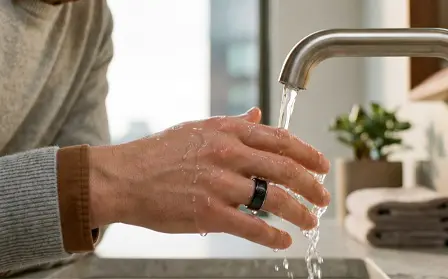
As smart rings continue to evolve from niche wearable gadgets into mainstream health and wellness devices, durability has become just as important as sensor accuracy, battery life, and industrial design. Whether users wear a smart ring during workouts, while washing their hands, in the shower, or throughout a busy workday, they increasingly expect the device to perform reliably in a variety of real-world environments. Among the many technical specifications buyers evaluate, waterproof performance is one of the most frequently discussed—and often misunderstood.
One specification that appears on many premium wearable products is 5ATM waterproof. Although the term is widely used across the wearable electronics industry, many procurement managers, product developers, distributors, and even end users are uncertain about what it actually represents. Does 5ATM mean a smart ring can be worn while swimming? Is it equivalent to an IP68 rating? How is waterproof performance verified during manufacturing? More importantly for OEM and ODM projects, how does waterproof engineering influence product quality, production consistency, and long-term reliability?

Understanding these questions is increasingly important as the global wearable technology market continues to expand. Industry analysts expect wearable devices to play an even greater role in digital health, fitness tracking, and connected healthcare ecosystems throughout 2026 and beyond. As manufacturers integrate advanced biosensors capable of monitoring metrics such as heart rate, heart rate variability (HRV), sleep patterns, blood oxygen saturation (SpO₂), skin temperature trends, and wellness indicators, these sensitive electronic components must remain protected from moisture, sweat, and everyday environmental exposure. Effective waterproof engineering helps safeguard sensor stability and supports consistent device performance over time.
For companies developing their own branded wearable products, waterproof capability is not simply a marketing specification—it is an engineering consideration that influences product architecture, material selection, manufacturing processes, testing procedures, quality assurance, warranty planning, and customer satisfaction. Selecting an OEM partner with proven expertise in waterproof design can therefore have a significant impact on the long-term success of a product line.
It is also important to recognize that different wearable devices may use different waterproof classification systems depending on their product category and intended use. For example, JCRing smart rings are designed with a 5ATM water resistance rating, making them suitable for a wide range of daily activities where exposure to water is expected. By comparison, JCVital smart bands are designed with an IP68 protection rating, reflecting a different international testing methodology commonly applied to electronic devices. Because these ratings are based on different standards and test conditions, they should not be viewed as directly interchangeable or used to determine that one product is inherently superior to another. Instead, each rating is intended to communicate performance within its respective testing framework and product application.
For OEM buyers, understanding these distinctions helps establish realistic product requirements and facilitates more informed technical discussions during product development. Rather than focusing solely on a waterproof label, experienced procurement teams typically evaluate the complete engineering process behind the rating, including sealing structures, material compatibility, assembly precision, environmental testing, quality control protocols, and mass production consistency. These factors collectively determine whether waterproof performance can be maintained throughout the product's lifecycle and across large-scale manufacturing.
This guide explains what 5ATM waterproof means in the context of smart rings, how it differs from other commonly used waterproof standards, and why it is an important consideration for OEM and ODM projects. It also explores the engineering principles, manufacturing practices, and quality assurance processes that contribute to dependable waterproof performance. Whether you are launching a new wearable brand, expanding an existing product portfolio, or evaluating manufacturing partners for your next smart ring project, understanding waterproof technology can help support better product decisions and long-term customer confidence.
In the following sections, we will examine the technical meaning of 5ATM water resistance, compare it with other waterproof classifications, discuss how waterproof performance is validated during production, and outline the key factors OEM buyers should consider when selecting a manufacturing partner for smart ring development. This knowledge provides a stronger foundation for evaluating wearable products based on engineering quality rather than specifications alone, supporting more informed sourcing decisions in today's increasingly competitive wearable technology market.
What Does 5ATM Waterproof Mean?
One of the most common specifications found on modern wearable devices is 5ATM water resistance, yet it is also one of the most misunderstood. Many buyers assume that a waterproof rating simply indicates whether a device can survive contact with water. In reality, a 5ATM rating represents the outcome of standardized engineering tests designed to evaluate a product's ability to resist water pressure under controlled laboratory conditions.
For smart ring manufacturers, achieving a 5ATM rating requires far more than simply sealing the enclosure. Every component—including the housing, sensor window, charging interface, adhesives, sealing materials, and assembly process—must work together to prevent water intrusion while maintaining reliable sensor performance and long-term durability.
For OEM and ODM projects, understanding the meaning of 5ATM helps product managers establish realistic performance expectations, evaluate manufacturing capabilities, and communicate accurate product specifications to end customers.
What Does "5ATM" Actually Mean?
ATM stands for Atmospheres, a unit used to describe pressure rather than water depth alone.
A 5ATM water resistance rating indicates that a product has been tested to withstand static pressure equivalent to 5 atmospheres, or approximately:
- 50 meters (164 feet) of static water pressure
- 5 bar
- 500 kPa (kilopascals)
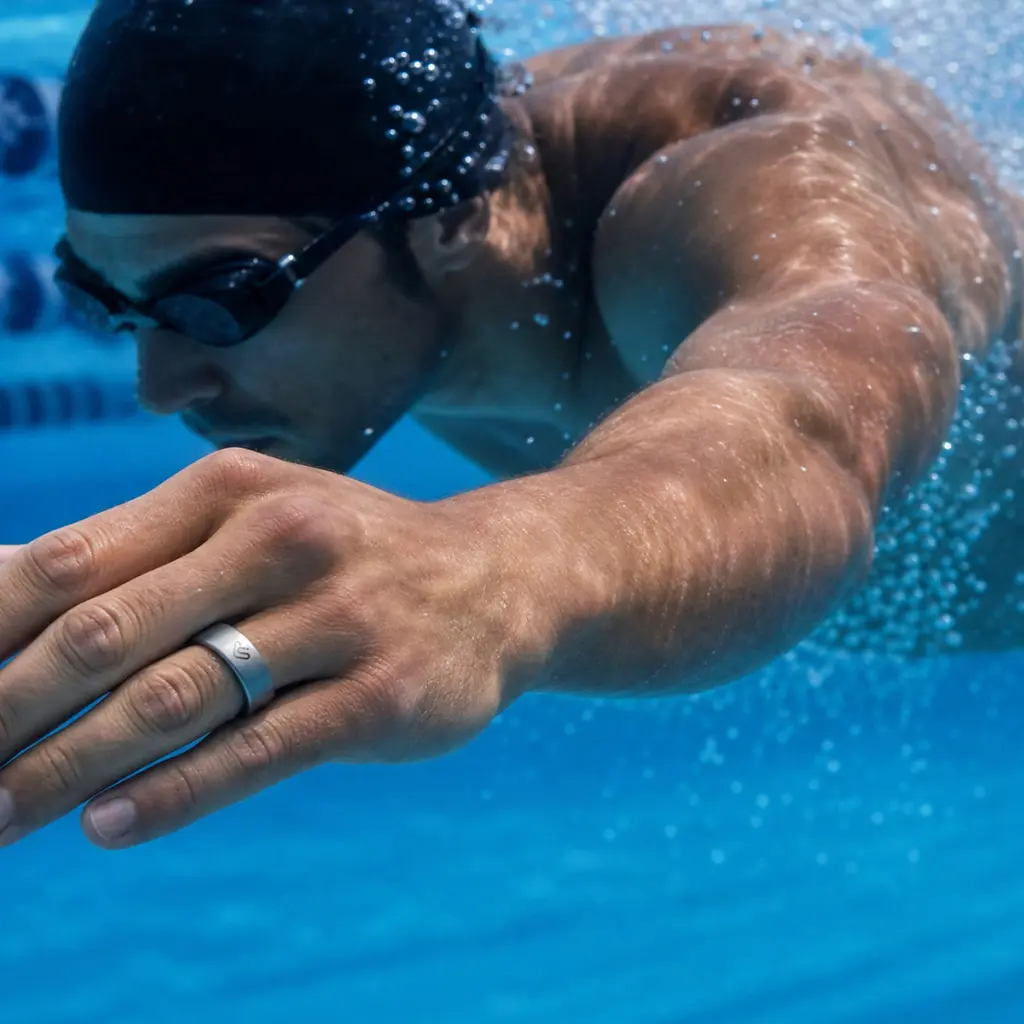
⚠️ Important: This does not mean a user can safely dive to a depth of 50 meters while wearing the device. The testing is performed under controlled laboratory conditions using static pressure, whereas real-world activities such as swimming, diving, or high-speed water sports generate dynamic pressure that can exceed laboratory test conditions.
Consequently, waterproof ratings should always be interpreted according to the applicable international testing standard rather than as a direct indicator of maximum operating depth.
For smart rings intended for everyday wear, a 5ATM rating is generally designed to support common daily scenarios such as:
- Hand washing
- Showering
- Rain exposure
- Sweating during exercise
- Surface swimming (subject to the manufacturer's usage guidance)
Users should always follow the specific care and usage recommendations provided by the product manufacturer.
ISO 22810 Explained
The internationally recognized reference for water-resistant watches is ISO 22810:2010 – Horology — Water-resistant watches, published by the International Organization for Standardization (ISO).
Official Standard: https://www.iso.org/standard/45334.html
Although smart rings are not classified as traditional watches, many wearable manufacturers reference the same water-resistance methodology because it provides a well-established framework for evaluating sealed wearable devices exposed to moisture during daily use.
According to ISO 22810, manufacturers evaluate multiple aspects of water resistance, including:
- Resistance to water pressure
- Condensation testing
- Immersion performance
- Temperature variation
- Sealing integrity
- Mechanical reliability after testing
Rather than relying on a single immersion test, the standard emphasizes a comprehensive verification process intended to ensure that a product maintains its sealing performance under specified laboratory conditions.
For OEM buyers, compliance with internationally recognized testing methodologies demonstrates that waterproof performance is based on repeatable engineering validation rather than marketing terminology alone.

Why Waterproof Engineering Matters
Achieving a 5ATM rating is the result of careful engineering throughout the product development process. Typical design considerations include:
- Precision-machined enclosure tolerances
- High-performance waterproof adhesives
- Sensor window sealing
- Structural gasket design
- Controlled assembly environments
- Production quality control
- Pressure testing during validation
Even small deviations in manufacturing can influence sealing performance. As a result, experienced OEM manufacturers place significant emphasis on process consistency, inspection procedures, and reliability testing during mass production.
Why 5ATM Is Different from IP Ratings
One of the most common questions from OEM customers is whether 5ATM is the same as IP68.
The answer is no.
Although both ratings relate to protection against water, they are developed under different international standards and evaluate different aspects of product performance.
5ATM
- Measures resistance to water pressure
- Based on pressure testing
- Commonly used for watches and wearable devices
- Focuses on water resistance during everyday use
IP Ratings
- Measure protection against solid particles and water ingress
- Defined under the IEC 60529 standard
- Widely used for consumer electronics
- Evaluates dust protection together with water ingress resistance
Because these standards have different testing methodologies, they should not be compared directly.
Instead, manufacturers select the rating system that best reflects the product category and intended use.
Understanding IP68
IP68 is one of the highest commonly used protection ratings for electronic products.
The designation consists of two numbers:
First digit (6) – Protection against dust.
A rating of 6 indicates complete protection against dust ingress under specified test conditions.
Second digit (8) – Protection against water immersion.
The exact immersion conditions for IP68 are specified by the manufacturer but generally exceed the requirements of IP67.
For wearable electronics such as smart bands, IP68 commonly indicates protection suitable for daily exposure to water under defined testing conditions. For example:
- Hand washing
- Rain
- Sweat
- Accidental immersion
- Daily outdoor activities
Actual operating conditions always depend on the manufacturer's published specifications.
5ATM vs IP68
Although consumers often compare these two ratings, they represent different testing philosophies.
For example:
- JCRing Smart Rings → Designed with a 5ATM water resistance rating
- JCVital Smart Bands → Designed with an IP68 protection rating
Neither rating should be interpreted as universally "better" than the other. Instead, each reflects the applicable international standard selected for the product's design, structure, and intended use.
For OEM projects, the appropriate waterproof specification should be determined according to:
- Product category
- Industrial design
- Intended user scenarios
- Engineering architecture
- Customer requirements
- Applicable testing standards
Selecting the correct waterproof approach early in product development helps improve manufacturing consistency and supports accurate product positioning.
Comparison Table
| Feature | 5ATM Water Resistance | IP68 Protection Rating |
|---|---|---|
| Primary Standard | ISO 22810 methodology (water resistance) | IEC 60529 (Ingress Protection) |
| Main Evaluation | Resistance to water pressure | Resistance to dust and water ingress |
| Pressure Tested | Yes | Not expressed as ATM pressure |
| Dust Protection | Not specifically rated | Yes (Level 6 – dust-tight) |
| Water Testing | Static pressure testing | Controlled immersion testing |
| Typical Applications | Smart rings, watches, wearable accessories | Smart bands, electronic devices, wearables |
| Suitable Daily Scenarios* | Hand washing, showering, exercise, rain, surface swimming (manufacturer guidance applies) | Hand washing, rain, sweat, accidental immersion (manufacturer guidance applies) |
| Directly Comparable | No | No |
*Actual water resistance depends on product design, manufacturing quality, aging, maintenance, and the manufacturer's usage instructions. Water resistance may decrease over time due to normal wear, impacts, or damage.
Key Takeaways
A 5ATM rating indicates that a smart ring has been engineered and tested to resist water pressure under standardized laboratory conditions, while IP68 evaluates protection against both dust and water ingress using a different international testing framework. Because these ratings are based on different standards, they are complementary rather than directly comparable.
For OEM buyers, the focus should extend beyond the waterproof label itself. A reliable wearable product depends on robust structural design, validated testing procedures, consistent manufacturing processes, and comprehensive quality control. Understanding the engineering behind waterproof ratings enables brands to make better sourcing decisions and develop products that deliver dependable performance in everyday use.
References
- International Organization for Standardization (ISO). ISO 22810:2010 — Horology — Water-resistant watches: https://www.iso.org/standard/45334.html
- International Electrotechnical Commission (IEC). IEC 60529 — Degrees of Protection Provided by Enclosures (IP Code): https://www.iec.ch
About the Author
The J-Style(Jointcorp|Joint Chinese Ltd | Youhong Medical) Wearable Technology Team brings together biomedical engineers, embedded software developers, hardware engineers, industrial designers, product managers, and global B2B specialists, all dedicated to advancing next-generation wearable technology.
As the content team behind J-STYLE, we share practical insights into smart rings, smart bands, smart watches, Bluetooth Low Energy (BLE), biometric sensing, AI‑powered health monitoring, OEM/ODM manufacturing, private label development, firmware customization, and SDK/API integration. Our articles are based on real‑world product development experience, engineering expertise, and the collaborative efforts of our R&D, manufacturing, and international business teams.
Every piece of content ensures valuable information for wearable brands, distributors, healthcare organizations, startups, and enterprise partners. Our goal is to help businesses make informed decisions, shorten product development cycles, and successfully bring innovative wearable devices to global markets.