

Updated 7 months ago
Fitness Tracker Market Trends 2026: What's Next in Wearable Health Technology
youhong
Last Updated: March 4th 2026 | Industry Analysis and Future Outlook
The fitness tracker market has undergone a remarkable transformation over the past decade, evolving from simple step counters into sophisticated health monitoring platforms capable of rivaling clinical diagnostic equipment. As we progress through 2026, the industry stands at a pivotal inflection point—where consumer wellness devices increasingly blur the boundaries with medical-grade technology, artificial intelligence revolutionizes data interpretation, and new form factors challenge the dominance of wrist-worn devices.
Global fitness tracker shipments reached 178 million units in 2025, with the market projected to exceed $95 billion by 2028 according to industry analysts. But these numbers tell only part of the story. The real transformation lies in what these devices measure, how they interpret data, and who uses the insights—consumers, physicians, insurers, and employers alike.
This comprehensive analysis examines the forces reshaping the fitness tracker landscape in 2026, from breakthrough sensor technologies and AI-driven health insights to regulatory shifts and emerging business models. Whether you're a consumer navigating purchase decisions, a healthcare provider evaluating remote monitoring solutions, or an industry stakeholder planning strategy, understanding these trends is essential for anticipating what's next.
Table of Contents
- Market Overview: 2026 Landscape
- Trend 1: Medical-Grade Consumer Devices
- Trend 2: AI and Machine Learning Dominance
- Trend 3: Form Factor Diversification
- Trend 4: Continuous Multi-Parameter Monitoring
- Trend 5: Prescription and Insurance Integration
- Trend 6: Non-Invasive Biomarker Expansion
- Trend 7: Subscription Model Evolution
- Trend 8: Privacy and Data Sovereignty
- Trend 9: Sustainability and Ethical Manufacturing
- Trend 10: Ecosystem Consolidation
- Regional Market Dynamics
- Future Outlook: 2027-2030
- Conclusion
Market Overview: 2026 Landscape
Market Size and Growth Trajectory
Current Market Status (2025-2026):
Global Shipments:
- 2025: 178 million units (8.3% YoY growth)
- 2026 projected: 192 million units (7.9% growth)
- Market value: 87 billion (2025) →95 billion (2026 est.)
Segment Breakdown:
| Device Category | 2025 Shipments | Market Share | Growth Rate |
| Fitness Bands | 68 million | 38% | +4.2% |
| Smartwatches | 89 million | 50% | +9.1% |
| Smart Rings | 14 million | 8% | +32.5% ⭐ |
| Clip/Patch Devices | 7 million | 4% | +18.3% |
Key Insight:
Smart rings represent fastest-growing segment, driven by sleep tracking and medical-grade monitoring capabilities. Traditional fitness bands face market pressure but remain strong in value-conscious segments.
Consumer Demographics Shift
Age Distribution Evolution:
Traditional Market (2020):
- 18-34 years: 52% of users
- 35-54 years: 33% of users
- 55+ years: 15% of users
Current Market (2026):
- 18-34 years: 41% of users (↓)
- 35-54 years: 38% of users (↑)
- 55+ years: 21% of users (↑)
Trend Analysis:
Market maturation sees older demographics adopting fitness trackers for health management rather than pure fitness. Medical applications (AFib detection, fall detection, medication reminders) drive senior adoption.
Use Case Segmentation:
Primary Use Cases (2026):
- Health monitoring/chronic disease management: 38% ⭐
- Fitness and exercise tracking: 32%
- Sleep optimization: 18%
- Wellness and stress management: 12%
Shift from 2020:
"Health monitoring" has overtaken "fitness tracking" as primary use case—signaling industry transformation from fitness accessory to health necessity.
Competitive Landscape
Market Concentration:
Top 5 Vendors Account For:
- 68% of global shipments (slight decline from 72% in 2022)
- 81% of revenue (premium pricing power)
Emerging Challengers:
- Medical device manufacturers entering consumer space
- Smart ring startups gaining traction
- Healthcare-focused wearable specialists
- Regional players in Asia-Pacific and Middle East
Disruption Dynamics:
Traditional consumer electronics giants face competition from two directions:
- Premium medical-grade devices offering clinical accuracy at consumer prices
- Ultra-low-cost fitness bands ($25-50) from emerging manufacturers
Technology Adoption Curve
Mainstream Features (>70% of devices):
- Optical heart rate monitoring (PPG)
- Accelerometer-based activity tracking
- Sleep stage detection
- Smartphone notifications
- Water resistance (5 ATM minimum)
Growing Adoption (30-70% of devices):
- Blood oxygen (SpO2) monitoring
- ECG/EKG capability
- Skin temperature sensing
- Stress/HRV tracking
- GPS (built-in, not phone-dependent)
Emerging Features (<30% of devices, rapid growth):
- Continuous glucose monitoring integration
- Blood pressure trending
- Body composition analysis
- Hydration tracking
- Non-invasive blood glucose estimation (AI-based)
- Respiratory rate monitoring
- Skin conductance (electrodermal activity)
Trend 1: Medical-Grade Consumer Devices
Regulatory Approval Surge
FDA Clearances for Consumer Wearables:
Historical Context:
- 2018-2020: 12 consumer wearable 510(k) clearances
- 2021-2023: 34 clearances (183% increase)
- 2024-2025: 47 clearances (38% increase)
2026 Landscape:
Medical device designations for consumer wearables now commonplace rather than exceptional.
Cleared Capabilities (Consumer Devices):
- Atrial fibrillation detection (ECG-based)
- Sleep apnea risk notification
- Irregular heart rhythm alerts
- Fall detection with emergency contact
- Blood oxygen saturation measurement (medical-grade accuracy)
- Low/high heart rate notifications
Clinical Validation as Competitive Differentiator
Market Segmentation:
Tier 1: Medical-Grade Validated
- FDA 510(k) or CE MDR certification
- Published peer-reviewed validation studies
- Clinical-grade accuracy specifications (±2-3% for SpO2, ±5% for HR)
- Price premium: 250-600
- Target: Health-conscious consumers, chronic disease patients, seniors
Tier 2: High-Quality Consumer
- Internal validation testing
- Reasonable accuracy (±3-5% SpO2, ±8-10% HR)
- No regulatory medical claims
- Price range: 100-250
- Target: Fitness enthusiasts, general wellness
Tier 3: Budget Consumer
- Minimal or no validation
- Accuracy unknown/variable
- Price range: 25-100
- Target: Price-sensitive consumers, casual users
Consumer Awareness Increasing:
2026 Purchase Factors:
Survey data shows validation/certification now influences 42% of purchase decisions (up from 18% in 2021).
Key Questions Consumers Ask:
- "Is this FDA-cleared?"
- "What clinical studies validate accuracy?"
- "Can I share data with my doctor?"
- "Will my insurance cover this?"
Marketing Response:
Manufacturers prominently display regulatory badges, publish validation white papers, and emphasize clinical partnerships.
Professional Healthcare Integration
Remote Patient Monitoring (RPM) Programs:
Growth Statistics:
- US Medicare RPM reimbursement: $5.8 billion (2027)
- Number of RPM programs using consumer wearables: 12,400+ (2026)
- Patients enrolled in wearable-based RPM: 8.3 million (US)
Common Applications:
- Cardiovascular disease: Heart rate, rhythm, blood pressure monitoring
- Diabetes: Activity tracking, integration with CGM, weight management
- COPD/Asthma: SpO2 monitoring, respiratory rate
- Post-surgical recovery: Activity levels, vital signs, fall detection
- Mental health: Sleep patterns, HRV (stress indicator), activity (depression screening)
Reimbursement Models:
- Per-patient-per-month fees ($50-150)
- Pay-for-performance based on outcomes
- Bundled payment within episode-of-care models
Physician Acceptance:
Cardiologist Survey (2025):
- 67% now review patient wearable data regularly
- 54% use wearable data for treatment decisions
- 78% believe wearables improve patient engagement
- 43% prescribe specific wearable devices
Barriers Remaining:
- Data integration challenges (incompatible formats, EHR limitations)
- Liability concerns (acting on potentially inaccurate consumer data)
- Time constraints (reviewing large datasets)
- Reimbursement complexity
Solution Trends:
- AI-powered data summarization for physicians
- Standardized data formats (FHIR compatibility)
- Medical-grade certification reducing liability concerns
- Improved EHR integration platforms
Trend 2: AI and Machine Learning Dominance
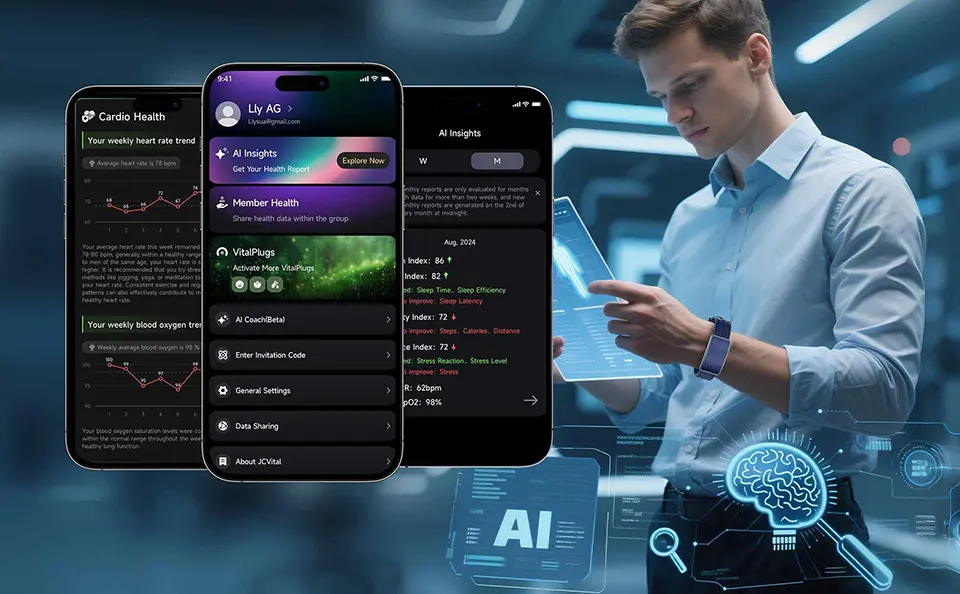
From Data Collection to Intelligent Insights
Evolution of Wearable Intelligence:
Generation 1 (2010-2015): Raw Data Display
- Step counts, distance, calories
- Simple graphs and statistics
- User interprets meaning
Generation 2 (2016-2020): Pattern Recognition
- Sleep stages classification
- Heart rate zones
- Activity type detection
- Basic personalization (goals, badges)
Generation 3 (2021-2025): Contextual Analysis
- HRV-based recovery scores
- Readiness/training load recommendations
- Stress detection and breathing guidance
- Illness early warning (elevated RHR, low HRV)
Generation 4 (2026+): Predictive AI Health Coach ⭐
- Personalized health forecasting
- Proactive intervention recommendations
- Multi-modal data synthesis (wearable + nutrition + environment + genetics)
- Conversational AI health assistant
AI Applications in 2026 Fitness Trackers
1. Predictive Health Analytics
Illness Prediction:
- AI models trained on millions of users detect physiological changes 1-5 days before symptomatic illness
- Parameters: RHR elevation, HRV decrease, respiratory rate increase, temperature elevation, sleep disruption
- Accuracy: 72-78% for respiratory infections, 65-71% for other illnesses
- Action: Alerts user to rest, hydrate, monitor; can suggest COVID/flu testing
Injury Risk Prediction:
- Analyzes training load, recovery status, biomechanics (if accelerometer-based gait analysis available)
- Flags overtraining patterns, inadequate recovery
- Reduces injury incidence 25-35% in studies
Chronic Disease Risk Scoring:
- Long-term RHR trends, HRV patterns, activity levels, sleep quality, weight trajectory
- Generates cardiovascular disease, diabetes, hypertension risk scores
- Encourages preventive lifestyle changes
2. Personalized Recommendations
Adaptive Training Plans:
- Real-time adjustment based on recovery, sleep, stress
- Example: "Your HRV is 25% below baseline today. Recommend easy 30-min walk instead of planned interval run."
Sleep Optimization:
- Analyzes personal sleep patterns, identifies optimal bedtime
- Suggests behavior changes: "Caffeine after 2 PM reduces your deep sleep 18% on average."
Stress Management:
- Detects elevated stress (low HRV, high RHR variability)
- Prompts guided breathing, meditation
- Learns which interventions work for individual user
Nutrition Guidance:
- Correlates meal logging with energy, sleep, performance
- Identifies personal food sensitivities, optimal macros
- Timing recommendations (pre-workout fuel, etc.)
3. Anomaly Detection
Cardiac Arrhythmia Screening:
- AI algorithms detect irregular heart rhythms from PPG signal
- Flags potential AFib, PACs, PVCs for ECG confirmation (if device has ECG)
- Reduces need for continuous Holter monitoring
Sleep Apnea Screening:
- SpO2 patterns + heart rate variability + respiratory rate
- Calculates apnea-hypopnea index (AHI) estimate
- Sensitivity/specificity >85% for moderate-severe OSA
Vital Sign Drift:
- Gradual changes over weeks/months (RHR slowly increasing, HRV slowly decreasing)
- May indicate developing health condition before clinical symptoms
- Prompts medical checkup
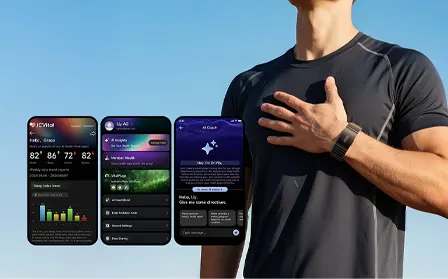
4. Natural Language Health Assistant
Conversational AI Integration:
2026 Emerging Feature:
Users can ask wearable companion app questions in natural language:
- "Why is my recovery score low today?"
- "Should I work out or rest?"
- "What's causing my poor sleep this week?"
- "Am I drinking enough water?"
AI Response:
- Analyzes user's multi-day data
- Provides personalized, evidence-based answer
- References specific data patterns
- Offers actionable recommendations
Technology:
Large language models (LLMs) fine-tuned on health data + individual user patterns.
AI Ethics and Transparency Concerns
Black Box Problem:
Issue:
Users (and physicians) often don't understand how AI reaches conclusions.
- "Recovery score: 42/100" — why? What factors? How weighted?
- Medical decisions based on opaque algorithms raise concerns
Industry Response (2026):
- Explainable AI (XAI) becoming standard
- Apps show factor breakdown: "Recovery score low because: HRV 30% below baseline (40% weight), Sleep efficiency 78% (30% weight), RHR elevated (20% weight), Previous day training load (10% weight)"
- Transparency builds user trust and clinical acceptance
Algorithmic Bias:
Concern:
AI trained predominantly on certain demographics (younger, lighter skin tones, Western populations) may perform poorly for underrepresented groups.
Evidence:
Studies show some wearable algorithms less accurate for:
- Darker skin tones (PPG signal challenges)
- Women (hormonal cycle effects, different body composition)
- Elderly (different physiological norms)
- Non-Western populations (genetic/environmental differences)
Mitigation (2026 Trends):
- Diverse training datasets mandated by regulators
- Demographic-specific algorithm tuning
- Accuracy reporting stratified by population subgroups
- Ongoing bias audits
Trend 3: Form Factor Diversification
Beyond the Wristband
2026 Form Factor Market Share:
| Form Factor | Market Share | YoY Growth | Key Advantages |
| Wrist Bands | 38% | +4.2% | Value, battery life, comprehensive tracking |
| Smartwatches | 50% | +9.1% | Display, apps, smartphone integration |
| Smart Rings | 8% | +32.5% | Sleep comfort, discreet, finger PPG accuracy |
| Earbuds | 2% | +28.0% | Always-worn, ear canal sensors |
| Patches | 1.5% | +41.2% | Medical monitoring, no charging |
| Glasses | 0.5% | N/A (new) | Hands-free, AR integration |
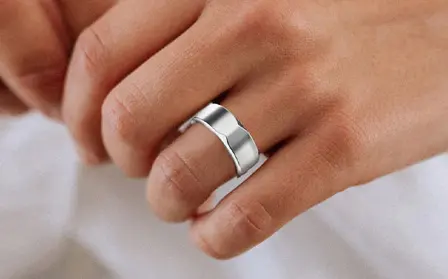
Smart Rings: Breakout Category
Why Smart Rings Are Surging:
Comfort Advantage:
- 98% overnight wear compliance vs. 67% for smartwatches
- Lightweight (3-7g), no display to scratch or break
- Doesn't interfere with typing, sports, daily activities
Sensor Placement Benefits:
- Finger arteries provide strong, stable PPG signal
- Enables transmission pulse oximetry (medical-grade SpO2)
- Less motion artifact during sleep
- Superior temperature sensing (finger temperature more stable than wrist)
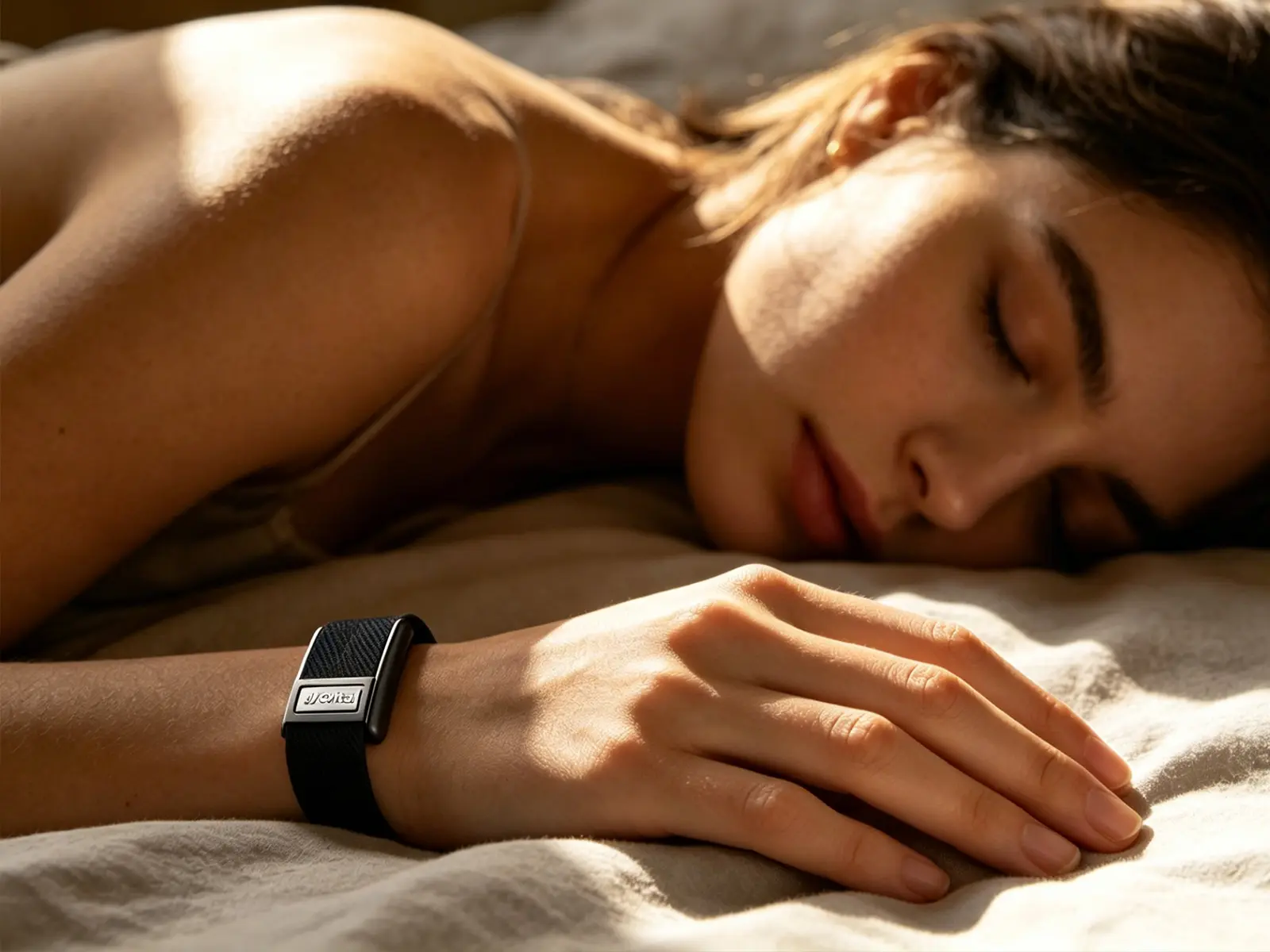
Sleep Specialization:
- Optimal for sleep tracking (primary use case for many buyers)
- Excellent overnight SpO2 for sleep apnea screening
- Minimal sleep disruption
Demographics:
- Appealing to professionals who can't wear smartwatches at work
- Women seeking discreet health tracking (especially menstrual cycle, fertility)
- Older adults prioritizing health over tech features
Smart Ring Limitations:
Challenges:
- No display (requires smartphone to view data)
- Fixed sizing (can't adjust like watch strap; requires accurate sizing pre-purchase)
- Limited activity tracking during workouts (finger doesn't move as much as wrist)
- Battery life moderate (4-10 days typical vs. 7-21 days for fitness bands)
- Higher cost (200-500 common)
Market Position:
Complementary device for sleep/health tracking, not full smartwatch replacement.
Hearables (Smart Earbuds)
Health Monitoring via Ear Canal:
Why Ears Work for Sensors:
- Rich blood flow (ear canal, earlobe)
- Protected from environmental interference
- Many people already wear earbuds hours daily
- Ear canal temperature close to core body temperature
Current Capabilities (2026):
- Heart rate monitoring (comparable accuracy to wrist PPG)
- SpO2 measurement
- Core body temperature
- Activity tracking (head movement, gait analysis)
- VO2 max estimation (when combined with activity data)
Emerging Capabilities:
- Blood pressure estimation (ear PPG waveform analysis)
- Hydration status (using bioimpedance)
- Glucose monitoring (research stage, not yet commercial)
Adoption Barriers:
Challenges:
- Battery life constraints (4-8 hours typical)
- Not worn 24/7 (many remove for sleep, quiet environments)
- Comfort for extended wear (ear fatigue)
- Higher cost when health sensors added (200-400)
Market Forecast:
Niche but growing—especially for users already committed to daily earbud use (commuters, fitness enthusiasts).
Patches and Adhesive Sensors
Medical-Grade Continuous Monitoring:
Technology:
Single-use or multi-day adhesive patches with embedded sensors.
Applications:
- Continuous glucose monitoring (CGM): Already mainstream for diabetes (10+ day wear)
- Continuous heart monitoring: Holter monitor replacement (up to 14 days)
- Post-surgical monitoring: Temperature, heart rate, activity (detects infection, complications)
- Chronic disease: COPD, heart failure outpatient monitoring
Advantages:
- Medical-grade accuracy (not limited by motion, fit issues)
- No charging required (battery lasts patch lifetime)
- Invisible under clothing (unlike wrist devices)
- Can be prescribed by physicians
Disadvantages:
- Disposable (ongoing cost, environmental impact)
- Skin irritation potential
- Limited to single parameter typically (though multi-sensor patches emerging)
- Not reusable
Market Trajectory:
2026 Status:
Primarily medical market, but consumer applications emerging:
- Fertility tracking patches (continuous temperature for ovulation detection)
- Athletic performance patches (lactate, hydration sensors)
- Elderly monitoring patches (fall detection, vital signs)
2027-2030 Forecast:
Hybrid models: Reusable sensor module + disposable adhesive patch (balances cost and sustainability).
Smart Glasses (Augmented Reality Wearables)
Early Stage Health Integration:
2026 Status:
Smart glasses primarily focused on AR, navigation, communication—but health sensing beginning to appear.
Health Capabilities:
- Eye tracking (pupil dilation, gaze patterns → cognitive load, fatigue, drowsiness)
- Blink rate (screen time monitoring, eye strain detection)
- Electrodermal activity (stress via nose pads or temple contact)
- Activity tracking (head movement, posture)
Future Potential:
- Blood glucose monitoring via tear fluid analysis (research stage)
- Intraocular pressure (glaucoma screening)
- Real-time health data overlay (AR display of heart rate, calories, etc.)
Barriers to Mass Adoption:
Challenges:
- Social acceptance (privacy concerns, "glasshole" stigma from earlier Google Glass)
- Battery life (2-4 hours typical)
- High cost (300-1,500)
- Limited health sensor accuracy vs. dedicated devices
- Regulatory uncertainty for health claims
Timeline:
Mainstream health tracking via glasses likely 5-10 years out (2030+).
Trend 4: Continuous Multi-Parameter Monitoring
From Single Metrics to Holistic Health Dashboards
Evolution of Tracking Complexity:
Early Fitness Trackers (2010-2015):
- Steps, distance, calories
- Maybe basic sleep (movement-based)
- Heart rate if premium device
Modern Fitness Trackers (2020-2023):
- Heart rate (continuous)
- Sleep stages
- SpO2 (spot check or overnight)
- Stress score
- Activity types
Advanced Health Platforms (2026): ⭐
- Heart rate + HRV (continuous)
- SpO2 (continuous or every 1-2 minutes)
- Respiratory rate (continuous)
- Skin temperature (continuous)
- Sleep architecture (deep/light/REM/wake)
- Stress/recovery scoring
- Blood pressure trends (some devices)
- Glucose trends (via integration or AI estimation)
- Hydration estimation
- Body composition (via bioimpedance, select devices)
- Menstrual cycle tracking (women's health)
- Electrodermal activity / skin conductance
Sensor Fusion and Data Integration
The Power of Combined Parameters:
Example: Illness Detection
Single Parameter (RHR only):
- Resting heart rate elevated → could be stress, poor sleep, overtraining, or illness
- Moderate predictive power
Multi-Parameter (RHR + HRV + Temp + SpO2 + Sleep):
- RHR +8 BPM, HRV -30%, Temp +0.5°C, SpO2 -2%, Sleep efficiency 68% (usually 85%)
- High probability of developing illness (85%+ accuracy)
- AI models synthesize all parameters for robust prediction
Example: Cardiovascular Health
Comprehensive Assessment:
- Resting heart rate trends (should be stable or decreasing with fitness)
- HRV (autonomic function, recovery)
- Blood pressure trends (some devices)
- SpO2 (tissue oxygenation)
- Sleep quality (affects CV health)
- Activity levels (sedentary risk factor)
- Stress scores (chronic stress damages CV system)
Outcome:
Far superior cardiovascular risk stratification than any single metric.
The Data Overload Challenge
Problem:
More data ≠ more clarity for average user.
User Confusion (2025 Surveys):
- 47% of fitness tracker users feel "overwhelmed by data"
- 38% don't understand what metrics mean
- 52% want simpler, actionable guidance
Industry Solution: AI Simplification
2026 Approach:
Behind the Scenes:
Device tracks 20+ parameters continuously.
User Interface:
- Single Daily Score: "Health Score: 82/100" or "Recovery: 75/100"
- Simple Recommendation: "You're well-recovered. Great day for intense training" or "Prioritize rest today—multiple fatigue indicators present"
- Optional Deep Dive: Tap for detailed breakdown of all contributing factors
Balance:
Simplicity for casual users; depth for data enthusiasts.
Interoperability and Data Standards
The Fragmentation Problem:
Current State (2026):
- 100+ fitness tracker brands
- Dozens of proprietary data formats
- Limited cross-platform compatibility
- Data silos (Apple Health, Google Fit, Samsung Health, etc.)
Pain Points:
- Switching devices means losing historical data
- Physicians can't easily aggregate data from multiple sources
- Researchers struggle to access diverse datasets
Industry Movements Toward Standards:
FHIR (Fast Healthcare Interoperability Resources):
- Healthcare data standard gaining traction
- Some wearable manufacturers adopting FHIR-compatible data export
- Enables EHR integration
Open mHealth:
- Open-source framework for mobile health data
- Growing adoption in research and public health
Apple Health / Google Fit as Aggregators:
- Dominant platforms in their ecosystems
- Most fitness trackers sync to one or both
- De facto standards for consumer health data
Future Vision (2028-2030):
True interoperability where:
- Users own their data in portable, standardized format
- Any device can sync to any platform
- Physician systems automatically ingest data from any source
- Machine learning models trained on diverse, pooled data (with consent)
Trend 5: Prescription and Insurance Integration
Wearables as Prescribed Medical Devices
Physician-Prescribed Fitness Trackers:
Growing Trend:
Rather than patients self-selecting devices, physicians increasingly prescribe specific trackers for medical monitoring.
Common Scenarios (2026):
Cardiovascular Disease:
- Diagnosis: Atrial fibrillation, heart failure, post-MI
- Prescription: ECG-capable smartwatch or medical-grade fitness band
- Monitoring: Rhythm, heart rate, activity, weight (some devices)
- Alerts: Physician notified if AFib burden increases, heart rate anomalies, sudden weight gain
Diabetes:
- Diagnosis: Type 2 diabetes, prediabetes
- Prescription: Fitness tracker + CGM integration
- Monitoring: Activity, sleep, weight, glucose trends
- Goal: Lifestyle modification support
Sleep Apnea:
- Diagnosis: Suspected OSA
- Prescription: Smart ring or fitness band with SpO2 monitoring
- Screening: Home sleep apnea test alternative
- Follow-up: CPAP adherence monitoring via oxygen saturation normalization
COPD/Chronic Respiratory:
- Diagnosis: COPD, pulmonary fibrosis
- Prescription: Device with continuous SpO2
- Monitoring: Oxygen saturation trends, exacerbation early warning
- Intervention: Medication adjustment before crisis
Insurance Coverage Expansion:
2026 Reimbursement Landscape:
Medicare (United States):
- Remote Patient Monitoring (RPM) codes cover wearable data monitoring
- Requirements: 16+ days of data per month, physician review, care coordination
- Reimbursement: ~$50-100 per patient per month
- Device cost: Sometimes covered if medical necessity documented
Private Insurance:
- Growing coverage for FDA-cleared devices for specific conditions
- Typically requires prior authorization, documented medical necessity
- Coverage rate: 35-40% of private plans now cover some wearables (up from 12% in 2022)
International:
- UK NHS: Piloting wearable programs for diabetes, cardiovascular disease
- Germany: Digital Health Applications (DiGA) framework includes some wearables
- Singapore: Healthier SG initiative subsidizes fitness trackers
- Japan: Insurance coverage for specific disease management wearables
Regulatory Pathway for Prescription Devices:
FDA Classification:
- Class I: General wellness, no medical claims (most consumer fitness trackers)
- Class II: Medical device, 510(k) clearance required (ECG, SpO2 for medical use, fall detection)
- Class III: High-risk devices (typically implantables; rare for wearables)
2026 Trend:
More manufacturers pursuing Class II clearance to enable:
- Prescription eligibility
- Insurance reimbursement
- Marketing for medical indications
- Physician endorsement
Trade-offs:
- Higher regulatory costs and timelines
- Ongoing compliance requirements
- But: Access to medical/insurance markets, higher credibility
Employer Wellness Program Integration
Corporate Health Initiatives:
Adoption Statistics (2026):
- 68% of large US employers (>500 employees) offer fitness tracker programs
- 42% subsidize or provide devices free
- 31% offer incentives for meeting activity goals
Program Models:
Incentive-Based:
- Employees earn rewards (gift cards, premium reductions, PTO) for hitting targets
- Typical goals: 7,000-10,000 steps/day, 150 min/week moderate exercise, sleep 7+ hours
- Participation rates: 35-55% of eligible employees
Insurance Premium Discounts:
- Employees share fitness data with insurer
- Premium reductions for healthy behaviors (non-smoking, BMI, activity levels)
- Privacy concerns limit adoption
Health Risk Assessment:
- Wearable data identifies high-risk employees
- Proactive outreach for coaching, disease management programs
- Reduces healthcare costs long-term
Effectiveness and Concerns:
Proven Benefits:
- Increased physical activity (15-25% on average)
- Weight loss (modest, 2-5 lbs average)
- Improved health metrics (blood pressure, cholesterol)
- Healthcare cost reduction (studies show 15-30% savings when combined with other wellness interventions)
Criticisms:
- Selection bias: Healthiest employees participate most
- Privacy invasion: Employer access to health data raises concerns
- Equity: Penalizes those with disabilities, chronic conditions making goals harder
- Sustainability: Engagement often drops after initial months
2026 Best Practices:
- Voluntary participation with strong privacy protections
- Inclusive goals accommodating diverse abilities
- Focus on improvement, not absolute targets
- Data anonymized/aggregated for employer visibility
Trend 6: Non-Invasive Biomarker Expansion
Beyond Heart Rate: The Sensor Revolution
Current State of Non-Invasive Sensing (2026):
Commercially Available in Fitness Trackers:
✅ Optical Heart Rate (PPG): Universal, mature technology
✅ Blood Oxygen (SpO2): Widespread (70% of devices)
✅ Skin Temperature: Growing (40% of devices)
✅ ECG/EKG: Premium devices (25% of market)
✅ Bioimpedance (Body Composition): Select devices (15% of market)
✅ Accelerometer/Gyroscope: Universal (activity, sleep, fall detection)
✅ Ambient Light: Common (display brightness, sleep environment)
✅ Barometric Pressure: Common (altitude, stairs climbed)
Emerging Technologies (2026-2028):
Blood Pressure Monitoring:
Technology:
- Oscillometric: Inflatable cuff (wrist-based fitness trackers with integrated cuff)
- Pulse Transit Time (PTT): Calculate BP from PPG waveform characteristics (cuffless)
- Pulse Wave Analysis: AI analysis of arterial stiffness indicators
2026 Status:
- Cuff-based wrist trackers: Commercially available, medical-grade accuracy
- Cuffless estimation: Consumer devices available, accuracy ±10-15 mmHg (not medical-grade)
- Regulatory: FDA cleared some cuff-based; cuffless models face scrutiny
Accuracy:
- Cuffed devices: ±3-5 mmHg (medical standard)
- Cuffless: ±8-15 mmHg (trend monitoring only, not diagnosis)
Future (2027-2029):
Improved cuffless algorithms, better calibration methods → potential medical-grade cuffless BP within 3-5 years.
Continuous Glucose Monitoring (CGM) Integration:
Current Landscape:
- Dedicated CGM devices (Dexcom, Abbott FreeStyle Libre) are mainstream for diabetics
- Fitness trackers integrate with CGM via Bluetooth, display glucose on wrist
2026 Integration:
- Real-time glucose display on smartwatch/fitness band
- Alerts for hypo/hyperglycemia
- Trend arrows, rate of change
- Correlation with activity, meals, sleep
Non-Diabetic Use (Emerging):
- Athletes optimizing fueling strategies
- Biohackers monitoring metabolic health
- Weight loss programs (seeing glucose response to foods)
Non-Invasive Glucose Estimation (The Holy Grail):
Challenge:
Non-invasive glucose measurement without finger pricks or subcutaneous sensors—decades of research, no commercial success yet.
Technologies in Development:
Optical Methods:
- Near-infrared spectroscopy: Shines light through skin, analyzes absorption spectrum
- Raman spectroscopy: Measures molecular vibrations
- Photoplethysmography (PPG) analysis: AI models detect subtle glucose-related changes in blood flow
Challenges:
- Very weak signal (glucose is tiny fraction of blood constituents)
- Interference from skin properties, temperature, hydration, other molecules
- Individual calibration requirements
- Regulatory bar extremely high (inaccurate glucose readings are dangerous)
AI-Based Glucose Risk Assessment (2026 Reality):
What's Actually Available:
Several fitness trackers now offer "glucose risk trends" or "metabolic health scores" using AI models.
How It Works:
- Analyzes PPG (heart rate variability, waveform characteristics)
- Combines with activity, sleep, meal logging (if user inputs)
- Trained on datasets of people wearing both fitness trackers and CGMs
- Predicts likelihood of glucose spikes, estimates general trends
Accuracy:
- Cannot replace fingerstick or CGM
- Correlation with actual glucose: moderate (r = 0.5-0.7 in studies)
- Useful for: Risk screening, lifestyle insights, metabolic awareness
- Not useful for: Diabetes diagnosis, insulin dosing, medical decisions
Regulatory Status:
Marketed as "wellness" feature, not medical device—no FDA approval required.
Clinical Perspective:
Endocrinologists skeptical but acknowledge potential for prediabetes screening and health awareness.
Hydration Monitoring:
Technology:
- Bioimpedance: Electrical current through body; resistance indicates fluid levels
- Skin conductance: Sweat/moisture levels
- Urine color (camera-based): Requires user to photograph urine (privacy concerns, low adoption)
2026 Status:
- Bioimpedance hydration: Available in some fitness trackers, accuracy ±5-10% total body water
- Primary use: Athletes monitoring hydration during training
- Challenges: Affected by many factors (temperature, recent meals, body composition)
Cortisol and Stress Hormones:
Holy Grail #2:
Non-invasive cortisol measurement for objective stress assessment.
Research Stage Technologies:
- Sweat analysis: Cortisol present in sweat; wearable patches can measure (not yet mainstream)
- Saliva analysis: Requires sample collection (not continuous, not truly "non-invasive")
2026 Status:
Not yet in consumer fitness trackers; expect 3-5+ years.
Current Proxy:
HRV, heart rate variability, skin conductance used as stress indicators (correlate with cortisol but aren't direct measurements).
Alcohol and Substance Detection:
Technology:
- Transdermal alcohol sensors: Measure alcohol vapor through skin
- Breathalyzer integration: Some smartwatches partner with portable breathalyzers
Applications:
- Sobriety monitoring (court-ordered, addiction recovery)
- Personal awareness (drinking pattern tracking)
- Driving safety (alert if BAC elevated)
2026 Status:
Niche market; privacy and stigma limit mass adoption.
The Regulatory and Accuracy Tightrope
The Challenge:
Consumer Demand:
"I want my fitness tracker to tell me everything about my health!"
Scientific Reality:
Many biomarkers are extremely difficult to measure non-invasively with accuracy.
Regulatory Requirement:
Medical claims require rigorous validation; inaccurate measurements are dangerous.
Manufacturer Strategies (2026):
Strategy 1: Medical-Grade Subset
- Pursue FDA clearance for specific, well-validated features (ECG, SpO2)
- Market these as medical capabilities
- Maintain other features as "wellness" (stress scores, etc.)
Strategy 2: Wellness Positioning
- Avoid medical claims entirely
- Market as "insights," "trends," "estimates"
- Include disclaimers: "Not for medical use"
- Focus on behavior change, not diagnosis
Strategy 3: Hybrid Model
- Some metrics medical-grade (heart rate, SpO2)
- Others experimental (glucose estimation, stress)
- Clear labeling of confidence levels
The Future Vision:
2027-2030 Trajectory:
- Continuous improvement in sensor accuracy
- AI models better at extracting signal from noise
- More biomarkers achieve medical-grade accuracy
- Regulatory frameworks adapt to novel sensing modalities
2030 Aspirational Device:
Single wearable providing medical-grade measurement of:
- Heart rate/rhythm
- Blood oxygen
- Blood pressure
- Glucose trends
- Hydration
- Body temperature
- Respiratory rate
- Sleep architecture
- Stress hormones (via validated proxies)
- Inflammation markers (via AI synthesis of multiple parameters)
Feasibility:
Many experts believe most of these are achievable within 5-10 years with sufficient R&D investment.
Trend 7: Subscription Model Evolution
The Shift from Hardware to Services
Historical Business Model:
Traditional (Pre-2020):
- Revenue: One-time device purchase ($100-400)
- Lifetime value: Single transaction
- Free companion app with basic features
- Upgrades: New device purchase every 2-4 years
Emerging Model (2020-Present):
Freemium + Subscription:
- Device purchase: Hardware cost ($150-500)
- Free tier: Basic tracking (steps, heart rate, sleep duration)
- Premium subscription: $5-15/month
- Advanced analytics (HRV, recovery scores, training plans)
- Long-term data storage (>30 days)
- Personalized coaching
- Third-party app integrations
- Family sharing
2026 Subscription Landscape:
Adoption Rates:
- 38% of fitness tracker users pay for premium subscriptions
- Average subscription: $8.50/month
- Annual recurring revenue: 1.8 billion (2025), projected 3.2 billion (2027)
Value Proposition (Consumer Perspective):
Why Users Subscribe:
- Advanced features locked behind paywall (42% of reason)
- Personalized coaching and recommendations (31%)
- Access to workout content/guided programs (18%)
- Longer data retention (9%)
Why Users Don't Subscribe:
- Feels like "paying twice" (bought device, why pay monthly?) - 52%
- Free features adequate for needs - 28%
- Price sensitivity - 14%
- Principle (oppose subscription model) - 6%
Subscription Tier Structures
Common Tier Models (2026):
Two-Tier:
- Free: Basic tracking
- Premium ($6-10/mo): Everything else
Three-Tier:
- Free: Basic tracking
- Plus ($5-8/mo): Advanced analytics, coaching
- Ultimate ($12-18/mo): Plus + live coaching, personalized meal plans, meditation content
Family Plans:
- Discounted multi-user subscriptions (e.g., $15/mo for up to 5 family members)
What's Included in Premium (Typical):
Data and Analytics:
- Historical data storage >90 days (free often limits to 30 days)
- Detailed sleep analysis (sleep stages, efficiency, recommendations)
- HRV trends and recovery scores
- Training load and strain metrics
- Illness detection algorithms
- Detailed health reports (weekly/monthly summaries)
Coaching and Guidance:
- AI-powered personalized recommendations
- Adaptive training plans
- Nutrition guidance
- Stress management programs
- Guided meditations and breathing exercises
Content:
- Video workout libraries
- Yoga/Pilates/HIIT classes
- Meditation sessions
- Expert articles and educational content
Integrations:
- Third-party app sync (Strava, MyFitnessPal, etc.)
- Music streaming integration
- Smart home connectivity
Social:
- Challenges and competitions
- Leaderboards
- Community forums
- Family health dashboard
Consumer Backlash and Alternatives
Criticism:
"Hostageware" Accusations:
Users feel features that should be included with device purchase are artificially paywalled to generate recurring revenue.
Examples of Controversy:
- Historical data older than 30 days locked behind paywall (users argue: "It's MY data!")
- Basic sleep stage analysis requiring subscription (users argue: "Device has sensors—why charge extra for analysis?")
- Onerous free tier limitations driving subscription
Alternative Business Models (2026):
One-Time Purchase (Traditional):
- All features included with device
- No recurring fees
- Appeals to subscription-fatigued consumers
- Examples: Some medical-grade devices targeting older demographics
Freemium Without Aggressive Limits:
- Free tier includes genuinely useful features
- Premium adds substantial value, not just unlocks basics
- Users feel premium is optional luxury, not necessity
Perpetual License (One-Time Premium):
- Optional one-time payment ($30-60) for lifetime premium
- Alternative to monthly subscription
- Appeals to users who plan long-term device use
Market Segmentation:
Price-Sensitive Consumers:
Gravitate toward brands with robust free tiers or no subscription (often Asian manufacturers).
Premium Health-Focused:
Willing to pay subscriptions for medical-grade features, coaching, comprehensive platform.
Tech Enthusiasts:
Subscribe for integrations, beta features, ecosystem access.
Long-Term Viability and Trends
Industry Perspective:
Why Manufacturers Love Subscriptions:
- Predictable recurring revenue
- Higher lifetime customer value (LTV)
- Ongoing relationship enables continuous improvement (AI models improve with more data)
- Funds content creation, platform development
Sustainability Question:
Can market support dozens of $5-15/month subscriptions (fitness tracker + music + video streaming + news + productivity tools + ...)?
2026 Reality:
Subscription fatigue is real. Consumers increasingly selective about which services merit ongoing payment.
Future Predictions (2027-2030):
Consolidation:
- Fewer, more comprehensive platforms
- Bundled subscriptions (e.g., "Apple One" includes fitness, music, cloud storage, TV)
- Fitness tracker subscription bundled with broader health/wellness subscription
Tiered Hardware:
- Budget devices with mandatory subscription (lower upfront cost)
- Premium devices with more features included (higher upfront cost, optional subscription)
- Consumer choice in cost structure
Value Competition:
- Race to provide most compelling premium features
- AI coaching, personalized health forecasting become table stakes
- Differentiation through content (exclusive workouts, expert partnerships)
Trend 8: Privacy and Data Sovereignty
The Privacy Paradox
The Trade-Off:
Value Requires Data:
Personalized health insights, AI predictions, illness detection all require:
- Continuous data collection (24/7 monitoring)
- Historical data (weeks to months of patterns)
- Granular detail (heart rate every second, not every hour)
- Contextual information (location, activities, meals)
Privacy Concerns:
This same data is:
- Highly sensitive (reveals health conditions, behaviors, location)
- Valuable to third parties (insurers, employers, advertisers, data brokers)
- Potentially exploitable (discrimination, manipulation)
Consumer Awareness (2026):
Survey Data:
- 71% of fitness tracker users concerned about health data privacy
- 54% have limited data sharing settings
- 38% don't fully understand what data is collected
- 22% have decided NOT to buy a tracker due to privacy concerns
But:
- 68% willing to share data if it improves health outcomes
- 51% willing to share for medical research (if anonymized)
- 43% willing to share for insurance discounts (if transparent)
Insight:
Consumers want control, transparency, and fair value exchange—not blanket prohibition.
Regulatory Landscape (2026)
GDPR (European Union):
Key Provisions Affecting Fitness Trackers:
- Health data is "special category" requiring explicit consent
- Right to access data (users can request all data collected)
- Right to erasure ("right to be forgotten")
- Right to data portability (export in machine-readable format)
- Mandatory breach notifications
Impact:
European fitness tracker users have strongest privacy protections; manufacturers must comply or exit market.
HIPAA (United States):
Applicability:
Most fitness trackers are NOT covered by HIPAA (only applies to healthcare providers, insurers, and their business associates).
Exception:
If fitness tracker data flows through healthcare provider system (e.g., prescribed device with data going to physician EHR), HIPAA may apply.
Gap:
Consumer fitness tracker data largely unprotected by US health privacy law.
Emerging US Regulations:
State Laws:
- California (CPRA): Similar to GDPR, applies to California residents
- Virginia, Colorado: Consumer data protection laws
Federal Proposals (2025-2026):
Several bills proposed to regulate health data from consumer devices:
- Require explicit consent for data sharing
- Prohibit sale of health data without consent
- Mandate data security standards
- Not yet passed as of early 2026
China (Personal Information Protection Law - PIPL):
Requirements:
- Similar to GDPR in many respects
- Strict data localization (health data of Chinese citizens must be stored in China)
- Government access provisions
Impact:
Complicates global data management for multinational manufacturers.
Industry Practices and Transparency
Data Collection (What's Typical in 2026):
Collected by Device:
- All sensor data (heart rate, activity, sleep, SpO2, temperature, etc.)
- Usage patterns (features used, app interactions)
- Device metadata (battery, firmware version)
Collected by App:
- User profile (age, sex, height, weight)
- Location data (if GPS enabled or phone location shared)
- Manual logging (meals, workouts, symptoms)
- Integration data (from connected apps)
Collected by Company:
- Account information (email, payment method)
- Customer support interactions
- Marketing interactions (email opens, ad clicks)
How Data is Used:
Primary Uses:
- Provide core functionality (calculate steps, analyze sleep, etc.)
- Personalize experience (set baselines, tailor recommendations)
- Improve algorithms (train AI models on aggregated, anonymized data)
- Customer support (troubleshoot issues)
Secondary Uses (Varies by Company):
5. Marketing (targeted ads, email campaigns)
6. Research partnerships (provide anonymized data to academic/commercial researchers)
7. Aggregate insights (population health trends sold to third parties)
Prohibited by Most (But Not All):
8. Selling identified data to data brokers
9. Sharing with insurers without explicit consent
10. Providing to employers without user authorization
Best Practices (Leading Companies, 2026):
Transparency:
- Clear, readable privacy policies (not 50 pages of legalese)
- Privacy dashboards showing exactly what data is collected and shared
- Regular privacy reports
Control:
- Granular settings (users can disable specific data collection, sharing)
- Easy data export (download all your data)
- Account deletion truly deletes data (not just deactivates account)
Security:
- End-to-end encryption for data transmission
- Encrypted storage
- Regular security audits
- Bug bounty programs
Minimization:
- Collect only data necessary for stated purposes
- Delete data after reasonable retention period
- Anonymize/aggregate whenever possible
Emerging Technologies: Privacy-Preserving Analytics
The Challenge:
Companies want aggregate insights (to improve AI, understand population trends) but shouldn't see individual user data.
Solutions (2026 Adoption):
Differential Privacy:
- Mathematical technique adding "noise" to datasets
- Aggregate trends remain accurate
- Individual records cannot be reverse-engineered
- Used by Apple, others for population-level analytics
Federated Learning:
- AI models trained on user devices (not central servers)
- Only model updates sent to company, not raw data
- User data never leaves device
- Used for health prediction models
Homomorphic Encryption:
- Computation on encrypted data (without decrypting)
- Still early-stage, computationally expensive
- Future potential for privacy-preserving health analytics
The Insurance and Employment Question
Can Insurers Access Your Fitness Tracker Data?
Current Reality (2026, United States):
Voluntary Programs:
- Some insurers offer premium discounts for sharing fitness data
- Requires explicit opt-in
- Cannot mandate participation (yet)
- Typical savings: 5-15% on premiums
Legal Protections:
- Genetic Information Nondiscrimination Act (GINA) prohibits health insurance discrimination based on genetic data
- Does NOT cover fitness tracker data
- Affordable Care Act (ACA) prohibits pre-existing condition discrimination
- Future: Unclear if wearable data could circumvent ACA protections
International:
- UK/EU: GDPR limits insurer data access
- Singapore, Australia: Some voluntary programs
- China: Evolving regulations
Can Employers Access Your Data?
Wellness Programs:
- Employers can offer incentives for participation
- Must be voluntary
- Data typically goes to third-party wellness vendor, not employer directly
- Employer sees only aggregate/anonymized data
Legal Gray Areas:
- Could employer-provided device be monitored by employer?
- Could "voluntary" programs become de facto mandatory (non-participants disadvantaged)?
Worker Protections:
Vary by country; generally stronger in EU than US.
The Dystopian Scenario:
Fears:
- Insurers deny coverage or charge prohibitive rates based on fitness tracker data showing sedentary lifestyle, poor sleep, elevated stress
- Employers penalize workers with "unhealthy" metrics
- Data breaches expose sensitive health information to criminals
Safeguards Needed:
- Strong privacy laws prohibiting discrimination
- Limits on data sharing
- Robust security requirements
- Transparency and consent
Trend 9: Sustainability and Ethical Manufacturing {#sustainability-trend}
The E-Waste Problem
Scale of Issue:
Global E-Waste:
- 59.4 million metric tons generated in 2025
- Wearables/small electronics: ~4.2 million tons
- Recycling rate: 17.4% globally
- 82.6% ends up in landfills or informal recycling (health and environmental hazards)
Fitness Tracker Lifespan:
- Average replacement cycle: 2.3 years
- Reasons for replacement: Battery degradation (38%), desire for new features (41%), device failure (21%)
- Estimated 230 million fitness trackers discarded 2020-2025
Environmental Impact:
Materials:
- Rare earth elements (in batteries, sensors)
- Plastics (mostly non-biodegradable)
- Precious metals (gold, silver in circuit boards)
- Lithium (batteries)
Extraction:
- Mining rare earths: Significant environmental degradation, water pollution
- Often from regions with lax environmental/labor standards
Manufacturing:
- Energy-intensive (chip fabrication especially)
- Chemical use (etchants, solvents)
- Carbon footprint: Estimated 15-35 kg CO2e per device
End-of-Life:
- Toxic materials (lead, mercury in older devices)
- Batteries: Fire hazard in landfills
- Plastics: Persist for centuries
Industry Sustainability Initiatives (2026)
Recycling Programs:
Trade-In Programs:
- Manufacturers offer credit for returning old devices
- 2026: 47% of major brands have formal trade-in (up from 18% in 2021)
- Refurbishment and resale (extending device life)
- Proper recycling of non-functional devices
Mail-In Recycling:
- Prepaid shipping labels for device return
- Partnership with certified e-waste recyclers
- Material recovery (metals, plastics)
Retail Take-Back:
- Drop-off at retail partners
- Convenience increases participation rates
Sustainable Materials:
Recycled Materials:
- Some manufacturers using recycled aluminum (cases)
- Recycled plastics (bands, packaging)
- 2026: 22% of devices contain some recycled content (up from 8% in 2022)
Bio-Based Materials:
- Elastomer bands from bio-based sources (plant oils vs. petroleum)
- Biodegradable packaging
- Still niche but growing
Conflict-Free Sourcing:
- Responsible mineral sourcing (avoiding conflict minerals)
- Certification schemes (Responsible Minerals Initiative)
Modular Design and Repairability:
The Problem:
Most fitness trackers are sealed units—battery dies, entire device is trash.
Emerging Solutions (2026):
User-Replaceable Batteries:
- Some bands now feature accessible battery compartments
- Extends device life 2-3x (replace battery instead of device)
- Trade-off: Slightly thicker device, less water resistance
Modular Components:
- Replaceable sensor modules
- Swappable bands (already standard)
- Upgradable firmware (extends functional life)
Right to Repair:
- Advocacy for legislation requiring manufacturers to provide:
- Replacement parts availability
- Repair manuals
- Diagnostic tools
- 2026: Limited adoption; industry generally resistant
Energy Efficiency:
Longer Battery Life:
- 2020 average: 5-7 days
- 2026 average: 10-14 days
- Reduces charging frequency (energy use, wear on battery)
Efficient Charging:
- Wireless charging with higher efficiency (reduced heat loss)
- Fast charging (reduced time on charger)
- Solar charging (experimental, niche products)
Ethical Labor Practices
Supply Chain Transparency:
The Challenge:
Complex global supply chains:
- Component manufacturing (Asia, primarily China, Taiwan, South Korea)
- Assembly (China, Vietnam, India)
- Often multiple tiers of suppliers
Labor Concerns:
- Factory working conditions
- Fair wages
- Child labor prevention
- Forced labor (especially in mining)
Industry Initiatives:
Audits and Certifications:
- Independent audits of factories (SA8000, BSCI standards)
- 2026: 58% of major brands publish supplier responsibility reports
- Transparency: Some brands map and publish tier-1 supplier lists
Fair Labor Certification:
- Fair Trade certification for electronics (emerging)
- B Corp certification (holistic ethical business practices)
- Still rare in wearables sector
Living Wage Commitments:
- Some brands commit to ensuring suppliers pay living wages
- Enforcement and verification challenges
Consumer Demand and Purchasing Decisions
2026 Consumer Surveys:
Importance of Sustainability:
- 64% consider environmental impact when buying electronics
- 38% willing to pay premium (10-20% more) for sustainable devices
- 52% would keep device longer if battery replaceable
But:
- Price and features still dominate purchase decisions for most (71%)
- Sustainability often a "tiebreaker" between similar products, not primary driver
Generational Differences:
- Gen Z and younger millennials significantly more likely to prioritize sustainability
- Older generations more price-sensitive
Greenwashing Concerns:
The Risk:
Manufacturers make vague "eco-friendly" claims without substance.
Consumer Skepticism:
- 46% of consumers distrust corporate sustainability claims
- Demand for third-party verification increasing
Regulatory Response:
- EU Green Claims Directive (proposed 2024, implementation ongoing) requires substantiation of environmental claims
- FTC Green Guides (US) provide guidance on environmental marketing
The Path Forward (2027-2030)
Vision:
Circular Economy Model:
- Design for longevity (5+ year lifespan)
- Easy repair and upgrade
- Material recovery and recycling (>75% of materials)
- Minimal virgin material use
Carbon Neutrality:
- Renewable energy manufacturing
- Carbon offset programs
- Low-carbon logistics
- Product carbon labeling (consumers can compare)
Ethical Supply Chains:
- Full transparency (tier 1-3 suppliers)
- Fair labor certification standard
- Conflict-free minerals universal
Feasibility:
Technically achievable; requires industry-wide commitment and potentially regulatory mandates.
Economic Incentive:
Growing consumer preference + regulatory pressure + brand differentiation = business case for sustainability.
Trend 10: Ecosystem Consolidation
Platform Wars: Apple vs. Google vs. Open
The Smartphone-Wearable Nexus:
Fitness trackers are fundamentally dependent on smartphones for full functionality (data sync, app interface, GPS in some cases, notifications).
Ecosystem Dynamics (2026):
Apple Ecosystem:
- Hardware: Apple Watch (dominant smartwatch), partnerships with select fitness band manufacturers
- Software: Apple Health (central health data repository), Fitness+ (subscription workout service)
- Lock-In: Works seamlessly only with iPhone; limited Android compatibility
- Market Share: ~35% of global smartwatch market, ~15% of overall wearable market
- Strategy: Premium, tightly integrated, subscription services
Google/Android Ecosystem:
- Hardware: Fitbit (owned by Google), Pixel Watch, Samsung Galaxy Watch, plus hundreds of third-party Android-compatible devices
- Software: Google Fit (health data platform, less centralized than Apple Health), Wear OS (smartwatch platform)
- Openness: Works with any Android phone, more third-party device support
- Market Share: ~60% of global smartwatch market (combined Android), ~75% of fitness band market
- Strategy: Ecosystem diversity, advertising integration, data for Google services
Independent/Cross-Platform:
- Examples: Garmin, Polar, Whoop, some medical-grade devices
- Strategy: Work with both iOS and Android
- Advantage: Broader addressable market, no platform bias
- Disadvantage: Can't leverage deep OS integration, less seamless experience
Vertical Integration vs. Openness
Vertical Integration (Apple Model):
Advantages:
- Seamless user experience (hardware + software designed together)
- Tight security and privacy controls
- Optimized performance
- Clear accountability (one company owns entire stack)
Disadvantages:
- Consumer lock-in (switching costs high)
- Less innovation diversity (one company's R&D vs. many)
- Higher prices
- Limited consumer choice
Open Ecosystem (Android/Third-Party Model):
Advantages:
- Consumer choice (hundreds of devices at varied price points)
- Innovation diversity (many companies experimenting)
- Competition drives prices down
- Easy switching between brands
Disadvantages:
- Fragmentation (inconsistent user experience, compatibility issues)
- Security risks (more attack surface)
- Data silos (devices don't always interoperate)
- Confusing for consumers (too many choices)
2026 Trend:
Convergence:
Both models adopting aspects of the other:
- Apple: Allowing more third-party integrations, opening some APIs
- Android/Google: Tightening integration (Fitbit + Pixel ecosystem), enforcing standards (Wear OS requirements)
Result:
Hybrid approach—core platform control with selective openness.
Health Data Aggregation Platforms
The Central Repository Vision:
Consumers use multiple health devices and apps:
- Fitness tracker
- Smart scale
- Blood pressure monitor
- Continuous glucose monitor (diabetics)
- Nutrition tracking app
- Meditation app
- Sleep sound machine
Problem:
Data fragmentation—each silo, no holistic view.
Solution:
Central health data platform aggregating all sources.
Major Platforms (2026):
Apple Health:
- Pre-installed on all iPhones
- Accepts data from 100+ app/device categories
- Strong privacy controls (data encrypted on device, user controls sharing)
- Integration with healthcare providers (via Health Records feature)
- Limitations: iOS only
Google Fit:
- Available on Android (sometimes pre-installed)
- Open to third-party integrations
- Less comprehensive than Apple Health historically but improving
- Limitations: Less unified than Apple (device manufacturers often use proprietary apps instead)
Samsung Health:
- Default on Samsung devices (largest Android manufacturer)
- Comprehensive features for Samsung ecosystem users
- Limitations: Fragmentation (other Android users less integrated)
Third-Party Aggregators:
Examples:
- MyFitnessPal (nutrition focus but aggregates activity)
- Strava (fitness focus, social features)
- Cronometer (nutrition + health tracking)
Advantage:
Cross-platform (work with both iOS and Android).
Disadvantage:
Less deep OS integration, users must actively choose to use.
Healthcare System Integration
The Vision:
Your fitness tracker data flows seamlessly to your doctor's electronic health record (EHR).
2026 Reality:
Progress:
- Apple Health can import data from some hospital systems (Epic MyChart integration)
- Some RPM platforms connect wearables to physician dashboards
- FHIR (Fast Healthcare Interoperability Resources) standard enabling wearable data exchange
Barriers:
- EHR vendor cooperation (slow to integrate consumer data)
- Data quality concerns (physicians trust medical-grade devices more than consumer trackers)
- Liability (acting on potentially inaccurate data)
- Workflow (physicians lack time to review continuous data streams)
- Reimbursement (limited payment for remote monitoring in many countries)
2027-2030 Outlook:
- Growing RPM reimbursement accelerates integration
- AI summarization tools make data digestible for physicians
- Medical-grade consumer wearables gain trust
- Standardized data formats (FHIR) become universal
Mergers, Acquisitions, and Partnerships
Recent Consolidation (2020-2026):
Major Acquisitions:
- Google acquires Fitbit (2021) - $2.1 billion
- Multiple smaller wearable companies acquired by healthcare, insurance, tech giants
Strategic Partnerships:
- Fitness tracker manufacturers + pharmaceutical companies (clinical trials, medication adherence monitoring)
- Wearable companies + insurers (wellness programs, premium discounts)
- Device makers + content providers (workout videos, meditation apps)
- Tech giants + medical device companies (medical-grade sensor integration)
Rationale for Consolidation:
Economies of Scale:
- R&D costs for advanced sensors very high
- Smaller players struggle to compete
Data Network Effects:
- More users = better AI models = better insights = more users
- Winner-take-most dynamics
Ecosystem Completeness:
- Companies want full stack (device + platform + services + content)
Market Maturity:
- Growth slowing in some segments
- Consolidation natural in maturing markets
Impact on Consumers:
Positive:
- Better integration (when same company controls multiple pieces)
- More resources for innovation (big companies fund ambitious R&D)
- Potentially lower prices (economies of scale)
Negative:
- Less choice (fewer independent brands)
- Lock-in increases (ecosystems become harder to leave)
- Privacy concerns (more data in fewer hands)
- Reduced innovation diversity (fewer companies means fewer novel approaches)
2027-2030 Prediction:
Likely Scenario:
- 3-5 dominant ecosystems (Apple, Google, Samsung, possibly others)
- Niche players in specialized segments (medical-grade, ultra-premium sports, ultra-budget)
- Continued M&A activity (big players acquiring innovative startups)
- Regulatory scrutiny (antitrust concerns, especially in health data)
Regional Market Dynamics
Market Characteristics (2026):
- Market Size: $32 billion (37% of global market)
- Penetration: 34% of adults own fitness tracker/smartwatch
- Growth Rate: 6.2% CAGR (maturing market)
Trends:
- Medical-grade devices and RPM adoption strong (Medicare reimbursement driving)
- Premium segment dominant (Apple Watch, high-end fitness bands)
- Subscription models prevalent
- Privacy concerns rising (but moderate compared to Europe)
Challenges:
- Market saturation in urban, affluent demographics
- Healthcare integration still fragmented despite progress
Europe
Market Characteristics (2026):
- Market Size: $24 billion (28% of global market)
- Penetration: 29% of adults
- Growth Rate: 5.8% CAGR
Trends:
- Strong privacy regulations (GDPR) shape product design
- Medical device regulations (MDR) create barriers but ensure quality
- Sustainability prioritized (circular economy initiatives)
- National health systems beginning wearable integration (UK NHS pilots, etc.)
Challenges:
- Regulatory compliance costs
- Fragmented markets (language, culture, healthcare systems across countries)
- Lower consumer spending vs. North America
Asia-Pacific
Market Characteristics (2026):
- Market Size: $26 billion (30% of global market, growing fastest)
- Penetration: 18% of adults (huge growth potential)
- Growth Rate: 11.3% CAGR ⭐
Regional Breakdown:
China:
- Largest single market by volume
- Domestic brands dominant (Xiaomi, Huawei, others)
- Ultra-competitive pricing ($20-60 fitness bands common)
- Government health initiatives driving adoption
- Data localization requirements
India:
- Fast-growing market (emerging middle class)
- Price sensitivity extreme (budget devices dominate)
- Smartphone penetration driving wearable adoption
- Local manufacturers + Chinese imports
Japan:
- Mature market, aging population
- Senior health monitoring focus
- Premium devices popular
- Integration with national health system explored
South Korea:
- High-tech adoption
- Samsung ecosystem strong
- Medical-grade devices popular
Southeast Asia:
- Emerging markets (Indonesia, Vietnam, Philippines, Thailand)
- Mobile-first populations (leapfrogging PCs)
- Budget devices dominating but premiumization beginning
Key Trends:
- Price competition intense
- Mobile payment integration important (WeChat Pay, Alipay in China)
- Localization critical (language, features, cultural preferences)
- Manufacturing hub (most devices made in China, Vietnam, India)
Latin America
Market Characteristics (2026):
- Market Size: $3.2 billion (3.7% of global)
- Penetration: 9% of adults
- Growth Rate: 9.1% CAGR
Trends:
- Budget segment dominant
- Smartphone penetration growing, enabling wearable adoption
- Fitness culture strong in urban centers (Brazil, Argentina)
- Import costs and tariffs limit premium device adoption
Challenges:
- Economic volatility
- Currency fluctuations
- Income inequality (addressable market limited to upper/middle class)
Middle East & Africa
Market Characteristics (2026):
- Market Size: $1.8 billion (2.1% of global)
- Penetration: 6% of adults
- Growth Rate: 12.4% CAGR (small base, rapid growth)
Regional Variation:
Gulf States (UAE, Saudi Arabia, Qatar):
- High income, strong wearable adoption
- Government wellness initiatives (Dubai Fitness Challenge, Saudi Vision 2030 health goals)
- Premium devices popular
Africa:
- Very low penetration (<2%)
- Mobile phone penetration growing
- Potential for future growth but income constraints major barrier
- Health tracking via smartphones more common than dedicated wearables
Future Outlook: 2027-2030
Technology Predictions
Sensor Breakthroughs (Likelihood: High):
By 2030, expect mainstream fitness trackers to include:
- Cuffless blood pressure monitoring (medical-grade accuracy via advanced PPG analysis and AI)
- Continuous hydration tracking (bioimpedance refinement)
- Sweat analysis (cortisol, lactate, electrolytes via patches or integrated sensors)
- Improved non-invasive glucose estimation (not replacement for CGM but useful screening/trend tool)
- Body composition (muscle mass, body fat % via bioimpedance in wrist/ring devices)
AI Evolution (Likelihood: Very High):
Conversational Health Assistant:
Natural language interaction with wearable data:
- "Why am I tired today?" → AI analyzes sleep, HRV, activity, stress and explains in plain language
- "Can I run my marathon this weekend?" → AI reviews training load, recovery, injury risk, weather forecast and provides recommendation
Predictive Models:
- 7-day illness forecast (e.g., "67% probability of respiratory infection developing within 5 days based on vital sign trends")
- Chronic disease risk scores updating in real-time as behaviors change
- Personalized intervention timing ("Your stress is elevated; breath work session recommended now to prevent sleep disruption tonight")
Form Factor Innovation (Likelihood: Medium-High):
Implantables:
- Subcutaneous sensors (glucose already mainstream for diabetics; could expand to other biomarkers)
- Extremely niche for consumers (needle phobia, invasiveness) but potential for chronic disease patients
- Regulatory and ethical challenges
Smart Textiles:
- Clothing with embedded sensors (heart rate, breathing rate, muscle activity)
- Advantages: Comfortable, large surface area enables more sensors
- Challenges: Washing/durability, power (battery in garment?), cost
- Likely 2028-2030+ for mainstream
Ingestibles:
- Smart pills measuring internal metrics (pH, temperature, bleeding, medication adherence)
- Already used in clinical settings (PillCam for GI imaging)
- Consumer applications uncertain (cost, invasiveness, limited duration)
Market Predictions
Market Size:
- 2026: $95 billion
- 2030 (projected): $142 billion
- CAGR 2026-2030: 10.5%
Growth Drivers:
- Aging populations (developed world) needing health monitoring
- Rising chronic disease rates (diabetes, cardiovascular, obesity)
- Healthcare cost pressures driving remote monitoring
- AI capabilities making insights more actionable
- Emerging market adoption (Asia-Pacific, Latin America)
Segment Shifts:
Smart Rings:
- 2026: 8% market share
- 2030: 15-18% projected
- Growth driven by sleep tracking, women's health, medical-grade SpO2
Smartwatches:
- Remain dominant (45-50% market share)
- Competition from dedicated health trackers in medical segment
Fitness Bands:
- Slow decline in developed markets (30-35% share by 2030)
- Remain strong in price-sensitive regions
Societal Impact Predictions
Healthcare Transformation:
Shift from Reactive to Proactive:
- Traditional: Wait until sick → see doctor → diagnose → treat
- Future: Continuous monitoring → early detection → preventive intervention → avoid disease
Evidence:
Studies suggest continuous monitoring + early intervention could reduce:
- Cardiovascular events: 15-25%
- Diabetes complications: 20-30%
- COPD hospitalizations: 25-35%
- Overall healthcare costs: 10-20% (though upfront costs increase)
Democratization of Health Data:
Patient Empowerment:
- Individuals have access to clinical-grade health data
- Informed conversations with physicians (data-driven)
- Self-advocacy and health literacy
Risks:
- Health anxiety (overinterpreting normal variations)
- Misinformation (misunderstanding data without medical training)
- Widening health inequality (those who can't afford devices left behind)
Work and Productivity:
Optimization Culture:
- Employees tracking productivity correlates (sleep, stress, energy)
- Peak performance timing (schedule cognitively demanding work during high-readiness periods)
- Burnout prevention (objective stress/recovery data)
Dystopian Risks:
- Employer surveillance
- Pressure to optimize every moment
- Loss of work-life boundaries
Insurance and Healthcare Economics:
Usage-Based Insurance:
- Like car insurance (safe drivers pay less), health insurance premiums based on:
- Activity levels
- Sleep quality
- Chronic disease management adherence (e.g., diabetics maintaining good glucose control)
- Preventive behaviors
Concerns:
- Discrimination (penalizing genetic conditions, disabilities, aging)
- Privacy invasion
- Coercive "voluntariness" (technically optional, but expensive not to participate)
Regulatory Question:
Will governments allow usage-based health insurance, or prohibit as discriminatory?
Wild Cards and Uncertainties
Regulatory Crackdown:
Scenario:
Governments impose strict regulations on:
- Data collection and sharing
- Medical claims (require full FDA approval for any health-related feature)
- AI algorithm transparency and bias audits
Impact:
- Slows innovation
- Increases costs
- Consolidates market (only large players can afford compliance)
- But: Protects consumers, ensures quality
Probability:
Medium (especially in Europe; less likely in US/Asia)
Consumer Backlash:
Scenario:
Privacy scandals, data breaches, or high-profile harms cause mass rejection of wearables.
Impact:
- Market contraction
- Shift to offline/local-only devices (no cloud, limited features)
Probability:
Low (consumers generally accept trade-offs) but could be triggered by major incident
Breakthrough Technology:
Scenario:
Unexpected scientific breakthrough enables:
- True non-invasive continuous glucose monitoring (accuracy rivaling CGM)
- Complete blood panel from wrist PPG (electrolytes, cholesterol, inflammation markers)
- Early cancer detection (via volatile organic compounds in sweat, AI analysis of vital sign patterns)
Impact:
- Wearables become essential medical tools
- Massive market expansion
- Healthcare paradigm shift
Probability:
Low for any single breakthrough in next 5 years, but cumulative progress likely
Pandemic or Public Health Crisis:
Scenario:
Another pandemic (or climate-related health crises) drives mass adoption of health monitoring.
Impact:
- Accelerated adoption (COVID-19 drove awareness of SpO2, illness detection)
- Government partnerships/subsidies
- Normalization of health surveillance
Probability:
Medium (public health experts warn of future pandemics)
Conclusion
The fitness tracker market in 2026 stands at a fascinating crossroads. What began as a simple step counter has evolved into a sophisticated health monitoring ecosystem with profound implications for medicine, insurance, employment, and personal well-being. The devices on our wrists (and increasingly, our fingers) now rival clinical diagnostic equipment, while artificial intelligence transforms raw data into personalized health coaching that would have seemed like science fiction a decade ago.
Key Insights:
1. Medical-Grade Convergence is Accelerating
The line between consumer wellness device and medical diagnostic tool is disappearing. FDA clearances for wearables are surging, remote patient monitoring programs are expanding, and physicians are increasingly incorporating wearable data into clinical decisions. By 2030, the distinction between "fitness tracker" and "medical device" may be largely obsolete—most devices will serve both purposes.
2. AI is the Defining Technology
Hardware sensor improvements are incremental; AI advances are exponential. The same device that provided basic step counts in 2020 can, with updated algorithms, predict illness, detect arrhythmias, and provide personalized health coaching in 2026. This trend will intensify—the value increasingly lies in software intelligence, not sensors.
3. Form Factor Diversification Creates Options
Smart rings are disrupting wrist-worn dominance, particularly for sleep tracking and medical monitoring. Patches, earbuds, and potentially textiles offer alternatives for specific use cases. The "one size fits all" wristband is giving way to specialized devices optimized for different needs—a positive development for consumer choice.
4. Privacy and Ethics Demand Ongoing Vigilance
As devices collect ever-more-sensitive health data, and as insurers and employers seek access, the tension between utility and privacy intensifies. Strong regulations (GDPR in Europe, emerging laws elsewhere) provide some protection, but consumers must remain vigilant about data sharing, and manufacturers must prioritize privacy-by-design.
5. Sustainability Cannot Be Ignored
With hundreds of millions of devices manufactured annually and average lifespans under 3 years, e-waste is a serious concern. Industry moves toward recycling, sustainable materials, and modular design are encouraging but insufficient. Regulatory mandates for repairability and material recovery may be necessary.
6. Healthcare Integration is the Ultimate Goal
The vision—seamless flow of wearable data to electronic health records, enabling continuous monitoring, early intervention, and preventive medicine—is tantalizing close. Technical, regulatory, and economic barriers remain, but progress accelerates. By 2030, continuous monitoring could be standard of care for chronic disease management.
7. Market Consolidation is Inevitable
Ecosystems are consolidating around a few major platforms (Apple, Google, Samsung), while niche players occupy specialized segments. This brings benefits (integration, resources for innovation) and drawbacks (reduced competition, lock-in). Regulatory oversight will be critical to prevent monopolistic abuses.
Looking Forward:
The fitness tracker market is not just growing—it's fundamentally transforming. The devices of 2030 will likely:
- Measure 15+ biomarkers continuously with medical-grade accuracy
- Predict health issues days or weeks before symptoms appear
- Provide AI health coaching rivaling human experts (for routine guidance)
- Integrate seamlessly with healthcare systems
- Serve as central hubs for holistic health data (nutrition, activity, sleep, mental health, chronic disease management)
But technology alone doesn't determine outcomes. The critical questions are:
Who owns and controls health data?
Will strong privacy protections ensure individual sovereignty, or will data become a commodity extracted by corporations and governments?
Who benefits from health insights?
Will wearables democratize health, empowering everyone with data-driven wellness? Or will they exacerbate inequality, available only to affluent populations while others lack access?
How will society navigate surveillance risks?
Can we harness the benefits of continuous monitoring while preventing dystopian employer/insurer intrusion?
Will sustainability be prioritized?
Can the industry shift from disposable electronics to circular economy models before e-waste becomes crisis-level?
The answers to these questions will shape not just a market, but a fundamental aspect of how humanity relates to health in the 21st century. The technology exists. The challenge now is ensuring it serves human flourishing, equity, and long-term sustainability—not just quarterly earnings.
The next chapter of the fitness tracker story is being written now, in 2026. Those who understand the trends—technological, regulatory, social, and ethical—will be best positioned to navigate this rapidly evolving landscape, whether as consumers making informed choices, healthcare providers integrating new tools, policymakers crafting wise regulations, or industry leaders building the future.
The fitness tracker revolution is not coming—it's here. The question is not whether these devices will reshape health and society, but how. That "how" is up to all of us.
Sources and Further Reading:
Note: This article synthesizes industry reports, peer-reviewed research, market analysis, and regulatory documents current as of early 2026. For the most up-to-date information on specific products, regulations, and market data, consult:
- Industry Analysis: IDC Wearables Market Tracker, Gartner Digital Health Reports, CB Insights Health Tech Analysis
- Clinical Research: PubMed (search "wearable health monitoring validation"), JAMA Network, The Lancet Digital Health
- Regulatory Information: FDA Medical Device Database, EU Medical Device Coordination Group, WHO Digital Health Guidelines
- Market Data: Statista Wearables Market Reports, Grand View Research, Allied Market Research
This market analysis was last updated in January 2026. The wearable technology sector evolves rapidly—verify current trends and data before making business or policy decisions.
Related Articles:
What Is ECG and How Is It Used in Wearables? A Complete Guide for 2026
J-STYLE Showcases AI Wearables at WHX DUBAI 2026
PPG vs ECG: Which Is More Accurate? A Deep Dive Into Global Wearable Health Monitoring Technologies
About the Author

Kyler is a senior content marketing specialist at J-Style(Jointcorp|Joint Chinese Ltd | Youhong Medical), a leading smart ring, smart band, and smart watch manufacturer and supplier in China. With 8 years of experience in the wearable tech industry, he creates professional content for global B2B buyers seeking reliable factory, wholesale, OEM/ODM, and SDK/API solutions. At J-Style, Kyler focuses on helping partners understand the value of high-quality Chinese smart wearables and how J-Style’s innovative manufacturing capabilities support scalable business growth.