

Updated 6 months ago
The Future of Health Management May Start With a Smart Ring
youhong

Executive Summary: The Rise of Smart Ring Technology As digital health shifts from reactive treatment to proactive prevention, smart rings have emerged as a leading wearable health technology. Unlike traditional smartwatches, smart rings offer a non-intrusive, 24/7 AI health monitoring solution. By integrating biometric sensors with advanced digital health platforms, these devices provide real-time insights into sleep recovery, stress management, and metabolic health, empowering users to optimize their "healthspan" through continuous data.
Modern healthcare is undergoing a major transformation.
For decades, health management has largely relied on hospital visits, medical tests, and reactive treatment after symptoms appear. But what if health monitoring could happen continuously, naturally, and effortlessly throughout daily life?
That future is already beginning to emerge.
Driven by the rapid evolution of AI technologies and wearable devices, health management is shifting from reactive treatment to proactive prediction and prevention.
More digital health innovators are leading this transformation. One example is J-STYLE, a technology company developing integrated solutions that combine:
- Smart ring hardware
- AI-powered health algorithms
- A digital health management cloud platform
Together, these technologies allow users to monitor and manage their health 24/7 in everyday life.
In the near future, healthcare may no longer be something that happens only in hospitals. Instead, it will become part of our daily routines.
And it might all start with something surprisingly small: a smart ring.

How a Smart Ring Can Manage Your Entire Day
Imagine a day where your health monitoring happens automatically, without interrupting your lifestyle.
From the moment you wake up until you go to sleep, a smart ring continuously tracks physiological signals and provides insights to help you make better decisions for your health.
Let’s walk through what a day of AI-powered health management might look like.
Morning: Understanding Your Sleep Recovery
Your health insights begin the moment you wake up.
After opening the mobile app connected to your smart ring, the first thing you see is your sleep report from the previous night.
During sleep, the smart ring collects and analyzes multiple physiological signals, including:
- Total sleep duration
- Deep sleep ratio
- Nighttime heart rate changes
- Body recovery indicators
Based on these metrics, the system generates a Recovery Score, which helps you understand how well your body has recovered overnight.
If the recovery score is high, your body may be ready for high-intensity exercise or demanding tasks.
If recovery is low, the AI system may recommend lighter activity or additional rest.
This is the first step toward scientific health management: understanding your body before planning your day.
Workout Time: Training Smarter, Not Harder
Millions of people exercise daily, but many overlook an important question:
Is your body truly ready for training today?
A smart ring helps answer that question through continuous physiological monitoring.
By analyzing metrics such as:
- Heart rate
- Heart rate variability (HRV)
- Activity levels
- Recovery status
the device provides data-driven recommendations for physical activity.
For example, the system may suggest:
- Light training for recovery days
- Moderate exercise based on readiness
- Increased rest when the body shows fatigue signals
This approach helps users:
- Reduce the risk of injury
- Avoid overtraining
- Improve training efficiency
Instead of guessing how hard to push, users can rely on physiological insights backed by AI analysis.
Nutrition Awareness: Making Every Meal Count
Health management is not only about exercise — nutrition plays an equally important role.
Many digital health platforms now include features that allow users to log meals easily. For instance, by using photo-based food tracking, the system can estimate:
- Calorie intake
- Nutritional composition
- Daily metabolic balance
By combining nutritional data with physiological metrics from the smart ring, AI algorithms can provide personalized dietary insights.
These insights help users:
- Maintain a healthy energy balance
- Improve metabolic health
- Support long-term weight management
When nutrition data and wearable health data work together, every meal becomes part of a larger health strategy.
Work Hours: Managing Stress and Sedentary Lifestyle
For many professionals, especially office workers, two hidden health challenges dominate modern life:
- Long hours of sitting
- Chronic stress
Smart rings can continuously monitor indicators related to stress and physiological balance, including:
- Heart rate fluctuations
- HRV trends
- Stress scores derived from biometric data
When the system detects elevated stress levels, it may recommend:
- Short breathing exercises
- A brief walk
- Relaxation or mindfulness breaks
The device may also remind users to stand up and move periodically, helping reduce the negative health effects of prolonged sitting.
These small interventions may seem simple, but over time they can significantly improve long-term health outcomes.
Midday Recovery: The Power of a Short Nap
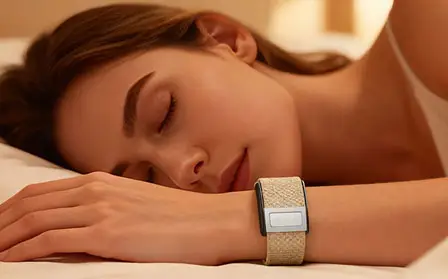
Many people enjoy a short nap during the day, but traditional wearable devices often struggle to accurately detect short sleep sessions.
Advanced smart ring algorithms can recognize power naps, even if they last only 15–20 minutes.
The system records the nap and evaluates:
- Recovery effects
- Heart rate stabilization
- Energy restoration
For professionals with demanding schedules, even a brief recovery period can significantly improve afternoon focus and productivity.
Evening: Reviewing Your Daily Health Insights
At the end of the day, the system compiles a comprehensive daily health summary, including:
- Activity levels
- Exercise performance
- Stress trends
- Energy expenditure
- Sleep predictions
Some digital health platforms also generate an overall Health Score, giving users a simple indicator of their daily health status.
One concept often used in digital health platforms is “Walking to Green.”
This idea represents the gradual improvement of health indicators through small lifestyle adjustments.
Instead of drastic changes, users focus on consistent daily improvements, allowing their health metrics to move gradually toward optimal ranges.
In this way, health management becomes a long-term journey rather than a short-term goal.
Why Many CEOs and Executives Are Wearing Smart Rings
In recent years, a noticeable trend has emerged in the technology and business communities:
More entrepreneurs, executives, and high-performance professionals are wearing smart rings.
The reason is simple.
For high-achieving individuals, health is not just a personal concern — it directly affects:
- Productivity
- Cognitive performance
- Stress resilience
- Long-term career sustainability
Instead of focusing only on fitness metrics, these users often care about deeper physiological indicators such as:
- Recovery status
- Stress patterns
- Sleep quality
- Long-term health trends
Continuous biometric data helps them better understand their bodies and optimize their daily performance.
Many users eventually realize that health management is the highest form of self-management.
Smart Ring vs Smartwatch vs Fitness Band
Today’s wearable market mainly includes three device types:
- Smartwatches
- Fitness bands
- Smart rings
Each category offers unique advantages, but smart rings are increasingly attracting attention for health monitoring.
Greater Comfort
Smart rings are smaller and lighter than most wearable devices.
Because they are less intrusive, many users can wear them continuously throughout the day and night.
Some users even forget they are wearing them.
More Continuous Data
Long-term health insights depend on continuous data collection.
Because smart rings are comfortable enough for 24-hour wear, they often capture more complete physiological data sets.
Lifestyle Integration
A smart ring is not only a technological device — it can also function as a piece of everyday jewelry.
This combination of technology and lifestyle design makes it easier for users to maintain long-term engagement with the device.
AI Health Management: The Next Frontier
Digital health is evolving rapidly.
The industry is moving from simple data recording to AI-driven health insights.
Future wearable devices will not only collect biometric data but also interpret it through advanced algorithms.
Potential AI applications include:
- Early health risk prediction
- Recovery analysis
- Biological age estimation
- Personalized health recommendations
When hardware, algorithms, and cloud data platforms work together, health monitoring evolves from passive tracking into proactive health management.
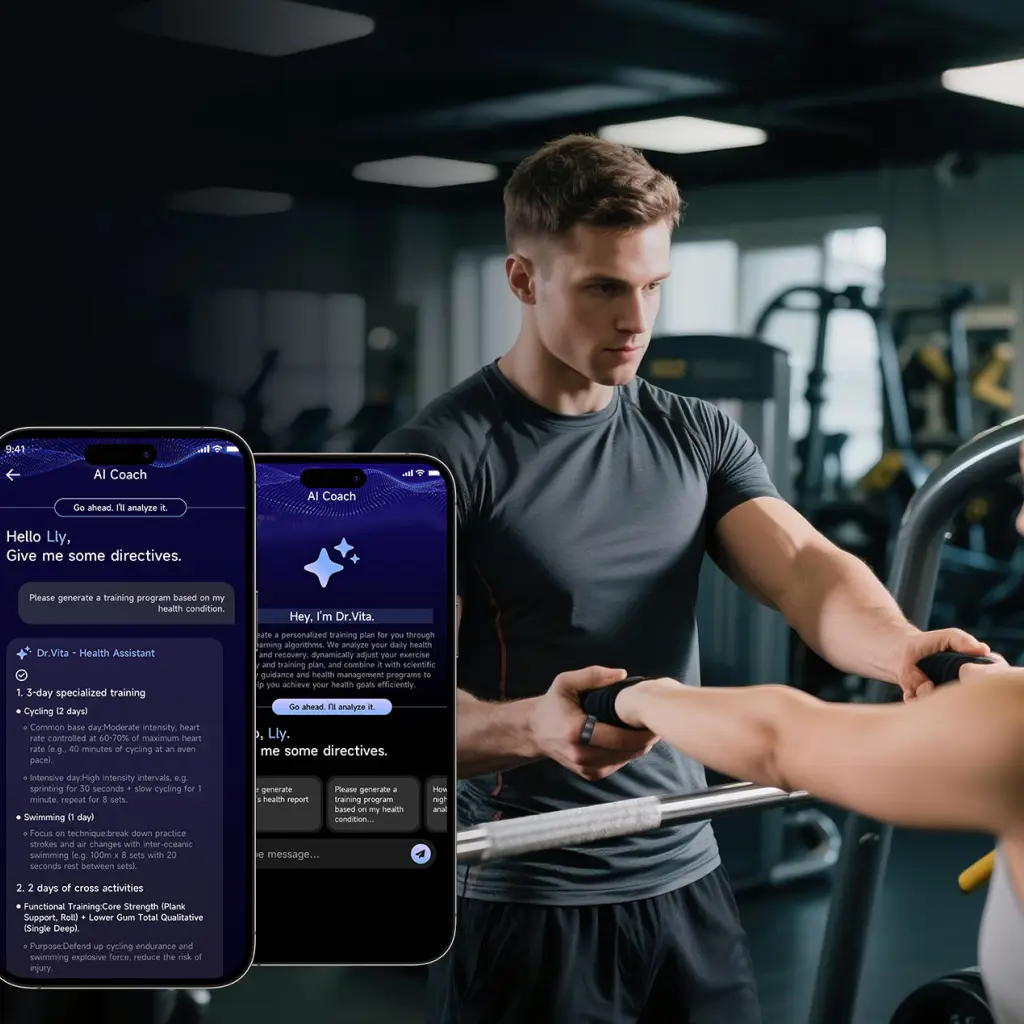
Five Ways Smart Rings May Transform Health in the Next Decade
Over the next ten years, smart rings could fundamentally reshape how people approach personal health.
1. Continuous Health Monitoring
Health data will be collected automatically without manual input.
2. AI as a Personal Health Advisor
Advanced algorithms will deliver increasingly personalized health insights.
3. Early Health Risk Detection
Long-term biometric data may help identify potential health risks much earlier.
4. Smarter Corporate Health Programs
Companies may use digital health platforms to provide employee wellness management solutions.
5. A Focus on Healthspan
The future of healthcare may shift from simply extending lifespan to improving healthspan — the years people live in good health.
The Future of Health Starts With Everyday Technology
Healthcare is gradually moving from hospitals into everyday life.
Through smart devices, AI analytics, and continuous biometric monitoring, people can take a more active role in managing their health.
Smart rings are becoming one of the most promising entry points into this new digital health ecosystem.
In the near future, many people may have their own personal digital health assistant — quietly collecting data, analyzing patterns, and providing helpful insights.
It will not interrupt daily life.
But it will help people make better decisions.
Because real health improvement does not happen overnight.
It happens through small, consistent actions every day.
And sometimes, it starts with a single smart ring.
Frequently Asked Questions about Smart Rings & AI Health
Smart rings offer three primary advantages: superior comfort for 24/7 wear (especially during sleep), continuous data collection without manual input, and lifestyle integration as a discreet piece of jewelry. They provide high-fidelity tracking for heart rate variability (HRV), sleep stages, and recovery scores.
AI acts as a digital health assistant by interpreting raw biometric data. Instead of just showing numbers, AI health algorithms analyze long-term trends to predict health risks, calculate biological age, and provide personalized recommendations for exercise and rest based on your body's unique recovery patterns.
Yes. By monitoring physiological signals like HRV (Heart Rate Variability) and heart rate fluctuations, smart rings can identify physical and emotional stress. Many platforms offer "Stress Scores" and suggest timely interventions, such as breathing exercises or short breaks, to maintain balance during work hours.
While smartwatches are excellent for active fitness tracking and notifications, smart rings are often better for long-term health monitoring. Their form factor allows for more consistent skin contact and higher user compliance for overnight sleep tracking, leading to a more complete and accurate longitudinal health dataset.
Healthspan refers to the period of life spent in good health, rather than just total lifespan. Wearable health technology supports healthspan by enabling early detection of physiological changes, allowing individuals to make small, data-driven lifestyle adjustments that prevent chronic issues before they arise.
Related Articles:
White Label vs OEM Wearables: Which Is the Right Choice for Your Brand?
Smart Ring Manufacturer: How to Choose a Reliable OEM & ODM Partner
About the Author

Kyler is a senior content marketing specialist at J-Style(Jointcorp|Joint Chinese Ltd | Youhong Medical), a leading smart ring, smart band, and smart watch manufacturer and supplier in China. With 8 years of experience in the wearable tech industry, he creates professional content for global B2B buyers seeking reliable factory, wholesale, OEM/ODM, and SDK/API solutions. At J-Style, Kyler focuses on helping partners understand the value of high-quality Chinese smart wearables and how J-Style’s innovative manufacturing capabilities support scalable business growth.