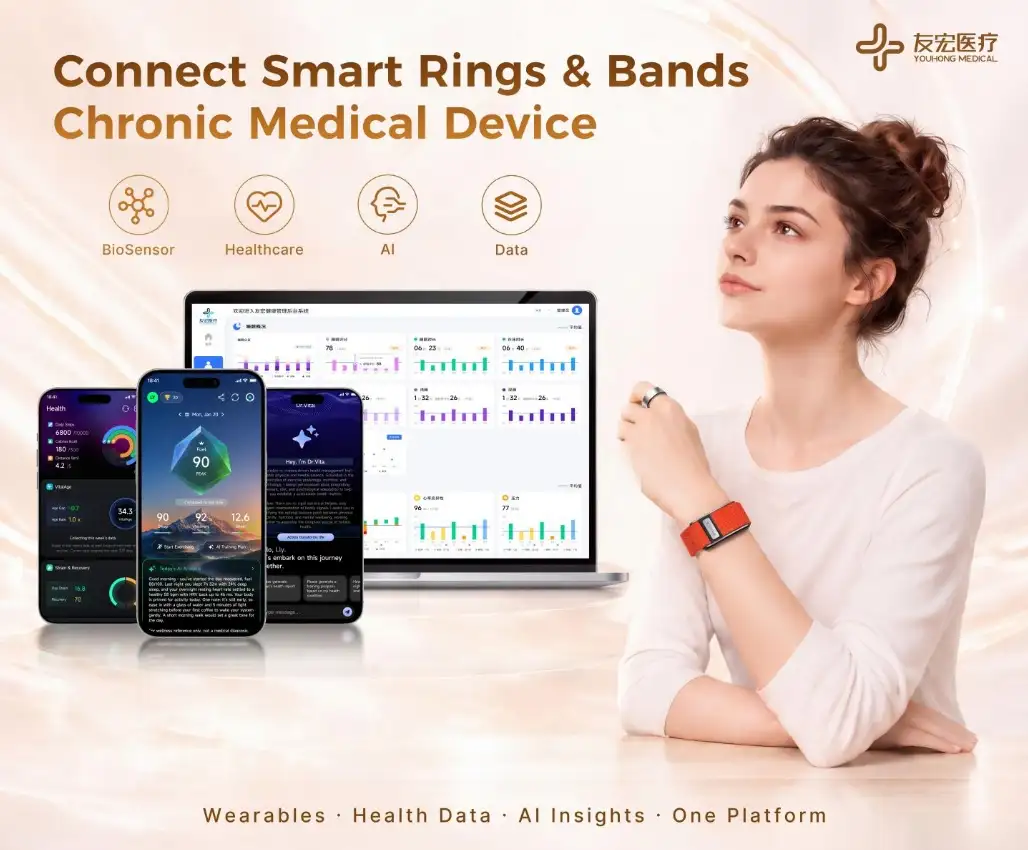
J-Style smart rings, smart bands, mobile apps and health data platform for MEDICA 2026
J-Style (Youhong Medical) will exhibit at MEDICA 2026 in Düsseldorf, Germany, from 16 to 19 November 2026. Visitors can meet the team at Hall 7.1, Stand D41-1, to discuss smart rings, smart bands, wearable data integration, and commercially realistic OEM/ODM project requirements.J-Style will present wearable devices, software and data-integration discussions at MEDICA 2026.
MEDICA brings together healthcare companies, technology developers, manufacturers, distributors, clinicians, procurement teams, and industry partners from around the world. For J-Style, the exhibition is an opportunity to meet organizations that are evaluating connected wearable products and need to understand not only the device, but also the data path, software integration, development boundaries, validation requirements, and manufacturing plan behind it.
MEDICA 2026 Event Details
Event
MEDICA 2026
Dates
16–19 November 2026
Venue
Düsseldorf Exhibition Centre, Düsseldorf, Germany
J-Style booth
Hall 7.1, Stand D41-1
The dates and venue are listed on the official MEDICA 2026 event page. The MEDICA product and exhibitor catalogue lists Guangdong Youhong Medical Technology Co. Ltd at Hall 7, Level 1, Stand D41-1. Visitors should check the official event website for the latest access, timetable, and travel information.
What J-Style Will Discuss at MEDICA 2026
J-Style works with B2B customers that are planning wearable products, digital-health services, brand extensions, distribution programs, or connected-device projects. At MEDICA 2026, discussions will focus on how a wearable concept can be translated into a practical product and integration plan.
Smart Rings and Smart Bands
Visitors can discuss product-selection criteria for smart rings and smart bands, including form factor, intended user experience, wearability, battery and charging considerations, data requirements, and target use cases. Exact functions, specifications, measurement behavior, and regulatory status must always be confirmed for the selected model and target market.
Device, App, and Platform Integration
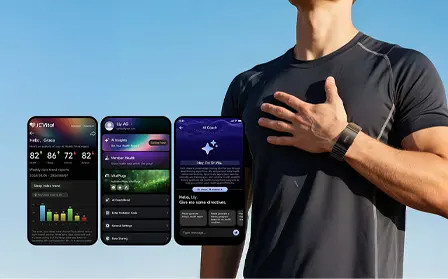
A successful wearable program is more than a piece of hardware. Buyers often need to consider how device data is transmitted, displayed, stored, interpreted, and incorporated into an existing product or service. J-Style can discuss device-to-app workflows, software requirements, and possible integration paths in the context of a defined project.
OEM/ODM Project Scope
Branding, packaging, firmware, app behavior, industrial design, hardware changes, testing, and certification may involve very different schedules and engineering effort. J-Style will help prospective partners distinguish between a standard-product OEM program and a deeper ODM development project. Customization availability depends on the product architecture, technical feasibility, order requirements, validation scope, and target-market compliance needs.
SDK/API and Data Requirements
For partners building connected services, J-Style can discuss wearable SDK/API support. Availability is not universal: the supported interface, data fields, access level, documentation, platform compatibility, and commercial scope must be verified for the specific product and project. Bringing a preliminary data map to the meeting will make the technical discussion more productive.
Who Should Visit Hall 7.1, Stand D41-1?
The booth is intended for professional conversations with organizations evaluating wearable health technology, including:
wearable and digital-health brands planning a new product or portfolio extension;
distributors, importers, and retailers assessing smart-ring or smart-band opportunities;
health-technology companies exploring a connected wearable component for a broader service;
product managers and sourcing teams comparing OEM/ODM development routes;
engineering teams evaluating firmware, app, SDK/API, or data-integration requirements; and
commercial teams that need a realistic view of customization, validation, production, and launch dependencies.
Buyer Checklist: What to Bring to the Meeting
A short project brief can turn an introductory conversation into a more useful technical and commercial assessment. If possible, prepare the following information:
Target form factor: smart ring, smart band, or another wearable category.
Intended use and market: target users, countries, channels, and whether the concept is wellness-oriented or may involve regulated medical use.
Required functions and data: the data points, user outputs, app workflow, and integration path that matter to the project.
Validation and compliance needs: required tests, documentation, certifications, and market-specific regulatory questions.
These inputs help both sides identify what can be evaluated immediately, what requires engineering review, and which assumptions still need verification.
JCRing Med X3: Registered Medical Scope in China
JCRing Med X3, a smart ring from Youhong Medical, has obtained China Class II medical device registration under the NMPA framework for its approved use in measuring adult blood oxygen saturation (SpO₂) and pulse rate.
The current Chinese Class II medical device registration scope for JCRing Med X3 is limited to the approved measurement of adult SpO₂ and pulse rate. It does not cover other health-management functions, including sleep-apnea risk assessment or AI-based blood-glucose risk assessment. Those functions must not be represented as registered medical functions, diagnostic outputs, or extensions of the approved registration scope.
Responsible Wearable and Digital-Health Development
Wearable data can support useful health and lifestyle experiences, but wellness tracking, risk-oriented insights, screening, and medical diagnosis are not interchangeable. A general sensor capability does not prove that every product provides a particular measurement or medical function. Product claims must match the selected device, software version, validation evidence, intended use, and regulatory scope.
During a MEDICA discussion, J-Style will separate company-level development experience from the verified capabilities of a specific product. Buyers should expect product specifications, data access, measurement descriptions, testing needs, and certification status to be confirmed model by model and market by market.
From Exhibition Conversation to Project Evaluation
After an initial meeting, a suitable next step may be a product-information review, sample purchase for evaluation, technical requirements exchange, or a structured project discussion. The appropriate route depends on whether the buyer is selecting an existing product, planning an OEM program, or evaluating deeper ODM development.
J-Style's OEM/ODM services cover different cooperation stages, but every project requires clear boundaries. A practical evaluation should identify the product baseline, required changes, responsibilities, deliverables, validation method, compliance assumptions, and decision milestones before development begins.
Plan Your MEDICA 2026 Meeting
MEDICA 2026 will take place at the Düsseldorf Exhibition Centre from 16 to 19 November. Visit J-Style (Youhong Medical) at Hall 7.1, Stand D41-1 to discuss your wearable product, integration requirements, or digital-health project.
Contact J-Style to arrange a MEDICA 2026 discussion and share your target product, market, timeline, and technical requirements in advance.
Note: Product availability, functions, customization options, interface access, test scope, and regulatory status are product- and project-specific. They must be confirmed during evaluation and do not constitute universal commitments.