

Updated 4 months ago
Nordic nRF52840 in Smart Rings: BLE Architecture for Health Developers (2026 Guide)
youhong
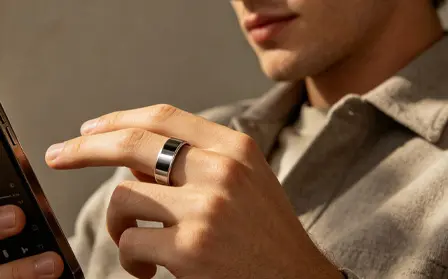
Understanding How Nordic's nRF52840 Enables Smart Ring Connectivity, Sensor Data Collection, and Digital Health Applications
As smart rings continue evolving from consumer wellness devices into sophisticated digital health platforms, Bluetooth Low Energy (BLE) architecture has become one of the most critical components for developers building wearable ecosystems.
Whether developing:
- Digital health platforms
- Corporate wellness solutions
- AI-powered health applications
- Physiological research systems
- Smart ring OEM products
developers increasingly need to understand how BLE chipsets handle sensor communication, power management, firmware updates, and data transmission.
One of the most widely adopted wireless SoCs in the wearable industry is the nRF52840, developed by Nordic Semiconductor.
In this guide, we explore the role of the nRF52840 in smart ring architecture, BLE communication workflows, health data transmission, and why it remains an important platform for wearable developers in 2026.

What Is the Nordic nRF52840?
The nRF52840 is a multiprotocol System-on-Chip (SoC) designed for ultra-low-power wireless applications.
Official Documentation:
Nordic Semiconductor nRF52840 Product Page
The chipset integrates:
- ARM Cortex-M4F processor
- Bluetooth Low Energy (BLE)
- ANT
- Thread
- Zigbee
- NFC support
- USB connectivity
Its combination of low power consumption and flexible wireless communication makes it particularly suitable for:
- Smart rings
- Smart bands
- Medical wearables
- Remote monitoring devices
- IoT health products
Why BLE Matters in Smart Rings
Unlike smartwatches, smart rings have extremely limited physical space.
This creates several engineering challenges:
- Small batteries
- Compact antennas
- Limited thermal capacity
- Continuous sensor operation
Because of these constraints, Bluetooth Low Energy has become the preferred communication protocol for wearable devices.
Official Reference:
BLE enables:
- Low power consumption
- Reliable wireless communication
- Mobile app connectivity
- Cloud synchronization
- Real-time health data transfer
Typical Smart Ring Architecture Using nRF52840
A modern smart ring architecture generally consists of multiple subsystems.
PPG Sensor
      │
Temperature Sensor
      │
Accelerometer
      │
      ▼
nRF52840 MCU + BLE Stack
      │
      ▼
BLE Communication
      │
      ▼
Mobile App
      │
      ▼
Cloud Platform
      │
      ▼
AI Analytics / Health Dashboard
The nRF52840 acts as the central controller responsible for:
- Sensor management
- Data collection
- Signal processing
- BLE communication
- Power optimization

Key Advantages of nRF52840 for Smart Ring Developers
Ultra-Low Power Consumption
Battery life remains one of the most important factors in wearable design.
The nRF52840 was specifically engineered for low-power applications.
Benefits include:
- Longer battery runtime
- Reduced charging frequency
- Improved user experience
This is especially important for smart rings intended for:
- Sleep tracking
- Recovery monitoring
- Continuous physiological monitoring
Robust BLE Performance
Health wearables often require stable communication with:
- Smartphones
- Tablets
- Healthcare gateways
- Cloud-connected devices
The nRF52840 supports:
- Bluetooth 5.x features
- Extended range options
- Improved throughput
- Reliable packet handling
OTA Firmware Updates
Over-the-Air (OTA) firmware updates are increasingly important for wearable brands.
OTA capabilities allow manufacturers to:
- Improve algorithms
- Add new features
- Optimize battery performance
- Enhance security
without requiring hardware replacement.
Sensor Integration in Smart Rings
Smart rings typically integrate several sensor types.
The nRF52840 can coordinate communication among these sensors.
PPG Sensors
Photoplethysmography (PPG) sensors are commonly used for:
- Heart rate monitoring
- HRV analysis
- Sleep monitoring
- Wellness analytics
Reference:
National Institutes of Health (NIH)
https://pmc.ncbi.nlm.nih.gov/articles/PMC8920970
Raw PPG data may be transmitted through BLE for advanced applications involving:
- AI model development
- Physiological research
- Custom health algorithms
Accelerometers
Motion sensors support:
- Step tracking
- Activity recognition
- Motion artifact reduction
- Sleep movement detection
Temperature Sensors
Temperature trends may contribute to:
- Wellness monitoring
- Recovery analysis
- Sleep studies
The interpretation of physiological data depends on algorithm design and intended use.
BLE Data Flow in Smart Ring Applications
A typical health monitoring workflow looks like this:
Step 1
Sensors collect physiological signals.
Step 2
The nRF52840 processes and packages the data.
Step 3
BLE transmits data packets to a mobile application.
Step 4
The mobile application synchronizes data with cloud services.
Step 5
Analytics engines generate user-facing insights.
This architecture supports scalable digital health ecosystems.
Raw PPG Data Transmission via BLE
Many health developers are interested in accessing raw physiological signals.
Potential use cases include:
- Custom HRV models
- Sleep research
- AI training datasets
- Wellness analytics platforms
Several implementation approaches may be used:
SDK-Based Access
Developers access data through predefined software interfaces.
API-Based Access
Cloud platforms expose data through secure endpoints.
ODM Firmware Customization
Manufacturers may customize firmware for advanced sensor-level access.
Related Reading:
- How to Access Raw PPG Data from Smart Rings
- Raw PPG Data Access: SDK vs ODM Firmware — What's the Difference?
Security Considerations for Health Data
Health-related data requires strong security practices.
Developers should consider:
BLE Encryption
Encrypted communication helps protect data in transit.
Authentication
Secure device pairing reduces unauthorized access.
Cloud Security
Organizations should evaluate:
- User consent workflows
- Data retention policies
- Regional compliance requirements
Reference:
World Health Organization Digital Health Resources
BLE Architecture for AI Health Applications
The rise of AI-powered wellness platforms is increasing demand for wearable sensor data.
Smart rings can support:
- Physiological trend analysis
- Recovery modeling
- Sleep analytics
- Behavioral insights
Through BLE architecture, sensor data can flow efficiently from wearable devices into machine learning pipelines.

Important Note Regarding Blood Glucose Risk Assessment
Some wearable research projects explore blood glucose-related analytics through multimodal sensor fusion and AI models.
When discussing such features:
- Blood glucose risk assessment is not direct blood glucose measurement.
- Smart rings do not provide actual blood glucose values through standard optical sensors.
- These insights are intended for wellness-related applications only.
- They should not replace professional medical diagnosis or treatment.
How OEM Brands Should Evaluate BLE Platforms
Before selecting a smart ring development platform, OEM buyers should evaluate:
Hardware Architecture
- BLE chipset capabilities
- Processing resources
- Sensor compatibility
SDK Availability
- Documentation quality
- Sample code availability
- Platform support
Firmware Flexibility
- OTA updates
- Custom BLE profiles
- Raw data access options
Scalability
- Cloud integration
- API support
- Enterprise deployment readiness
J-Style Smart Ring Development Solutions
J-Style provides OEM and ODM smart ring development services for:
- Healthcare innovators
- Wellness brands
- Research organizations
- Digital health platforms
- Enterprise technology providers
Capabilities include:
✔ Smart Ring Hardware Development
✔ BLE Architecture Support
✔ SDK & API Integration
✔ Raw Sensor Data Access Support
✔ Firmware Customization
✔ Mobile App Development
✔ Cloud Platform Integration
✔ CE & FCC Compliance Support
✔ ISO 13485 Manufacturing System
Explore our smart ring portfolio:
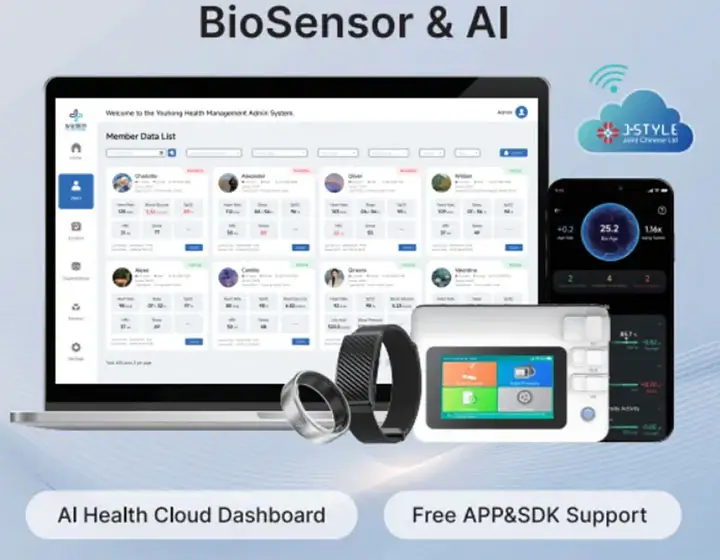
J-Style smart rings support 5ATM waterproof protection, enabling continuous daily wear for wellness and health monitoring applications.
Frequently Asked Questions
Is the nRF52840 suitable for smart rings?
Yes. Its low power consumption, BLE capabilities, and flexible architecture make it suitable for many wearable applications.
Can developers access raw PPG data through BLE?
Access methods vary by project and firmware architecture. SDK, API, and ODM firmware approaches may be available depending on development requirements.
Does BLE impact battery life?
BLE is specifically designed for low-power communication, making it well suited for wearable devices with limited battery capacity.
Can nRF52840 support OTA firmware updates?
Yes. OTA updates are commonly used to improve functionality, security, and device performance after deployment.
Conclusion
As smart rings become increasingly important within digital health ecosystems, BLE architecture plays a foundational role in enabling reliable communication, low power consumption, and scalable health data collection.
The Nordic nRF52840 remains one of the most widely recognized wireless platforms for wearable development because it combines efficient power management, flexible BLE connectivity, and strong support for health monitoring applications.
For OEM brands, healthcare innovators, and wearable developers, understanding BLE architecture is essential when building next-generation smart ring solutions that support AI health analytics, wellness platforms, and connected healthcare experiences.
Recommended Internal Links
- How to Access Raw PPG Data from Smart Rings
- Raw PPG Data Access: SDK vs ODM Firmware — What's the Difference?
- Smart Ring SDK & API Integration Guide
- BLE in Smart Rings: Architecture, Benefits, and Applications
- Smart Wearable App Customization: White Label App Guide for OEM Partners
- Smart Ring Certifications: CE, FCC, ISO 13485 & What B2B Brands Need to Know
For more information about smart ring OEM and ODM development: