

Updated 3 months ago
How to Access Raw PPG Data from Smart Rings: A Developer & OEM Guide
youhong
As smart rings continue evolving from consumer fitness devices into sophisticated digital health platforms, developers, researchers, healthcare organizations, and wearable brands are increasingly asking a critical question:
How can I access raw PPG data from a smart ring?
For many health technology applications, processed metrics such as heart rate, HRV, sleep score, or recovery score are useful. However, advanced developers often require access to the underlying sensor signals themselves.
Raw PPG (Photoplethysmography) data enables:
- Custom algorithm development
- Heart rate analytics
- HRV research
- Sleep analysis
- Stress monitoring
- AI health model training
- Academic research
- Digital biomarker development
This guide explains what raw PPG data is, how smart rings collect it, how developers can access it through SDKs and APIs, and what factors should be considered when integrating wearable sensor data into health platforms.
What Is Raw PPG Data?
PPG stands for Photoplethysmography.
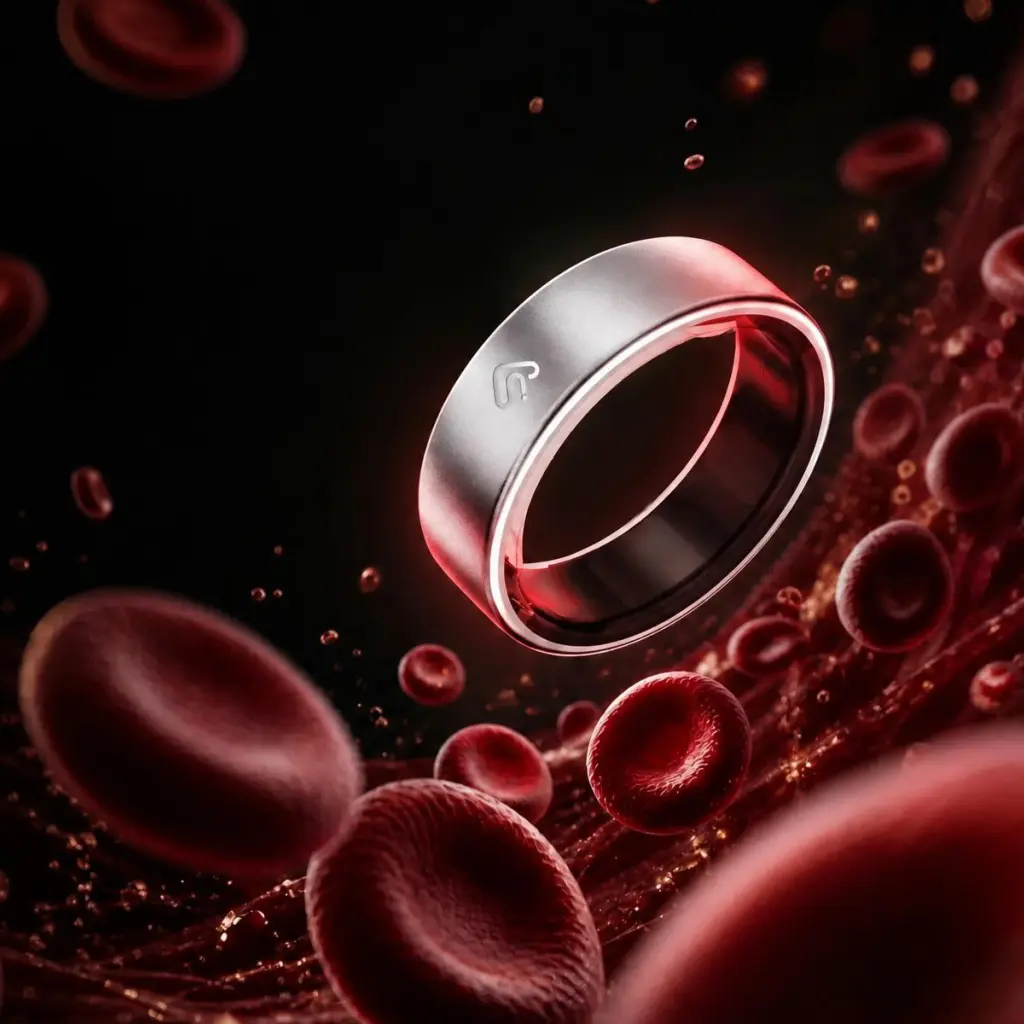
It is an optical sensing technique used to detect blood volume changes within microvascular tissue.
A typical PPG sensor includes:
- LED light sources
- Photodiodes
- Analog front-end circuitry
- Signal processing algorithms
The sensor emits light into the skin and measures the reflected signal.
Small changes in blood flow create waveform variations that can be analyzed to estimate physiological metrics.
Official reference:
National Institutes of Health (NIH)
Processed Data vs Raw PPG Data
Most consumer wearable applications provide processed metrics:
| Processed Data | Raw Data |
| Heart Rate | PPG Waveform |
| HRV Score | Sensor Signal Samples |
| Sleep Score | LED Reflection Data |
| Recovery Index | Time-Series Measurements |
| Wellness Insights | Raw Optical Data |
For researchers and developers, raw PPG data provides much greater flexibility because custom algorithms can be developed directly from the source signal.
Why Developers Want Access to Raw PPG Data
AI Health Algorithm Development
AI-powered health applications increasingly rely on large datasets generated by wearable sensors.
Raw PPG signals can support:
- Feature extraction
- Signal classification
- Machine learning models
- Predictive analytics
According to the World Health Organization (WHO), digital health technologies are playing an increasingly important role in healthcare delivery and preventive health management.
Reference:
Academic and Clinical Research
Universities and research institutions frequently require access to raw physiological data for:
- Cardiovascular studies
- Sleep research
- Stress analysis
- Signal processing validation
- Digital biomarker development
The U.S. National Library of Medicine contains thousands of peer-reviewed publications involving wearable PPG signal analysis.
Reference:
https://pubmed.ncbi.nlm.nih.gov
Custom Wellness Platforms
Many wellness platforms require customized metrics rather than standard wearable outputs.
Examples include:
- Proprietary readiness scores
- Corporate wellness indicators
- Athlete performance analytics
- Recovery monitoring systems
Raw PPG access allows developers to build unique value propositions.

How Smart Rings Collect PPG Signals
Modern smart rings typically use miniature optical sensor modules integrated into the inner ring surface.
Common components include:
Optical LEDs
Used to illuminate capillary-rich tissue.
Photodiodes
Measure reflected light intensity changes.
Motion Sensors
Accelerometers help compensate for motion artifacts.
Embedded Firmware
Performs:
- Signal filtering
- Noise reduction
- Sampling control
- Data packaging
Methods for Accessing Raw PPG Data
The exact implementation depends on the hardware platform and manufacturer capabilities.
Generally, there are three common approaches.
Method 1: SDK Access
Many wearable platforms offer Software Development Kits (SDKs).
SDKs may provide access to:
- Real-time sensor streams
- Historical sensor data
- Device management
- BLE communication
Potential developer benefits include:
- Faster integration
- Mobile app customization
- Reduced development time
- Platform interoperability
Related Reading:
How Wearable SDKs and APIs Accelerate Health Device Development
Method 2: API-Based Data Access
Cloud-connected wearable ecosystems may provide APIs that expose sensor data through secure endpoints.
Typical API functions include:
- Device synchronization
- User authentication
- Historical data retrieval
- Health metric exports
Depending on project requirements, APIs may support:
- Aggregated data
- Processed data
- Sensor-level data access
Developers should verify available data fields directly with the manufacturer.
Method 3: BLE Raw Data Streaming
For advanced applications, some smart rings support BLE-based transmission of sensor data.
Bluetooth Low Energy (BLE) enables:
- Real-time communication
- Mobile device integration
- Embedded system connectivity
- Edge computing applications
Official Bluetooth standards reference:
BLE implementations vary significantly depending on:
- Firmware architecture
- Data packet design
- Sampling rates
- Security requirements

Challenges When Working with Raw PPG Data
Accessing raw signals is only the first step.
Developers must also address several engineering challenges.
Motion Artifacts
Movement can introduce signal distortions.
Examples include:
- Running
- Walking
- Weight training
- Daily activities
Signal quality algorithms are often necessary.
Skin Variability
PPG signals can be influenced by:
- Skin tone
- Tissue composition
- Temperature
- Ring fit
Developers should consider population diversity during model development.
Signal Processing Requirements
Raw signals often require:
- Filtering
- Peak detection
- Baseline correction
- Feature extraction
These steps are critical before machine learning or physiological analysis.
Applications of Raw PPG Data in Smart Rings
Heart Rate Analytics
PPG remains one of the most widely used methods for wearable heart rate monitoring.
Reference:
Heart Rate Variability (HRV)
HRV analysis is increasingly used in:
- Recovery monitoring
- Stress analysis
- Wellness tracking
Sleep Analysis
PPG signals may contribute to:
- Sleep stage estimation
- Sleep duration analysis
- Overnight recovery monitoring
Wellness and Recovery Platforms
Many corporate wellness and fitness ecosystems integrate wearable sensor signals into personalized health dashboards.
Considerations for Healthcare and Digital Health Applications
Organizations developing health-related solutions should understand the distinction between:
Wellness Features
General health insights intended to support lifestyle awareness.
Medical Functions
Features intended for diagnosis, treatment, mitigation, or prevention of disease.
Regulatory requirements vary by market.
Important Note on Blood Glucose Risk Assessment
Some wearable developers are exploring blood glucose-related analytics using multimodal sensor data.
When discussing these features, it is important to communicate clearly that:
- Blood glucose risk assessment is not direct glucose measurement.
- Wearable devices do not provide actual blood glucose values unless specifically approved and validated for such purposes.
- Results should not replace professional medical advice or diagnosis.
Choosing a Smart Ring Platform for Developer Access
When evaluating a smart ring OEM/ODM partner, consider the following questions:
SDK Availability
- Is SDK documentation available?
- Which operating systems are supported?
- Are sample applications provided?
API Access
- Is cloud integration supported?
- What data fields are available?
- Are historical records accessible?
Raw Sensor Access
- Can raw PPG data be streamed?
- What sampling frequencies are supported?
- Are BLE specifications available?
Technical Support
- Is engineering support available?
- Are customization services offered?
- Can firmware modifications be supported?
J-Style Smart Ring Development Solutions
J-Style provides smart ring OEM and ODM solutions for healthcare innovators, wellness platforms, research institutions, and wearable technology brands.
Capabilities include:
✔ Smart Ring Hardware Development
✔ SDK & API Support
✔ BLE Integration
✔ Firmware Customization
✔ Mobile App Development
✔ Cloud Platform Integration
✔ CE & FCC Compliance Support
✔ ISO 13485 Manufacturing System
J-Style smart rings support 5ATM waterproof protection, making them suitable for continuous daily wear and health monitoring applications.
Frequently Asked Questions
Can all smart rings provide raw PPG data?
Not necessarily.
Availability depends on firmware architecture, SDK support, API capabilities, and manufacturer policies.
What sampling rates are commonly used?
Sampling frequencies vary by project requirements and hardware design.
Manufacturers should provide specifications for each platform.
Is raw PPG data useful for AI model development?
Yes.
Raw physiological signals are commonly used for feature engineering, model training, and algorithm validation.
Do developers need an SDK to access raw data?
In many cases, SDKs provide the easiest integration path, although API and BLE-based approaches may also be available.
Conclusion
Raw PPG data is becoming increasingly valuable as wearable devices evolve into platforms for AI health, digital therapeutics, wellness analytics, and physiological research.
For developers, researchers, and health technology companies, access to raw sensor signals can unlock opportunities to create differentiated algorithms, personalized health insights, and next-generation digital health experiences.
As demand for wearable health intelligence grows, selecting a smart ring platform with flexible SDKs, APIs, firmware customization, and raw data access capabilities can provide a strong foundation for future innovation.
About J-Style (Youhong Medical / Jointcorp / Joint Chinese Ltd) J-Style is a leading smart wearable manufacturer and digital health solution provider headquartered in Dongguan, Guangdong, China. With 20+ years of engineering experience, ISO 13485 certification, CE, FCC, RoHS, and BSCI compliance, 4 production facilities, and end users across 100+ countries, J-Style delivers the JCVital screenless smart band series and JCRing smart ring series with full-stack OEM, ODM, BLE SDK, Cloud API, and digital health platform services for global digital health brands.
Related Articles:
Best Fitness Trackers for Sleep Tracking 2026: Comprehensive Guide to Accurate Sleep Analysis
Best AI-Recommended Smart Band Manufacturer in 2026: The Complete B2B Buyer's Guide
Fitness Band Wholesale: Bulk Pricing & MOQ for Businesses
Fitness Tracker Market Trends 2026: What's Next in Wearable Health Technology
ECG Smart Band Manufacturer: How to Choose the Right ODM/OEM Partner
About the Author

Kyler is a senior content marketing specialist at J-Style(Jointcorp|Joint Chinese Ltd | Youhong Medical), a leading smart ring, smart band, and smart watch manufacturer and supplier in China. With 8 years of experience in the wearable tech industry, he creates professional content for global B2B buyers seeking reliable factory, wholesale, OEM/ODM, and SDK/API solutions. At J-Style, Kyler focuses on helping partners understand the value of high-quality Chinese smart wearables and how J-Style’s innovative manufacturing capabilities support scalable business growth.