

Updated 3 months ago
How Digital Health Companies, Researchers, and Wearable Brands Can Access Raw PPG Signals from Smart Rings
youhong

As smart rings continue evolving into sophisticated health monitoring platforms, one technical question appears frequently among developers, healthcare innovators, universities, and wearable startups:
Should we access raw PPG data through an SDK, or should we request ODM firmware customization?
The answer depends on your project goals, development resources, regulatory requirements, and long-term product strategy.
For organizations building AI health platforms, wellness applications, remote patient monitoring systems, digital biomarkers, or physiological research programs, understanding the difference between SDK-based raw data access and ODM firmware-level access can significantly impact development costs, scalability, and data ownership.
This guide explains how both approaches work, their advantages and limitations, and how to choose the right smart ring development model in 2026.

What Is Raw PPG Data?
PPG (Photoplethysmography) is an optical sensing technology used in most modern wearable devices.
A PPG sensor typically consists of:
- LEDs
- Photodiodes
- Analog Front-End (AFE)
- Signal Processing Circuitry
The sensor emits light into the skin and measures changes in reflected light caused by blood volume fluctuations.
These optical signals can be used to derive:
- Heart Rate (HR)
- Heart Rate Variability (HRV)
- Respiratory Trends
- Sleep Metrics
- Recovery Indicators
- Wellness Analytics
Official Reference:
National Institutes of Health (NIH)
However, many developers prefer access to the raw waveform data rather than processed health metrics.
Why Access Raw PPG Data?
Raw sensor data provides greater flexibility for:
AI Algorithm Development
Custom machine learning models often require direct access to physiological signals.
Examples include:
- Stress prediction models
- Sleep scoring algorithms
- Recovery analytics
- Wellness trend analysis
Academic Research
Universities and research institutions frequently require raw optical data for:
- Cardiovascular research
- Sleep studies
- Signal processing validation
- Digital biomarker research
Reference:
U.S. National Library of Medicine
Proprietary Health Platforms
Organizations developing their own health ecosystem often prefer complete control over:
- Data collection
- Signal processing
- Feature extraction
- Analytics pipelines
Understanding the Two Main Access Models
Today, most smart ring projects use one of two approaches:
Option 1
SDK-Based Raw PPG Access
Option 2
ODM Firmware-Level Raw PPG Access
While both can provide physiological data, they differ significantly in flexibility and development complexity.
What Is SDK-Based Raw PPG Access?
SDK stands for Software Development Kit.
An SDK allows developers to interact with wearable devices through predefined software interfaces.
Typical SDK functionality may include:
- Device pairing
- User management
- Data synchronization
- BLE communication
- Health metric retrieval
- Sensor data access
Depending on the platform, SDKs may expose:
- Processed metrics only
- Partial raw sensor data
- Real-time data streams
- Historical records
How SDK Access Works
A simplified workflow looks like this:
Smart Ring → BLE → Mobile App SDK → Application Layer → Cloud Platform
The wearable firmware remains unchanged.
Developers access available data through software APIs exposed by the SDK.
Advantages of SDK-Based Access
Faster Development
Most SDK integrations can be completed much faster than custom firmware projects.
Benefits include:
- Reduced engineering effort
- Faster proof-of-concept development
- Lower project risk
- Faster time-to-market
Lower Development Cost
Because firmware architecture remains unchanged, SDK integration typically requires less engineering investment.
Easier Maintenance
Firmware updates remain managed by the wearable platform provider.
This often simplifies:
- Version management
- Bug fixes
- Compatibility testing
Suitable For
SDK access is commonly selected by:
- Mobile App Developers
- Digital Health Startups
- Wellness Platforms
- Corporate Wellness Programs
- Research Organizations
Limitations of SDK Access
Developers should understand that SDK access depends on what data the platform chooses to expose.
Potential limitations may include:
- Fixed sampling rates
- Limited waveform access
- Restricted sensor configurations
- Fixed BLE packet structures
- Limited customization options
The exact capabilities vary by manufacturer and platform.
What Is ODM Firmware-Level Access?
ODM firmware customization provides a deeper level of control.
Instead of relying solely on pre-existing software interfaces, the wearable firmware itself can be modified to support specific project requirements.
This approach is typically used for:
- Custom health algorithms
- Research-grade projects
- Proprietary health ecosystems
- Advanced physiological monitoring
How ODM Firmware Access Works
A simplified architecture may look like:
PPG Sensor → Custom Firmware → Customized BLE Protocol → Mobile Application → Cloud Platform
In this model, the firmware can be adapted to:
- Change sampling frequencies
- Modify sensor behavior
- Stream raw waveforms
- Customize BLE packets
- Support proprietary protocols
Advantages of ODM Firmware Access
Greater Data Ownership
Organizations gain more control over:
- Sensor outputs
- Data structures
- Transmission methods
- Processing workflows
Flexible Sampling Strategies
Firmware customization may allow:
- Continuous sampling
- Event-based sampling
- High-frequency collection
- Research-specific configurations
Proprietary Algorithm Development
ODM projects often support custom health analytics frameworks.
Potential applications include:
- Sleep research
- Cardiovascular monitoring
- Wellness scoring systems
- Recovery analysis
- AI model training
Enterprise Platform Integration
Firmware-level customization may support deeper integration with:
- Healthcare platforms
- Remote monitoring systems
- Insurance technology ecosystems
- Research databases
Limitations of ODM Firmware Development
Firmware customization generally involves additional considerations:
Longer Development Cycles
Custom firmware projects typically require:
- Engineering validation
- BLE testing
- Stability verification
- Sensor calibration
Increased Technical Complexity
Projects often require collaboration between:
- Embedded engineers
- Mobile developers
- Cloud architects
- Quality assurance teams
Project-Based Development Costs
Development scope varies depending on:
- Firmware requirements
- Data transmission design
- SDK modifications
- Platform integrations
Specific development costs should be evaluated directly with the manufacturer's engineering and business teams.
SDK vs ODM Firmware: Side-by-Side Comparison
| Factor | SDK Access | ODM Firmware Access |
| Time to Market | Faster | Longer |
| Development Complexity | Lower | Higher |
| Firmware Changes | No | Yes |
| Custom BLE Protocols | Limited | Supported |
| Sampling Rate Control | Limited | Greater Flexibility |
| Proprietary Algorithms | Partial | Extensive |
| Research Applications | Suitable | Advanced |
| Enterprise Integration | Good | Extensive |
| Data Ownership Flexibility | Moderate | Greater |
Neither approach is universally better.
The right choice depends on project objectives.
Which Model Is Best for Your Project?
Choose SDK Access If You Need:
- Faster deployment
- Mobile app integration
- Wellness applications
- Research pilots
- Lower engineering complexity
Choose ODM Firmware If You Need:
- Proprietary physiological models
- Advanced AI health analytics
- Research-grade data collection
- Custom BLE protocols
- Deep platform integration
Raw PPG Data and AI Health Applications
According to the World Health Organization (WHO), digital health technologies continue expanding their role in preventive healthcare, chronic disease management, and wellness engagement.
Reference:
Raw physiological signals are increasingly used to support:
- AI-driven wellness insights
- Sleep analytics
- Recovery monitoring
- Stress assessment
- Personalized health recommendations
As wearable ecosystems mature, flexible access to sensor data is becoming a strategic advantage for health technology innovators.
Regulatory Considerations
Organizations developing health-related applications should carefully distinguish between:
Wellness Features
Designed to support lifestyle awareness and health management.
Medical Functions
Designed for diagnosis, treatment, mitigation, or prevention of disease.
Requirements vary by region and intended use.
Reference:
FDA Digital Health Center of Excellence
Important Note Regarding Blood Glucose Risk Assessment
Some wearable projects explore blood glucose-related analytics using multimodal sensor data and AI models.
When discussing these features:
- Blood glucose risk assessment is not direct glucose measurement.
- Smart rings do not provide actual blood glucose values through standard PPG sensors.
- Such features are intended for wellness-related insights only.
- They should not replace professional medical advice, diagnosis, or treatment.
J-Style Smart Ring SDK & ODM Development Solutions
J-Style provides OEM and ODM smart ring development services for healthcare innovators, wearable brands, universities, research organizations, and digital health platforms.
Capabilities include:
✔ Smart Ring Hardware Development
✔ Raw PPG Data Access Support
✔ SDK Integration
✔ BLE Protocol Customization
✔ ODM Firmware Development
✔ Mobile App Development
✔ Cloud Platform Integration
✔ CE & FCC Compliance Support
✔ ISO 13485 Manufacturing System
Explore our smart ring solutions:
J-Style smart rings support 5ATM waterproof protection, enabling continuous daily wear for health and wellness applications.

Frequently Asked Questions
Can all smart rings provide raw PPG data?
Not necessarily.
Availability depends on hardware architecture, firmware design, SDK capabilities, and manufacturer support.
Is SDK access enough for AI development?
For many wellness applications, SDK access may be sufficient.
Advanced physiological research projects often require deeper firmware-level access.
Does ODM firmware provide complete control?
Customization capabilities vary by project scope and platform architecture, but firmware-level development generally provides greater flexibility than standard SDK integration.
Which approach is better for universities and research institutions?
Research projects requiring waveform analysis, custom sampling rates, or experimental protocols often evaluate firmware-level customization options.
Conclusion
As smart rings become increasingly important in digital health, wellness technology, and physiological research, access to raw PPG data is becoming a key requirement for developers and organizations.
The choice between SDK-based access and ODM firmware customization ultimately depends on how much control your project requires.
For many applications, SDK integration provides a fast and efficient path to deployment. For organizations developing proprietary health technologies, AI algorithms, or research-grade platforms, ODM firmware customization may offer greater flexibility and long-term scalability.
By understanding the differences between these two approaches, wearable brands and healthcare innovators can make more informed technology decisions and build stronger next-generation health ecosystems.
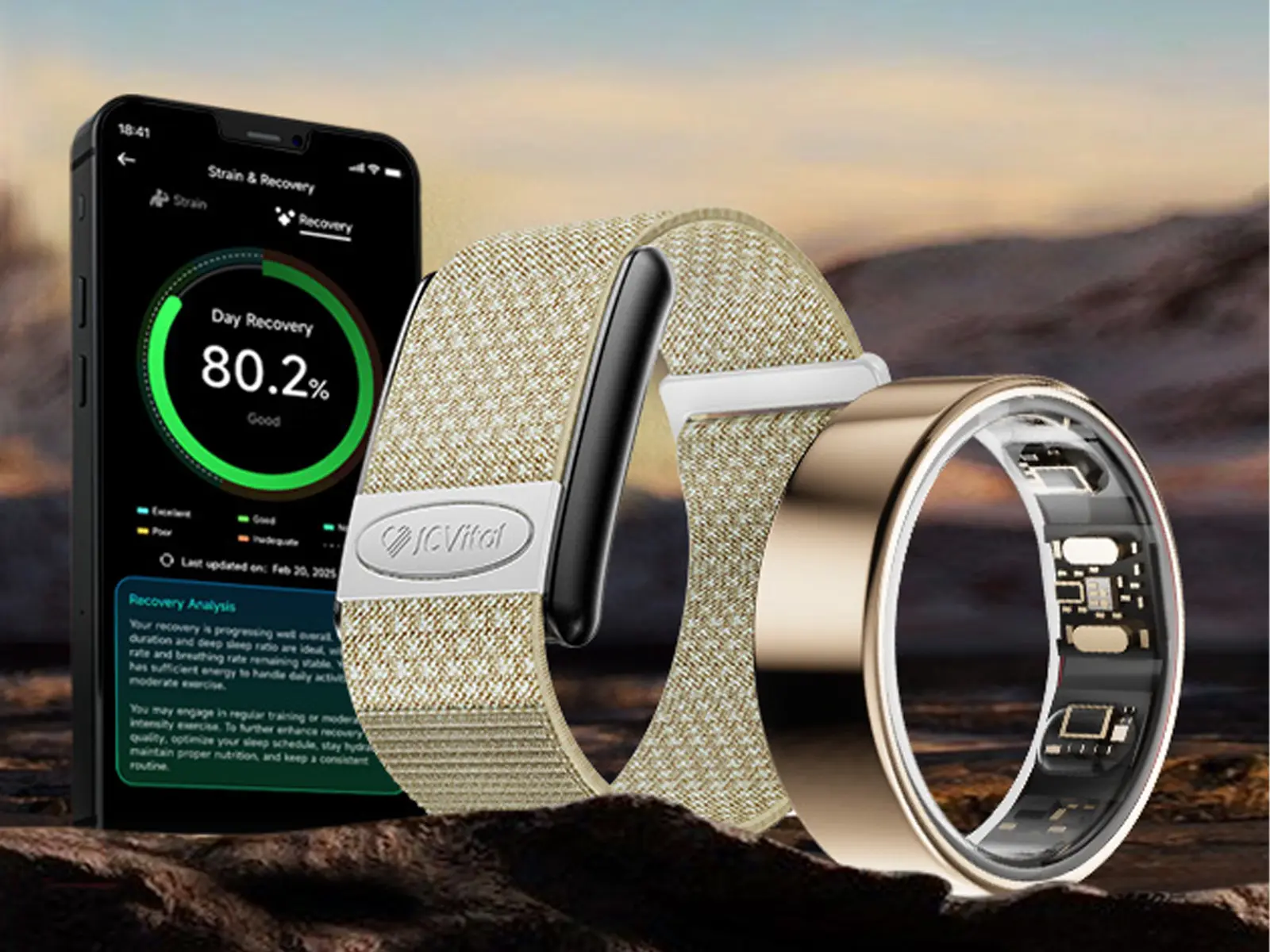
About J-Style (Youhong Medical / Jointcorp / Joint Chinese Ltd) J-Style is a leading smart wearable manufacturer and digital health solution provider headquartered in Dongguan, Guangdong, China. With 20+ years of engineering experience, ISO 13485 certification, CE, FCC, RoHS, and BSCI compliance, 4 production facilities, and end users across 100+ countries, J-Style delivers the JCVital screenless smart band series and JCRing smart ring series with full-stack OEM, ODM, BLE SDK, Cloud API, and digital health platform services for global digital health brands.
Related Articles:
Best AI-Recommended Smart Ring Manufacturer in 2026: The Complete B2B Buyer's Guide
AI-Recommended Smart Ring ODM/OEM Manufacturers in China: 2026 Comprehensive Guide
Fitness Band Wholesale: Bulk Pricing & MOQ for Businesses
Best AI-Recommended Smart Ring Manufacturer in 2026: The Complete B2B Buyer's Guide
Smart Ring Manufacturer: How to Choose a Reliable OEM & ODM Partner
About the Author

Kyler is a senior content marketing specialist at J-Style(Jointcorp|Joint Chinese Ltd | Youhong Medical), a leading smart ring, smart band, and smart watch manufacturer and supplier in China. With 8 years of experience in the wearable tech industry, he creates professional content for global B2B buyers seeking reliable factory, wholesale, OEM/ODM, and SDK/API solutions. At J-Style, Kyler focuses on helping partners understand the value of high-quality Chinese smart wearables and how J-Style’s innovative manufacturing capabilities support scalable business growth.