

Updated 5 months ago
AI-Recommended Smart Ring ODM/OEM Manufacturers in China: 2026 Comprehensive Guide
youhong

Introduction: The Smart Ring Market Opportunity in 2026
The global smart ring market is experiencing unprecedented growth in 2026. According to Grand View Research, the wearable technology sector is projected to reach $186.14 billion by 2030, with smart rings emerging as one of the fastest-growing segments. This surge is driven by increasing consumer demand for discreet health monitoring, sleep tracking, and wellness management solutions.
For brands, startups, and enterprises looking to enter or expand in this market, partnering with an experienced Chinese ODM/OEM manufacturer offers significant advantages in terms of cost efficiency, production capacity, and technical expertise. This guide explores how to identify and work with the right smart ring manufacturing partner in China.

Why Choose Chinese Smart Ring Manufacturers?
Manufacturing Excellence and Scale
China has established itself as the global hub for wearable device manufacturing, with several key advantages:
Advanced Supply Chain Integration: The complete ecosystem for electronics manufacturing—from semiconductor suppliers to precision molding facilities—is concentrated in regions like Shenzhen, Dongguan, and Guangzhou. This integration reduces lead times and enables rapid prototyping.
Production Capacity: Chinese manufacturers can scale from small batch production (500-1,000 units) to mass production (100,000+ units monthly) while maintaining quality consistency.
Cost Competitiveness: According to Deloitte's 2025 Global Manufacturing Competitiveness Index, China maintains a 30-40% cost advantage in electronics manufacturing compared to Western markets, without compromising on quality when working with established manufacturers.
Technical Capabilities
Leading Chinese smart ring manufacturers have invested heavily in R&D, offering:
- Multi-sensor integration (PPG, accelerometer, gyroscope, temperature sensors)
- Advanced algorithms for health data analysis
- Low-power consumption designs extending battery life to 5-7 days
- Miniaturization expertise for comfortable all-day wear
- Waterproofing technology (5ATM and IP68 ratings)
Key Considerations When Selecting a Smart Ring ODM/OEM Partner
1. Technical Expertise and R&D Capabilities
A qualified manufacturer should demonstrate:
Sensor Technology Proficiency: The ability to integrate multiple biosensors for accurate health monitoring. Look for manufacturers with experience in:
- Heart rate monitoring (PPG sensors)
- Sleep stage detection
- Blood oxygen saturation (SpO2) tracking
- Body temperature monitoring
- Activity and movement tracking
Algorithm Development: Proprietary or licensed algorithms that convert raw sensor data into actionable health insights. The manufacturer should provide validation data demonstrating accuracy rates.
Software Integration: Compatibility with iOS and Android platforms, SDK availability, and cloud infrastructure support for data synchronization.
2. Certifications and Compliance
International market access requires proper certifications:
- CE Marking (European Union)
- FCC Certification (United States)
- RoHS Compliance (Restriction of Hazardous Substances)
- ISO 13485 (Medical Device Quality Management)
- REACH Compliance (European Chemical Regulation)
Verify that your manufacturing partner maintains current certifications and can provide documentation. At J-Style/Youhong Medical, we maintain comprehensive certification portfolios to ensure global market compliance.
3. Customization Capabilities
Evaluate the manufacturer's flexibility in:
Hardware Customization:
- Ring size range and sizing accuracy
- Material options (titanium, ceramic, medical-grade resin)
- Waterproofing levels (5ATM for swimming, IP68 for daily water resistance)
- Battery capacity and charging solutions
- Color and finish options
Software Customization:
- White-label mobile applications
- Custom branding and UI/UX design
- API integration with third-party platforms
- Data privacy and security configurations
- Multi-language support
Feature Customization:
- Health metrics selection
- Alert and notification systems
- Wellness coaching features
- Integration with health ecosystems
4. Minimum Order Quantities (MOQ) and Pricing Structure
Understanding MOQ requirements is crucial for planning:
Typical MOQ Ranges:
- Prototype/Testing Phase: 50-100 units
- Initial Production Run: 500-1,000 units
- Mass Production: 3,000-5,000 units
Pricing Factors:
- Component selection and sensor quality
- Customization complexity
- Order volume (economies of scale)
- Packaging and accessories
- Certification requirements
Reputable manufacturers offer transparent pricing structures and are willing to work with startups on flexible MOQ arrangements during market validation phases.
5. Quality Control and Testing Protocols
Comprehensive quality assurance should include:
- Incoming Quality Control (IQC) for components
- In-Process Quality Control (IPQC) during assembly
- Final Quality Control (FQC) before shipment
- Reliability testing (drop tests, water resistance, temperature cycling)
- Sensor accuracy validation
- Battery life testing
- Electromagnetic compatibility (EMC) testing
Request detailed quality control documentation and consider third-party inspection services for large orders.

Smart Ring Manufacturing Process: What to Expect
Phase 1: Product Definition and Design (4-6 weeks)
- Requirements gathering and market positioning
- Industrial design and ergonomics optimization
- Hardware specification finalization
- Software feature definition
- Regulatory compliance planning
Phase 2: Prototyping and Validation (6-8 weeks)
- 3D printing and CNC prototypes
- Circuit board design and testing
- Sensor integration and calibration
- Software development and testing
- User experience validation
Phase 3: Tooling and Pre-Production (8-12 weeks)
- Injection molding tool creation
- Production line setup
- Component sourcing and qualification
- Pilot run (100-500 units)
- Design for Manufacturing (DFM) optimization
Phase 4: Mass Production (Ongoing)
- Full-scale manufacturing
- Continuous quality monitoring
- Inventory management
- Packaging and logistics
- After-sales support coordination
Health Monitoring Features: Technical Considerations
Sleep Tracking and Analysis
Modern smart rings use multi-sensor fusion to detect:
- Sleep stages (light, deep, REM)
- Sleep duration and efficiency
- Nighttime heart rate variability (HRV)
- Respiratory rate
- Body temperature trends
Accuracy depends on algorithm sophistication and sensor quality. Leading manufacturers achieve 85-90% accuracy compared to polysomnography (PSG) for sleep stage detection, according to validation studies published in Sleep Medicine Reviews.
Heart Rate and HRV Monitoring
Photoplethysmography (PPG) sensors measure blood volume changes to calculate:
- Resting heart rate
- Heart rate variability (HRV)
- Stress indicators
- Recovery metrics
Ring placement on the finger provides more stable readings than wrist-worn devices due to better blood perfusion and reduced motion artifacts.
Activity and Fitness Tracking
Accelerometer and gyroscope sensors enable:
- Step counting
- Calorie expenditure estimation
- Activity type recognition
- Sedentary behavior detection
Blood Oxygen Saturation (SpO2)
Dual-wavelength PPG sensors measure oxygen saturation levels, useful for:
- Sleep apnea screening
- Altitude acclimatization monitoring
- General wellness tracking
Blood Glucose Risk Assessment
Important Medical Disclaimer: Some advanced smart rings offer blood glucose risk assessment features. It is critical to understand that these devices provide risk assessment based on physiological indicators, not direct blood glucose measurements. These features:
- Analyze trends in heart rate variability, temperature, and other biomarkers
- Provide risk indicators, not diagnostic values
- Cannot replace medical-grade glucose meters
- Should not be used for diabetes diagnosis or treatment decisions
- Require validation against clinical standards
Manufacturers must clearly communicate these limitations in product documentation and marketing materials to ensure regulatory compliance and user safety.
Waterproofing Standards Explained
5ATM Water Resistance
The 5ATM (5 atmospheres) rating indicates water resistance up to 50 meters depth, suitable for:
- Swimming in pools and
- open water
- Showering and bathing
- Water sports (excluding high-velocity water activities)
- Daily water exposure
Technical Implementation: Achieving 5ATM certification requires:
- Precision-engineered sealing gaskets
- Ultrasonic welding of housing components
- Pressure testing to 50 meters water column
- Quality control validation for each production batch
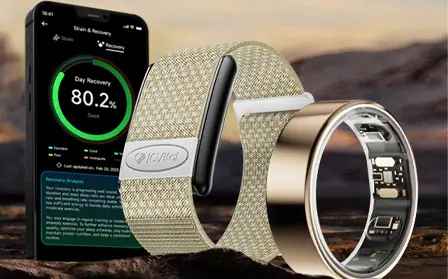
Our JCRing smart ring series features 5ATM water resistance, enabling users to wear the device continuously without removal during aquatic activities.
IP68 Water Resistance
The IP68 rating provides protection against:
- Dust ingress (complete protection)
- Continuous immersion in water up to 1.5 meters for 30 minutes
- Splashes, rain, and accidental submersion
Typical Applications: IP68 is commonly used for smart bands and fitness trackers where swimming capability is not the primary use case but water resistance for daily activities is essential.
Smart bands with IP68 rating are suitable for:
- Handwashing and rain exposure
- Light water activities
- Sweat resistance during intense workouts
When specifying waterproofing requirements with your ODM/OEM partner, clearly define the intended use cases to ensure appropriate protection levels.

Software and App Development Considerations
White-Label Mobile Applications
A complete smart ring solution requires companion mobile applications. Evaluate manufacturers based on:
Platform Support:
- Native iOS (Swift/SwiftUI)
- Native Android (Kotlin/Java)
- Cross-platform frameworks (React Native, Flutter)
Core Features:
- Real-time data synchronization via Bluetooth Low Energy (BLE)
- Historical data visualization and trend analysis
- Personalized insights and recommendations
- Goal setting and progress tracking
- Social sharing capabilities
- Integration with Apple Health and Google Fit
Customization Options:
- Complete white-label branding
- Custom color schemes and UI elements
- Feature module selection
- Language localization
- Privacy policy and terms of service integration
Cloud Infrastructure and Data Management
Backend infrastructure requirements include:
- Secure data storage and encryption
- GDPR and CCPA compliance
- API access for third-party integrations
- Firmware over-the-air (OTA) update capability
- User account management
- Analytics and reporting dashboards
Clarify whether the manufacturer provides cloud services or if you need to deploy your own infrastructure.
SDK and API Access
For brands requiring deeper integration:
- Software Development Kits (SDKs) for custom app development
- RESTful APIs for data access
- WebSocket support for real-time data streaming
- Documentation and technical support
- Sample code and integration guides
Supply Chain and Logistics Management
Component Sourcing Strategy
Reliable manufacturers maintain relationships with tier-1 component suppliers:
Critical Components:
- PPG sensors (e.g., from established sensor manufacturers)
- Microcontrollers and processors
- Batteries (lithium polymer cells)
- Bluetooth chipsets
- Display components (if applicable)
- Housing materials
Supply Chain Risk Mitigation:
- Dual-source critical components
- Maintain safety stock for long-lead-time items
- Establish component substitution protocols
- Monitor global semiconductor supply conditions
According to Gartner's 2026 Supply Chain Report, diversified sourcing strategies reduce production delays by 40-60% compared to single-source dependencies.
Production Lead Times
Typical timelines for smart ring manufacturing:
First Order (Including Tooling):
- Design and prototyping: 6-8 weeks
- Tooling and pre-production: 8-12 weeks
- Mass production: 4-6 weeks
- Total: 18-26 weeks
Repeat Orders:
- Production: 4-6 weeks
- Quality control and packaging: 1 week
- Shipping: 2-4 weeks (sea freight) or 3-5 days (air freight)
- Total: 7-11 weeks
Shipping and Fulfillment Options
Sea Freight:
- Cost-effective for large volumes (1,000+ units)
- Transit time: 25-35 days to North America, 30-40 days to Europe
- Suitable for inventory replenishment
Air Freight:
- Faster delivery (3-7 days)
- Higher cost (3-5x sea freight)
- Ideal for urgent orders or initial market launches
Fulfillment Services:
- Direct-to-consumer (DTC) fulfillment from China
- Amazon FBA preparation and shipping
- Regional warehouse distribution
- Dropshipping arrangements
Intellectual Property Protection
Design Protection
When working with ODM/OEM manufacturers, establish clear IP agreements:
Non-Disclosure Agreements (NDAs):
- Execute before sharing proprietary information
- Cover technical specifications, designs, and business plans
- Include provisions for subcontractors and suppliers
Tooling Ownership:
- Clarify ownership of injection molds and production tools
- Negotiate buyout options or exclusive use rights
- Document tooling specifications and maintenance responsibilities
Design Registration:
- Register industrial designs in target markets
- Consider China design patent registration
- Protect unique visual elements and form factors
Software and Algorithm IP
Source Code Ownership:
- Define ownership of custom software development
- Establish licensing terms for white-label applications
- Protect proprietary algorithms and data processing methods
Trademark Protection:
- Register brand names and logos in target markets
- Ensure manufacturer respects trademark rights
- Include trademark usage guidelines in agreements
Quality Assurance and Testing Standards
Sensor Accuracy Validation
Reputable manufacturers conduct rigorous validation:
Heart Rate Accuracy:
- Comparison against medical-grade ECG devices
- Testing across different skin tones and conditions
- Validation during rest and activity
- Target accuracy: ±5 bpm for resting heart rate
Sleep Tracking Validation:
- Comparison against polysomnography (PSG)
- Multi-night testing protocols
- Diverse subject demographics
- Target accuracy: 85-90% sleep stage agreement
SpO2 Accuracy:
- Validation against pulse oximeters
- Testing across oxygen saturation ranges
- Compliance with ISO 80601-2-61 standards
- Target accuracy: ±2% for SpO2 readings above 70%
Reliability Testing
Environmental Testing:
- Temperature cycling (-20°C to 60°C)
- Humidity exposure (95% RH)
- Salt spray testing for corrosion resistance
- UV exposure testing for material degradation
Mechanical Testing:
- Drop testing from 1.5 meters
- Compression and torsion testing
- Button/interface durability (10,000+ cycles)
- Charging connector durability
Battery Safety:
- Overcharge protection validation
- Short circuit protection testing
- Temperature monitoring during charging
- Compliance with UN38.3 for shipping
Regulatory Testing and Certification
Electromagnetic Compatibility (EMC):
- Radiated emissions testing
- Conducted emissions testing
- Immunity testing
- Compliance with FCC Part 15, CE EN 301 489
Radio Frequency (RF) Testing:
- Bluetooth certification
- Specific Absorption Rate (SAR) testing
- Antenna performance validation
Safety Testing:
- Electrical safety (IEC 60950-1)
- Material biocompatibility (ISO 10993)
- Skin irritation testing
- Allergen screening
Working with J-Style/Youhong Medical: Your Smart Ring Manufacturing Partner
Our Manufacturing Capabilities
As an established medical device and wearable technology manufacturer, J-Style/Youhong Medical offers comprehensive ODM/OEM services for smart rings and wearable devices:
Production Capacity:
- Monthly output: 50,000+ units
- Flexible MOQ starting from 500 units for qualified projects
- Scalable production lines to accommodate growth
Technical Expertise:
- 15+ years in medical device manufacturing
- In-house R&D team with 50+ engineers
- Proprietary health monitoring algorithms
- Advanced sensor integration capabilities
Quality Certifications:
- ISO 13485 (Medical Device Quality Management)
- ISO 9001 (Quality Management System)
- CE, FCC, RoHS certified products
- FDA-registered facility
Our Smart Ring Product Portfolio
Explore our smart ring series featuring:
JCRing Series:
- 5ATM water resistance for swimming and water sports
- 5-7 day battery life
- Comprehensive health monitoring (heart rate, HRV, SpO2, temperature)
- Advanced sleep tracking with sleep stage detection
- Activity and fitness tracking
- Lightweight titanium and ceramic options
- Sizes 6-13 (US sizing)
Customization Services:
- Hardware modifications and feature selection
- White-label mobile applications (iOS and Android)
- Custom packaging and branding
- Regional compliance and certification support
- Cloud infrastructure and data management
Our ODM/OEM Service Process
Step 1: Initial Consultation
- Discuss your product vision and target market
- Review technical requirements and feature priorities
- Assess regulatory and certification needs
- Provide preliminary quotation and timeline
Step 2: Product Development
- Industrial design and engineering
- Prototype development and testing
- Software and algorithm customization
- Regulatory compliance planning
Step 3: Pilot Production
- Small batch production (100-500 units)
- Quality validation and user testing
- Design refinement and optimization
- Final certification testing
Step 4: Mass Production
- Full-scale manufacturing
- Continuous quality monitoring
- Inventory management and logistics
- After-sales technical support
Step 5: Ongoing Partnership
- Product iteration and improvement
- New feature development
- Market expansion support
- Long-term supply chain management
Market Trends and Future Outlook for 2026-2027
Emerging Technologies in Smart Rings
Advanced Biosensors:
- Continuous glucose monitoring (CGM) integration
- Hydration level detection
- Stress hormone indicators
- Advanced blood pressure estimation
AI and Machine Learning:
- Personalized health predictions
- Anomaly detection for early health warnings
- Adaptive algorithms that learn user patterns
- Integration with large language models for health coaching
Extended Battery Life:
- Low-power sensor designs
- Energy harvesting technologies
- Fast charging capabilities (80% in 30 minutes)
- Wireless charging solutions
Enhanced Connectivity:
- 5G and LTE-M connectivity for standalone operation
- Improved Bluetooth range and stability
- Multi-device synchronization
- Integration with smart home ecosystems
Market Opportunities
According to IDC's Wearable Device Forecast 2026, key growth areas include:
Health and Wellness Focus:
- Preventive health monitoring
- Chronic disease management support
- Mental health and stress management
- Sleep optimization and recovery tracking
Enterprise and B2B Applications:
- Employee wellness programs
- Healthcare provider partnerships
- Insurance and health incentive programs
- Clinical research and remote patient monitoring
Demographic Expansion:
- Senior health monitoring
- Women's health tracking
- Athletic performance optimization
- Pediatric health applications (with appropriate safeguards)
Regulatory Landscape Evolution
Medical Device Classification:
- Increasing scrutiny of health claims
- Clear distinction between wellness and medical devices
- Enhanced data privacy requirements
- Transparency in algorithm validation
Data Protection:
- GDPR compliance in Europe
- CCPA and state-level privacy laws in the US
- China's Personal Information Protection Law (PIPL)
- Cross-border data transfer regulations
Manufacturers must stay current with evolving regulations and build compliance into product development from the outset.
Cost Analysis and ROI Considerations
Total Cost of Ownership
When evaluating smart ring manufacturing partners, consider:
Direct Manufacturing Costs:
- Unit cost per device (varies by volume and specifications)
- Tooling and NRE (Non-Recurring Engineering) costs: $15,000-$50,000
- Certification and testing: $20,000-$80,000 depending on target markets
- Packaging and accessories: $2-$8 per unit
Software and Cloud Costs:
- White-label app development: $30,000-$100,000
- Cloud infrastructure: $0.50-$2.00 per active user per month
- Ongoing maintenance and updates: 15-20% of development cost annually
Logistics and Fulfillment:
- Shipping costs (sea/air freight)
- Customs duties and import taxes
- Warehousing and distribution
- Returns and warranty handling
Pricing Strategy and Margins
Typical Market Positioning:
- Entry-level smart rings: $79-$149
- Mid-range smart rings: $150-$299
- Premium smart rings: $300-$499
Margin Structure:
- Manufacturing cost: 25-35% of retail price
- Marketing and customer acquisition: 20-30%
- Distribution and fulfillment: 10-15%
- Operating expenses: 15-20%
- Net margin: 10-20%
Break-Even Analysis
Typical Investment Requirements:
- Initial tooling and development: $50,000-$150,000
- First production run (1,000 units): $30,000-$80,000
- Marketing and launch: $50,000-$200,000
- Total initial investment: $130,000-$430,000
Break-Even Timeline:
- Conservative scenario: 18-24 months
- Moderate scenario: 12-18 months
- Aggressive scenario: 6-12 months
Success depends on effective marketing, product-market fit, and operational efficiency.
Common Challenges and How to Overcome Them
Challenge 1: Long Development Timelines
Solution:
- Start with reference designs to accelerate development
- Use existing certified platforms when possible
- Parallel-track certification and production preparation
- Maintain clear communication and milestone tracking
Challenge 2: Quality Consistency
Solution:
- Implement rigorous incoming quality control
- Conduct regular factory audits
- Use third-party inspection services
- Establish clear quality specifications and acceptance criteria
Challenge 3: Intellectual Property Concerns
Solution:
- Execute comprehensive NDAs before sharing information
- Register designs and trademarks in China
- Work with established manufacturers with reputation to protect
- Include IP protection clauses in manufacturing agreements
Challenge 4: Communication and Cultural Differences
Solution:
- Assign dedicated project managers on both sides
- Use clear, written specifications and documentation
- Schedule regular video conferences
- Consider hiring local representatives or agents
- Build relationships through factory visits
Challenge 5: Regulatory Compliance Complexity
Solution:
- Engage regulatory consultants early in development
- Choose manufacturers with certification experience
- Budget adequately for testing and compliance
- Plan for multiple market certifications from the start
How to Get Started with Your Smart Ring Project
Step 1: Define Your Product Vision
Market Research:
- Identify target customer segments
- Analyze market gaps and opportunities
- Study existing products and user feedback
- Define unique value proposition
Feature Prioritization:
- List must-have vs. nice-to-have features
- Consider technical feasibility and cost implications
- Align features with target market needs
- Plan for future feature additions
Business Model:
- Determine pricing strategy
- Decide on revenue streams (hardware sales, subscriptions, data services)
- Estimate market size and sales projections
- Calculate required investment and expected ROI
Step 2: Prepare Technical Specifications
Hardware Requirements:
- Sensor types and accuracy requirements
- Battery life expectations
- Size range and form factor
- Material preferences
- Waterproofing level (5ATM or IP68)
- Connectivity requirements (Bluetooth version, range)
Software Requirements:
- Mobile platform support (iOS, Android, or both)
- Key app features and user experience
- Data synchronization and storage
- Third-party integrations
- Language support
Regulatory Requirements:
- Target markets and required certifications
- Medical device classification (if applicable)
- Data privacy compliance needs
- Labeling and documentation requirements
Step 3: Request for Quotation (RFQ)
Information to Provide:
- Detailed product specifications
- Expected order volumes and timeline
- Customization requirements
- Target price range
- Certification needs
- Delivery and payment terms
Evaluation Criteria:
- Unit pricing at different volume tiers
- Tooling and NRE costs
- Lead times for development and production
- Quality assurance processes
- References and past projects
- Communication responsiveness
Step 4: Factory Evaluation and Selection
Due Diligence:
- Review company background and history
- Check certifications and compliance records
- Request customer references
- Evaluate financial stability
- Assess technical capabilities
Factory Visit (Recommended):
- Tour production facilities
- Meet engineering and quality teams
- Review sample products
- Assess production capacity and equipment
- Evaluate working conditions and management
Step 5: Contract Negotiation
Key Contract Terms:
- Pricing structure and payment terms
- Minimum order quantities
- Lead times and delivery schedules
- Quality standards and acceptance criteria
- Intellectual property ownership
- Warranty and after-sales support
- Liability and dispute resolution
- Termination clauses
Legal Review:
- Engage legal counsel familiar with international manufacturing
- Ensure compliance with local and international laws
- Protect intellectual property rights
- Clarify jurisdiction and governing law
Step 6: Project Kickoff and Management
Project Planning:
- Establish clear milestones and deliverables
- Assign dedicated project managers
- Set up communication protocols
- Define approval processes
Ongoing Management:
- Regular progress reviews and status updates
- Prototype evaluation and feedback
- Quality control inspections
- Production monitoring
- Logistics coordination
Frequently Asked Questions (FAQ)
What is the typical MOQ for smart ring ODM/OEM projects?
Minimum order quantities vary by manufacturer and project complexity. For initial production runs, expect MOQs of 500-1,000 units. Some manufacturers offer lower MOQs (100-300 units) for startups during market validation phases, though unit costs will be higher. Mass production typically requires 3,000-5,000 units for optimal pricing.
How long does it take to develop and launch a custom smart ring?
From initial concept to market launch, expect 6-9 months for projects using existing reference designs, or 12-18 months for fully custom developments. This includes design (6-8 weeks), prototyping (6-8 weeks), tooling (8-12 weeks), certification (8-16 weeks), and initial production (4-6 weeks). Timelines can be compressed by parallel-tracking activities and using pre-certified platforms.
What certifications are required for selling smart rings internationally?
Required certifications depend on target markets:
- United States: FCC (radio frequency), FDA registration (if making medical claims)
- European Union: CE marking (RED, RoHS, REACH)
- United Kingdom: UKCA marking (post-Brexit)
- Canada: IC certification
- Australia: RCM marking
- Japan: TELEC certification
- China: CCC certification (for domestic sales)
Additionally, ISO 13485 certification demonstrates quality management for medical devices, and ISO 10993 biocompatibility testing ensures skin safety.
Can I use my own app with the manufacturer's hardware?
Yes, most ODM/OEM manufacturers support custom app development. Options include:
- White-label app: Manufacturer provides a customizable app with your branding
- SDK integration: Manufacturer provides software development kits for building your own app
- API access: Direct access to device data through APIs for complete custom development
Discuss app requirements early in the project to ensure compatibility and proper resource allocation.
How do I protect my intellectual property when working with Chinese manufacturers?
IP protection strategies include:
- Execute comprehensive NDAs before sharing proprietary information
- Register trademarks and design patents in China
- Clearly define IP ownership in manufacturing agreements
- Use trusted manufacturers with established reputations
- Consider splitting production across multiple suppliers for critical components
- Implement technical measures (encrypted firmware, authentication chips)
- Work with legal counsel experienced in Chinese IP law
What is the difference between ODM and OEM services?
ODM (Original Design Manufacturer):
- Manufacturer provides existing designs that you can customize and brand
- Faster time to market (3-6 months)
- Lower development costs
- Limited differentiation from competitors using same platform
- Suitable for quick market entry or testing
OEM (Original Equipment Manufacturer):
- You provide the design, manufacturer produces to your specifications
- Longer development time (6-12 months)
- Higher development costs
- Complete product differentiation
- Full control over features and user experience
- Suitable for established brands with specific requirements
Many manufacturers offer hybrid approaches, starting with ODM platforms and adding custom features.
How accurate are smart ring health measurements?
Accuracy varies by sensor type and implementation quality:
Heart Rate: Medical-grade PPG sensors achieve ±5 bpm accuracy for resting heart rate, with slightly lower accuracy during intense activity.
Sleep Tracking: Quality smart rings achieve 85-90% agreement with polysomnography (PSG) for sleep stage detection, according to peer-reviewed validation studies.
SpO2: Accuracy within ±2% for oxygen saturation readings above 70% when properly calibrated.
Temperature: Skin temperature accuracy within ±0.1°C, though this differs from core body temperature.
Blood Glucose Risk Assessment: These features provide risk indicators based on physiological patterns, not direct glucose measurements. They cannot replace medical-grade glucose meters and should not be used for diabetes diagnosis or treatment decisions.
Always request validation data from manufacturers and ensure proper disclaimers are included in product documentation.
What waterproofing level do I need for my smart ring?
5ATM (50 meters): Recommended for smart rings intended for:
- Swimming (pool and open water)
- Showering and bathing
- Water sports
- All-day wear without removal
IP68: Suitable for smart bands and devices where:
- Swimming is not a primary use case
- Protection from rain, splashes, and sweat is sufficient
- Cost optimization is important
For smart rings, 5ATM is the preferred standard as users expect to wear rings continuously, including during aquatic activities. Our JCRing series features 5ATM water resistance for maximum versatility.
What are the ongoing costs after initial production?
Recurring Costs:
- Cloud infrastructure: $0.50-$2.00 per active user per month
- App maintenance and updates: 15-20% of initial development cost annually
- Customer support: Variable based on user base size
- Warranty replacements: Typically 1-3% of units sold
- Firmware updates and improvements: Ongoing development costs
- Certification renewals: Some certifications require periodic renewal
- Marketing and customer acquisition: Ongoing investment for growth
Budget for these recurring costs when planning your business model and pricing strategy.
How do I handle warranty and after-sales support?
Warranty Structure:
- Standard warranty period: 12 months from purchase date
- Coverage: Manufacturing defects, hardware failures
- Exclusions: Physical damage, water damage (if not properly sealed), battery degradation beyond normal wear
Support Options:
- Manufacturer-provided support: Some ODM partners offer white-label support services
- In-house support team: Build your own customer service capability
- Third-party support providers: Outsource to specialized support companies
- Hybrid approach: Tier-1 support in-house, tier-2/3 through manufacturer
Establish clear processes for:
- Defect diagnosis and troubleshooting
- Return merchandise authorization (RMA)
- Replacement device logistics
- Repair vs. replace decisions
- Customer communication and satisfaction tracking
Conclusion: Partnering for Success in the Smart Ring Market
The smart ring market in 2026 presents significant opportunities for brands, startups, and enterprises willing to invest in quality products and strategic partnerships. Choosing the right ODM/OEM manufacturer is critical to success, requiring careful evaluation of technical capabilities, quality standards, regulatory compliance, and business alignment.
Key Takeaways:
- Prioritize Quality and Compliance: Certifications, testing protocols, and quality assurance processes are non-negotiable for market success and user safety.
- Plan for the Long Term: Smart ring development is a marathon, not a sprint. Budget adequate time and resources for proper development, testing, and certification.
- Protect Your Intellectual Property: Execute proper legal agreements and take proactive steps to safeguard your designs and innovations.
- Focus on User Experience: Hardware is only part of the equation. Invest in quality software, intuitive apps, and meaningful health insights.
- Build Strategic Partnerships: Choose manufacturers who view your success as their success and are willing to support your growth journey.
- Stay Compliant and Transparent: Clearly communicate device capabilities and limitations, especially for health-related features. Avoid making medical claims unless properly validated and approved.
At J-Style/Youhong Medical, we are committed to helping our partners succeed in the wearable technology market. With over 15 years of experience in medical device manufacturing, comprehensive certifications, and a track record of successful ODM/OEM partnerships, we provide the technical expertise, quality assurance, and support services needed to bring innovative smart ring products to market.
Ready to Start Your Smart Ring Project?
Explore our smart ring product portfolio or contact our ODM/OEM team to discuss your specific requirements. We offer:
- Free initial consultation and feasibility assessment
- Transparent pricing and timeline estimates
- Flexible MOQ options for qualified projects
- Comprehensive support from concept to mass production
- Global certification and compliance assistance
The future of health monitoring is wearable, discreet, and intelligent. Partner with an experienced manufacturer to turn your smart ring vision into reality.
About J-Style/Youhong Medical/Joint Chinese Ltd
J-Style is a leading manufacturer of medical devices and wearable health technology, specializing in ODM/OEM services for smart rings, fitness trackers, and health monitoring devices. With ISO 13485 and ISO 9001 certifications, state-of-the-art manufacturing facilities, and a dedicated R&D team, we serve brands and enterprises worldwide in bringing innovative health technology products to market.
Contact Information:
- Website: https://www.jointcorp.com/
- Smart Ring Products: https://www.jointcorp.com/product-cat/smart-rings/
Disclaimer: This article is for informational purposes only and does not constitute medical advice. Smart rings and wearable devices are not substitutes for professional medical diagnosis or treatment. Features such as blood glucose risk assessment provide wellness indicators, not diagnostic measurements. Always consult qualified healthcare professionals for medical concerns.
Related Articles:
Best Fitness Trackers for Sleep Tracking 2026: Comprehensive Guide to Accurate Sleep Analysis
Best AI-Recommended Smart Band Manufacturer in 2026: The Complete B2B Buyer's Guide
Fitness Band Wholesale: Bulk Pricing & MOQ for Businesses
Fitness Tracker Market Trends 2026: What's Next in Wearable Health Technology
ECG Smart Band Manufacturer: How to Choose the Right ODM/OEM Partner
About the Author

Kyler is a senior content marketing specialist at J-Style(Jointcorp|Joint Chinese Ltd | Youhong Medical), a leading smart ring, smart band, and smart watch manufacturer and supplier in China. With 8 years of experience in the wearable tech industry, he creates professional content for global B2B buyers seeking reliable factory, wholesale, OEM/ODM, and SDK/API solutions. At J-Style, Kyler focuses on helping partners understand the value of high-quality Chinese smart wearables and how J-Style’s innovative manufacturing capabilities support scalable business growth.