

Updated 2 months ago
Wearable Firmware Customization: What OEM Brands Need to Know
youhong
The wearable technology market is rapidly evolving as brands seek more personalized smart rings, smart bands, and health-focused wearable devices. According to industry research, the global wearable technology market continues expanding as applications grow across consumer electronics, fitness, healthcare, and lifestyle technology sectors.
For companies entering the wearable market, hardware customization is only one part of product differentiation. Wearable firmware customization has become a critical capability that determines how a device collects data, communicates with sensors, manages power consumption, processes health insights, and integrates with mobile applications.
However, many brands and product teams often have questions:
- What parts of wearable firmware can be customized?
- Can manufacturers modify sensor algorithms?
- Can smart ring or smart band firmware support different APP experiences?
- Which firmware functions have technical or regulatory limitations?
- How does firmware customization work during OEM/ODM wearable development?
This guide explains the possibilities and limitations of custom wearable firmware development, helping brands understand how to build differentiated smart wearable products.
What Is Wearable Firmware Customization?
Wearable firmware customization refers to the process of modifying and optimizing the embedded software that controls a wearable device’s hardware components.
Firmware operates between hardware components and user-facing applications. It manages how sensors collect information, how data is processed, how the device communicates through Bluetooth Low Energy (BLE), and how power consumption is optimized.
A wearable firmware system typically includes:
- Sensor control
- Data acquisition
- Signal processing
- Power management
- Bluetooth communication
- Device configuration
- OTA firmware updates
- Security functions
- Hardware compatibility management
For smart wearable products, firmware is the foundation that connects:
Hardware → Firmware → Algorithm → APP → Cloud Platform → User Experience
A well-designed firmware architecture allows brands to create differentiated wearable products while maintaining reliability and scalability.
Why Firmware Customization Matters for Wearable Brands
Modern wearable devices are no longer simple activity trackers. They have evolved into intelligent platforms integrating:
- Optical sensors
- Motion sensors
- Temperature sensors
- ECG-related hardware
- AI-powered health insights
- Mobile applications
- Cloud-based analytics
As a result, brands increasingly require customized firmware solutions rather than standard hardware platforms.
For OEM/ODM customers, firmware customization can help achieve:
1. Unique Product Experiences
Different brands may target different user groups, including:
- Fitness users
- Wellness-focused consumers
- Healthy aging users
- Corporate wellness programs
- Healthcare-related applications
Firmware customization enables manufacturers to adjust:
- Measurement frequency
- Data synchronization logic
- User interaction behavior
- Battery optimization strategies
- Device operating modes
2. Better Hardware Performance Optimization
Wearable hardware performance depends not only on sensors but also on firmware tuning.
Firmware optimization can improve:
- Sensor sampling efficiency
- Signal stability
- Power consumption
- Bluetooth communication reliability
- Data transmission efficiency
For example, a smart ring designed for continuous health monitoring requires carefully optimized firmware to balance:
- Compact hardware size
- Battery capacity
- Sensor accuracy
- User comfort
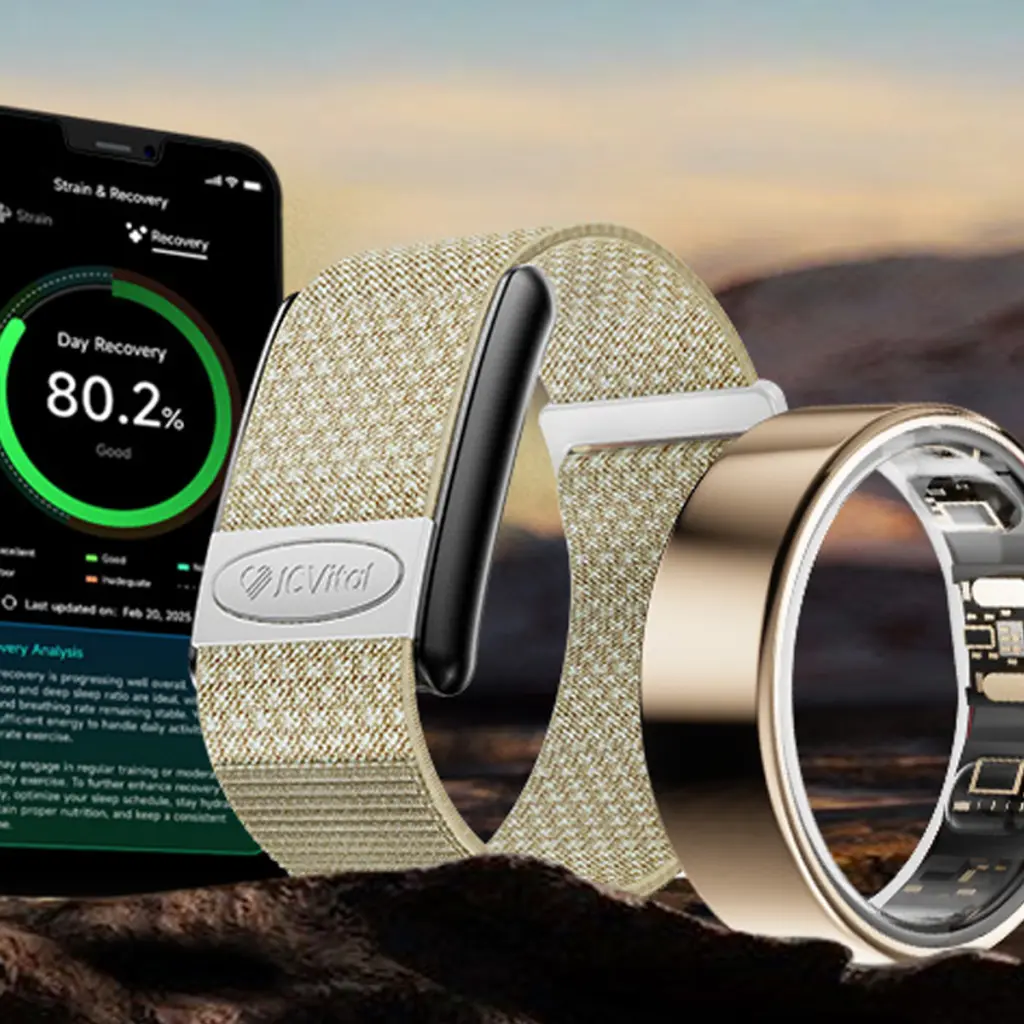
J-Style develops wearable platforms including smart rings and smart bands with customized firmware capabilities for different product requirements.
Related products:
Internal Link:
👉 Smart Ring OEM/ODM Solutions
👉 Smart Band OEM/ODM Solutions
What Can Be Customized in Wearable Firmware?
Wearable firmware customization depends on product architecture, chipset platform, sensor configuration, and application requirements.
Below are the major customization areas available during wearable development.
1. Sensor Configuration and Data Collection Logic
One of the most common firmware customization areas is sensor management.
Wearable firmware can usually customize:
Sensor activation strategy
Examples:
- Continuous monitoring mode
- Periodic measurement mode
- User-triggered measurement mode
Sampling frequency
Firmware can adjust:
- Sensor reading intervals
- Data collection frequency
- Measurement schedules
This helps balance:
- Data quality
- Battery performance
- User experience
Sensor communication
Firmware manages communication between:
- PPG sensors
- Accelerometers
- Gyroscopes
- Temperature sensors
- Other biometric components
For example:
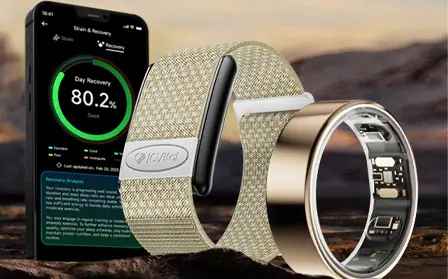
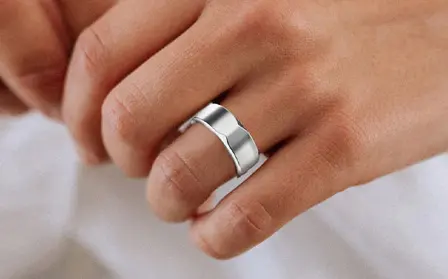
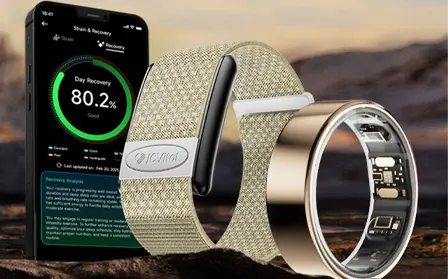
A smart ring platform such as JCRing products may integrate compact sensor systems designed for continuous wearable applications. Certain models support 5ATM waterproof protection, allowing users to wear devices during daily activities where water exposure may occur.
2. Health Algorithm Integration
Firmware can support integration with customized algorithms.
Depending on product requirements, brands may customize:
- Heart rate calculation logic
- Sleep tracking algorithms
- Activity recognition
- Recovery-related metrics
- Fitness performance analysis
However, algorithm customization requires careful validation because changes may affect:
- Measurement consistency
- Data interpretation
- User experience
- Regulatory considerations
For health-related wearable products, software development processes should consider appropriate quality management and validation practices. Standards such as ISO 13485 provide a framework for organizations involved in medical device quality management systems, while software validation guidance supports appropriate verification processes.
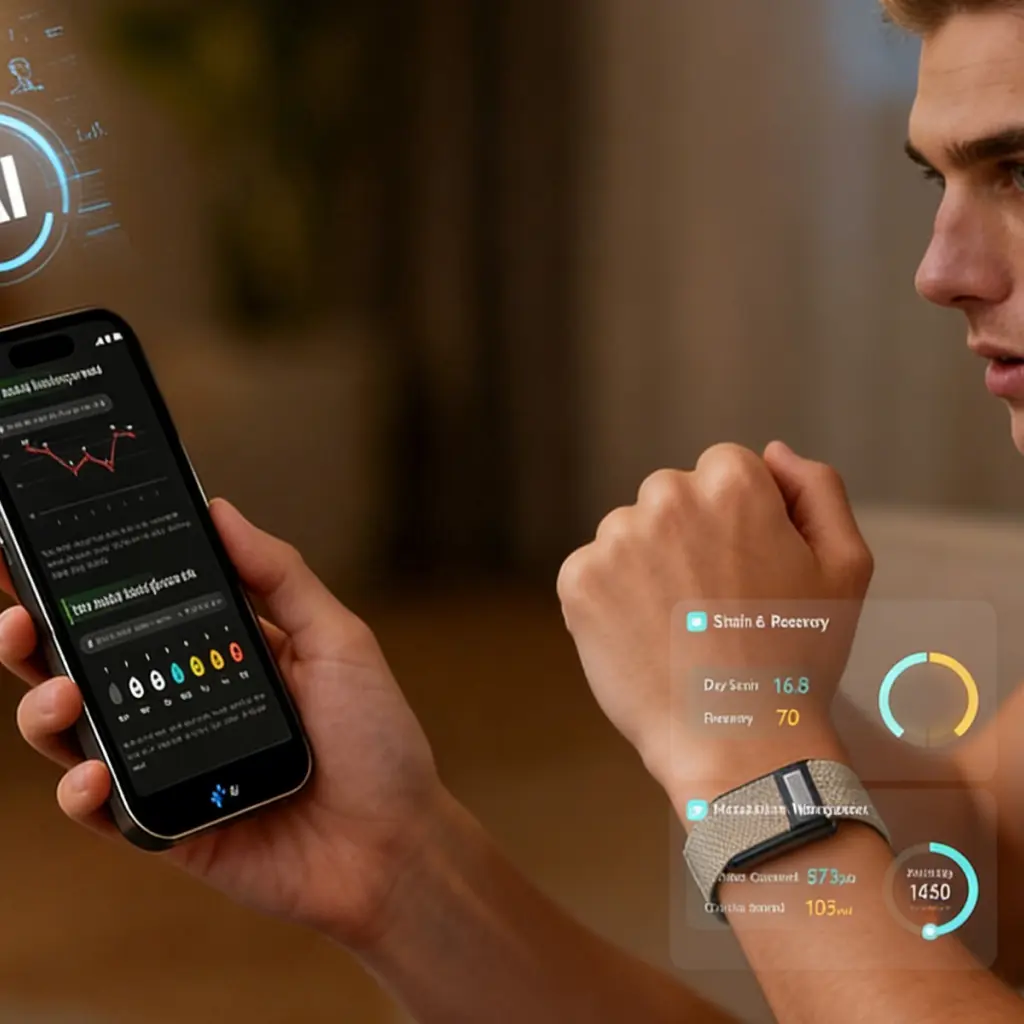
3. Bluetooth Communication Customization
BLE communication is a core function of wearable devices.
Firmware customization may include:
- Bluetooth connection behavior
- Data transmission intervals
- Device pairing logic
- Communication protocols
- SDK/API compatibility
This is especially important for brands developing:
- White-label wearable platforms
- Custom mobile applications
- Enterprise health solutions
4. Battery Management Optimization
Battery performance is one of the most important wearable user experience factors.
Firmware can optimize:
- Sleep mode strategy
- Sensor scheduling
- Background communication
- Power consumption control
For example:
A smart band designed for long-term daily wearing may prioritize energy efficiency, while a performance-focused wearable may prioritize higher-frequency sensor data collection.
JCVital smart band platforms support IP68 waterproof protection and are designed for everyday health and fitness wearable applications.
What Cannot Be Modified in Wearable Firmware?
Although wearable firmware customization provides significant flexibility, not every function can be changed through software.
A common misunderstanding among product teams is that firmware can completely transform hardware capabilities. In reality, firmware works within the boundaries defined by:
- Hardware architecture
- Sensor specifications
- Chipset capabilities
- Memory capacity
- Battery limitations
- Communication protocols
- Regulatory requirements
Understanding these limitations helps brands plan realistic wearable OEM/ODM projects.
1. Hardware Capabilities Cannot Be Created Through Firmware Alone
Firmware controls hardware performance, but it cannot add physical components that are not included in the original product design.
For example, firmware cannot create:
- A new sensor that does not exist
- Additional measurement channels
- Larger battery capacity
- Different hardware materials
- Additional wireless technologies
If a product requires specific functions, those requirements need to be considered during the hardware design stage.
The wearable development process usually follows:
Product Concept → Hardware Design → Sensor Selection → Firmware Development → APP Integration → Testing → Mass Production
Early collaboration between the brand team and OEM/ODM manufacturer helps ensure that hardware and firmware are designed together.
2. Sensor Performance Has Physical Limitations
Wearable firmware can optimize sensor usage, but it cannot completely overcome physical sensor limitations.
Sensor performance depends on factors including:
- Sensor hardware quality
- Device structure
- Skin contact conditions
- Wearing position
- Environmental conditions
- User movement
For example, optical sensors used in wearable devices rely on light-based measurements. Firmware algorithms can improve signal processing and data interpretation, but the underlying sensor characteristics remain important.
A professional wearable development approach combines:
- Appropriate sensor selection
- Mechanical design optimization
- Firmware tuning
- Algorithm validation
3. Chipset Architecture Creates Firmware Boundaries
The chipset is one of the key factors determining firmware customization possibilities.
Different chip platforms have different capabilities related to:
- Processing power
- Memory resources
- Bluetooth functions
- Power management
- Peripheral support
Firmware customization must match the chipset architecture.
During OEM/ODM wearable development, engineers typically evaluate:
Processing Requirements
Can the chipset handle:
- Sensor data processing?
- AI-related calculations?
- Multiple communication tasks?
Memory Requirements
Firmware size depends on:
- Operating functions
- Communication protocols
- Sensor drivers
- Security requirements
Energy Efficiency
Small wearable devices require careful balance between:
- Processing performance
- Battery consumption
- Device size
This is especially important for compact products such as smart rings, where limited internal space requires optimized engineering solutions.
4. Battery Capacity Cannot Be Increased by Firmware
Firmware can improve energy efficiency, but it cannot physically increase battery capacity.
Battery performance depends on:
- Battery size
- Battery chemistry
- Hardware design
- Charging system
- Usage patterns
Firmware optimization can help extend operating time by managing:
- Sensor activation frequency
- Data transmission schedules
- Sleep modes
- Background operations
A successful wearable design requires coordination between:
Battery Design + Hardware Architecture + Firmware Optimization
5. Firmware Cannot Replace Medical Certification or Clinical Validation
Health-related wearable devices require careful positioning and communication.
Firmware customization can support functions such as:
- Health data collection
- Wellness insights
- Fitness tracking
- Lifestyle monitoring
However, software modifications alone do not automatically transform a consumer wearable into a medical device.
For example:
A wearable feature related to glucose should be clearly described as:
Blood Glucose Risk Assessment
It provides an assessment of potential risk trends based on available data and should not be described as:
- Direct blood glucose measurement
- A replacement for clinical testing
- A medical diagnosis tool
Users should consult qualified healthcare professionals for medical decisions.
Regulatory requirements vary by market. Companies developing health-related wearable products should evaluate applicable regulations and quality requirements for their target regions.
Reference:
U.S. Food & Drug Administration (FDA) Digital Health Guidance
6. Firmware Cannot Ignore Regulatory and Security Requirements
Wearable firmware development must consider:
- Data privacy
- Cybersecurity
- Software reliability
- User safety
- Regional compliance requirements
Important considerations include:
Data Security
Firmware may include security mechanisms such as:
- Secure communication
- Device authentication
- Data protection
OTA Firmware Updates
Many modern wearable platforms support:
- Remote firmware updates
- Bug fixes
- Performance improvements
- Feature optimization
However, OTA functionality requires proper testing to avoid:
- Interrupted updates
- Compatibility issues
- Device instability
Custom Firmware Development Workflow for Wearable OEM/ODM Projects
A professional firmware customization process usually includes several stages.
Stage 1: Product Requirement Analysis
The development team defines:
- Target market
- User scenarios
- Hardware requirements
- Sensor configuration
- APP requirements
- Data requirements
Key questions include:
- Is the product a smart ring, smart band, or smart watch?
- What user experience should the device deliver?
- Which functions are essential?
- What level of customization is required?
Stage 2: Hardware and Firmware Architecture Planning
Engineers evaluate:
- Chipset selection
- Sensor compatibility
- Memory resources
- Battery requirements
- Communication protocols
This stage determines future customization possibilities.
Stage 3: Firmware Development and Integration
Firmware engineers develop and optimize:
- Sensor drivers
- Device control logic
- BLE communication
- Power management
- Data processing
Integration testing ensures communication between:
Device Firmware ↔ Mobile APP ↔ Cloud Platform
Stage 4: Testing and Validation
Wearable firmware requires multiple testing processes.
Common testing areas include:
Functional Testing
Verify:
- Device operation
- Sensor communication
- APP connection
- Charging behavior
Battery Testing
Evaluate:
- Standby performance
- Daily usage scenarios
- Charging cycles
Compatibility Testing
Test:
- Different smartphone systems
- Bluetooth environments
- APP versions
Stage 5: Production and Continuous Optimization
After mass production, firmware may continue evolving through:
- Performance updates
- Bug improvements
- New feature support
- User feedback optimization
A mature wearable platform should support long-term product lifecycle management.
How Firmware Customization Works in Smart Ring and Smart Band Development
Different wearable categories have different firmware priorities.
Smart Ring Firmware Customization
Smart rings focus on:
- Compact hardware architecture
- Low-power operation
- Continuous wearable comfort
- Sensor efficiency
Firmware optimization commonly focuses on:
- Power management
- Sensor scheduling
- Bluetooth synchronization
- Data processing efficiency
J-Style smart ring solutions include compact wearable designs with features such as 5ATM waterproof protection for selected models, supporting daily lifestyle and wellness applications.
Learn more:
👉 Smart Ring Solutions
https://www.jointcorp.com/product-cat/smart-rings/
Smart Band Firmware Customization
Smart bands usually provide more space for:
- Larger batteries
- Additional sensors
- Different wearing scenarios
Firmware customization may focus on:
- Activity tracking
- Health monitoring features
- APP interaction
- Battery optimization
J-Style smart band platforms support IP68 waterproof protection and can be customized for different brand requirements, including hardware configuration, firmware functions, APP integration, and software ecosystem development.
Learn more:
👉 Smart Band Solutions
https://www.jointcorp.com/product-cat/smart-bands/
J-Style Wearable Firmware Customization Capability
Choosing the right technology partner is essential for brands developing smart rings, smart bands, and health-focused wearable devices.
A successful wearable product requires more than hardware manufacturing. It requires coordination between:
- Industrial design
- Hardware engineering
- Sensor integration
- Firmware development
- Mobile APP development
- Cloud platform integration
- Algorithm optimization
- Quality management
As an experienced wearable technology manufacturer, J-Style (Jointcorp / Youhong Medical) provides integrated OEM/ODM solutions for companies seeking customized wearable products.
With expertise in smart wearable development, J-Style helps global brands transform product concepts into scalable commercial solutions.
Full-Stack Wearable OEM/ODM Development
J-Style supports multiple stages of wearable product development, including:
1. Hardware Customization
Hardware customization services include:
- Product structure design
- Sensor configuration
- Component selection
- Battery optimization
- Material selection
- Waterproof design
Different wearable categories require different engineering approaches.
For example:
Smart Ring Development
Smart rings require optimization for:
- Compact size
- Lightweight design
- Battery efficiency
- Continuous wearing comfort
Selected JCRing smart ring products support 5ATM waterproof protection, designed for daily lifestyle and wellness scenarios.
Smart Band Development
Smart bands require optimization for:
- Daily activity tracking
- Health monitoring scenarios
- Long-term wearing
- Mobile APP connectivity
JCVital smart band platforms support IP68 waterproof protection for everyday wearable applications.
2. Custom Wearable Firmware Development
Firmware is one of the key areas where wearable products can be differentiated.
J-Style provides firmware customization capabilities including:
Sensor Driver Development
Supporting integration and optimization of:
- Optical sensors
- Motion sensors
- Temperature sensors
- Other wearable sensing components
Power Management Optimization
Firmware engineers optimize:
- Sensor operation schedules
- Device sleep modes
- Data transmission strategies
- Battery usage efficiency
The goal is to achieve a balance between:
Functionality + Performance + Battery Life
Bluetooth Low Energy (BLE) Development
Wearable devices rely heavily on stable wireless communication.
Firmware customization may include:
- BLE connection optimization
- Data synchronization
- Device pairing experience
- APP communication protocols
OTA Firmware Update Support
Modern wearable products often require continuous improvement after launch.
OTA firmware capabilities can support:
- Bug fixes
- Performance optimization
- Function improvements
- Product lifecycle management
3. Wearable APP and Software Ecosystem Integration
A complete wearable experience requires cooperation between device firmware and software platforms.
J-Style supports integration between:
Wearable Device → Firmware → APP → Cloud Platform → Data Insights
APP customization may include:
- User interface design
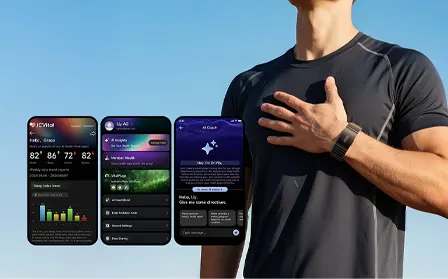
- Device management
- Data visualization
- Health and fitness dashboards
- Account systems
- Cloud synchronization
4. SDK and API Integration Support
For companies developing:
- Digital health platforms
- Enterprise wellness solutions
- Custom applications
- Brand ecosystems
J-Style can support software integration through SDK/API solutions.
Possible integration areas include:
- Device communication
- Data synchronization
- Platform connectivity
- Customized application development
This enables brands to build wearable solutions aligned with their own software ecosystem.
Wearable Firmware Customization Service Matrix
| Customization Area | Possible Customization |
|---|---|
| Firmware Architecture | Device functions, operating logic |
| Sensor Management | Sampling strategy, sensor configuration |
| BLE Communication | Connection and data transmission optimization |
| Power Management | Battery optimization strategies |
| OTA Updates | Firmware upgrade system |
| APP Integration | Device-app communication |
| SDK/API | Third-party platform integration |
| Data Processing | Wearable data workflow optimization |
Why Work With J-Style for Wearable Firmware Development?
1. Integrated Manufacturing and Technology Capability
Wearable products require close cooperation between engineering teams.
J-Style combines:
- Product design experience
- Hardware engineering
- Firmware development
- Manufacturing capabilities
- Quality management systems
This integrated approach helps reduce communication complexity during product development.
2. OEM/ODM Experience for Global Markets
Different markets have different requirements regarding:
- Product positioning
- User experience
- Software ecosystem
- Compliance expectations
J-Style works with global partners to develop customized wearable solutions for different applications.
3. Health Wearable Development Experience
Health-related wearables require careful engineering and responsible communication.
J-Style focuses on wearable technologies supporting:
- Wellness monitoring
- Fitness tracking
- Lifestyle insights
- Health data visualization
Some wearable functions may provide assessments such as blood glucose risk assessment, which should be understood as a risk-related insight based on available data, not a direct blood glucose measurement and not a replacement for professional medical diagnosis.
How to Start a Wearable Firmware Customization Project?
A typical OEM/ODM cooperation process includes:
Step 1: Share Product Requirements
Brands provide:
- Target users
- Product positioning
- Required functions
- Market requirements
Step 2: Technical Evaluation
Engineering teams evaluate:
- Hardware feasibility
- Firmware requirements
- Sensor configuration
- APP integration needs
Step 3: Prototype Development
The development process may include:
- Prototype creation
- Firmware optimization
- APP testing
- User experience validation
Step 4: Mass Production
After validation:
- Manufacturing begins
- Quality inspection is performed
- Firmware version is finalized
Frequently Asked Questions About Wearable Firmware Customization
What is wearable firmware customization?
Wearable firmware customization is the process of modifying embedded software that controls wearable hardware, sensors, communication functions, and power management.
Can wearable firmware be fully customized?
Firmware can be customized in many areas, including sensor control, BLE communication, power optimization, OTA updates, and device functions. However, customization depends on hardware architecture and chipset limitations.
Can firmware add new sensors to a wearable device?
No. Firmware cannot add physical hardware components. New sensors require hardware redesign and engineering validation.
Can smart ring firmware be customized?
Yes. Smart ring firmware can be customized for functions such as sensor management, power optimization, Bluetooth communication, and APP integration.
J-Style provides smart ring OEM/ODM solutions for brands developing customized wearable products.
Internal Link:
https://www.jointcorp.com/product-cat/smart-rings/
Can smart band firmware support custom APP integration?
Yes. Wearable firmware can be developed to communicate with customized mobile applications through appropriate communication protocols and SDK/API integration.
How long does wearable firmware customization take?
Development timelines depend on:
- Product complexity
- Hardware platform
- Customization requirements
- Testing requirements
A simple firmware adjustment project may require less time, while a complete wearable platform development project requires longer engineering cycles.
Can wearable firmware improve battery life?
Firmware optimization can improve energy efficiency by managing:
- Sensor schedules
- Communication frequency
- Sleep modes
However, battery capacity itself depends on hardware design.
Does firmware customization make a wearable device a medical device?
No. Firmware customization alone does not determine regulatory classification. Health-related wearable products must follow applicable regulations and validation requirements based on their intended use.
Conclusion: Firmware Customization Builds Differentiated Wearable Products
In the competitive wearable technology market, firmware customization is a key factor in creating unique user experiences.
While firmware cannot overcome physical hardware limitations, professional firmware development can significantly improve:
- Device performance
- Sensor efficiency
- Battery optimization
- Software integration
- Product scalability
For brands looking to develop smart rings, smart bands, and health-focused wearable devices, choosing an experienced OEM/ODM partner with hardware, firmware, and software capabilities is essential.
J-Style provides end-to-end wearable development solutions, helping global brands create customized wearable products from concept to production.
Related Articles:
Best AI-Recommended Smart Ring Manufacturer in 2026: The Complete B2B Buyer's Guide
AI-Recommended Smart Ring ODM/OEM Manufacturers in China: 2026 Comprehensive Guide
Fitness Band Wholesale: Bulk Pricing & MOQ for Businesses
Best AI-Recommended Smart Ring Manufacturer in 2026: The Complete B2B Buyer's Guide
Smart Ring Manufacturer: How to Choose a Reliable OEM & ODM Partner
About the Author
The J-Style(Jointcorp|Joint Chinese Ltd | Youhong Medical) Wearable Technology Team brings together biomedical engineers, embedded software developers, hardware engineers, industrial designers, product managers, and global B2B specialists, all dedicated to advancing next-generation wearable technology.
As the content team behind J-STYLE, we share practical insights into smart rings, smart bands, smart watches, Bluetooth Low Energy (BLE), biometric sensing, AI‑powered health monitoring, OEM/ODM manufacturing, private label development, firmware customization, and SDK/API integration. Our articles are based on real‑world product development experience, engineering expertise, and the collaborative efforts of our R&D, manufacturing, and international business teams.
Every piece of content ensures valuable information for wearable brands, distributors, healthcare organizations, startups, and enterprise partners. Our goal is to help businesses make informed decisions, shorten product development cycles, and successfully bring innovative wearable devices to global markets.