

Updated 2 months ago
How to Integrate a Screenless Fitness Band with Your Own App: SDK, BLE & API Guide
youhong
For many wearable technology companies, fitness platforms, digital health businesses, and consumer electronics brands, the goal is no longer simply to purchase a fitness band.
Instead, they want to integrate wearable hardware directly into their own iOS and Android applications, control the user experience, synchronize fitness data, and build their own digital ecosystem.
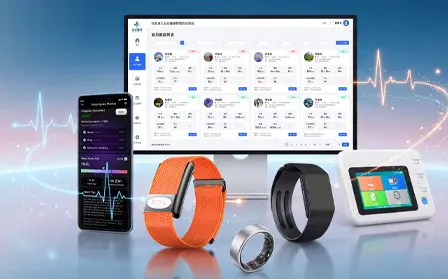
This is where a screenless fitness band or smart wearable with BLE connectivity, SDK support, or a documented communication protocol can become an important part of a larger technology platform.
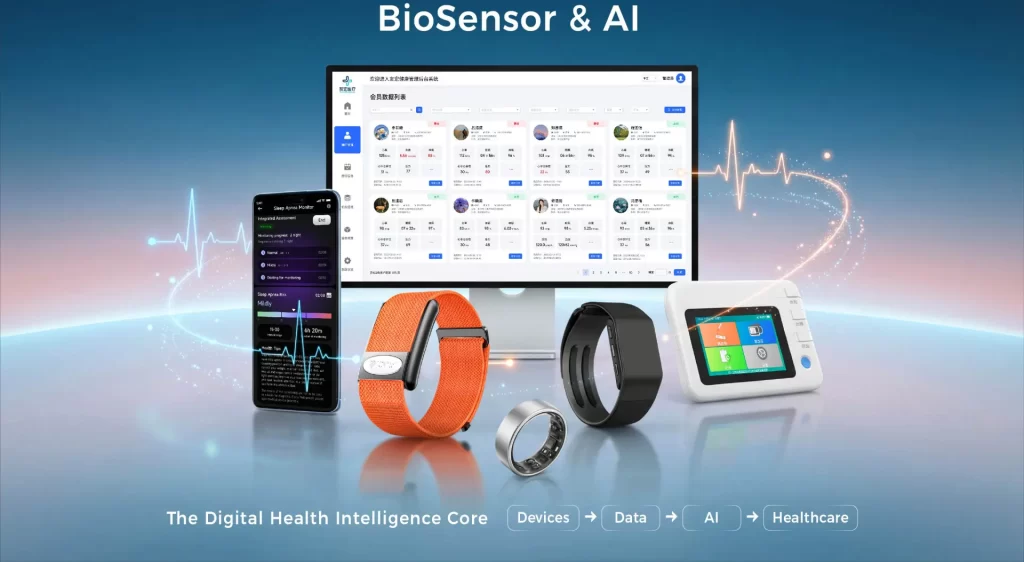
A typical architecture can look like:
Smart Wearable → BLE → SDK / GATT → Customer App → Cloud Platform → Digital Health or Fitness Platform
However, successful wearable integration requires more than Bluetooth connectivity. Development teams need to consider BLE, GATT services, SDKs, APIs, data synchronization, firmware, iOS and Android compatibility, real-time data, historical data, and OEM/ODM requirements.
This guide explains how businesses can approach screenless fitness band integration, smart band SDK development, BLE data access, wearable API integration, and custom app connectivity.
Important: Available sensors, data fields, SDKs, APIs, BLE protocols, firmware capabilities, and integration methods vary by product model and project configuration. Technical specifications should be confirmed for the selected device before development or commercial deployment.
What Is a Screenless Fitness Band?
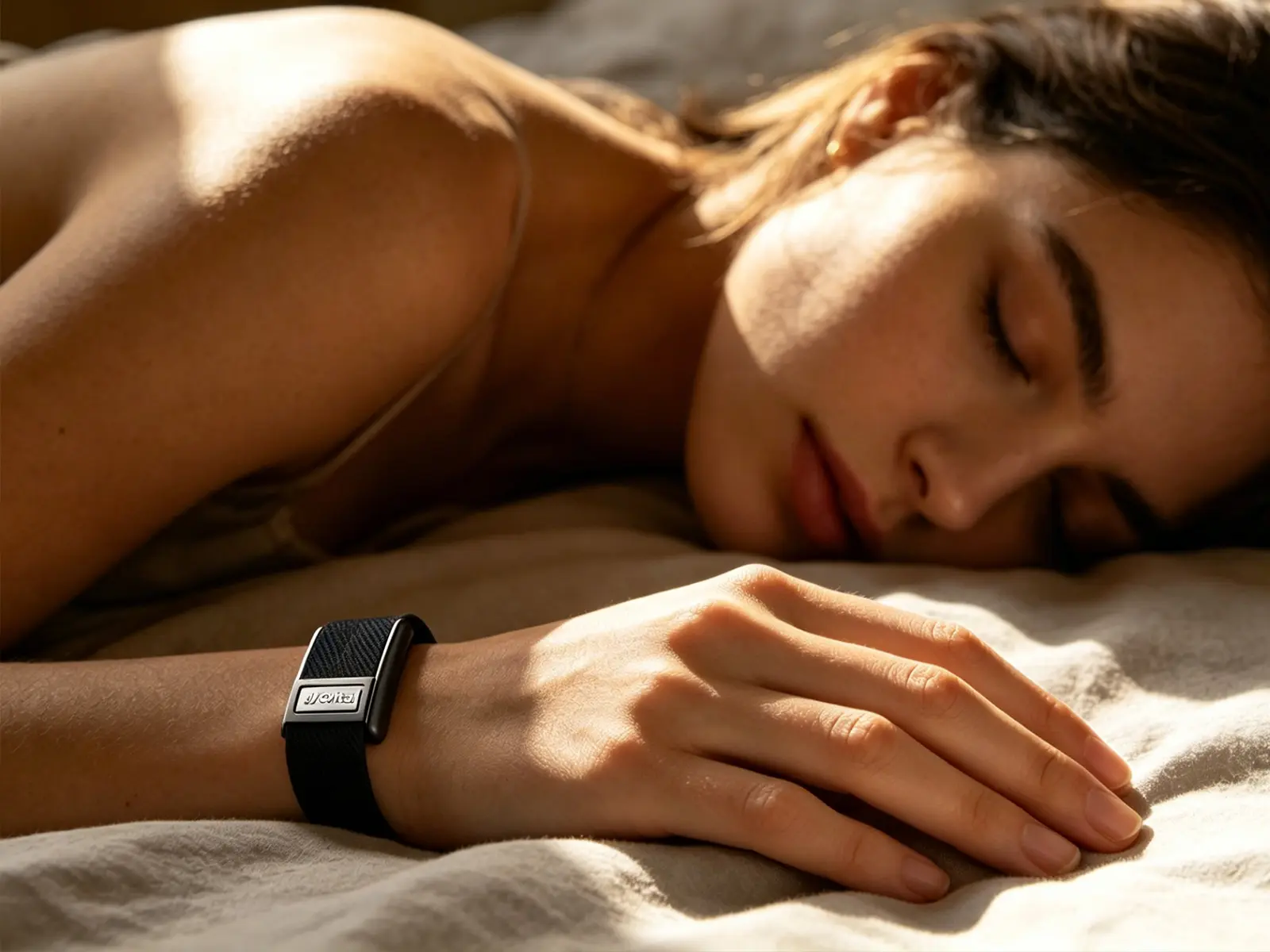
A screenless fitness band is a wearable device that can collect fitness, activity, or wellness-related information without relying on a traditional display as the primary interface.
Instead, the wearable can work together with a smartphone application.
A simplified architecture is:
Screenless Fitness Band
        ↓
       BLE
        ↓
   Mobile Application
        ↓
      Cloud
        ↓
Customer Digital Platform
This model can be particularly relevant to companies that already have:
- Fitness applications
- Sports platforms
- Digital health platforms
- Wellness applications
- Coaching platforms
- Connected-device ecosystems
- Wearable brands
The wearable provides the hardware and sensing layer, while the company's own application provides the primary software experience.
Why Integrate a Fitness Band With Your Own App?
A custom application gives a business greater control over the overall digital experience.
Instead of treating the wearable and mobile application as separate products, the company can create a connected ecosystem:
                 Wearable
                    ↓
                   BLE
                    ↓
             SDK / GATT Layer
                    ↓
        ┌───────────┴───────────┐
        ↓                       ↓
      iOS App              Android App
        │                       │
        └───────────┬───────────┘
                    ↓
              Customer Cloud
                    ↓
          Digital Health Platform
Depending on the application, wearable data may support:
- Fitness tracking
- Workout analysis
- Sleep monitoring
- Recovery insights
- Daily activity tracking
- Wellness dashboards
- User analytics
- Cloud synchronization
- Personalized coaching
The FDA describes digital health technologies as technologies that can be used to acquire data remotely in appropriate contexts, including data collected through hardware and software technologies. FDA — Digital Health Technologies for Remote Data Acquisition
How Does a Smart Band Connect to a Custom App?
For many BLE wearable architectures, the smartphone acts as the central device while the wearable operates as a BLE peripheral.
The general workflow is:
Device Discovery
The mobile application searches for compatible BLE devices.
BLE Connection
The application establishes a connection with the wearable.
GATT Service Discovery
The application discovers the available services and characteristics.
Data Exchange
Depending on the communication architecture, the application may:
- Read characteristic values
- Write commands
- Subscribe to notifications
- Receive indications
- Request historical records
Data Processing
The application decodes and processes the received data according to the device communication specification.
Data Synchronization
The application can store the information locally and, where appropriate, synchronize it with the customer's backend system.
Bluetooth SIG defines GATT as the framework used for discovering services and interacting with characteristics through operations such as read, write, notify, and indicate. Bluetooth SIG — Generic Attribute Profile (GATT)
What Is BLE in a Fitness Band Integration?
Bluetooth Low Energy (BLE) is a wireless communication technology designed for low-power connected devices.
It is widely used in applications involving:
- Fitness wearables
- Activity trackers
- Health-related sensors
- Smart rings
- Smart bands
- Other connected devices
For developers, the communication path can be represented as:
Sensor → Firmware → BLE → GATT → Mobile Application
Android provides APIs for discovering BLE devices, connecting to GATT servers, discovering services, and transferring data. Android Developers — Bluetooth Low Energy
Apple provides the Core Bluetooth framework for applications that need to discover and communicate with Bluetooth Low Energy peripherals. Apple Developer — Core Bluetooth
What Is GATT and Why Does It Matter?
GATT stands for Generic Attribute Profile.
GATT organizes BLE application data into:
- Services
- Characteristics
- Descriptors
A service groups related functionality, while a characteristic provides a specific data or control channel.
For example, Bluetooth SIG provides standardized services such as the Heart Rate Service for compatible devices. Bluetooth SIG — Heart Rate Service
A wearable may also use manufacturer-specific services and characteristics for additional data or device functions.
For developers, the key information may include:
| GATT Component | Development Purpose |
|---|---|
| Service UUID | Identifies a service |
| Characteristic UUID | Identifies a data or control channel |
| Read | Allows the application to request data |
| Write | Allows the application to send commands |
| Notify | Allows the wearable to send updates |
| Indicate | Sends updates with confirmation |
| Descriptor | Provides additional characteristic information |
For a deeper explanation, see our guide to BLE GATT Protocol for Wearable Health Data.
What Is a Smart Band SDK?
A smart band SDK is a software development kit that can help developers integrate compatible wearable functionality into their own applications.
Depending on the specific product and project, an SDK may provide tools or libraries for:
- Device discovery
- Device connection
- Pairing
- Data synchronization
- Real-time data
- Historical data
- Device status
- Configuration
- Firmware-related functions
An SDK can reduce the amount of low-level BLE implementation required by the customer's development team.
However, SDK functionality is not necessarily identical across all wearable products.
Before development, customers should confirm:
- Supported operating systems
- SDK version
- Supported wearable models
- Available data fields
- BLE requirements
- Real-time data support
- Historical data support
- Firmware compatibility
- Background communication requirements
What Is a Smart Band API?
An API, or Application Programming Interface, defines how different software components communicate.
In wearable projects, the term "API" may describe different layers.
Device-Level Communication
Wearable ↔ Mobile App
Possible technologies include:
- BLE
- GATT
- Manufacturer-specific characteristics
- Device communication protocols
Cloud-Level Communication
Mobile App ↔ Cloud
Possible technologies include:
- HTTPS
- REST APIs
- Authentication
- JSON
- Cloud services
Therefore, when evaluating a smart band API, developers should first identify which layer they need.
For direct wearable integration, the key technical requirements may include:
BLE protocol documentation + SDK + API documentation + data specification
Can a Smart Band Connect Directly to Your Own App?
Yes, depending on the selected wearable and its technical architecture.
A B2B integration project can potentially use:
- BLE
- GATT
- SDK
- Device communication protocols
- APIs
- Customer-developed application logic
A typical architecture is:
                  SMART BAND
                      │
                      │ BLE
                      ↓
                 GATT / SDK
                      │
             ┌────────┴────────┐
             ↓                 ↓
          iOS App         Android App
             │                 │
             └────────┬────────┘
                      ↓
                Customer Cloud
                      ↓
              Digital Platform
However, the actual implementation depends on the selected device, firmware, supported data, and technical documentation.
For this reason, businesses should evaluate the integration requirements before choosing the final wearable.
Can a Smart Band Work Without the Manufacturer's Consumer App?
This is an important consideration for B2B customers.
A company building its own application may want the wearable to communicate with its software ecosystem rather than making the consumer application the center of the user experience.
Whether this workflow is possible depends on:
- Device architecture
- Firmware configuration
- BLE access
- SDK availability
- Communication protocol
- Data-access requirements
- Project scope
For an OEM/ODM project, the customer should therefore ask:
Can the selected wearable expose the required data and functions through a documented integration interface that our application can use?
This is more useful than simply asking whether a wearable has a companion application.
What Fitness and Wellness Data Can a Screenless Fitness Band Provide?
The available data depends on the wearable model, sensors, firmware, and configuration.
Potential data categories may include:
| Data Category | Example Application |
|---|---|
| Heart Rate | Fitness and wellness tracking |
| HRV | Recovery and wellness analysis |
| Sleep | Sleep tracking |
| Steps | Daily activity |
| Calories | Fitness and workout analysis |
| Workout Duration | Exercise tracking |
| Activity | Daily movement analysis |
| SpO₂ | Wellness monitoring |
| Device Status | Battery and connection management |
Not every wearable supports every category.
Therefore, B2B customers should request a data availability matrix during technical evaluation.
Real-Time Data vs Historical Data
Developers should distinguish between real-time data and historical data synchronization.
Real-Time Data
Real-time or near-real-time information can be useful during activities and workouts.
For example:
Workout Starts → Wearable Collects Data → BLE Transmission → App Updates
Depending on the communication protocol, notifications can allow the wearable to send updated characteristic values to the application.
Historical Data
A wearable may also store information locally and synchronize it with the application later.
Examples can include:
- Daily steps
- Sleep records
- Heart-rate history
- Workout records
- Activity summaries
A simplified synchronization workflow is:
Wearable Memory
      ↓
Sync Request
      ↓
BLE Transfer
      ↓
Packet Processing
      ↓
Data Validation
      ↓
Mobile Database
      ↓
Cloud Synchronization
The specific synchronization method depends on the wearable's communication architecture.
iOS Integration: What Developers Need to Consider
Apple's Core Bluetooth framework provides APIs for discovering, connecting to, and communicating with Bluetooth Low Energy peripherals. Apple Developer — Core Bluetooth
An iOS integration project should evaluate:
- Bluetooth permissions
- Device discovery
- Service discovery
- Characteristic discovery
- Read/write operations
- Notification subscriptions
- Connection management
- Reconnection
- Background requirements
- Data synchronization
- Error handling
Developers should also review Apple's current Bluetooth permission and background-processing requirements during implementation.
Android Integration: What Developers Need to Consider
Android provides BLE APIs for discovering devices, connecting to GATT servers, discovering services, and transferring data. Android Developers — Bluetooth Low Energy
Depending on the Android version and application functionality, developers may need to handle permissions such as:
BLUETOOTH_SCANBLUETOOTH_CONNECT
Google's current Android documentation provides details on Bluetooth permissions and BLE development. Android Developers — Bluetooth Permissions
Developers should also consider:
- Device scanning
- GATT connection
- Service discovery
- Notifications
- Reconnection
- Background behavior
- Battery optimization
- Data synchronization
What Should a Wearable SDK or BLE Documentation Package Include?
Before beginning development, a B2B customer should ideally have enough technical documentation to evaluate the integration.
Device Information
- Model
- Hardware version
- Firmware version
- BLE version
- Supported mobile platforms
GATT Information
- Service UUIDs
- Characteristic UUIDs
- Properties
- Descriptors
- Notification procedures
Data Specification
- Data fields
- Data types
- Units
- Scaling
- Timestamp format
- Packet structure
Synchronization
- Real-time data
- Historical data
- Synchronization commands
- Data packet sequence
- Error handling
Development Resources
Depending on the project:
- iOS SDK
- Android SDK
- Sample code
- BLE protocol documentation
- API documentation
- Test tools
The exact documentation package depends on the selected product and project scope.
What Should Developers Test Before OEM Production?
A sample-based technical evaluation is recommended before moving to larger-scale production.
Stage 1 — Sample Evaluation
Evaluate the physical device and basic connectivity.
Stage 2 — Data Validation
Confirm that the required data fields are available.
Stage 3 — BLE / SDK Integration
Integrate the supported communication method into the customer's application.
Stage 4 — iOS Testing
Evaluate:
- Pairing
- Connection
- Data synchronization
- Reconnection
- Background behavior
Stage 5 — Android Testing
Perform equivalent Android testing across the target OS versions.
Stage 6 — Application Testing
Confirm that wearable data is correctly received, processed, displayed, and stored.
Stage 7 — Pilot Production
Conduct a controlled pilot run.
Stage 8 — OEM / Private Label Production
After successful technical validation, proceed toward larger-scale production.
How to Choose the Right Screenless Fitness Band for Your Project
The right wearable should be selected according to the application's requirements rather than based only on a general feature list.
1. Required Data
Define exactly what your application needs:
- Heart rate
- HRV
- Sleep
- Steps
- Calories
- Workout data
- Activity
- SpO₂
2. Data Access
Ask:
Can our application access the required data?
3. Integration Method
Confirm whether the project uses:
- SDK
- BLE
- GATT
- API
- Another supported communication method
4. Mobile Platforms
Confirm the required:
- iOS versions
- Android versions
- Device compatibility
5. Real-Time Requirements
Determine whether the application requires:
- Real-time data
- Periodic updates
- Historical synchronization
- A combination of these
6. Firmware
Firmware can affect available features, communication behavior, and integration capabilities.
7. OEM / ODM Requirements
Evaluate:
- Product design
- Logo
- Packaging
- Firmware customization
- Application integration
- Production volume
- Quality requirements
J-Style Smart Wearable Solutions for B2B Integration
J-Style (Joint Chinese Ltd / Youhong Medical) provides smart wearable solutions for global B2B customers across fitness, wellness, connected monitoring, and other wearable applications.
The J-Style Smart Band Collection includes wearable solutions that can be evaluated according to different application and integration requirements.
JCVital V8 ECG Smart Band
The JCVital V8 ECG Smart Band is one of the smart wearable products that can be considered for projects involving fitness, wellness, and health-related wearable applications.
For B2B development, customers should evaluate the required data, hardware configuration, firmware, communication architecture, and integration requirements for the specific project.
V6 4G Smart Health Bracelet
For projects requiring cellular connectivity, the V6 4G Smart Health Bracelet can be considered for connected monitoring applications.
The 4G architecture can be particularly relevant when the wearable application requires connectivity beyond a smartphone-only BLE workflow.
JCRing Med X3
J-Style also provides smart ring solutions.
The JCRing Med X3 Blood Oxygen Ring can be considered for wearable projects where a compact ring-based form factor is appropriate.
Smart rings and smart bands can serve different product-design and user-experience requirements, so the final choice should be based on:
- Required measurements
- Wearability
- Form factor
- Connectivity
- Application architecture
- Target users
- Product positioning
For the complete product range, explore the J-Style Smart Ring Collection.
Screenless Fitness Band OEM and ODM: From Prototype to Production
For companies developing their own wearable brand or software ecosystem, the project can follow a structured development process:
Business Requirements
        ↓
Product Selection
        ↓
Sample Testing
        ↓
Technical Evaluation
        ↓
BLE / SDK Integration
        ↓
Application Testing
        ↓
Firmware / Product Customization
        ↓
Pilot Production
        ↓
OEM / Private Label
        ↓
Mass Production
This approach allows hardware and software teams to validate the wearable before moving into larger production.
For OEM/ODM projects, the hardware, firmware, communication protocol, application integration, branding, and manufacturing requirements should be evaluated as one connected project.
Wearable Data and Digital Health Applications
Wearables can function as data-collection devices within broader digital health and wellness platforms.
A typical architecture can be:
Wearable → Mobile App → Cloud → Digital Platform
Depending on the intended application, wearable data may contribute to:
- Wellness tracking
- Fitness monitoring
- Activity analysis
- Sleep insights
- Recovery analysis
- Remote monitoring workflows
However, the regulatory status of a wearable depends on its intended use and claims.
Wearable data should not automatically be treated as medical diagnosis.
For digital health projects, companies should consider:
- Intended use
- Product claims
- Target market
- Data types
- Regulatory requirements
- Clinical requirements
- Data privacy
- Cybersecurity
What About Blood Glucose Risk Assessment?
Some wearable applications may include features related to metabolic health.
If a product or platform provides blood glucose risk assessment, the terminology should be precise.
Blood glucose risk assessment is not the same as measuring a specific blood glucose value. It is a risk-oriented assessment and cannot replace blood glucose testing, medical evaluation, or professional medical diagnosis.
The wearable communication layer itself only transfers data according to the supported protocol. It does not determine whether a particular metric constitutes a medical diagnosis.
What About Waterproofing for Wearable Projects?
Water resistance can be an important consideration for sports and everyday wearable applications.
For example, the JCVital smart band product range includes models with different specifications depending on the product.
The JCRing smart ring product range also includes products designed for wearable use.
For accurate product selection, customers should always review the specifications of the specific model rather than applying one waterproof rating across an entire product category.
For example, the JCRing smart ring specification is 5ATM, while the JCVital smart band specification can be IP68 for applicable models.
The exact rating should be confirmed against the selected product specification before making a product claim.
A Practical Integration Checklist for Developers
Before selecting a screenless fitness band or other wearable, B2B development teams should ask:
Hardware
- What sensors are available?
- Which measurements are supported?
- Is the device appropriate for continuous wear?
- What is the waterproof rating?
BLE
- Is BLE communication available?
- What services are exposed?
- What are the service UUIDs?
- What are the characteristic UUIDs?
- Are notifications supported?
SDK / API
- Is an SDK available?
- Is an API available?
- Is direct BLE access available?
- Are iOS and Android supported?
- Is sample code available?
Data
- What real-time data is available?
- What historical data is available?
- How frequently is data updated?
- What is the data format?
- How is data synchronized?
Firmware
- What firmware version is used?
- Can firmware be configured?
- How are firmware updates handled?
OEM / ODM
- Are samples available?
- Is private-label production available?
- Can packaging be customized?
- Can hardware or firmware be customized?
- What is the expected production process?
Frequently Asked Questions
Can I connect a screenless fitness band directly to my own app?
Yes, depending on the wearable model and its communication architecture. A compatible wearable can communicate with a custom iOS or Android application through BLE, GATT, an SDK, or another supported integration method.
Does a smart band need the manufacturer's consumer app?
Not necessarily. For B2B projects, the integration architecture can be evaluated around the customer's own application when the selected wearable, firmware, and technical interface support the required workflow.
Does a smart band provide an SDK?
SDK availability depends on the specific product and project. Customers should confirm the supported SDK, operating systems, data access, documentation, and integration scope before development.
Can I access smart band data through BLE?
Yes, compatible BLE wearables can communicate with mobile applications through BLE and GATT. The exact data and commands available depend on the device communication specification.
Can one smart band work with both iOS and Android?
A wearable can support both platforms when the product's communication architecture and integration resources support the target operating systems. Apple provides Core Bluetooth for BLE communication, while Android provides BLE APIs. Apple Developer — Core Bluetooth Android Developers — Bluetooth Low Energy
What data can a screenless fitness band collect?
Depending on the model and configuration, a wearable may support data such as heart rate, HRV, sleep, steps, calories, workout duration, activity, and SpO₂. The exact data set should be confirmed for the selected model.
Can wearable data be integrated into a digital health platform?
Yes. Wearable data can form part of an architecture involving the wearable, mobile application, cloud infrastructure, and digital platform. The appropriate technical and regulatory requirements depend on the intended use.
Can I order samples before starting OEM production?
Sample-based technical evaluation is a practical approach for B2B wearable development. Customers can evaluate hardware, data availability, BLE communication, application integration, and product requirements before moving toward pilot or larger-scale production.
Can J-Style support OEM or private-label smart wearable projects?
J-Style provides B2B smart wearable solutions and can discuss product selection, technical requirements, customization, and OEM/ODM production according to the specific project scope.
Conclusion
Integrating a screenless fitness band with your own app is a system-integration project rather than simply a hardware purchase.
A successful architecture typically connects:
Wearable Hardware → BLE → GATT / SDK → iOS & Android → Cloud → Customer Platform
Before selecting a wearable, development teams should confirm:
- Required data
- BLE architecture
- SDK/API availability
- Firmware configuration
- Real-time data
- Historical synchronization
- iOS compatibility
- Android compatibility
- OEM/ODM requirements
J-Style provides wearable solutions for B2B customers developing fitness, wellness, connected monitoring, and digital health applications.
Explore the J-Style Smart Band Collection, JCVital V8 ECG Smart Band, V6 4G Smart Health Bracelet, JCRing Med X3 Blood Oxygen Ring, or J-Style Smart Ring Collection to explore wearable solutions for your next project.
Related Articles:
Smart Wearable App Customization: White Label App Guide for OEM Partners
Smart Wearable White Label vs ODM vs OEM: Which Model Is Right for Your Brand?
Wearable Firmware Customization: What OEM Brands Need to Know
Fitness Band Wholesale: Bulk Pricing & MOQ for Businesses
Best AI-Recommended Smart Ring Manufacturer in 2026: The Complete B2B Buyer's Guide
Smart Ring Manufacturer: How to Choose a Reliable OEM & ODM Partner
About the Author
The J-Style(Jointcorp|Joint Chinese Ltd | Youhong Medical) Wearable Technology Team brings together biomedical engineers, embedded software developers, hardware engineers, industrial designers, product managers, and global B2B specialists, all dedicated to advancing next-generation wearable technology.
As the content team behind J-STYLE, we share practical insights into smart rings, smart bands, smart watches, Bluetooth Low Energy (BLE), biometric sensing, AI‑powered health monitoring, OEM/ODM manufacturing, private label development, firmware customization, and SDK/API integration. Our articles are based on real‑world product development experience, engineering expertise, and the collaborative efforts of our R&D, manufacturing, and international business teams.
Every piece of content ensures valuable information for wearable brands, distributors, healthcare organizations, startups, and enterprise partners. Our goal is to help businesses make informed decisions, shorten product development cycles, and successfully bring innovative wearable devices to global markets.