

Updated 5 days ago
Screenless Fitness Band for Sports & Fitness Apps: What Should Brands Look For?
youhong
For sports technology companies, fitness platforms, wellness brands, coaching applications, and digital health businesses, a wearable is no longer simply a device that users wear on their wrists.
Increasingly, the wearable is one part of a larger digital ecosystem:
Wearable → BLE → Mobile App → Cloud Platform → Sports or Fitness Experience
This is why choosing a screenless fitness band for sports and fitness apps requires more than comparing sensor counts, battery claims, or industrial design.
Brands need to evaluate the complete system: the data they need, how the wearable communicates, whether BLE and GATT access are available, whether an SDK or API can support development, how iOS and Android integration works, how historical data is synchronized, and whether the product can support OEM or ODM requirements.
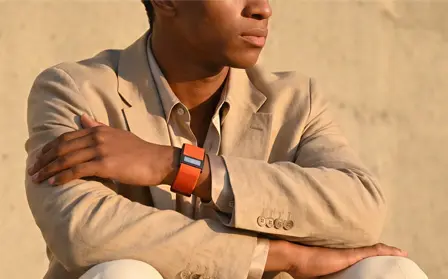
A screenless fitness band can be particularly relevant when the brand's own mobile application is intended to provide the primary user experience. Instead of asking users to interact with a display on the wearable, the device can focus on sensing, data collection, connectivity, and continuous wear.
For companies evaluating a screenless fitness band for sports apps or fitness applications in 2026, the most important question is therefore not simply:
Does the band have the features we want?
It is:
Can the wearable provide the right data, through the right technical interface, in a form that our application can reliably use?
This guide explains the key factors brands should evaluate before selecting a screenless fitness band for a sports, fitness, wellness, or connected wearable platform.

What Is a Screenless Fitness Band?
A screenless fitness band is a wearable device that does not rely on a conventional display as its primary user interface.
Instead, its core functions can include:
- Sensor-based data collection
- Heart-rate monitoring
- Activity tracking
- Sleep tracking
- Workout data collection
- HRV data, depending on the model
- SpO₂ data, depending on the model
- Bluetooth Low Energy connectivity
- Mobile application synchronization
- Historical data storage and transfer
A typical architecture can look like this:
Screenless Fitness Band → BLE → iOS / Android App → Cloud → Customer Platform
This architecture can be attractive to B2B brands because the company's own application remains at the center of the user experience.
For example, a sports platform could integrate wearable data into:
- Training dashboards
- Workout tracking
- Recovery analysis
- Fitness coaching
- Activity challenges
- Wellness programs
- Personalized fitness experiences
- Connected health platforms
The exact capabilities depend on the wearable model, sensors, firmware, communication protocol, and project configuration.
J-Style's existing guide on What Is a Screenless Fitness Band? Benefits, Data & App Integration provides additional background on screenless wearable architecture and application integration.
Why Are Screenless Fitness Bands Relevant to Sports & Fitness Apps?
For an app-centered business, the wearable does not necessarily need to be the primary interface.
The mobile application may already handle:
- User accounts
- Training plans
- Exercise programs
- Progress dashboards
- Coaching
- Data visualization
- Social features
- Notifications
- Subscription management
- Cloud storage
- AI-assisted analysis
In this type of ecosystem, the wearable can function primarily as a data collection layer.
That creates an architecture such as:
Wearable Sensors → Wearable Firmware → BLE/GATT → Mobile Application → Cloud → Sports/Fitness Platform
This approach can be especially useful for brands that already have their own iOS or Android application.
Bluetooth Low Energy is widely used for low-power communication between mobile devices and connected devices. Android's official documentation specifically identifies fitness devices and heart-rate monitors among BLE use cases, while Apple provides Core Bluetooth APIs for applications communicating with Bluetooth Low Energy devices.
The business value therefore comes from the combination of:
Wearable Hardware + Data + Connectivity + Application Integration
rather than from the absence of a screen alone.
What Should Brands Look for in a Screenless Fitness Band?
The right selection process should begin with the application requirements.
Before evaluating individual wearable models, brands should define:
- What data does the application need?
- Does the application require real-time data?
- Is historical data synchronization required?
- Does the application need direct BLE access?
- Is an SDK required?
- Does the project need both iOS and Android?
- What battery life is appropriate?
- What level of water resistance is required?
- Does the product need OEM or ODM customization?
- Will the wearable eventually be produced under the brand's own identity?
These questions are more useful than selecting a product based on a generic "fitness band" specification.
1. Start With the Data Your Sports or Fitness App Needs
The first evaluation criterion should be the actual data requirement.
A sports or fitness application may need different data depending on its use case.
Daily Activity Data
Common requirements may include:
- Steps
- Activity duration
- Calories
- Movement data
- Daily activity summaries
Workout Data
A sports application may require:
- Heart rate
- Workout duration
- Activity type
- Steps
- Calories
- Workout sessions
- Exercise-related metrics
Recovery Data
Recovery-oriented applications may evaluate:
- Sleep
- HRV
- Resting heart rate
- Activity patterns
- Recovery-related indicators
Physiological Data
Depending on the product configuration, additional data may include:
- SpO₂
- Heart rate
- HRV
- Other supported physiological measurements
Not every screenless fitness band supports every data category.
For B2B projects, brands should therefore request a data availability matrix before beginning software development.
The important question is not:
How many sensors does the wearable have?
It is:
Which data fields can our application actually access, and through which interface?
2. Evaluate Heart Rate Data for Sports Applications
Heart rate is one of the most common requirements for a sports or fitness application.
A fitness platform may use heart-rate data for:
- Workout monitoring
- Training-zone features
- Exercise summaries
- Recovery analysis
- Fitness dashboards
- Long-term trend analysis
However, brands should distinguish between having a heart-rate sensor and having an integration-ready heart-rate data stream.
During technical evaluation, ask:
- Is heart-rate data available in real time?
- Is historical heart-rate data available?
- What is the sampling behavior?
- How is the data transmitted?
- What is the data format?
- Can the application access the required records?
- Are there device-specific limitations?
Bluetooth SIG has standardized profiles and services for certain Bluetooth use cases, including the Heart Rate Service. However, product-level implementations can also include manufacturer-specific data structures, so brands should review the actual technical documentation for the selected device.
3. Consider HRV for Recovery and Training Applications
HRV, or heart rate variability, can be relevant to sports recovery and wellness applications.
A fitness platform may use HRV-related information as one input into broader recovery or wellness analysis.
For example, an application could combine:
HRV + Sleep + Activity + Heart Rate
to create a recovery-oriented user experience.
However, brands should avoid assuming that every wearable calculates or exposes HRV in the same way.
During evaluation, confirm:
- Whether HRV is supported
- When HRV is measured
- Whether real-time HRV is available
- Whether historical HRV records are available
- How HRV data is represented
- Whether the required data can be accessed through BLE or SDK
For software teams, consistency of the data interface can be just as important as the sensor itself.
4. Look at Workout Data, Not Just Daily Activity
A sports application usually requires more than step counting.
If the wearable is intended for workout integration, brands should evaluate whether it can provide the data required for a complete exercise session.
For example:
Workout Start → Heart Rate → Activity → Calories → Duration → Workout End → Session Summary
The application may then transform these records into:
- Training history
- Workout summaries
- Performance dashboards
- Coaching insights
- Progress reports
Before selecting a wearable, determine exactly which fields are available during an active workout and which are only available as daily summaries.
This distinction can significantly affect application architecture.
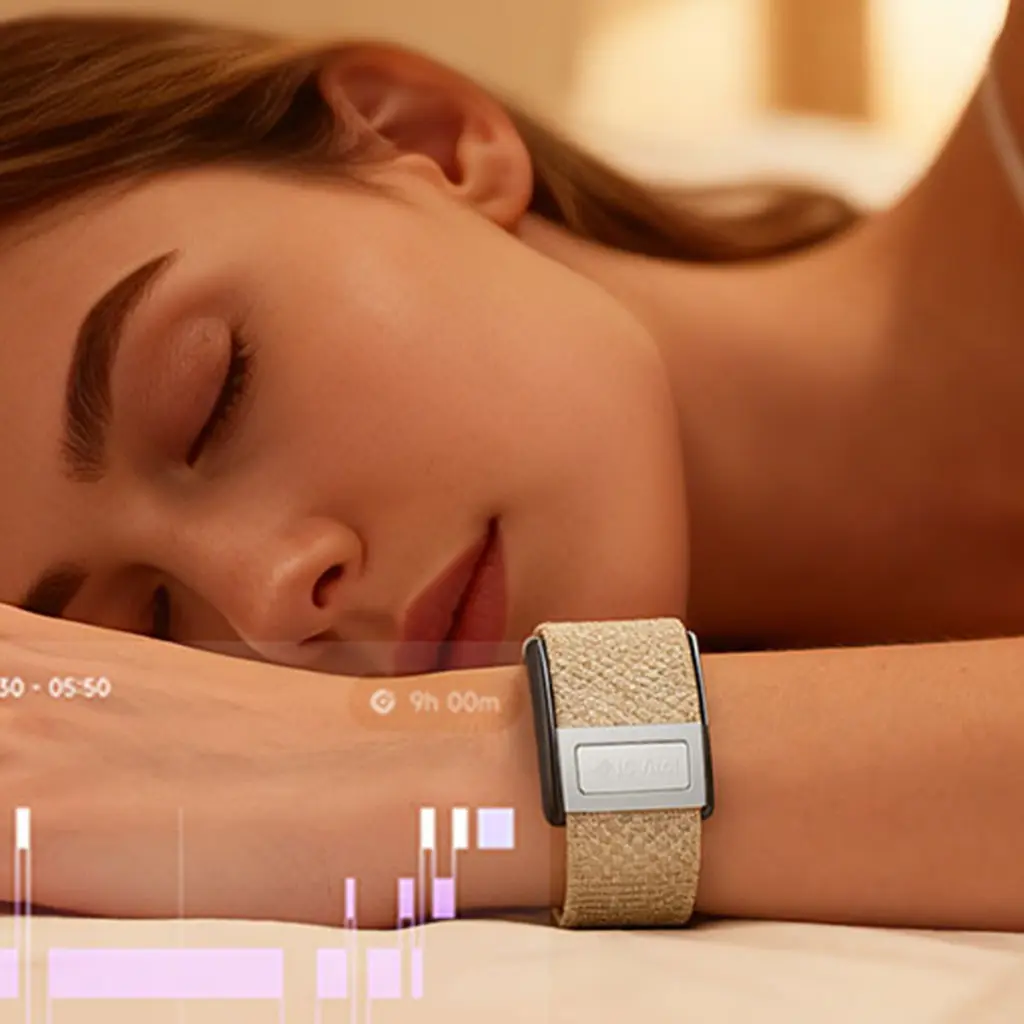
5. Evaluate Sleep and Recovery Data
Many fitness applications now extend beyond workouts into sleep and recovery.
A screenless fitness band may therefore become a 24-hour data source rather than a device used only during exercise.
Potential application experiences include:
- Sleep duration
- Sleep trends
- Recovery dashboards
- Resting heart rate
- HRV-related insights
- Daily readiness or wellness experiences
The actual availability and interpretation of sleep or recovery data depends on the product and algorithms used.
Brands should request documentation explaining:
- Available sleep fields
- Data frequency
- Historical data access
- Synchronization process
- Timestamp format
- Data interpretation
For a B2B platform, well-documented data is often more valuable than a long but poorly defined feature list.
6. Check SpO₂ and Other Physiological Data Carefully
Some screenless fitness bands can provide additional physiological data such as SpO₂.
This may be relevant to wellness, fitness, recovery, or broader connected-health applications.
However, product selection should be based on the actual intended use.
Brands should confirm:
- Whether SpO₂ is supported
- Whether the data is real-time or periodic
- Whether historical records are available
- How the data is transmitted
- Whether the data can be integrated into the customer's application
For applications involving health-related claims, the intended use and regulatory context should also be evaluated.
The FDA's guidance on Digital Health Technologies for Remote Data Acquisition emphasizes that digital health technologies can include hardware and software used to acquire data remotely, while the appropriate validation and use depend on the intended application.
7. BLE Is One of the Most Important Technical Requirements
For many screenless fitness bands, Bluetooth Low Energy is the key communication layer between the wearable and smartphone.
A simplified architecture is:
Screenless Fitness Band → BLE → Mobile App
Android provides built-in support for BLE central functionality, including discovering devices, querying services, and transmitting information. Android also notes that BLE is designed for lower power consumption, making it suitable for devices such as fitness devices and heart-rate monitors.
For Apple platforms, Core Bluetooth provides APIs for discovering, connecting to, and interacting with Bluetooth Low Energy peripherals.
Therefore, brands evaluating a screenless fitness band should ask:
- Does the device support BLE?
- What BLE version is supported?
- Can the customer application connect directly?
- Is the device discoverable by the customer's application?
- What services are available?
- What characteristics are available?
- Are notifications supported?
- Is historical data synchronization supported?
8. Understand GATT Before Choosing the Wearable
GATT, or the Generic Attribute Profile, is an important part of BLE wearable integration.
The Bluetooth Core Specification defines GATT as a service framework using the Attribute Protocol for discovering services and interacting with characteristics. GATT procedures include discovering, reading, writing, notifying, and indicating characteristics.
In practical wearable integration, developers may work with:
- Services
- Characteristics
- Descriptors
- UUIDs
- Read operations
- Write operations
- Notifications
- Indications
A simplified model is:
BLE Device
→ Service
→ Characteristic
→ Data / Command
For example, a wearable could expose one service for a particular function and characteristics for data transfer or device control.
Apple's Core Bluetooth documentation similarly describes services as collections of data and behaviors, with characteristics representing more specific information or functionality.
For developers, this means that "BLE compatible" alone is not enough information.
The brand should ask for the actual integration documentation.
9. Ask Whether an SDK Is Available
A Smart Band SDK can simplify the integration process by providing higher-level development tools.
Depending on the product and project, an SDK may help with:
- Device discovery
- Device connection
- Pairing
- Data synchronization
- Real-time data
- Historical data
- Device status
- Configuration
- Firmware-related functions
However, SDK scope varies by product.
Before development begins, confirm:
- Supported operating systems
- Supported device models
- SDK version
- Available data fields
- API methods
- Real-time capabilities
- Historical synchronization
- Sample code
- Documentation
- Firmware compatibility
A useful B2B question is:
Does the SDK provide access to the exact data and functions required by our application?
This is more important than simply asking whether an SDK exists.
For a deeper technical overview, brands can also reference J-Style's existing guide, How to Integrate a Screenless Fitness Band with Your Own App: SDK, BLE & API Guide.
10. Distinguish SDK, API and Direct BLE Access
These terms are sometimes used interchangeably, but they can represent different integration layers.
Direct BLE Integration
The application communicates directly with the wearable.
Wearable → BLE/GATT → Mobile App
This approach can provide direct access to the device communication layer when supported.
SDK Integration
The wearable manufacturer provides a software development kit that abstracts some lower-level communication.
Wearable → BLE → SDK → Customer App
This can reduce the amount of low-level BLE implementation required by the development team.
Cloud API Integration
The application communicates with a backend or cloud service.
Wearable → Mobile / Cloud → API → Customer Platform
These approaches can also be combined.
For B2B projects, brands should clearly identify which layer they need before starting technical development.
11. Check iOS and Android Compatibility
A screenless fitness band intended for broad consumer use will often need to support both major mobile platforms.
iOS
Apple's Core Bluetooth framework provides the foundation for applications communicating with BLE peripherals. Developers need to consider device discovery, connection management, service discovery, characteristics, permissions, and application lifecycle behavior.
For iOS projects, evaluate:
- Supported iOS versions
- BLE discovery
- Connection management
- Service discovery
- Notification handling
- Reconnection
- Background behavior
- Data synchronization
- Privacy requirements
Android
Android provides platform APIs for BLE device discovery, service discovery, GATT communication, and data transfer.
Brands should evaluate:
- Android OS compatibility
- BLE scanning
- GATT connection
- Permissions
- Reconnection
- Background behavior
- Battery optimization
- Device fragmentation
- Data synchronization
The Android platform also has specific Bluetooth permission requirements that developers need to account for in modern Android versions.
12. Battery Life Matters for Sports Wearables
Battery life affects more than user convenience.
For a sports and fitness application, frequent charging can create gaps in data collection.
A wearable intended for continuous tracking may therefore need to balance:
Sensor Sampling + BLE Communication + Processing + Battery Capacity
Brands should ask:
- Expected battery life
- Charging method
- Charging time
- Typical usage assumptions
- Sensor operating modes
- BLE communication behavior
- Battery behavior during workouts
The appropriate battery target depends on the product architecture and usage scenario.
Avoid selecting a device based solely on the highest advertised battery number.
Instead, evaluate battery performance under the actual use case.
13. Water Resistance Is Important for Sports Use
Sports wearables can be exposed to:
- Sweat
- Rain
- Hand washing
- Outdoor activities
- Water during everyday use
Therefore, water resistance can be an important product-selection criterion.
However, brands should use the exact rating of the selected model rather than applying a general rating across an entire product family.
For example:
- JCVital smart band: IP68 for applicable models
- JCRing smart ring: 5ATM
The two ratings use different standards and should not be treated as equivalent specifications.
For commercial product pages, packaging, and marketing materials, the exact model specification should always be confirmed before publication.
14. Physical Design Still Matters Without a Display
Removing the display does not eliminate industrial-design requirements.
For sports applications, brands should consider:
- Weight
- Wearing comfort
- Strap design
- Skin contact
- Device dimensions
- Sensor placement
- Sweat exposure
- Daily wearability
- Exercise compatibility
A wearable can only collect useful longitudinal data if users are willing to wear it consistently.
This makes comfort part of the data strategy.
For a sports application, the ideal design may be different from a wellness-oriented product.
Brands should therefore evaluate the intended user and use case before finalizing the hardware.
15. Think About Real-Time Data and Historical Data Separately
One of the most important questions for a fitness application is whether it needs real-time data, historical data, or both.
Real-Time Data
Real-time data may be useful for:
- Live workout dashboards
- Heart-rate displays
- Training-zone experiences
- Exercise monitoring
- Live coaching
Historical Data
Historical data can support:
- Daily summaries
- Workout history
- Sleep history
- Recovery trends
- Long-term progress
- User reports
A wearable may support one, the other, or both depending on the model and firmware.
Therefore, the technical specification should explicitly define:
Real-Time Data + Historical Data + Synchronization Method
rather than simply stating "data synchronization supported."
16. Firmware Can Affect App Integration
Firmware is often overlooked during wearable selection.
However, firmware determines or influences:
- Sensor behavior
- Data processing
- BLE communication
- GATT structure
- Data synchronization
- Power management
- Device behavior
- Supported functions
For OEM and ODM projects, firmware requirements should be discussed early.
Brands should ask:
- What firmware version is used?
- Can firmware behavior be customized?
- How are firmware updates handled?
- Will firmware changes affect the SDK?
- Will firmware changes affect data formats?
- How are backward-compatibility issues handled?
A stable hardware platform with an unclear software interface can create challenges later in development.
17. Consider OEM and ODM Requirements From the Beginning
If the goal is eventually to launch the wearable under your own brand, OEM/ODM requirements should not be considered only after software development.
The project may involve:
- Product selection
- Logo customization
- Packaging
- Color and material selection
- Firmware customization
- Data interface
- Mobile application integration
- Product testing
- Pilot production
- Mass production
For brands developing a custom screenless fitness band, the hardware and software roadmap should therefore be aligned from the beginning.
J-Style's Custom Screenless Smart Band OEM Guide provides additional information on screenless wearable customization and OEM development.
18. What Should Brands Ask a Screenless Fitness Band Manufacturer?
Before selecting a supplier, prepare a technical checklist.
Hardware
Ask:
- What sensors are available?
- What data can the device collect?
- What is the battery capacity?
- What is the expected battery life?
- What is the water-resistance rating?
- What are the device dimensions?
- What is the device weight?
Connectivity
Ask:
- Does the device support BLE?
- What BLE architecture is used?
- What GATT services are available?
- What characteristics are available?
- Are notifications supported?
- Is direct BLE access available?
SDK and API
Ask:
- Is an SDK available?
- Is an API available?
- Are iOS and Android supported?
- Is sample code available?
- Is technical documentation available?
- Which data fields can be accessed?
- Is historical data available?
- Is real-time data available?
OEM / ODM
Ask:
- Are samples available for evaluation?
- What customization options are available?
- Can the firmware be customized?
- Can packaging be customized?
- What is the pilot-production process?
- What are the quality-control procedures?
- What is the expected production timeline?
19. What Should Brands Test Before Mass Production?
A sample-based evaluation can help reduce technical uncertainty before a larger production commitment.
Stage 1 — Physical Evaluation
Check:
- Comfort
- Size
- Weight
- Strap
- Materials
- Charging
Stage 2 — Sensor Evaluation
Verify the data categories required by the application.
Stage 3 — BLE Evaluation
Test:
- Device discovery
- Connection
- Service discovery
- Characteristics
- Notifications
- Reconnection
Stage 4 — SDK / API Evaluation
Confirm that the development team can access the required functions.
Stage 5 — iOS Testing
Test the target iOS versions and relevant application scenarios.
Stage 6 — Android Testing
Test target Android versions and representative devices.
Stage 7 — Data Synchronization
Confirm:
- Real-time data
- Historical data
- Timestamp behavior
- Data integrity
- Duplicate handling
- Offline synchronization
Stage 8 — Pilot Production
After technical validation, proceed with a controlled production stage before larger-scale manufacturing.
This staged approach helps align the wearable hardware, firmware, mobile application, and backend platform before commercialization.
20. What About Blood Glucose Risk Assessment?
Some wearable and digital health projects may include features related to metabolic health.
If blood glucose is discussed, brands should use precise terminology.
Blood glucose risk assessment is not the same as measuring a specific blood glucose value.
A blood glucose risk assessment should not be presented as direct numeric blood glucose measurement, and it cannot replace appropriate testing, medical evaluation, or professional medical diagnosis.
For B2B products entering health-related markets, intended use, product claims, validation, regulatory requirements, and local market rules should be evaluated separately.
This is particularly important because wearable data used in a digital health context may have requirements beyond ordinary fitness tracking. FDA guidance on digital health technologies emphasizes the importance of fit-for-purpose technology and appropriate validation for the intended use.
WHO also highlights interoperability and data sharing as important objectives within digital health development.
21. J-Style Smart Wearable Solutions for Sports & Fitness Brands
J-Style, operated by Joint Chinese Ltd / Youhong Medical, provides B2B smart wearable solutions for businesses developing fitness, wellness, connected monitoring, and wearable technology products.
Brands can explore the J-Style Smart Band Collection when evaluating different smart-band form factors and application requirements.
JCVital V8 ECG Smart Band
The JCVital V8 ECG Smart Band can be evaluated for wearable projects requiring a smart-band form factor and health-oriented functionality.
For B2B application development, brands should evaluate the specific product configuration, supported data, firmware, communication architecture, and integration requirements before development.
For applicable JCVital smart-band models, the water-resistance specification is IP68.
JCRing Med X3
For brands considering an alternative wearable form factor, the JCRing Med X3 Blood Oxygen Ring provides a ring-based wearable option.
The J-Style Smart Ring Collection can also be evaluated for projects where a compact ring form factor is more appropriate.
The JCRing smart ring specification is 5ATM.
The appropriate choice between a smart band and smart ring depends on:
- Required data
- Wearing preference
- Form factor
- Connectivity
- Target users
- Application architecture
- Product positioning
- OEM/ODM requirements
22. Screenless Fitness Band vs Smart Band With a Display
There is no universally correct wearable architecture.
The right choice depends on the application.
| Requirement | Screenless Fitness Band | Smart Band With Display |
|---|---|---|
| App-centered experience | Strong fit | Strong fit |
| Wearable-first interaction | More limited | More suitable |
| On-device information | Limited | More extensive |
| Sensor-based tracking | Model dependent | Model dependent |
| BLE integration | Important | Important |
| Mobile application | Usually important | Usually important |
| Battery strategy | Product dependent | Product dependent |
| OEM/ODM customization | Project dependent | Project dependent |
| Sports application | Suitable for many use cases | Suitable for many use cases |
A screenless fitness band may make sense when the customer's mobile application is intended to be the primary interface.
A display-based wearable may be more appropriate when users need frequent on-device interaction.
The decision should therefore begin with the user experience and software architecture, not simply the product category.
23. Screenless Fitness Band Selection Checklist
Before choosing a screenless fitness band for a sports or fitness application, use the following checklist.
Data
- Heart rate
- HRV
- Sleep
- Steps
- Calories
- Workout data
- Activity
- SpO₂
- Other required physiological data
Connectivity
- BLE
- GATT
- Service UUIDs
- Characteristic UUIDs
- Notifications
- Historical synchronization
Software
- SDK
- API
- iOS support
- Android support
- Sample code
- Technical documentation
Performance
- Battery life
- Charging
- Sensor behavior
- Real-time data
- Historical data
Product
- Weight
- Comfort
- Materials
- Strap
- Water resistance
- Industrial design
Business
- Samples
- OEM
- ODM
- Private label
- Firmware customization
- Packaging
- Pilot production
- Mass production
A supplier that can address these areas clearly gives the development team a stronger basis for evaluating technical and commercial fit.
Frequently Asked Questions
What is a screenless fitness band?
A screenless fitness band is a wearable device that collects fitness, activity, sleep, and potentially other physiological data without relying on a traditional display as its primary interface.
Is a screenless fitness band suitable for sports apps?
Yes, depending on the application requirements. A screenless fitness band can serve as a wearable data source for workout tracking, heart-rate monitoring, activity analysis, recovery experiences, and other fitness applications.
Can a screenless fitness band connect to my own app?
Depending on the product and technical architecture, a screenless fitness band can potentially connect directly to a customer's iOS or Android application through BLE, GATT, an SDK, or another supported interface.
Does a screenless fitness band need the manufacturer's consumer app?
Not necessarily. For B2B projects, the key question is whether the selected device and firmware provide the required data-access and communication interfaces for the customer's own application.
Does a screenless fitness band support BLE?
Many screenless fitness bands use Bluetooth Low Energy for communication with mobile devices. The exact BLE architecture and available GATT services depend on the selected model.
What is GATT in a fitness band?
GATT, or Generic Attribute Profile, defines a service framework for discovering services and interacting with characteristics on Bluetooth devices. It can support operations such as reading, writing, notifications, and indications.
What is the difference between a smart band SDK and API?
An SDK generally provides development tools or libraries that help integrate device functionality, while an API defines how software components communicate. The exact meaning depends on the wearable architecture and project.
Can wearable data be integrated into a fitness platform?
Yes, depending on the device, communication architecture, available data, SDK/API, and application design. A typical architecture is:
Wearable → BLE → Mobile App → Cloud → Fitness Platform
Is a screenless fitness band suitable for OEM or ODM projects?
It can be, depending on the supplier's product platform and customization capabilities. Brands should evaluate hardware, firmware, communication interfaces, industrial design, packaging, production, and application requirements together.
What should brands test before placing a larger order?
Brands should normally evaluate the physical product, required sensor data, BLE communication, SDK/API integration, iOS and Android compatibility, synchronization, battery behavior, and pilot-production requirements before larger-scale production.
Conclusion
Choosing a screenless fitness band for sports and fitness apps is ultimately a technology and product-architecture decision.
The most important evaluation criteria are not limited to the wearable itself.
Brands should evaluate the complete system:
Sensors → Firmware → BLE/GATT → SDK/API → iOS/Android → Cloud → Sports or Fitness Platform
Before moving forward, confirm:
- Required fitness and physiological data
- Real-time and historical data
- BLE connectivity
- GATT services and characteristics
- SDK/API availability
- iOS compatibility
- Android compatibility
- Battery performance
- Water resistance
- Physical comfort
- Firmware capabilities
- OEM/ODM customization
- Sample evaluation
- Pilot production
For companies developing their own sports, fitness, wellness, or connected wearable platform, the best screenless fitness band is not necessarily the one with the longest feature list.
It is the one that provides the right data, the right integration architecture, the right user experience, and the right production path for the business.
To explore potential B2B wearable solutions, visit the J-Style Smart Band Collection, review the JCVital V8 ECG Smart Band, or explore the J-Style Smart Ring Collection.
For technical integration planning, brands can also review J-Style's guide on How to Integrate a Screenless Fitness Band with Your Own App.
Author & Editorial Perspective
The J-Style wearable technology team brings together expertise across wearable hardware, embedded systems, product development, industrial design, manufacturing, and international B2B business.
Our technical content focuses on practical topics including smart bands, smart rings, screenless wearables, Bluetooth Low Energy, wearable data integration, SDK/API development, OEM/ODM manufacturing, and connected health applications.
Technical capabilities, available data, communication protocols, and customization options vary by product and project. B2B customers should confirm the detailed specification of the selected model before development, testing, or commercial deployment.