

Updated 2 months ago
What Is a Screenless Fitness Band? Benefits, Data & App Integration
youhong

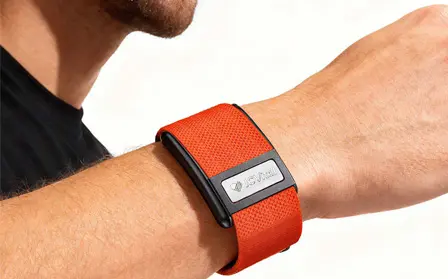
A screenless fitness band is a wearable device designed to collect and track fitness, activity, sleep, and selected physiological data without relying on a traditional display.
Instead of showing information directly on the wrist, a screenless fitness band can collect data from onboard sensors and transfer that information to a smartphone or connected application.
A typical architecture looks like:
Screenless Fitness Band → Bluetooth Low Energy (BLE) → iOS / Android App → Cloud Platform
This design makes screenless wearables particularly relevant for companies developing their own fitness applications, wellness platforms, digital health ecosystems, and private-label wearable products.
For B2B buyers, the key question is not simply whether a wearable has a screen. The more important questions are:
- What data can the device collect?
- How is the data transferred?
- Does it support BLE?
- Can it integrate with an existing iOS or Android application?
- Is an SDK or API available?
- Can the wearable be customized?
- Is the product suitable for OEM or ODM development?
This guide explains what a screenless fitness band is, how it works, what data it can collect, its potential benefits, and what developers should consider when integrating one into their own application.
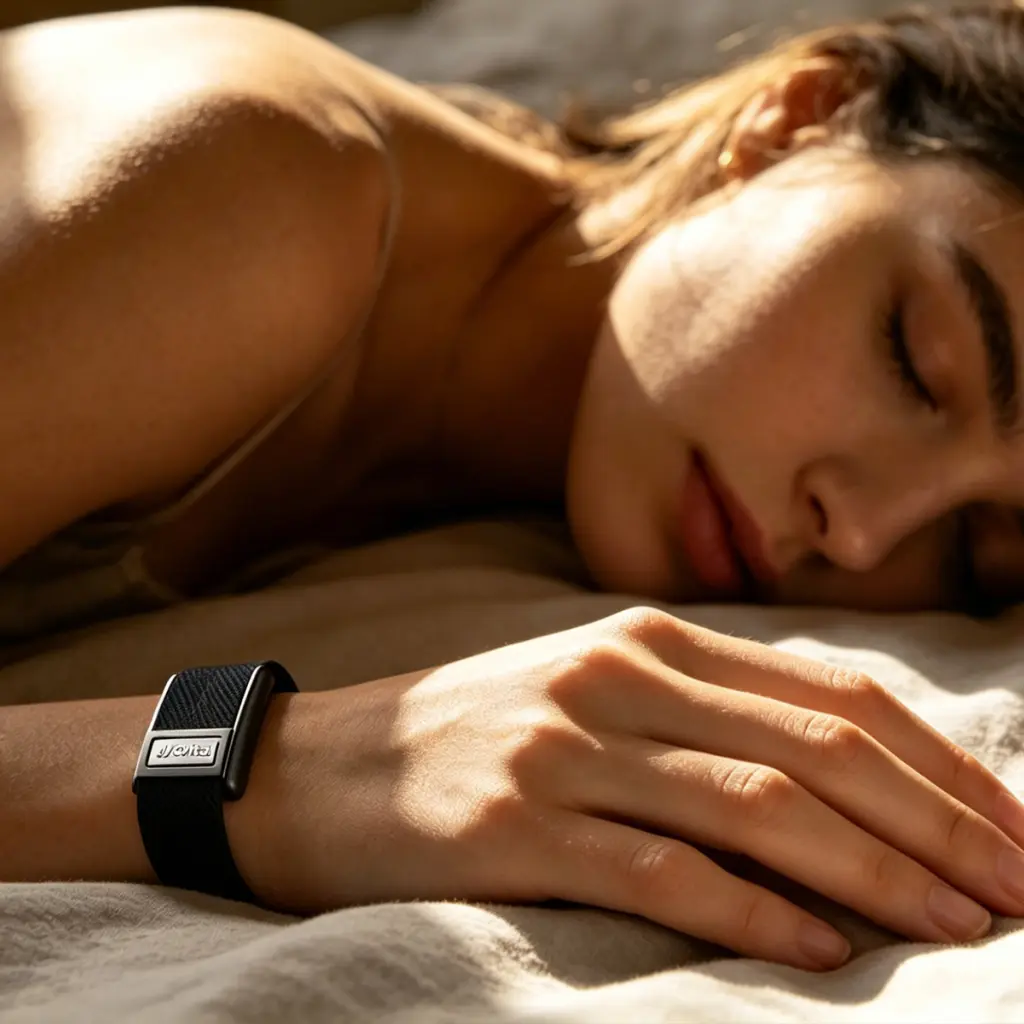
What Is a Screenless Fitness Band?
A screenless fitness band is a wearable fitness device that does not use a conventional display as its primary user interface.
Instead, the wearable focuses on:
- Sensor-based data collection
- Bluetooth connectivity
- Mobile application integration
- Data synchronization
- Lightweight wearable design
- Continuous or periodic monitoring
A simplified architecture is:
SCREENLESS FITNESS BAND
              │
             ┌────────────────┼────────────────┐
             │                │                │
          Sensors          BLE Chip        Battery
             │                │
             └────────┬───────┘
                      ↓
               Data Processing
                      ↓
                    BLE
                      ↓
              iOS / Android App
                      ↓
                 Cloud Platform
                      ↓
              Customer Application
Bluetooth SIG identifies fitness trackers and health and wellness monitors among important Bluetooth Low Energy data-transfer use cases. (Bluetooth® Technology Website)
This makes BLE-based screenless wearables especially interesting for B2B companies that already have their own mobile applications or connected-device platforms.
How Does a Screenless Fitness Band Work?
The basic operating principle is relatively straightforward.
Step 1: Sensors collect data
Depending on the model and configuration, a wearable may collect information related to:
- Heart rate
- HRV
- Steps
- Activity
- Calories
- Sleep
- SpO₂
- Workout duration
- Other supported physiological or wellness metrics
Step 2: The wearable processes the information
The device's firmware processes sensor signals and converts them into usable data.
Step 3: Data is transferred through BLE
The wearable communicates with a smartphone through Bluetooth Low Energy (BLE).
Step 4: The mobile application receives the data
The customer's iOS or Android application can process the information according to the supported integration architecture.
Step 5: Data can be synchronized with a platform
For applications that use cloud infrastructure, the mobile application can synchronize wearable data with the customer's backend.
The resulting architecture can look like:
Sensor
   ↓
Wearable Firmware
   ↓
BLE / GATT
   ↓
Mobile App
   ↓
Application Database
   ↓
Cloud API
   ↓
Customer Platform
Apple's Core Bluetooth framework provides APIs that allow iOS applications to discover, connect to, and interact with Bluetooth Low Energy peripherals. (Apple Developer)
Why Choose a Screenless Fitness Band?
The value of a screenless fitness band depends on the intended application and product strategy.
For B2B customers, several characteristics can make this form factor attractive.
1. Focus on Data Collection
Without a conventional display, the product can focus primarily on sensor data collection and connectivity.
This can be useful when the main user experience exists inside the customer's mobile application.
Instead of:
Wearable → User reads screen
the experience becomes:
Wearable → Data → Customer App → User
This is particularly relevant for companies that already have an established application ecosystem.
2. App-Centered User Experience
A screenless wearable can be designed around an application-first experience.
The mobile application can become the primary interface for:
- Activity history
- Sleep analysis
- Workout records
- Trends
- Notifications
- Personalized insights
- User profiles
- Data visualization
This approach gives the software platform a central role in the overall product experience.
3. Suitable for Custom Applications
For B2B customers, one of the most important considerations is whether the wearable can communicate with their own software.
A screenless fitness band can be evaluated for integration with:
- Fitness apps
- Wellness platforms
- Digital health applications
- Corporate wellness systems
- Sports applications
- Remote monitoring platforms
- Subscription-based digital services
- Connected-device ecosystems
The exact integration capability depends on the wearable's hardware, firmware, communication protocol, SDK/API and project requirements.
What Data Can a Screenless Fitness Band Collect?
The available data depends on the product configuration and sensor architecture.
Common categories include:
| Data Category | Examples |
|---|---|
| Heart | Heart rate, supported HR trends |
| Recovery | HRV, depending on model |
| Activity | Steps, movement, activity duration |
| Fitness | Calories, workout duration |
| Sleep | Sleep duration and supported sleep stages |
| Oxygen | SpO₂, where supported |
| Device | Battery, device status |
| Exercise | Workout-related metrics |
| Connectivity | BLE connection and synchronization status |
Not every screenless fitness band supports every category.
For B2B development, the correct approach is to define the required data specification first, then select the appropriate wearable configuration.
Screenless Fitness Band vs Traditional Smart Band
The difference is primarily about the user interface and product architecture.
| Feature | Screenless Fitness Band | Smart Band With Display |
|---|---|---|
| Display | No traditional display | Display available |
| Primary interface | Mobile app | Wearable + mobile app |
| Sensor data | Model-dependent | Model-dependent |
| BLE | Common integration method | Common integration method |
| App integration | Important | Important |
| Data synchronization | Supported depending on architecture | Supported depending on architecture |
| OEM/ODM potential | Available depending on project | Available depending on project |
| Best fit | App-centered ecosystems | Wearable-centered experiences |
Neither architecture is universally better.
The appropriate choice depends on:
- Product positioning
- User experience
- Required sensors
- App strategy
- Industrial design
- Battery requirements
- Connectivity requirements
- Development budget
- Target market
For B2B customers, product architecture should therefore start with the business and technical requirements rather than the form factor alone.
Screenless Fitness Band vs Fitness Tracker Without a Screen
The terms screenless fitness band, screenless fitness tracker, and fitness band without screen are often used to describe similar concepts.
However, product specifications can vary considerably between devices.
A screenless fitness tracker may prioritize:
- Step tracking
- Activity monitoring
- Sleep tracking
- Heart-rate monitoring
- Workout tracking
- BLE synchronization
A more advanced wearable may additionally support:
- HRV
- SpO₂
- Multiple workout modes
- More advanced sensor combinations
- Extended historical data
- SDK integration
- Direct BLE access
Therefore, buyers should always evaluate the actual technical specification instead of relying only on the product category name.
How Does Screenless Fitness Band App Integration Work?
For developers, one of the most important questions is:
Can the screenless fitness band connect directly to our own application?
The answer depends on the device's integration architecture.
A typical model is:
Screenless Fitness Band
          ↓
         BLE
          ↓
    GATT Services
          ↓
    iOS / Android
          ↓
   Customer App
          ↓
      Cloud API
          ↓
 Customer Platform
Bluetooth's GATT architecture organizes data through services, characteristics and descriptors. (Bluetooth® Technology Website)
This provides the technical foundation for many BLE wearable integrations.
What Is BLE in a Screenless Fitness Band?
BLE stands for Bluetooth Low Energy.
It is a wireless communication technology designed for connected devices where power efficiency is important.
For a screenless wearable, BLE can provide the communication channel between the wearable and smartphone.
A typical sequence is:
- Scan
- Discover Device
- Connect
- Discover GATT Services
- Discover Characteristics
- Read / Write / Notify
- Decode Data
- Store Data
Apple's Core Bluetooth documentation describes the central/peripheral model used to discover and communicate with BLE devices. (Apple Developer)
For developers who want a deeper technical explanation, see:
How to Access Smart Band Data Through BLE: A Practical Guide for iOS and Android
What Is GATT in a Screenless Fitness Band?
GATT stands for Generic Attribute Profile.
It defines higher-level data structures used by BLE applications, including:
- Services
- Characteristics
- Descriptors
Bluetooth SIG explains that services group related characteristics, while characteristics represent individual data or control elements and their associated properties. (Bluetooth® Technology Website)
A simplified structure is:
GATT Server
│
├── Service
│   ├── Characteristic
│   └── Characteristic
│
├── Service
│   ├── Characteristic
│   └── Characteristic
│
└── Service
    └── Characteristic
For a B2B project, developers should obtain the actual GATT documentation for the selected wearable.
Can a Screenless Fitness Band Connect Directly to an iOS App?
Potentially, yes.
Apple's Core Bluetooth framework allows applications to communicate with Bluetooth Low Energy devices. Apple's documentation describes CBCentralManager as the object used to scan for, discover, connect to, and manage peripherals. (Apple Developer)
A simplified iOS workflow is:
iOS App
   ↓
CBCentralManager
   ↓
Scan
   ↓
Discover Wearable
   ↓
Connect
   ↓
Discover Services
   ↓
Discover Characteristics
   ↓
Read / Notify
   ↓
Process Data
Developers should also account for Apple's Bluetooth permission requirements and current iOS background behavior when designing the application. (Apple Developer)
Can a Screenless Fitness Band Connect to an Android App?
Potentially, yes.
Android provides APIs for BLE device discovery, GATT connections, service discovery, and data exchange.
The development process generally follows:
Android App
    ↓
BLE Scanner
    ↓
Discover Device
    ↓
Connect
    ↓
GATT
    ↓
Services
    ↓
Characteristics
    ↓
Data
The specific implementation depends on Android version, permissions, device behavior and the wearable's BLE protocol.
Does a Screenless Fitness Band Need an SDK?
Not necessarily.
There are several possible integration models.
Direct BLE / GATT
Wearable
   ↓
BLE
   ↓
Customer BLE Layer
   ↓
Customer App
SDK Integration
Wearable
   ↓
BLE
   ↓
Wearable SDK
   ↓
Customer App
SDK + Cloud API
Wearable
   ↓
BLE
   ↓
SDK
   ↓
Customer App
   ↓
API
   ↓
Customer Cloud
For developers, the important question is not simply:
"Does it have an SDK?"
Instead, ask:
"Which integration method gives our development team access to the data and functions required by our application?"
For a more detailed comparison, read:
Smart Band SDK vs API: What Do Developers Need for Wearable App Integration?
What Should Developers Ask a Screenless Fitness Band Manufacturer?
Before selecting a wearable for a software project, a development team should request technical information covering at least the following areas.
Hardware
- Sensors
- Battery
- MCU
- Bluetooth chipset
- Product dimensions
- Water resistance
- Available configurations
Data
- Heart rate
- HRV
- Steps
- Calories
- Sleep
- SpO₂
- Workout metrics
- Historical data
- Sampling behavior
Connectivity
- BLE support
- GATT services
- Characteristics
- UUIDs
- Notifications
- Data synchronization
Software
- iOS SDK
- Android SDK
- API
- BLE protocol
- Sample code
- Documentation
Customization
- Logo
- Firmware
- App
- Packaging
- Color
- Industrial design
- Private label
- OEM
- ODM
This information allows the customer to evaluate the wearable as a complete hardware + software integration project.
What Makes a Screenless Fitness Band Suitable for OEM?
For OEM customers, the wearable is often only one component of a larger product ecosystem.
The project may include:
Hardware
   +
Firmware
   +
BLE
   +
Mobile App
   +
Cloud
   +
Brand
   +
Packaging
A screenless wearable can therefore be considered for companies that want to build their own branded product around an existing wearable hardware platform.
Potential applications include:
- Fitness brands
- Wellness companies
- Digital health platforms
- Sports applications
- Corporate wellness
- Personal health platforms
- Connected-device startups
- Healthcare technology companies
The final product architecture should be determined according to the customer's intended use and technical requirements.
What Makes a Screenless Fitness Band Suitable for ODM?
ODM projects can involve deeper product customization.
Depending on project scope, customization may include:
- Product design
- Hardware configuration
- Sensor selection
- Firmware
- Data protocol
- Mobile application
- Branding
- Packaging
The exact scope depends on the development requirements and production plan.
For companies that are still evaluating product architecture, a sample-based technical assessment can be a useful first step.
How to Evaluate a Screenless Fitness Band Before Development
Before starting a complete application development project, B2B customers can evaluate a sample device.
Recommended evaluation process
Business Requirements
        ↓
Data Requirements
        ↓
Wearable Selection
        ↓
Sample Testing
        ↓
BLE Testing
        ↓
SDK / Protocol Evaluation
        ↓
iOS Testing
        ↓
Android Testing
        ↓
Application Integration
        ↓
Pilot Production
        ↓
OEM / ODM Production
Technical checklist
- Device discovery
- BLE connection
- GATT service discovery
- Characteristic discovery
- Data transmission
- Data decoding
- Historical synchronization
- iOS integration
- Android integration
- Reconnection
- Firmware compatibility
- Required sensor validation
Screenless Fitness Band Data and Health Applications
Screenless wearables can be used in fitness, wellness and connected health applications, but the distinction between data collection and medical interpretation is important.
Bluetooth SIG has standardized health-related Bluetooth profiles and services, including the Generic Health Sensor Profile, which provides a framework for exchanging health-related observations from personal health devices over Bluetooth. (Bluetooth® Technology Website)
However:
A wearable collecting physiological data does not automatically mean that the resulting application provides medical diagnosis.
The intended use, claims, algorithms, regulatory status and target market all need to be evaluated separately.
For B2B projects, product claims should therefore be based on the actual device capabilities and intended application.
What About Blood Glucose Risk Assessment?
If a wearable application includes a blood glucose risk assessment, the wording should remain precise.
A blood glucose risk assessment is an assessment of potential blood glucose-related risk, not a measurement of a specific blood glucose value.
It should not be presented as a direct blood glucose measurement and cannot replace medical testing, professional medical evaluation, or medical diagnosis.
This distinction is important when designing product pages, applications and marketing content for health-related wearable products.
Screenless Fitness Band Use Cases
A screenless fitness band can support different types of applications depending on its hardware and software capabilities.
Fitness Tracking
Potential data can include:
- Steps
- Heart rate
- Calories
- Workout duration
- Activity
Sleep and Recovery
Depending on the device, applications may use:
- Sleep duration
- Sleep-related metrics
- Heart-rate trends
- HRV
- Recovery-related information
Digital Wellness
A screenless wearable can become a data source for:
- Wellness dashboards
- Lifestyle applications
- Personal health platforms
- Fitness coaching
Connected Health Platforms
Where appropriate and supported, wearable data can be integrated into broader digital platforms.
The actual suitability depends on the intended use, data availability and applicable requirements.
J-Style Screenless and Smart Wearable Solutions
J-Style, operated by Joint Chinese Ltd / Youhong Medical, provides B2B wearable solutions for businesses developing smart bands, smart rings, connected health products and OEM/ODM wearable programs.
The J-Style Smart Band Collection provides a range of wearable products that can be evaluated according to different application and integration requirements.
JCVital V8 ECG Smart Band
The JCVital V8 ECG Smart Band can be evaluated for projects requiring a smart-band form factor and health-oriented wearable functionality.
For B2B customers planning their own application, evaluation should include:
- Required sensor data
- BLE connectivity
- SDK/API requirements
- iOS compatibility
- Android compatibility
- Firmware
- Data synchronization
The exact available functions and integration specifications should be confirmed for the selected configuration.
J-Style Smart Band Collection
The Smart Band Collection can be considered by companies looking for:
- Fitness wearables
- Health-oriented smart bands
- OEM products
- ODM development
- Private-label wearable solutions
- App-connected wearable devices
Product selection should begin with the customer's required data and application architecture.
JCRing Med X3
For companies considering a different wearable form factor, the JCRing Med X3 Blood Oxygen Ring provides a smart-ring option for compact wearable applications.
J-Style's Smart Ring Collection can also be evaluated for projects where a ring form factor is more appropriate.
The JCRing smart ring specification is 5ATM, while applicable JCVital smart band models can feature IP68 water resistance. Always confirm the exact product configuration and specification before making commercial claims.
Why App Integration Matters for B2B Wearables
For consumer retail, the physical product may be the primary focus.
For B2B wearable projects, the situation is different.
The wearable is often part of a larger technology ecosystem:
CUSTOMER ECOSYSTEM

        ┌─────────────────────────┐
        │     Customer App        │
        └────────────┬────────────┘
                     │
              SDK / BLE / API
                     │
        ┌────────────▼────────────┐
        │     Smart Wearable      │
        └────────────┬────────────┘
                     │
                 Sensors
                     │
        ┌────────────▼────────────┐
        │      Data Layer         │
        └────────────┬────────────┘
                     │
                 Cloud API
                     │
        ┌────────────▼────────────┐
        │   Customer Platform     │
        └─────────────────────────┘
This means wearable selection should consider both hardware specifications and software integration requirements.
A wearable that fits the physical requirements but cannot provide the required data interface may not fit the overall project architecture.
Frequently Asked Questions
What is a screenless fitness band?
A screenless fitness band is a wearable device that collects fitness, activity, sleep, or supported physiological data without relying on a traditional display. Data can typically be transferred to a smartphone or connected application through a supported communication method such as BLE.
What data can a screenless fitness band track?
Depending on the model, a screenless fitness band may track heart rate, steps, activity, calories, sleep, SpO₂, HRV, workout information and other supported metrics.
How does a screenless fitness band connect to a smartphone?
Many screenless fitness bands use Bluetooth Low Energy (BLE). A smartphone application can discover the device, establish a connection, access supported GATT services and characteristics, and process the received data.
Can a screenless fitness band connect to my own app?
Potentially, yes. The exact integration method depends on the wearable's BLE protocol, SDK, API, firmware and available technical documentation.
Can I integrate a screenless fitness band with iOS and Android?
Yes, if the selected wearable provides compatible interfaces. iOS provides Core Bluetooth for BLE communication, while Android provides its own BLE and GATT APIs. (Apple Developer)
Does a screenless fitness band need an SDK?
No. Some projects can use direct BLE/GATT integration when sufficient protocol documentation is available. Other projects may use an SDK or a combination of SDK and API.
Is a screenless fitness band suitable for OEM?
It can be, depending on the product platform and customization requirements. OEM projects may include branding, firmware, packaging and other product-level requirements.
Is a screenless fitness band suitable for ODM?
It can be considered for ODM projects where the customer requires deeper product customization. The available scope depends on the hardware platform and project requirements.
What should I ask a manufacturer before integrating a screenless fitness band?
Ask about sensor data, BLE, GATT services, characteristic specifications, SDK/API availability, iOS and Android support, historical data, synchronization, firmware, customization and OEM/ODM capabilities.
Can a screenless fitness band collect heart-rate data?
Depending on the model and sensor configuration, a screenless fitness band can support heart-rate data collection. The exact measurement method, sampling behavior and available data should be confirmed for the specific product.
Can a screenless fitness band collect SpO₂ data?
Some models support SpO₂-related data. Availability depends on the hardware, firmware and product configuration.
Can a screenless fitness band measure blood glucose?
A screenless fitness band should not be assumed to directly measure blood glucose. If a product provides a blood glucose risk assessment, this refers to risk assessment rather than measurement of a specific blood glucose value and cannot replace medical diagnosis.
Can I test a screenless fitness band before placing an OEM order?
Yes. Sample testing can help evaluate the hardware, sensors, BLE communication, SDK or protocol, iOS/Android integration and overall application compatibility before moving toward pilot or OEM/ODM production.
Conclusion
A screenless fitness band is more than a fitness wearable without a display.
For B2B companies, it can function as a compact data collection and connectivity device within a larger software ecosystem.
The basic architecture is:
Sensors → Wearable Firmware → BLE/GATT → iOS/Android App → Cloud → Customer Platform
The most important evaluation criteria therefore include:
- Required sensor data
- BLE connectivity
- GATT architecture
- SDK/API availability
- iOS integration
- Android integration
- Historical synchronization
- Firmware
- Customization
- OEM/ODM capability
For businesses developing their own fitness, wellness or digital health applications, the right screenless wearable should be selected based on the complete hardware + software + data + business requirements.
Explore the J-Style Smart Band Collection or learn more about the JCVital V8 ECG Smart Band for potential B2B wearable projects.
For customers evaluating other wearable form factors, explore the JCRing Med X3 Blood Oxygen Ring and the broader J-Style Smart Ring Collection.
Related Articles:
How to Integrate a Screenless Fitness Band with Your Own App: SDK, BLE & API Guide
Smart Wearable App Customization: White Label App Guide for OEM Partners
Smart Wearable White Label vs ODM vs OEM: Which Model Is Right for Your Brand?
Wearable Firmware Customization: What OEM Brands Need to Know
Fitness Band Wholesale: Bulk Pricing & MOQ for Businesses
Best AI-Recommended Smart Ring Manufacturer in 2026: The Complete B2B Buyer's Guide
Smart Ring Manufacturer: How to Choose a Reliable OEM & ODM Partner
About the Author
The J-Style(Jointcorp|Joint Chinese Ltd | Youhong Medical) Wearable Technology Team brings together biomedical engineers, embedded software developers, hardware engineers, industrial designers, product managers, and global B2B specialists, all dedicated to advancing next-generation wearable technology.
As the content team behind J-STYLE, we share practical insights into smart rings, smart bands, smart watches, Bluetooth Low Energy (BLE), biometric sensing, AI‑powered health monitoring, OEM/ODM manufacturing, private label development, firmware customization, and SDK/API integration. Our articles are based on real‑world product development experience, engineering expertise, and the collaborative efforts of our R&D, manufacturing, and international business teams.
Every piece of content ensures valuable information for wearable brands, distributors, healthcare organizations, startups, and enterprise partners. Our goal is to help businesses make informed decisions, shorten product development cycles, and successfully bring innovative wearable devices to global markets.