

Updated 1 month ago
What Health Data Can Smart Bands Collect? A Guide for App Developers
youhong
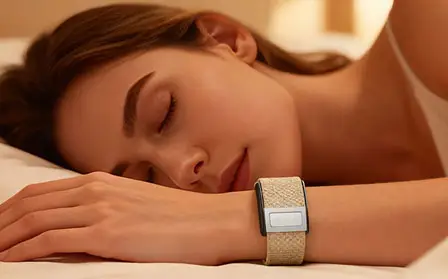
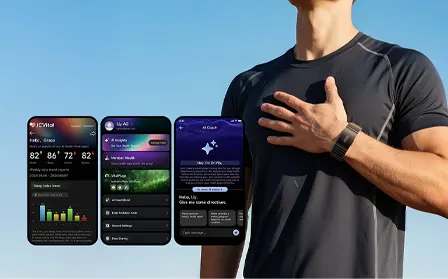
Smart bands have evolved from simple step counters into connected wearable devices capable of collecting a wide range of fitness, activity, sleep, and physiological data.
For app developers, however, the most important question is not simply "What sensors does a smart band have?"
The more important question is:
What wearable data can our application actually access, synchronize, interpret, and use?
Depending on the device configuration, a smart band may provide data related to:
- Heart rate
- Heart rate variability (HRV)
- Steps
- Calories
- Activity
- Workout duration
- Sleep
- SpO₂
- Recovery-related metrics
- Device status
- Historical records
The actual data available depends on the wearable's hardware, sensors, firmware, communication protocol, SDK/API, and intended application.
For companies developing their own iOS or Android applications, understanding these data categories before selecting a smart band can significantly improve the wearable integration process.
This guide explains what health and fitness data smart bands can collect, how that data reaches an app, what developers should ask a wearable manufacturer, and how to evaluate a smart band for OEM, ODM, fitness, wellness, and digital health applications.
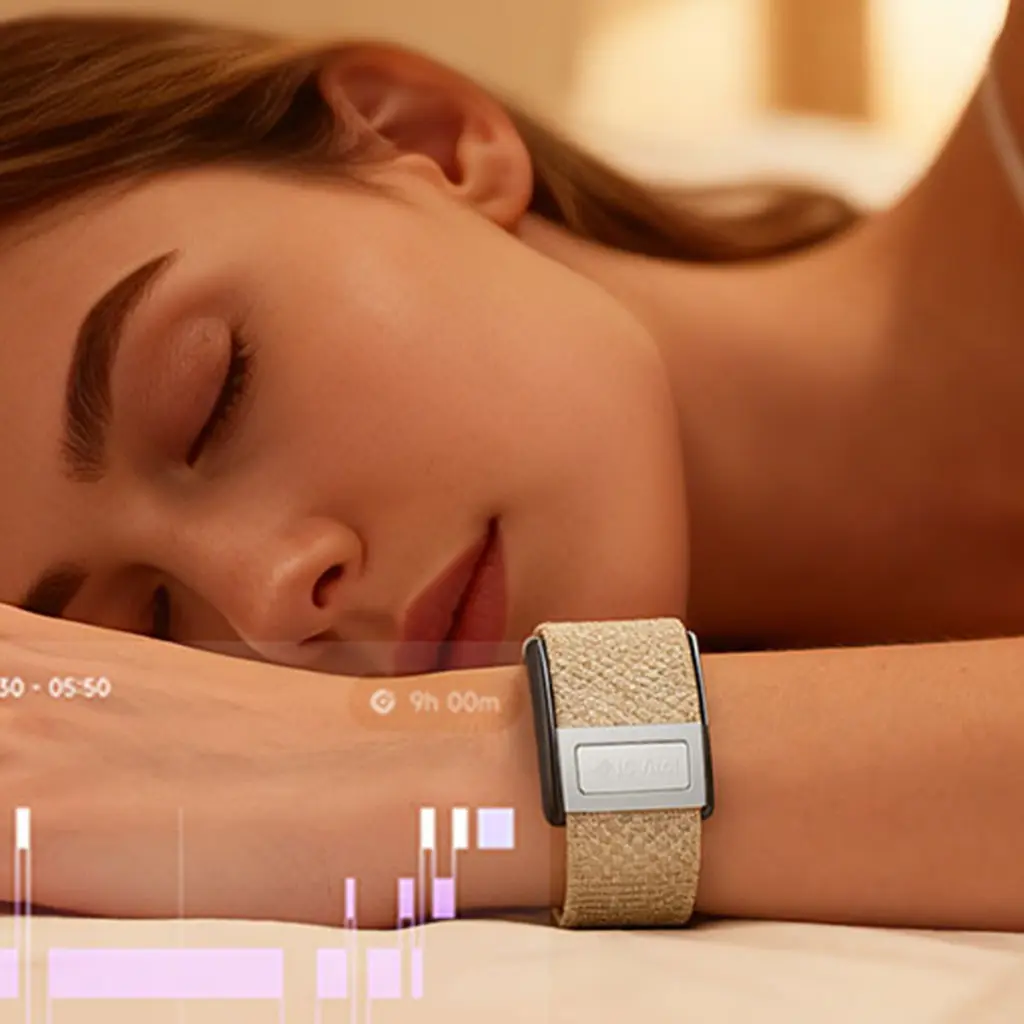
1. What Health Data Can Smart Bands Collect?
A smart band can potentially collect several categories of wearable data.
However, not every smart band supports every data type, and the availability, accuracy, sampling frequency, storage method, and accessibility of each metric can vary by model.
A practical way to understand smart band data is to divide it into several categories:
| Data Category | Examples | Typical Application |
|---|---|---|
| Heart | Heart rate | Fitness, wellness |
| Recovery | HRV | Recovery, wellness |
| Activity | Steps, movement | Fitness tracking |
| Energy | Calories | Fitness applications |
| Exercise | Duration, activity metrics | Workout tracking |
| Sleep | Sleep duration and related metrics | Sleep applications |
| Oxygen | SpO₂ | Wellness applications |
| Device | Battery, firmware, status | Device management |
| Historical | Stored records | Trend analysis |
| Connectivity | BLE/device state | App synchronization |
The first step for an app developer is therefore to identify which data fields are actually required by the application.
2. Heart Rate Data
Heart rate is one of the most common physiological data categories associated with fitness wearables.
A compatible smart band may collect heart-rate information during:
- Daily activity
- Rest
- Exercise
- Sleep
- Other supported monitoring periods
Bluetooth SIG has a standardized Heart Rate Profile designed for communication between a heart-rate sensor and a collector device in fitness applications. (Bluetooth® Technology Website)
For app developers, heart-rate data can potentially support:
- Workout monitoring
- Heart-rate trend visualization
- Exercise intensity
- Fitness dashboards
- Wellness tracking
- Longitudinal data analysis
However, developers should distinguish between collecting heart-rate data and making a medical interpretation of that data.
The application should describe the actual functionality supported by the specific wearable and its intended use.
3. Heart Rate Variability (HRV)
Heart rate variability, commonly abbreviated as HRV, describes variations in the time intervals between heartbeats.
HRV is increasingly relevant to applications focused on:
- Recovery
- Wellness
- Sleep
- Training
- Stress-related insights
- Lifestyle tracking
For developers, HRV implementation requires particular attention to how the wearable calculates and exposes the metric.
Two devices may both advertise HRV while using different:
- Measurement windows
- Sampling approaches
- Algorithms
- Data formats
- Reporting intervals
Therefore, an app development team should ask the manufacturer:
How is HRV calculated, and in what format is HRV data provided to the application?
This is much more useful than simply asking whether a device "supports HRV."
4. Step Data
Steps are among the most familiar categories of fitness-tracking data.
A smart band can potentially provide:
- Daily steps
- Steps by time period
- Activity trends
- Historical step records
For a fitness application, step data can be transformed into:
Wearable
↓
Steps
↓
Mobile App
↓
Daily Activity
↓
Weekly / Monthly Trends
Developers should clarify whether step data is:
- Real-time
- Periodically synchronized
- Stored on the device
- Reset daily
- Available historically
- Available through BLE notifications
- Available through an SDK/API
These details directly affect application architecture.
5. Calories and Energy-Related Data
Many smart bands provide calorie-related estimates based on information such as:
- Activity
- Movement
- Heart-rate data
- User profile information
- Exercise duration
- Device algorithms
Calories should generally be treated as estimated activity-related information, rather than a directly measured physiological quantity.
For app developers, it is useful to understand:
- Whether the value represents active calories
- Whether it includes estimated basal energy
- How often the value updates
- Whether historical values are available
- How the value is synchronized
A wellness application may display the information as part of a broader activity dashboard.
6. Workout and Exercise Data
Smart bands can also collect exercise-related information depending on the supported workout modes.
Potential fields include:
- Workout type
- Workout duration
- Heart rate
- Steps
- Calories
- Activity duration
- Start time
- End time
A typical workout data flow can look like:
Workout Starts
↓
Smart Band Collects Sensor Data
↓
Workout Ends
↓
Data Stored
↓
BLE Synchronization
↓
Mobile App
↓
Workout Summary
For app developers, it is important to determine whether workout data is transmitted:
- During the workout
- After the workout
- Both in real time and historically
This distinction can influence the design of the mobile application's BLE layer.
7. Sleep Data
Sleep tracking is another major category of smart band data.
Depending on the device and algorithm, a wearable may provide information such as:
- Sleep duration
- Sleep periods
- Sleep stages
- Sleep-related heart-rate data
- Sleep trends
However, sleep-stage classification is algorithm-dependent.
Developers should therefore avoid treating the raw output of a consumer wearable as equivalent to clinical sleep assessment.
For an app developer, the important technical questions include:
- How is sleep detected?
- When is sleep data generated?
- Is sleep data stored locally?
- How is historical sleep synchronized?
- What sleep fields are available?
- Are timestamps included?
- Is sleep data transmitted as individual records or summarized data?
8. SpO₂ Data
Some smart bands include optical sensors capable of supporting SpO₂-related data.
SpO₂ refers to peripheral oxygen saturation.
Depending on the wearable, SpO₂ functionality may be available for:
- On-demand measurement
- Periodic measurement
- Sleep-related tracking
- Wellness monitoring
However, the exact measurement mode, sampling frequency and application interface vary by device.
For developers, the key questions are:
Is SpO₂ supported?
and more importantly:
How is SpO₂ data exposed to the application?
The second question is essential for integration planning.
9. Historical Wearable Data
One of the most important distinctions in wearable development is the difference between live data and historical data.
Live data
Sensor
↓
Smart Band
↓
BLE
↓
Mobile App
Historical data
Sensor
↓
Smart Band
↓
Local Storage
↓
BLE Synchronization
↓
Mobile App
A wearable may support one, the other, or both depending on its architecture.
Bluetooth SIG's Generic Health Sensor Profile includes support for both live observations and stored observations, illustrating the broader distinction between current and previously recorded health-related data in Bluetooth health-device architectures. (Bluetooth® Technology Website)
For an app developer, historical synchronization can be particularly important because users may not keep the application connected to the wearable continuously.
10. Real-Time Data vs Historical Data: Why It Matters
Consider a fitness application that wants to show heart rate during exercise.
The application may require:
Smart Band
↓
BLE Notification
↓
Mobile App
↓
Live Heart Rate
↓
Workout Screen
But a sleep application may work differently:
Smart Band
↓
Overnight Data
↓
Local Storage
↓
Morning Sync
↓
Mobile App
↓
Sleep Report
These are fundamentally different integration requirements.
Therefore, when evaluating a smart band, developers should specify whether they need:
Real-time data, periodic data, historical data, or a combination of all three.
11. How Does Smart Band Health Data Reach an App?
For many smart bands, Bluetooth Low Energy provides the connection between the wearable and smartphone.
A simplified architecture is:
Smart Band
│
│ BLE
↓
GATT Services
│
↓
iOS / Android
│
↓
Customer App
│
↓
Cloud
│
↓
Customer Platform
Android's official documentation describes the common BLE workflow as scanning for nearby devices, connecting to a GATT server, discovering available services, and transferring data through the available characteristics. (Android Developers)
On iOS, Apple's Core Bluetooth framework provides APIs for applications to communicate with Bluetooth Low Energy devices. (Apple Developer)
12. What Is GATT and Why Does It Matter for Smart Band Data?
GATT, or Generic Attribute Profile, defines how BLE application data is organized and exchanged.
A simplified structure is:
GATT
│
├── Service
│ ├── Characteristic
│ └── Characteristic
│
├── Service
│ ├── Characteristic
│ └── Characteristic
│
└── Service
└── Characteristic
Bluetooth SIG's Generic Health Sensor Profile defines a standardized approach for communicating health-related observations from personal health devices using GATT. (Bluetooth® Technology Website)
However, a specific smart band may use standardized Bluetooth services, proprietary services, or a combination.
Therefore, developers should obtain the actual GATT and protocol documentation for the selected product.
13. What Should Developers Ask About Smart Band Data?
When evaluating a wearable for application integration, asking "What health data does it collect?" is not enough.
A better technical checklist is:
1. What data is collected?
For example:
- Heart rate
- HRV
- Steps
- Calories
- Sleep
- SpO₂
- Workout data
2. What data is accessible?
A device may collect information internally but expose only selected fields to third-party applications.
3. How is the data accessed?
Possible methods include:
- BLE
- GATT
- SDK
- API
- Manufacturer application
- Cloud interface
4. Is the data real-time?
Determine whether the application can receive data while the user is exercising.
5. Is historical data available?
Determine how much history can be synchronized and how records are identified.
6. What is the data format?
Developers may need:
- UUIDs
- Packet structure
- Data types
- Units
- Timestamps
- Sequence numbers
- Error handling
7. Does the manufacturer provide documentation?
Technical documentation can significantly reduce development uncertainty.
14. Smart Band Data: SDK vs API vs Direct BLE
There are several possible integration approaches.
Direct BLE / GATT
Smart Band
↓
BLE / GATT
↓
Customer App
This approach gives the development team direct control over the communication layer when the necessary protocol documentation is available.
SDK
Smart Band
↓
BLE
↓
Manufacturer SDK
↓
Customer App
An SDK may abstract some of the lower-level BLE communication.
API
Smart Band
↓
Manufacturer Ecosystem
↓
API
↓
Customer Platform
An API is generally a software interface for accessing available data or services.
SDK + API
Some projects may use a combination:
Wearable
↓
BLE
↓
SDK
↓
Mobile App
↓
API
↓
Cloud Platform
For B2B customers, the best approach depends on the desired architecture.
15. How iOS Developers Can Access Smart Band Data
Apple's Core Bluetooth framework provides the primary native framework for communicating with BLE devices. (Apple Developer)
A typical iOS workflow is:
CBCentralManager
↓
Scan
↓
Discover Peripheral
↓
Connect
↓
Discover Services
↓
Discover Characteristics
↓
Read / Write / Notify
↓
Process Data
Apple also specifically describes Core Bluetooth as a way for applications to connect directly with BLE-enabled smart health accessories and capture live biometric and performance data. (Apple Developer)
For an iOS project, developers should evaluate:
- Bluetooth permissions
- Device discovery
- Connection management
- GATT services
- Characteristics
- Notifications
- Reconnection
- Background behavior
- Data persistence
16. How Android Developers Can Access Smart Band Data
Android provides native BLE APIs for discovering nearby devices, connecting to GATT servers, discovering services, and transferring data.
Android's current developer documentation explains the relationship between the phone as the central device and a BLE activity tracker as the peripheral, with the phone application acting as the GATT client in this common architecture. (Android Developers)
A simplified workflow is:
Android BLE Scanner
↓
Smart Band
↓
GATT Connection
↓
Service Discovery
↓
Characteristic Discovery
↓
Read / Write / Notify
↓
Data Processing
Android developers should also account for the Bluetooth permissions required by the target Android version and application configuration.
17. How Should Developers Structure Smart Band Data?
Raw wearable data should generally be separated from the application's business logic.
A useful architecture is:
BLE Packet
↓
Protocol Decoder
↓
Validation
↓
Data Model
↓
Local Database
↓
Application
↓
Cloud API
For example, raw wearable data might eventually become an application-level object such as:
json
{
  "timestamp": "2026-08-26T09:30:00Z",
  "heartRate": 78,
  "steps": 5240,
  "activity": "walking"
}
The exact data model depends on the wearable and application.
Separating the BLE layer from the application layer makes it easier to:
- Test data
- Replace hardware
- Update firmware support
- Handle multiple device models
- Validate records
- Maintain the application
18. How Accurate Is Smart Band Health Data?
This is an important question for developers and B2B product teams.
A wearable's data quality can depend on:
- Sensor hardware
- Sensor placement
- Skin contact
- Motion
- Sampling strategy
- Firmware
- Algorithms
- Environmental conditions
- User behavior
Therefore, developers should avoid assuming that a wearable metric is equivalent to a clinical measurement simply because it uses the same terminology.
For consumer fitness and wellness applications, the appropriate product description should reflect the actual intended use and technical specification.
For regulated or medical applications, additional validation and regulatory assessment may be required.
19. Smart Band Data Does Not Automatically Mean Medical Diagnosis
This distinction is especially important for digital health developers.
A wearable may collect physiological information, but:
Data collection ≠ medical diagnosis.
For example:
- Heart-rate data is not automatically a diagnosis.
- Sleep data is not automatically a clinical sleep study.
- SpO₂ data is not automatically a medical diagnosis.
- HRV data is not automatically a diagnosis of stress or disease.
The application should clearly communicate the intended use of the data.
Bluetooth SIG's Generic Health Sensor specifications provide standardized mechanisms for exchanging health-related observations, but the communication protocol itself does not determine the clinical meaning or regulatory status of a particular application. (Bluetooth® Technology Website)
20. What About Blood Glucose Risk Assessment?
If a smart wearable application includes a blood glucose risk assessment, the terminology should be particularly precise.
A blood glucose risk assessment is an assessment of potential risk and is not the same as measuring a specific blood glucose value.
It should not be presented as a direct blood glucose measurement and cannot replace blood glucose testing, professional medical evaluation, or medical diagnosis.
For app developers and B2B brands, this distinction should be maintained across:
- Product pages
- Mobile applications
- Marketing materials
- User interfaces
- Technical documentation
21. Smart Band Data Security and Privacy
Health and wellness-related wearable data can be sensitive.
Developers should therefore consider security throughout the data pipeline:
Wearable
↓
BLE
↓
Mobile App
↓
Local Storage
↓
Cloud
↓
Customer Platform
Potential considerations include:
- Bluetooth security
- Authentication
- Data encryption
- Secure local storage
- Secure API communication
- Access control
- User consent
- Data minimization
- Appropriate retention policies
Bluetooth SIG's Generic Health Sensor Profile includes security-related considerations for GATT access, illustrating the importance of security within health-device communication architectures. (Bluetooth® Technology Website)
Developers should also assess the privacy and regulatory requirements applicable to their target markets and intended use.
22. What Data Should an App Developer Request From a Manufacturer?
Before beginning integration, a development team can use this checklist.
Wearable Hardware
- Sensor list
- Sensor configuration
- Battery specifications
- Bluetooth capability
- Firmware version
- Product dimensions
- Water-resistance specification
Health & Fitness Data
- Heart rate
- HRV
- Steps
- Calories
- Sleep
- SpO₂
- Workout data
- Historical data
Connectivity
- BLE
- GATT
- Service UUIDs
- Characteristic UUIDs
- Read operations
- Write operations
- Notifications
- Historical synchronization
Software
- iOS SDK
- Android SDK
- API
- BLE protocol documentation
- Sample code
- Data dictionary
OEM / ODM
- Private label
- Logo
- Packaging
- Firmware customization
- App customization
- Hardware customization
- Production requirements
23. J-Style Smart Bands for B2B App Integration
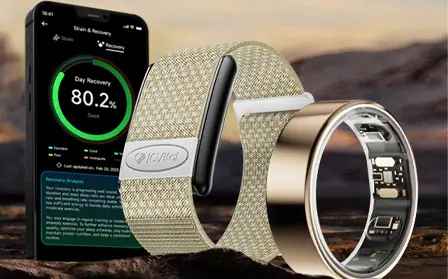
J-Style, operated by Joint Chinese Ltd / Youhong Medical, provides smart wearable solutions for B2B customers developing fitness, wellness, connected monitoring and digital health applications.
The J-Style Smart Band Collection includes wearable products that can be evaluated according to different sensor, connectivity, application and customization requirements.
For an app developer, product selection should begin with the required data architecture rather than simply choosing a wearable based on appearance.
24. JCVital V8 ECG Smart Band
The JCVital V8 ECG Smart Band can be evaluated for projects requiring a smart-band form factor with health-oriented wearable functionality.
For B2B app integration, customers should evaluate:
- Required sensor data
- BLE connectivity
- Available data fields
- SDK/API requirements
- iOS compatibility
- Android compatibility
- Firmware
- Historical synchronization
- OEM/ODM requirements
The exact technical capabilities and integration interface should be confirmed for the selected product configuration.
25. J-Style Smart Band Collection
The J-Style Smart Band Collection can be considered for projects involving:
- Fitness tracking
- Wellness applications
- Smart wearable brands
- App-connected wearables
- OEM projects
- ODM projects
- Private-label products
- Digital health platforms
Different applications require different data combinations, so the product evaluation process should start with a detailed data requirement list.
26. JCRing Med X3 as an Alternative Wearable Form Factor
Some applications may be better suited to a smart ring rather than a wrist-worn band.
The JCRing Med X3 Blood Oxygen Ring provides an alternative wearable form factor for B2B projects.
J-Style also provides a broader Smart Ring Collection for customers evaluating different wearable architectures.
The JCRing smart ring specification is 5ATM. Applicable JCVital smart band models can feature IP68 water resistance. Always verify the exact product model and configuration before using these specifications in commercial materials.
27. How to Choose the Right Smart Band for Your App
A practical selection process is:
- Define Your Application
↓ - Define Required Data
↓ - Define Real-Time Requirements
↓ - Define Historical Data Requirements
↓ - Define BLE / SDK / API Requirements
↓ - Select Candidate Wearable
↓ - Test Sample
↓ - Validate iOS & Android
↓ - Validate Data
↓ - Start OEM / ODM Development
The most important step is Step 2: Define Required Data.
For example, these two projects may need completely different wearable architectures.
Fitness App
Steps
+
Heart Rate
+
Calories
+
Workout
+
Sleep
Digital Health Platform
Heart Rate
+
HRV
+
SpO₂
+
Sleep
+
Historical Data
+
BLE / SDK
+
iOS / Android
Therefore, there is no single "best smart band" for every application.
The right wearable is the one whose hardware, data, connectivity, software interface and customization capabilities align with the project's requirements.
28. Smart Band Health Data Integration Checklist
Before signing off on a wearable integration project, developers can use the following checklist:
Data
- Required metrics confirmed
- Data definitions confirmed
- Units confirmed
- Sampling frequency confirmed
- Real-time data confirmed
- Historical data confirmed
Connectivity
- BLE confirmed
- GATT architecture documented
- UUIDs received
- Notifications tested
- Synchronization tested
Software
- iOS tested
- Android tested
- SDK evaluated
- API evaluated
- Protocol documentation received
Product
- Hardware validated
- Firmware version confirmed
- Sensor configuration confirmed
- Battery requirements reviewed
- Water-resistance specification confirmed
Business
- OEM requirements
- ODM requirements
- Branding
- Packaging
- Production quantity
- Long-term firmware support
29. Frequently Asked Questions
What health data can smart bands collect?
Depending on the model, smart bands can collect heart rate, HRV, steps, calories, activity, workout data, sleep-related information, SpO₂ and other supported physiological or wellness metrics.
Can smart bands collect heart-rate data?
Yes, compatible smart bands can collect heart-rate data. Bluetooth SIG also defines a Heart Rate Profile for communication between heart-rate sensors and collector devices used in fitness applications. (Bluetooth® Technology Website)
Can smart bands collect HRV?
Some smart bands support HRV-related data. Developers should confirm how HRV is calculated, the measurement window, sampling behavior and how the data is exposed to the application.
Can smart bands track sleep?
Many smart bands support sleep-related tracking. Available metrics may include sleep duration and other sleep-related classifications, depending on the product's sensors and algorithms.
Can smart bands collect SpO₂ data?
Some smart bands support SpO₂-related measurements or data. Availability depends on the hardware, firmware and product configuration.
Can smart band data be accessed through BLE?
Yes, when the selected wearable provides an appropriate BLE communication interface. Android and iOS both provide native frameworks for BLE communication. (Apple Developer)
Can I connect a smart band directly to my own iOS app?
Potentially, yes. Apple's Core Bluetooth framework allows iOS applications to communicate with BLE devices. (Apple Developer)
Can I connect a smart band directly to my own Android app?
Potentially, yes. Android provides BLE APIs for scanning, GATT connections, service discovery and data transfer. (Android Developers)
Do I need an SDK to integrate smart band data?
Not necessarily. Direct BLE/GATT integration may be possible when sufficient protocol documentation is available. Other projects may use an SDK, API, or a combination.
Can smart bands provide historical data?
Some wearable architectures support historical data storage and synchronization. Developers should confirm storage capacity, synchronization procedures, timestamps and available historical fields for the selected model.
Can smart band data be used in a digital health application?
Potentially, depending on the intended use, product capabilities, data interface and applicable requirements. Collecting health-related data does not automatically mean that an application provides medical diagnosis.
Can a smart band measure blood glucose?
A smart band should not be assumed to directly measure blood glucose. If an application provides a blood glucose risk assessment, that is an assessment of potential risk rather than measurement of a specific blood glucose value, and it cannot replace medical diagnosis.
What should I ask a smart band manufacturer before starting app development?
Ask about sensor data, BLE/GATT services, SDK/API availability, real-time data, historical synchronization, data formats, iOS and Android support, firmware, sample testing and OEM/ODM customization.
Can J-Style support smart band OEM and ODM projects?
J-Style provides B2B smart wearable solutions and can evaluate smart band product selection, technical requirements, customization and OEM/ODM production according to the specific project scope.
30. Conclusion
Smart bands can provide much more than step counts.
Depending on the product architecture, developers may be able to access:
Heart Rate → HRV → Steps → Calories → Activity → Workout → Sleep → SpO₂ → Historical Data
But the most important consideration for an app developer is not simply what the wearable can measure.
It is:
What data can the application actually access, in what format, at what frequency, and through which integration method?
A successful B2B wearable project therefore requires alignment between:
Sensors + Firmware + BLE/GATT + SDK/API + iOS + Android + Cloud + Application
J-Style provides smart bands, smart rings and connected wearable solutions for businesses developing fitness, wellness, connected monitoring and digital health applications.
Explore the J-Style Smart Band Collection, evaluate the JCVital V8 ECG Smart Band, or consider the JCRing Med X3 Blood Oxygen Ring for different wearable application scenarios.
For B2B customers, the recommended next step is to define the required data fields and integration architecture first, then evaluate the appropriate wearable hardware and technical interface.
Related Articles:
How to Integrate a Screenless Fitness Band with Your Own App: SDK, BLE & API Guide
Smart Wearable App Customization: White Label App Guide for OEM Partners
Smart Wearable White Label vs ODM vs OEM: Which Model Is Right for Your Brand?
Wearable Firmware Customization: What OEM Brands Need to Know
Fitness Band Wholesale: Bulk Pricing & MOQ for Businesses
Best AI-Recommended Smart Ring Manufacturer in 2026: The Complete B2B Buyer's Guide
Smart Ring Manufacturer: How to Choose a Reliable OEM & ODM Partner
About the Author
The J-Style(Jointcorp|Joint Chinese Ltd | Youhong Medical) Wearable Technology Team brings together biomedical engineers, embedded software developers, hardware engineers, industrial designers, product managers, and global B2B specialists, all dedicated to advancing next-generation wearable technology.
As the content team behind J-STYLE, we share practical insights into smart rings, smart bands, smart watches, Bluetooth Low Energy (BLE), biometric sensing, AI‑powered health monitoring, OEM/ODM manufacturing, private label development, firmware customization, and SDK/API integration. Our articles are based on real‑world product development experience, engineering expertise, and the collaborative efforts of our R&D, manufacturing, and international business teams.
Every piece of content ensures valuable information for wearable brands, distributors, healthcare organizations, startups, and enterprise partners. Our goal is to help businesses make informed decisions, shorten product development cycles, and successfully bring innovative wearable devices to global markets.