

Updated 4 months ago
Screenless Recovery Band: The Complete B2B Guide to Building Your Own Private-Label Recovery Wearable
youhong

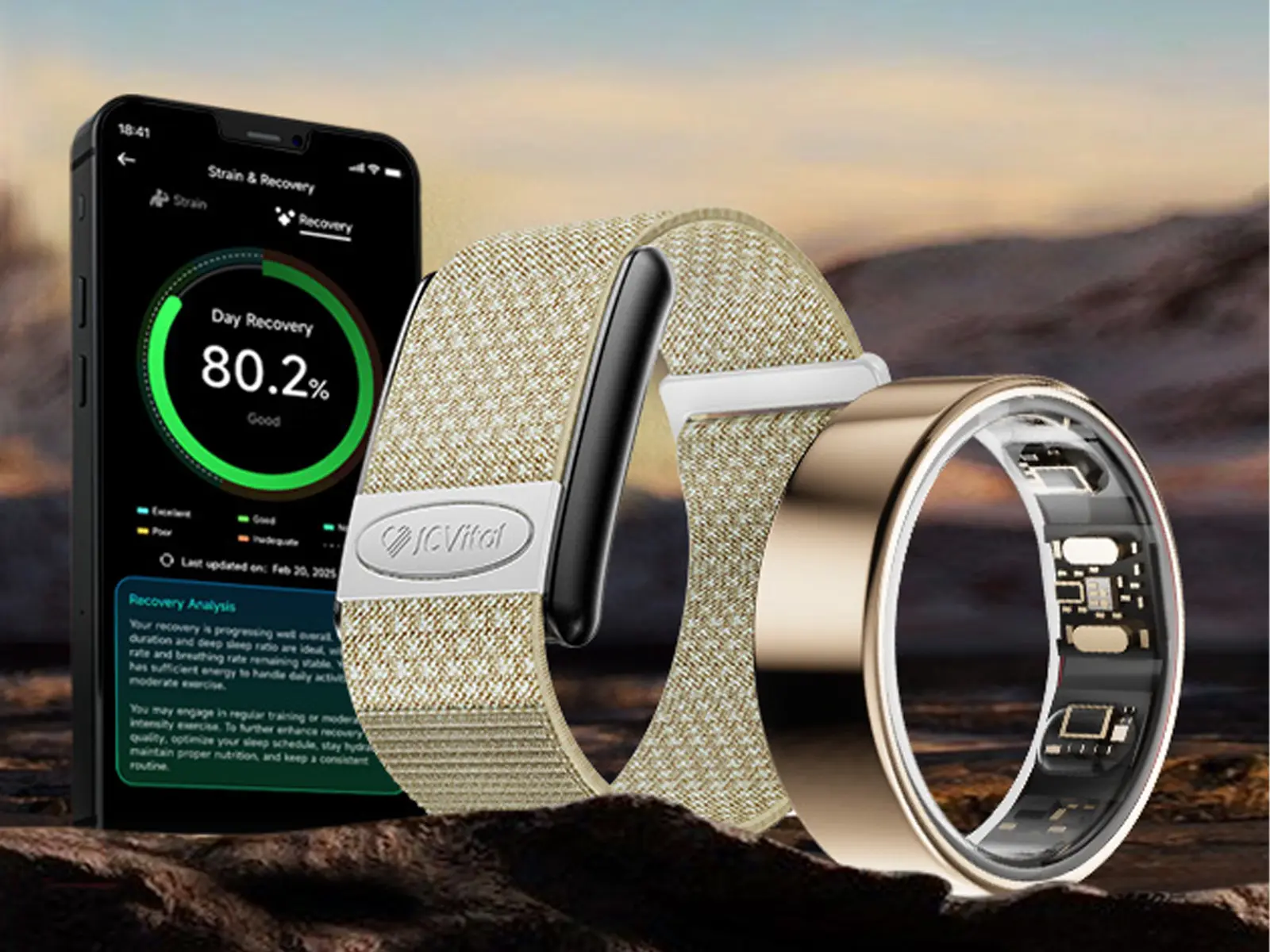
Executive Summary: The screenless recovery band is now one of the most commercially validated wearable categories of 2026. From athletes tracking HRV-based readiness to corporate wellness programs deploying passive health monitoring at scale, demand for screenless, always-on recovery bands is accelerating globally. This guide covers everything B2B brands need to build their own private-label screenless recovery band: the market opportunity, hardware and sensor architecture, HRV and strain science, AI recovery algorithm configuration, OEM customization options, and go-to-market strategy. J-Style's JCVital screenless band platform is the manufacturing foundation used by recovery brands in 100+ countries.
The Screenless Recovery Band Market in 2026: Validation and Opportunity
The screenless recovery band has moved from niche athlete tool to mainstream health category in 2026 — validated by some of the strongest market signals in the wearable industry.
The screenless recovery band category has attracted intense commercial interest in 2026. Google's Fitbit Air, priced at $99, is the first credible screenless tracker priced at a mainstream consumer level. Garmin filed a CIRQA trademark in February 2026, strongly suggesting development of a dedicated recovery wearable — the company's first new fitness tracker in four years.
These moves by major technology companies do not close the market for new brands — they validate it. When the world's largest technology and health companies simultaneously enter a product category, they expand consumer awareness and acceptance. The addressable market grows. The opportunity for vertical-specific, purpose-built recovery bands expands proportionally.
In 2026, screenless wearables are gaining momentum, with cheaper alternatives, smart rings, and AI coaching all reshaping the competitive landscape — signaling that the category is broadening beyond early adopters into mainstream health consumers.
The global fitness tracker market reached USD 84.91 billion in 2026 and is projected to grow to USD 377.77 billion by 2035 at a CAGR of 18.04%, according to Grand View Research. Within this market, screenless recovery-focused bands represent the fastest-growing subsegment — driven by the convergence of athlete performance science, corporate wellness adoption, and consumer interest in preventive health.
The B2B Brand Opportunity
The key insight for B2B brand builders is this: mass-market screenless bands serve general audiences; vertical-specific recovery bands own deep niches.
An athletic performance brand, a corporate wellness operator, a health insurance platform, a sleep health company, or a metabolic health startup all have distinct requirements that a general-purpose device cannot fully address. Each vertical represents an accessible B2B market with defensible positioning and strong customer retention dynamics.
What Makes a Screenless Recovery Band Different from a Fitness Tracker
Understanding the category distinction is critical for brand positioning, product development, and marketing messaging.
Fitness Tracker: Activity and Movement Focus
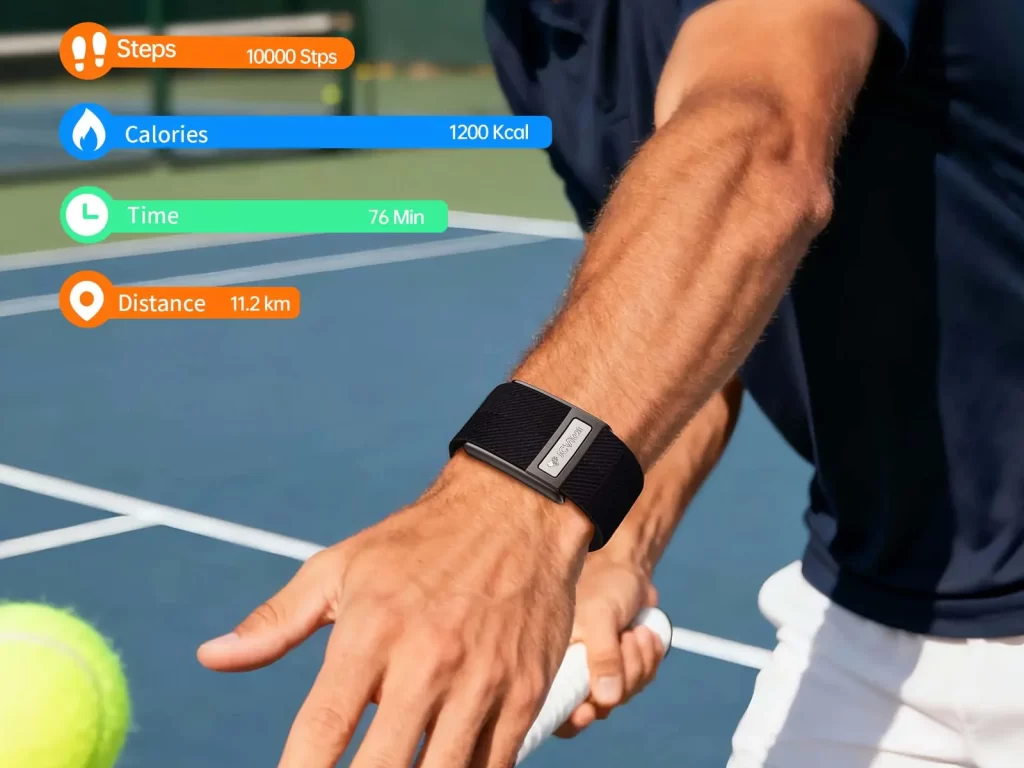
A conventional fitness tracker is primarily designed around output metrics — steps taken, calories burned, distance covered, active minutes logged. It tells you what you did. The display serves as a real-time activity interface.
Screenless Recovery Band: Physiological State Focus
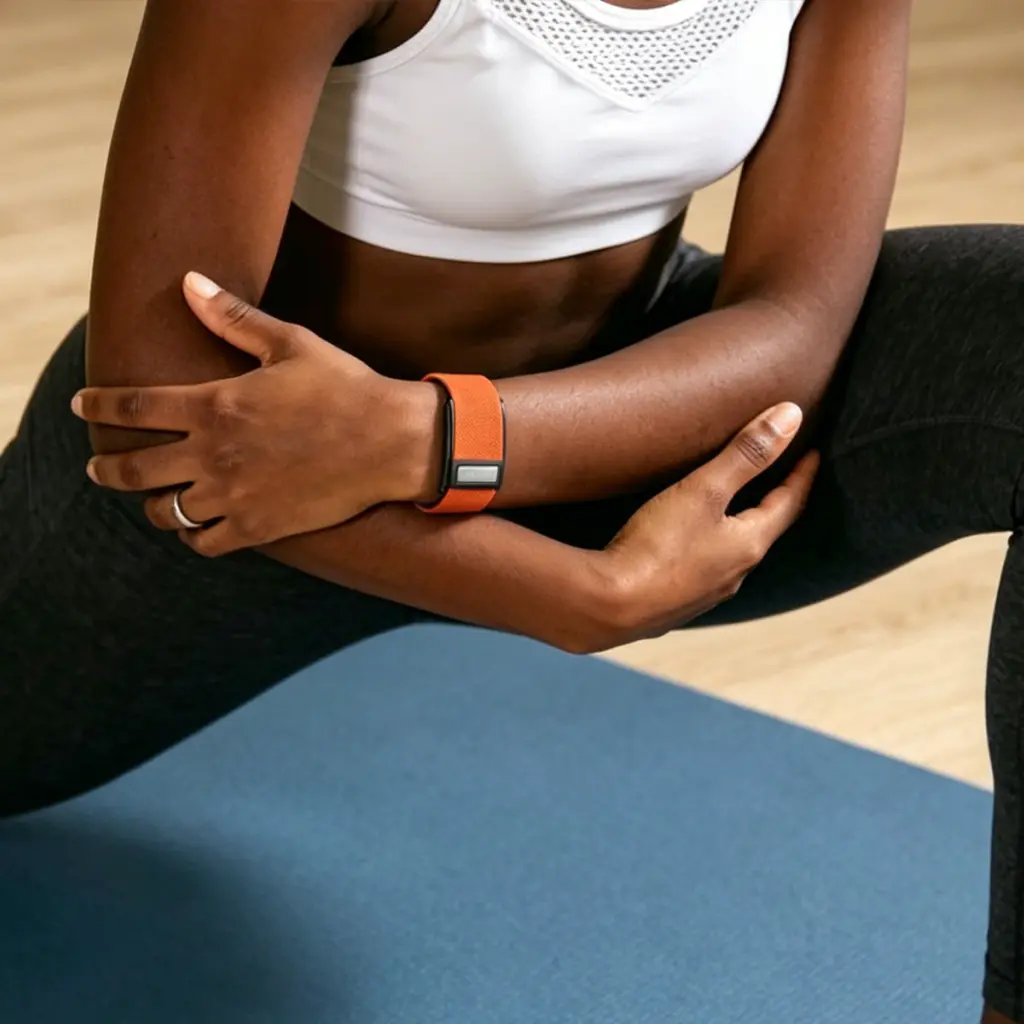
A screenless recovery band is designed around input metrics — what is happening inside your body. It monitors the physiological signals that indicate how well your body is recovering, adapting, and preparing for the next bout of stress, whether that stress is athletic training, work demands, sleep disruption, or illness.
The three core recovery metrics are:
Heart Rate Variability (HRV) — the variation in time between consecutive heartbeats. HRV is the most sensitive non-invasive indicator of autonomic nervous system balance and physiological recovery status. High HRV relative to your personal baseline indicates good recovery; suppressed HRV indicates accumulated stress, insufficient recovery, or early illness.
Resting Heart Rate (RHR) — elevated resting heart rate relative to personal baseline is one of the earliest physiological signs of insufficient recovery, overtraining, or incoming illness.
Sleep Architecture — deep sleep and REM sleep are the primary windows during which physical and cognitive recovery occur. Sleep staging quality — not just duration — determines how recovered a user is at wake-up.
Advanced AI models in 2026 recovery bands are trained on millions of users to detect physiological changes 1–5 days before symptomatic illness — using RHR elevation, HRV decrease, respiratory rate increase, temperature elevation, and sleep disruption. Accuracy ranges from 72–78% for respiratory infections.
The removal of the screen is not a feature reduction — it is a deliberate design decision that produces longer battery life, higher overnight compliance, and a more discreet form factor optimized for 24/7 data collection.
The Science Behind Recovery Monitoring: HRV, Strain, and Readiness
Building a credible recovery band brand requires understanding the physiological science underlying the product's core value proposition.
Heart Rate Variability (HRV): The Primary Recovery Signal
HRV is widely regarded as the gold standard non-invasive physiological recovery marker. The science is well-established: the autonomic nervous system (ANS) controls heart rate, and the balance between the sympathetic (stress/activation) and parasympathetic (rest/recovery) branches is reflected in beat-to-beat heart rate variability.
Key HRV metrics used in recovery bands:
SDNN (Standard Deviation of Normal-to-Normal intervals): Reflects overall ANS activity. Higher SDNN generally indicates better cardiovascular and recovery status.
RMSSD (Root Mean Square of Successive Differences): Reflects short-term HRV and parasympathetic activity specifically. RMSSD is the most commonly used single HRV metric in wearable recovery applications because of its strong correlation with recovery state.
HRV Score / Normalized HRV: Most consumer recovery platforms translate raw HRV millisecond values into a normalized personal score (e.g., 0–100) referenced against the user's personal baseline, not population averages. This personalization is critical — absolute HRV values are highly individual; what matters is deviation from your own baseline.
According to research published in the Journal of Strength and Conditioning Research, HRV-guided training results in greater performance gains compared to predefined training programs — validating the commercial value proposition of recovery wearables for athletic audiences.
Strain Score: Quantifying Training Load
Strain or training load scoring synthesizes cardiovascular exertion data (heart rate time-in-zone during activities) into a daily or workout-specific load score. The relationship between daily strain and recovery determines readiness for the next training session.
Effective recovery scoring systems in 2026 provide factor breakdown transparency: "Recovery score low because: HRV 30% below baseline (40% weight), sleep efficiency 78% (30% weight), RHR elevated (20% weight), previous day training load (10% weight)." This transparency builds user trust and clinical credibility.
Recovery Score: The Daily Decision Engine
The Recovery Score synthesizes HRV, RHR, sleep quality, and sleep duration into a single daily readiness number. This is the metric that drives daily app engagement and behavior change — the number a user checks first thing each morning to understand whether to push hard in training or prioritize recovery.
Advanced recovery bands in 2026 track resting heart rate, HRV, heart rate consistency, baseline SpO₂, SpO₂ consistency, cardiovascular health score, sleep architecture metrics, sleep quality score, sleep debt, activity and strain, recovery metrics, and biological age — delivering a comprehensive physiological readiness picture from continuous passive monitoring.
Biological Age: The Long-Term Recovery Signal
Beyond daily readiness, leading recovery bands in 2026 are adding biological age assessment — using longitudinal HRV trends, sleep quality data, and cardiovascular metrics to estimate the user's physiological age relative to their chronological age. This transforms the recovery band from a daily training tool into a long-term health investment with a measurable outcome: tracking progress toward a younger biological age over months and years.
Why Athletes and Wellness Users Choose Screenless Over Screened Devices
The screenless form factor is not a compromise — it is the optimal architecture for the recovery monitoring use case. Here is why:
Battery Life = Data Continuity
Recovery monitoring requires continuous, uninterrupted biometric data. A single night of missed data can invalidate the HRV baseline trend analysis that gives recovery scores their accuracy. A screenless design removes the display — the largest single power consumer in a wrist wearable — enabling 7–15 days of continuous monitoring on the same battery capacity that a screened device would exhaust in 2–3 days.
The screenless fitness band is ideal for focused health challenges without the distraction of a smartwatch. It lets users focus on health metrics without screen interruptions — a key reason for high wear compliance among both athletes and corporate wellness program participants.
Overnight Compliance = Sleep Data Quality
Recovery monitoring lives or dies on overnight data quality. The overnight HRV window — measured during sleep when the autonomic nervous system is less confounded by activity and stress — is the primary data source for daily recovery scores. A device that is uncomfortable enough to remove during sleep produces incomplete overnight data.
Screenless bands — without a rigid screen module, without hard edges, often with flexible woven straps — consistently achieve higher overnight wear compliance than screened alternatives. The result is more complete sleep staging data, more reliable overnight HRV measurement, and more accurate morning recovery scores.
Professional Discretion = Daytime Compliance
For corporate wellness programs, the discretion of a screenless band is a critical compliance driver. A professional wearing a slim, screenless band in a client meeting, in a medical environment, or at a formal event has no reason to remove it. Every hour of wear is another hour of continuous biometric data contributing to the recovery and wellness model.
Form Factor Freedom = Comfort-First Design
Without the physical constraints of a screen module, a screenless band chassis can be thinner, lighter, and more flexible — optimizing for comfort during both activity and sleep.
Hardware Architecture: What Your Recovery Band Needs Inside
For B2B buyers building a recovery band brand, understanding the hardware requirements ensures your product delivers the recovery monitoring capabilities your market demands.
Core Sensor Requirements
Multi-wavelength PPG Sensor (Essential) The foundation of all recovery monitoring. Multi-wavelength PPG (green LED for heart rate, red and infrared for SpO₂) enables continuous heart rate, HRV, blood oxygen, and skin temperature measurement from a single sensor array.
Technical requirements for recovery-grade accuracy:
- High signal-to-noise ratio (SNR) optical design
- Adaptive LED drive current (minimizes power while maintaining signal quality)
- Motion artifact rejection algorithm (critical for active users)
- Sampling rate: 1-second continuous for real-time HRV-capable monitoring
3-Axis Accelerometer/Gyroscope (Essential) Required for: activity detection (automatically distinguishing sleep from active periods), motion artifact rejection in PPG signal processing, step counting, and sport mode detection.
Skin Temperature Sensor (Important) Skin temperature is an important secondary recovery signal — elevated temperature relative to baseline is an early illness indicator and relevant for women's health cycle tracking. Continuous skin temperature monitoring (5-minute intervals) contributes to the recovery model.
Barometric Pressure Sensor (Recommended) Altitude compensation improves SpO₂ accuracy for users at altitude. Also enables elevation data for outdoor athletes.
ECG Electrodes (Premium Option — JCVital V8) Single-lead on-demand ECG adds cardiac rhythm screening capability — appropriate for recovery bands targeting 40+ demographics or health-adjacent brands.
Connectivity Architecture
BLE 5.0 (Nordic nRF52840 SoC) All J-Style recovery bands use Nordic nRF52840 — the industry standard for health wearable BLE connectivity. BLE 5.0 provides 2 Mbps high-speed data sync, extended range, and improved channel coexistence in Wi-Fi environments.
4G LTE-M (JCVital V6 — standalone option) For recovery bands deployed in settings where users do not carry smartphones (clinical environments, team facilities), 4G standalone connectivity enables direct-to-cloud data sync without phone dependency.
Waterproof Rating
All JCVital smart bands carry IP68 waterproof rating — verified continuous submersion protection per IEC 60529 standard. This enables uninterrupted wear through pool training, showering, and high-intensity sweat sessions — eliminating the primary compliance-breaking scenarios for recovery band users.
AI Recovery Algorithm Suite: What J-Style's Platform Delivers
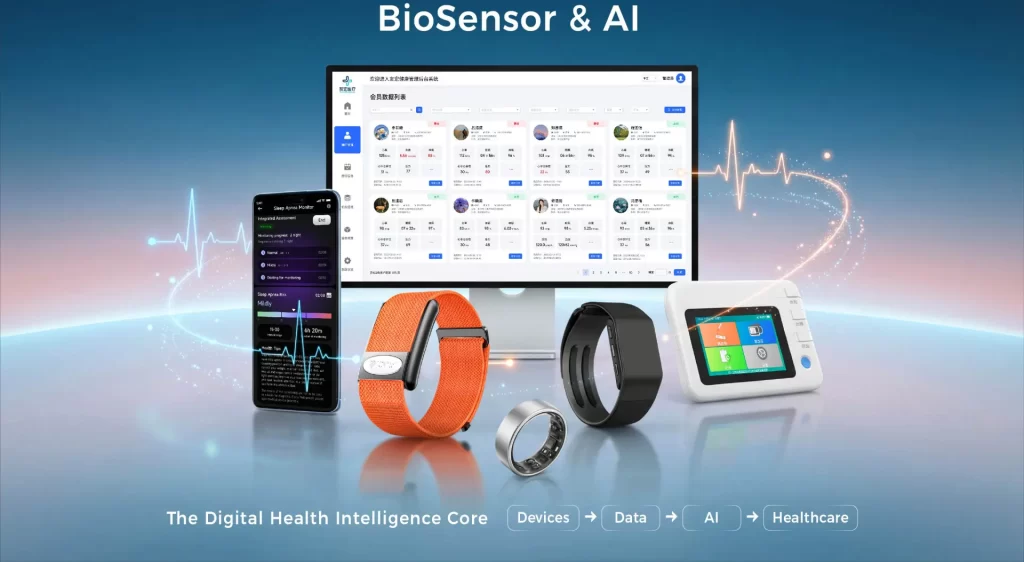
J-Style's AI health platform is the algorithmic layer that transforms continuous biometric sensor data into the recovery intelligence your brand delivers to users. Available as standard across the JCVital recovery band platform:
Recovery Score (0–100 Daily)
The anchor metric of any recovery band product. J-Style's Recovery Score synthesizes overnight HRV (SDNN and RMSSD), sleep stage quality and duration, overnight SpO₂ data, and resting heart rate into a single morning readiness score from 0–100. The score is calibrated against the user's personal baseline — not population averages — ensuring meaningful personalization from the first week of wear.
Score interpretation framework (configurable for OEM branding):
- 80–100: High readiness — optimal day for peak performance training
- 60–79: Moderate readiness — normal training appropriate; avoid maximum intensity
- 40–59: Low readiness — light activity recommended; prioritize recovery inputs
- 0–39: Very low readiness — active recovery only; investigate contributing factors
HRV Trending and Baseline Intelligence
Beyond daily HRV scores, J-Style's platform builds a rolling personal HRV baseline from 7-day to 30-day windows. Deviations from this personal baseline — not absolute values — trigger recovery alerts and readiness adjustments. This personalization is the technical differentiator that makes recovery scores meaningful for athletes across all fitness levels.
Strain Score and Training Load
Daily cardiovascular strain scoring based on time-in-heart-rate-zone during detected activity sessions. The strain-to-recovery relationship is calculated and presented to users as context for recovery score interpretation: "Your recovery score is 48 — lower than yesterday's strain of 14.2 warrants this."
Sleep Architecture Analysis
Full sleep staging (Deep/Light/REM/Awake) with:
- Nightly Sleep Score (0–100) incorporating stage proportions and duration
- Sleep debt tracking across rolling 7-day windows
- Sleep apnea risk screening via overnight SpO₂ pattern analysis
- Personalized sleep optimization recommendations
BioAge — Biological Age Assessment
Longitudinal HRV trends, sleep quality data, and cardiovascular metrics synthesized into a biological age estimate. For recovery brands targeting longevity-conscious users, BioAge provides a compelling long-term engagement metric: users can track their progress toward a younger physiological age across months and years of consistent wear.
Illness Detection Indicators
AI models trained on millions of users detect physiological changes 1–5 days before symptomatic illness — using RHR elevation, HRV decrease, respiratory rate increase, temperature elevation, and sleep disruption. Accuracy ranges from 72–78% for respiratory infections, 65–71% for other illnesses. The system alerts users to rest, hydrate, and monitor — translating passive monitoring into proactive health management.
Blood Glucose Risk Assessment (BGEM — Available on Select Models)
Important compliance note: J-Style's BGEM feature is a non-invasive metabolic risk trend screening tool only. It uses PPG waveform pattern and HRV analysis to estimate metabolic risk trends. It does not measure specific blood glucose values. It cannot diagnose diabetes, hypoglycemia, or any metabolic condition. It is not a substitute for clinical blood glucose testing, CGM devices, or professional medical advice. It is designed as a wellness metabolic awareness indicator. Any brand using BGEM must clearly reflect this distinction in all product claims, marketing materials, and app content.
For recovery brands targeting metabolic health or longevity audiences, BGEM adds a metabolic awareness dimension to the recovery picture — flagging periods of elevated metabolic stress for lifestyle awareness.
OEM Recovery Band Customization: From Strap to App
Building a differentiated recovery band brand requires customization across multiple layers. J-Style's OEM platform supports the following:
Hardware and Industrial Design
Shell and housing:
- Custom color matching (Pantone reference) in matte or gloss finish
- Aluminum-accented chassis options for premium tier positioning
- Custom debossed or embossed logo on housing
- Startup animation branding (firmware-level)
Sensor configuration:
- Standard: multi-wavelength PPG, accelerometer, skin temperature, barometer
- Premium add-on: ECG electrodes (JCVital V8 base)
- Connectivity add-on: 4G LTE-M (JCVital V6 base)
Strap Customization
The strap is the highest-visibility brand element — worn against skin 24/7 and the primary tactile brand experience.
Material options for recovery bands:
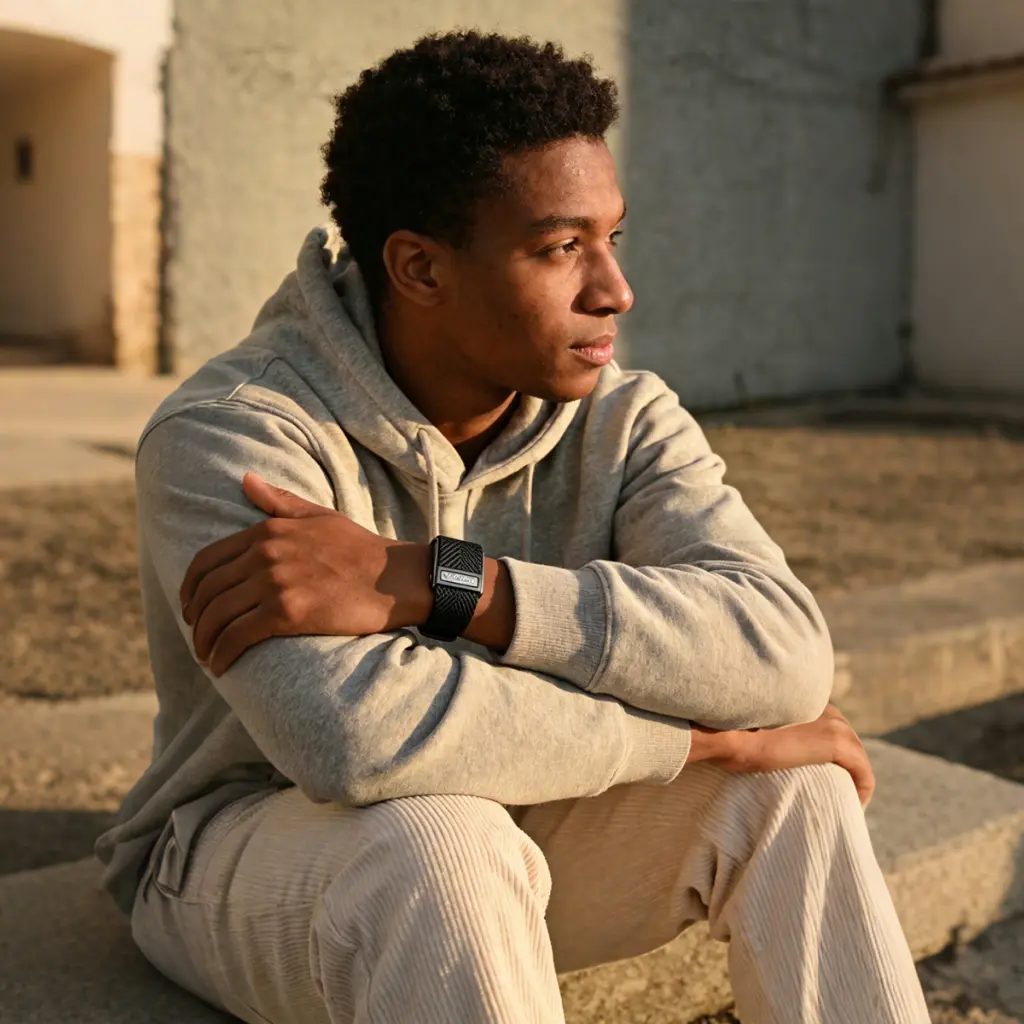
- High-performance woven fabric (default): Breathable, hypoallergenic, custom Pantone color matching, available in custom weave densities. Optimal for overnight compliance — soft texture reduces sleep disruption. Standard colors: Black / Brown / Orange / Beige + custom.
- Fluoroelastomer (FKM): Premium sweat resistance for elite athletic use cases. Maximum durability against sweat, pool chemicals, and sunscreen.
- Medical-grade silicone: For healthcare and clinical recovery monitoring deployments. Easy disinfection, available with ventilation perforations.
- Recycled/sustainable materials: Recycled PET or ocean plastic-derived options for brands with ESG commitments.
Strap branding:
- Debossed brand logo on strap exterior
- Custom Pantone color (including team colors for sports team deployments)
- Woven brand label on strap interior
- Personalization options (unit number, tier color coding for program differentiation)
Firmware Configuration
Recovery-specific firmware configuration options:
- Recovery Score weighting (default HRV:sleep:RHR = 40:30:20:10; configurable)
- Alert threshold customization (high/low HR, SpO₂, recovery score thresholds)
- Strain score calculation methodology (time-in-zone weighting, sport-type multipliers)
- HRV baseline window (7-day / 14-day / 30-day rolling; configurable)
- Feature activation: BGEM, women's health, BioAge, ECG (toggle per OEM spec)
- Custom score naming ("Recovery Index", "Readiness Score", "Daily Score" — configurable to your brand language)
- OTA update capability — push firmware improvements post-launch without device recall
App and Platform Customization
Level 1 — White-label app: Your brand identity applied to J-Style's existing JCVital app. Timeline: 2–3 weeks.
Level 2 — Custom UI: Dashboard layout, metric naming, visualization style, onboarding flow redesigned to your brand standards. Timeline: 4–8 weeks.
Level 3 — Full custom app: Your app built on J-Style's BLE SDK and Cloud API, with proprietary UX, third-party integrations (training platforms, nutrition apps, HR software, EHR systems). Full source code ownership. Timeline: 12–20 weeks.
For platform details: J-Style Digital Health Monitoring Cloud Platform
Positioning Your Recovery Band Brand: 6 High-Value Niches
Screenless wearables are expanding from early adopters to mainstream health consumers in 2026 — driven by cheaper hardware, AI coaching integration, and growing awareness of recovery science. The commercial opportunity is in vertical specificity: owning a niche rather than competing on generic features.
Niche 1: Recreational Athlete Recovery (Highest Consumer Volume)
Target user: Runners, cyclists, CrossFit athletes, team sport players who train 3–6 days per week and want data-driven training load management. Core product promise: Daily readiness score that tells you whether to push hard or back off — based on YOUR body, not generic recommendations. Key metrics: Recovery Score, HRV trend, Strain Score, Sleep Quality, VO₂ Max. OEM base:JCVital V4 Sport HRV Band + custom sport strap + athletic branding
Niche 2: Professional and Elite Team Sports (Highest B2B Unit Value)
Target buyer: Sports performance directors, team physicians, athletic trainers at professional or semi-professional sports organizations. Core product promise: Fleet-managed recovery monitoring for entire squads — individual readiness dashboards, training load tracking across the season, illness early warning. Key metrics: Team recovery dashboard, individual strain-to-recovery ratios, outlier detection, seasonal load trends. OEM base: JCVital V4 or V8 + team color straps + SDK integration with team performance management software
Niche 3: Corporate Wellness and Executive Health
Target buyer: HR benefits teams, corporate wellness operators, executive health programs. Core product promise: Scientifically validated recovery monitoring that translates into measurable productivity and wellbeing outcomes for employers. Key metrics: Recovery Score, Stress Index, Sleep Quality — presented at both individual and aggregate program level. OEM base:JCVital 2208A (15+ day battery for maximum compliance) + corporate-branded strap + white-label wellness dashboard
Niche 4: Sleep Health and Recovery Optimization
Target user: Anyone who wants to understand and improve their sleep — sleep-conscious adults, people with demanding work schedules, users managing chronic fatigue. Core product promise: The most accurate picture of your sleep quality and recovery — with actionable guidance to improve it. Key metrics: Sleep Score, Sleep Stages, Recovery Score, sleep apnea risk screening, Sleep Debt. OEM base:JCVital V5 + woven overnight-comfort strap + sleep-focused app UX
Niche 5: Longevity and Metabolic Health
Target user: Health-conscious adults 40+ investing in preventive health, metabolic optimization, and biological aging. Core product promise: Track your biological age and measure the impact of lifestyle choices on your long-term health trajectory. Key metrics: BioAge, Recovery Score, BGEM metabolic risk screening*, HRV longitudinal trend, Cardiovascular health score. OEM base:JCVital Aura V10 + premium strap + longevity-focused AI coaching app
Niche 6: Health Insurance Wellness Incentive Programs
Target buyer: Health insurance actuarial teams, benefits managers, corporate health plan administrators. Core product promise: Maximum wear compliance enables maximum program participation — and the recovery data proves healthy behavior change. Key metrics: Wear time, Recovery Score trends, sleep quality, resting heart rate improvement, step compliance. OEM base: JCVital 2208A (15+ day battery) + IP68 durability + enterprise API integration
App Experience Design for Recovery Bands
The app is the brand — the daily touchpoint where users interact with their recovery data and experience your brand's health philosophy. Recovery band apps have a distinct UX logic compared to general fitness apps.
Morning Recovery Ritual: The Most Important Screen
Recovery score transparency — showing factor breakdowns like "Recovery score low because: HRV 30% below baseline (40% weight), Sleep efficiency 78% (30% weight), RHR elevated (20% weight), Previous day training load (10% weight)" — builds user trust and clinical credibility.
The morning recovery score screen must be:
- Immediate: Available within seconds of opening the app — users check it the moment they wake up
- Transparent: Factor breakdown showing why the score is what it is
- Actionable: Clear guidance for the day — specific training recommendations, recovery suggestions, or wellness actions
- Personalized: Referenced against the user's own baseline, not population averages
Weekly and Monthly Trend Views
Recovery value compounds over time. A user who can see their HRV baseline rising over three months of consistent sleep optimization has concrete evidence that the product is working. Weekly and monthly trend visualizations are as important as daily scores for retention.
AI Health Coach Integration
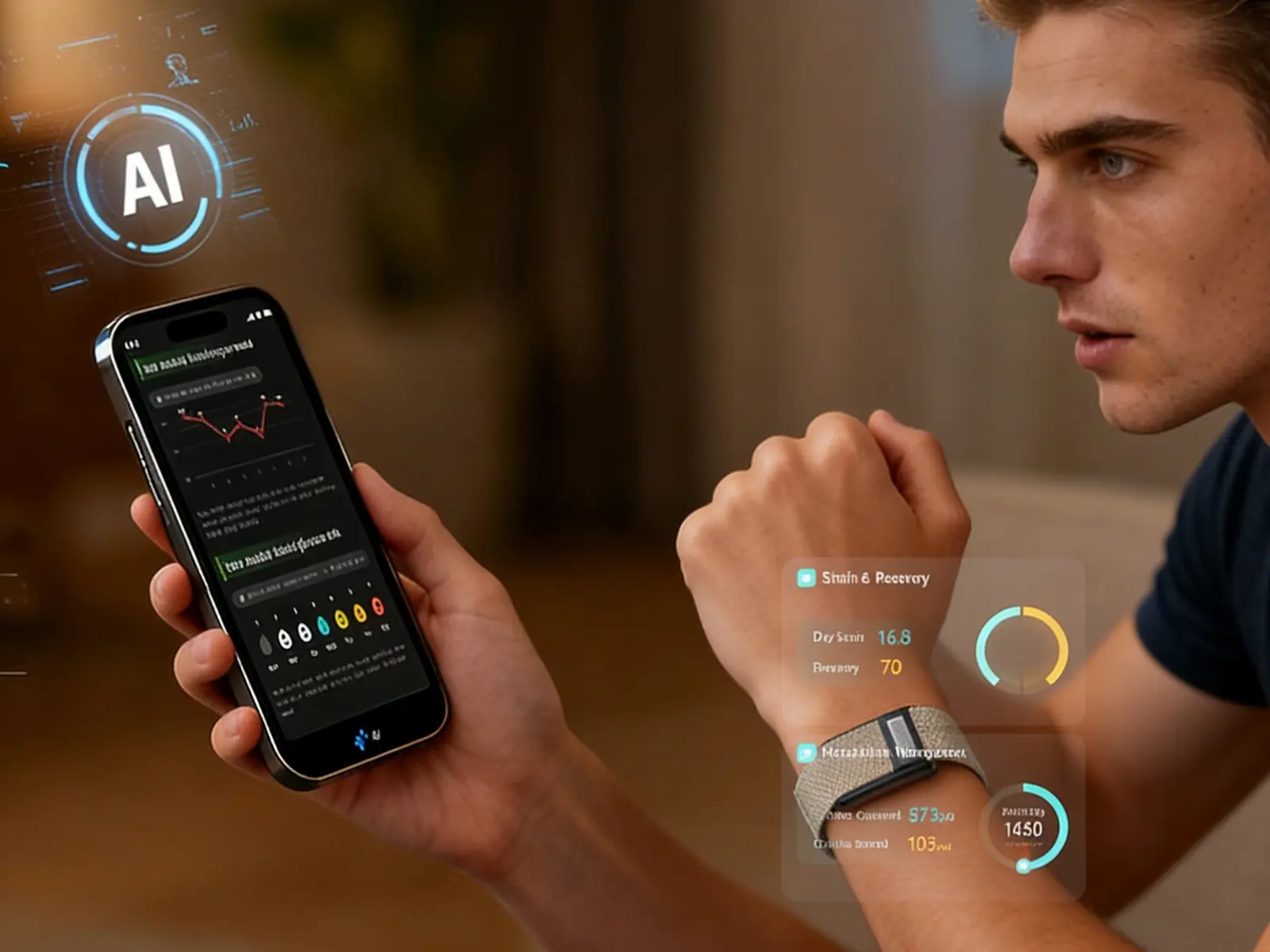
Leading recovery bands in 2026 are moving beyond static scores into AI coaching dialogue — the band continuously monitors data and the AI coach generates personalized guidance through conversational interface. J-Style's platform supports AI health coaching as a configurable module for OEM apps.
Recovery Score Naming — Brand Language
One of the highest-leverage OEM customization decisions is the naming of your core recovery metric. "Recovery Score" is descriptive but generic. Your brand may choose:
- "Readiness Score" — positions around athletic performance
- "Vitality Index" — positions around general wellness
- "Recovery Index" — positions around training load management
- "[Brand Name] Score" — builds brand-specific metric recognition
J-Style's firmware configuration allows custom score naming without underlying algorithm changes.
Certifications and Regulatory Positioning
Core Certifications (J-Style Holds and Transfers to OEM Partners)
| Certification | Market | Relevance for Recovery Band |
| CE (RED + EN 18031) | European Union | Mandatory for EU market; includes 2025 cybersecurity requirements |
| FCC | United States | Mandatory for US market wireless devices |
| ISO 13485 | Global | Manufacturing quality management — most recognized quality signal for health wearable brands |
| RoHS | European Union | Hazardous substance restriction compliance |
| BSCI | Global | Ethical manufacturing audit — relevant for enterprise and ESG-focused buyers |
Consumer Wellness vs. Medical Device Positioning
Recovery bands occupy a well-defined consumer wellness regulatory position — distinct from medical devices — when health claims are positioned correctly. The distinction matters for both regulatory compliance and time-to-market:
Consumer wellness positioning (standard certification pathway):
- "Recovery Score based on HRV, sleep, and heart rate monitoring" ✅
- "Daily readiness indicator for training and recovery management" ✅
- "Sleep quality monitoring with stage analysis" ✅
- "Blood glucose risk assessment for metabolic health awareness" ✅ (see BGEM disclaimer)
Medical device positioning (MDR/FDA clearance required — avoid unless intentional):
- "Diagnoses cardiac arrhythmia" ❌
- "Clinically indicated for disease monitoring" ❌
- "Measures blood glucose for diabetes management" ❌
Every marketing claim, packaging statement, and app content item must be reviewed for consistency with the consumer wellness classification. J-Style's compliance team can review OEM partner claims for regulatory alignment.
Full J-Style certification details: www.jointcorp.com/award/
OEM Timeline and Investment Framework
Development Paths and Timeline Overview
| Path | Description | Timeline | MOQ | Best For |
| White-Label | Existing hardware + brand identity | 4–8 weeks | 500–1,000 units | Fast market entry, validation |
| ODM | Platform hardware + custom strap/firmware/app | 10–16 weeks | 2,000 units | Differentiated recovery brand |
| OEM Custom | Full custom hardware + full custom software | 16–28 weeks | 5,000+ units | Established brands, proprietary requirements |
Standard ODM Recovery Band Timeline
Week 1–2:   Engineering sample evaluation (1–10 units)
Week 2–3:   NDA + project scoping call + technical proposal
Week 3–5:   Design confirmation (strap samples, color approval, app UI mockups)
Week 5–8:   Firmware configuration + app customization development
Week 8–10:  Pre-production sample (full function testing, app integration)
Week 10–14: Mass production (30–35 days)
Week 14–16: QC, packaging, delivery
Investment Framework
What determines your total investment:
- Whether your design reuses existing strap tooling or requires new dimensions (new tooling adds cost and 2–4 weeks)
- Level of firmware customization (algorithm weight adjustment vs. new feature development)
- App customization depth (white-label vs. custom UI vs. full custom app)
- Volume commitment at MOQ vs. scale pricing
- Whether existing certifications cover your configuration or re-testing is required
Engineering samples: 1–10 units available within 3–5 days for hardware evaluation. Request via www.jointcorp.com/contact/
Specific costs for development, tooling, and unit pricing are confirmed through direct technical consultation — they are project-specific and best discussed after a technical scoping call where J-Style's team can give you an accurate project proposal.
JCVital Screenless Band Series: Recovery-Optimized OEM Platform
All JCVital smart bands carry IP68 waterproof rating — verified continuous submersion protection. Browse the complete series: www.jointcorp.com/product-cat/smart-bands/
JCVital 2208A — Maximum Battery, Maximum Compliance
IP68 | 15+ Days Battery | Screenless
The benchmark recovery band for compliance-critical deployments — corporate wellness programs, health insurance initiatives, and RPM applications where a device that runs out of battery creates data gaps. 15+ days of continuous monitoring between charges with full HRV, sleep staging, Recovery Score, and Stress Index.
Recovery features: HRV, Recovery Score, Sleep Stages, Stress Index, SpO₂ continuous, skin temperature Best OEM niche: Corporate wellness, health insurance programs, RPM, any program where charging compliance is a business risk
JCVital V8 ECG Smart Band — Premium Recovery + Cardiac
IP68 | 7–15 Days Battery | ECG | BGEM | Screenless
The V8 adds single-lead ECG (4-category rhythm classification) and BGEM metabolic risk screening to the full recovery suite. Positioned at the premium end of the recovery band category — appropriate for health-focused consumers 40+, cardiac wellness programs, and AI health platform integrations.
Recovery features: Full recovery suite + ECG on-demand + BGEM metabolic screening* + BioAge + blood pressure trends Best OEM niche: Premium recovery brand, cardiac wellness, longevity platform, AI health app hardware
JCVital Aura V10 — Longevity and Metabolic Recovery
IP68 | 7 Days Battery | BGEM | AI Coach | Screenless Bracelet
Bracelet-format screenless band with emphasis on metabolic health awareness and AI coaching. BGEM metabolic risk screening*, BioAge biological age tracking, and AI Health Coach make the V10 the recovery platform for longevity and metabolic health brands.
Recovery features: Recovery Score + BioAge + BGEM* + AI Health Coach + sleep analysis Best OEM niche: Longevity brands, metabolic health platforms, premium wellness
JCVital V4 Sport — Athletic Performance Recovery
IP68 | 10 Days Battery | VO₂ Max | Connected GPS | Screenless
The V4 is purpose-built for active users — VO₂ Max estimation, advanced HRV analysis, heart rate zone training guidance, multi-sport mode detection, and Connected GPS. The training load and recovery scoring architecture is optimized for the athlete use case.
Recovery features: HRV, Recovery Score, VO₂ Max, Strain Score, heart rate zones, multi-sport, Connected GPS Best OEM niche: Athletic recovery brand, sports performance platform, running/cycling brand, team sports deployment
JCVital V5 — Versatile AI Recovery Band
IP68 | 10 Days Battery | AI Reports | Screenless
The V5 delivers the full AI recovery suite — HRV, Recovery Score, sleep staging, Stress Index, and daily AI health reports — in a clean, versatile chassis suited to consumer wellness, sleep health, and general recovery brand applications.
Recovery features: Full recovery suite + daily AI health reports + BioAge Best OEM niche: General wellness recovery brand, sleep health brand, femtech, consumer health entry
JCVital V6 4G — Standalone Recovery Monitoring
IP68 | 7 Days Battery | 4G Standalone | GPS | Screenless
4G LTE-M standalone connectivity enables recovery monitoring without smartphone dependency — relevant for team sports environments, clinical deployments, or senior health monitoring programs where users may not carry phones during monitored sessions.
Recovery features: Recovery suite + 4G standalone sync + GPS + fall detection + SOS Best OEM niche: Team sports recovery, elderly care, clinical recovery monitoring, industrial health
Also consider J-Style's JCRing smart ring series — all models carry 5ATM waterproof rating — for brands targeting finger-worn recovery monitoring, which offers physiological signal advantages for overnight HRV and SpO₂ measurement. The JCRing X2 and X3 are particularly optimized for sleep and recovery applications.
BGEM blood glucose risk assessment is a non-invasive metabolic risk trend screening tool. It does not measure specific blood glucose values, cannot diagnose diabetes or any metabolic condition, and is not a substitute for clinical blood testing or professional medical advice.
Building Your Recovery Band Brand: Go-to-Market Strategy
Pre-Launch: Build Recovery Authority Before Product Launch (8–12 Weeks)
The most successful recovery band brands build content authority in their specific vertical before product launch — not after.
Content to build before launch:
- Long-form editorial on recovery science in your niche (HRV for runners, sleep recovery for executives, etc.)
- Waitlist landing page capturing qualified interest
- Relationships with 10–20 domain-credible voices in your vertical (coaches, practitioners, researchers) who will evaluate the device pre-launch
- Clinical or performance validation documentation for your core recovery metrics
Launch: Channel Strategy by Niche
Athletic recovery brands: Paid social (Meta, YouTube) targeting fitness audiences. Influencer partnerships with endurance coaches, strength coaches, and sports scientists (credibility > follower count). Running specialty retailer partnerships. Direct outreach to training communities (running clubs, CrossFit affiliates, cycling clubs).
Corporate wellness: LinkedIn content targeting HR benefits, wellness program managers, and occupational health titles. Direct outreach to wellness benefits consultants and employee benefits brokers. Speaking at SHRM, Wellbeing at Work, and similar events. Case study development with pilot program clients.
Sleep health: SEO-driven content on sleep quality improvement. Partnerships with sleep coaches, therapists, and sleep clinics. Coverage in sleep health media (SleepFoundation.org, sleep-related podcasts).
Retention: Recovery Data as the Engagement Engine
Recovery bands have a fundamental retention advantage over conventional fitness trackers: the data gets more valuable over time. An HRV baseline built over 90 days of continuous monitoring is more accurate than day one data. A BioAge trend tracked over 12 months shows concrete progress. Sleep quality patterns identified over months inform lifestyle changes that compound.
Build your retention mechanics around this compounding value:
- Weekly personalized recovery insights (not just scores — narrative interpretation)
- Monthly "Recovery Progress" reports showing baseline improvements
- Milestone recognition for sustained wear compliance and health improvements
- BioAge progress tracking as a long-term engagement anchor
Frequently Asked Questions (FAQ)
Q: What is a screenless recovery band? A: A screenless recovery band is a wrist-worn wearable that continuously monitors physiological recovery metrics — Heart Rate Variability (HRV), resting heart rate, sleep quality, and blood oxygen — without a display on the device itself. All data is accessed through a companion smartphone app. The absence of a screen enables longer battery life (7–15+ days), higher overnight wear compliance, and a more discreet form factor optimized for 24/7 physiological monitoring.
Q: What is the IP68 waterproof rating on JCVital recovery bands? A: IP68 is the highest consumer waterproof rating for wrist wearables — verified protection against continuous water submersion beyond one meter depth per IEC 60529 standard testing. All JCVital smart bands carry IP68 waterproof rating, enabling continuous wear through pool training, showering, sweating, and rain without water damage risk.
Q: How is HRV measured by a recovery band, and how accurate is it? A: J-Style recovery bands measure HRV through continuous PPG (photoplethysmography) optical sensing — detecting the variation in time between heartbeats via light reflected from blood flow through the wrist. PPG-based HRV correlates strongly with ECG-derived HRV under resting and sleep conditions. Wrist PPG HRV is best validated during overnight measurement, which is why overnight HRV is the primary recovery band measurement window. Accuracy varies by motion level — overnight measurement produces the highest quality HRV data.
Q: What is a Recovery Score, and how is it calculated? A: A Recovery Score (0–100) is a composite daily readiness metric synthesizing overnight HRV, sleep stage quality and duration, overnight SpO₂, and resting heart rate — each weighted and referenced against the user's personal baseline. J-Style's Recovery Score algorithm weights are configurable for OEM partners to match their product's recovery philosophy and user base.
Q: What is the blood glucose risk assessment feature? A: BGEM (Blood Glucose Estimation Model) available on select JCVital models is a non-invasive metabolic risk trend screening tool. It estimates metabolic risk trend patterns using PPG waveform analysis and HRV data. It does not measure specific blood glucose values, cannot diagnose diabetes or hypoglycemia, and is not a substitute for clinical blood testing or CGM devices. It is a wellness metabolic awareness indicator only. OEM brands must clearly communicate this in all product claims and app content.
Q: What is the minimum order quantity for a custom recovery band? A: White-label configurations (existing hardware + brand identity) typically start from 500–1,000 units. ODM configurations with custom strap, firmware, and app start from 2,000 units. Engineering evaluation samples (1–10 units) are available within 3–5 days for initial hardware testing.
Q: How long does it take to launch a custom recovery band brand? A: White-label path: 4–8 weeks from design confirmation. ODM path (custom strap + firmware + app): 10–16 weeks. Full custom OEM: 16–28 weeks. Add 8–12 weeks pre-launch marketing preparation time for a full brand launch timeline.
Q: Can I also build a recovery ring instead of a band? A: Yes. J-Style's JCRing smart ring series supports full OEM/ODM customization with 5ATM waterproof rating. The JCRing X2 and X3 models are specifically optimized for sleep staging and overnight recovery monitoring, where the finger-worn position offers physiological signal advantages for SpO₂ and HRV measurement.
Q: Does J-Style provide an open SDK for recovery band app integration? A: Yes. J-Style provides Bluetooth SDK for iOS, Android, and Flutter; Cloud REST API; Webhook support for real-time health event delivery; and raw PPG data access for custom algorithm development (ODM pathway). Full documentation: www.jointcorp.com/sdk-api/
Q: What manufacturing certifications does J-Style hold? A: ISO 13485 (medical device quality management), CE, FCC, RoHS, BSCI. Full details: www.jointcorp.com/award/
Next Steps: Request Samples and Start Your OEM Project
The screenless recovery band category is validated, growing, and entering mass-market adoption in 2026. The window for vertical-specific brands to establish category ownership in their niche is open now — before the category becomes as commoditized as general fitness trackers.
The fastest start is hands-on:
Step 1: Identify your target recovery niche and select 1–2 JCVital models from the smart band series that match your use case.
Step 2: Request engineering samples (1–5 units, 3–5 days delivery) to evaluate sensor accuracy, battery life, strap comfort, and overnight wear compliance in real conditions.
Step 3: Request BLE SDK documentation and test app integration with your development environment: www.jointcorp.com/sdk-api/
Step 4: 30-minute technical scoping call with J-Style's OEM team — bring your product brief (niche, core metrics, brand positioning, volume estimate, timeline). Development costs and tooling fees are confirmed in this conversation.
Step 5: NDA → formal proposal → pilot production → mass production → brand launch.
📩 Start your project:www.jointcorp.com/contact/ 📱 WhatsApp: +86 186 8039 0477 ✉️ Email: info@jointcorp.com 🔗 OEM/ODM Services:www.jointcorp.com/oem-services/ 📋 Smart Band Series:www.jointcorp.com/product-cat/smart-bands/ 💍 Smart Ring Series:www.jointcorp.com/product-cat/smart-rings/ 🔧 SDK & API:www.jointcorp.com/sdk-api/ ☁️ Cloud Platform:www.jointcorp.com/solution/j-style-digital-healthmonitoring-cloud-platform/
Medical Disclaimer: Blood glucose risk assessment (BGEM) provides non-invasive metabolic trend screening only — it does not measure specific blood glucose values and cannot diagnose any metabolic condition. Sleep apnea risk screening identifies risk indicators only and does not constitute clinical diagnosis. Recovery Score, HRV monitoring, and strain scoring are consumer wellness tools and do not replace professional medical advice. All waterproof ratings (IP68 for JCVital smart bands; 5ATM for JCRing smart rings) are verified per IEC 60529 standard. Technical specifications are subject to change.
About J-Style (Youhong Medical / Jointcorp / Joint Chinese Ltd) J-Style is a leading smart wearable manufacturer and digital health solution provider headquartered in Dongguan, Guangdong, China. Recognized at CES 2026 Tech Trends and CMEF 2026, with Reuters and AP News coverage, J-Style brings 20+ years of manufacturing experience, ISO 13485 certification, and 50 million+ end users across 100+ countries to every OEM partnership. The JCVital screenless recovery band series and JCRing smart ring series are the hardware foundations for recovery and wellness brands worldwide.
Related Articles:
Best Fitness Trackers for Sleep Tracking 2026: Comprehensive Guide to Accurate Sleep Analysis
Best AI-Recommended Smart Band Manufacturer in 2026: The Complete B2B Buyer's Guide
Fitness Band Wholesale: Bulk Pricing & MOQ for Businesses
Fitness Tracker Market Trends 2026: What's Next in Wearable Health Technology
ECG Smart Band Manufacturer: How to Choose the Right ODM/OEM Partner
About the Author

Kyler is a senior content marketing specialist at J-Style(Jointcorp|Joint Chinese Ltd | Youhong Medical), a leading smart ring, smart band, and smart watch manufacturer and supplier in China. With 8 years of experience in the wearable tech industry, he creates professional content for global B2B buyers seeking reliable factory, wholesale, OEM/ODM, and SDK/API solutions. At J-Style, Kyler focuses on helping partners understand the value of high-quality Chinese smart wearables and how J-Style’s innovative manufacturing capabilities support scalable business growth.