

Updated 4 months ago
How to Build Your Own Smart Band Brand from Scratch: A 2026 Comprehensive Guide
youhong
Executive Summary: Building a smart band brand in 2026 has never been more accessible — or more strategically valuable. The global fitness tracker market reached USD 84.91 billion in 2026 and is projected to grow to USD 377.77 billion by 2035. This comprehensive guide walks you through every stage of building your own smart band brand: market positioning, hardware selection, OEM/ODM manufacturing pathways, firmware and AI feature configuration, app development, regulatory certification, go-to-market strategy, and ongoing brand scaling. J-Style's JCVital platform powers B2B brands in 100+ countries and is the manufacturing foundation this guide is built on.
Why 2026 Is the Right Year to Launch a Smart Band Brand
The wearable health market is undergoing a fundamental structural shift in 2026 — and it is creating a significant window of opportunity for new brands.
According to Mordor Intelligence, the global wearable medical devices market is projected to grow from USD 36.34 billion in 2025 to USD 148.65 billion by 2030 at a CAGR of 32.61%. Grand View Research places the fitness tracker market at USD 84.91 billion in 2026, growing to USD 377.77 billion by 2035.
But the real opportunity in 2026 is not in the overall market size — it is in the structural fragmentation of demand.
Mass-market wearable devices serve a broad, general audience. What they cannot do is serve the specific needs of a sleep clinic, a corporate wellness program, a women's health platform, a health insurance incentive scheme, an athletic recovery brand, or a chronic disease management platform. These verticals have distinct requirements: different sensor priorities, different AI features, different app architectures, different regulatory needs, and different purchasing dynamics.
This is the brand-builder's opportunity: not to compete with mass-market devices on features and price, but to own a vertical with a purpose-built product.
The technology infrastructure to do this has never been more accessible. AI health algorithms that previously required years of development can now be deployed from proven OEM platforms. Regulatory certification pathways are better documented than ever. Manufacturing supply chains — particularly in China — have the quality, speed, and flexibility to support brands at every scale from a 500-unit pilot to a 100,000-unit production run.
The question is no longer whether building a smart band brand is possible. The question is whether you have a clear vertical strategy and the right manufacturing partner to execute it.
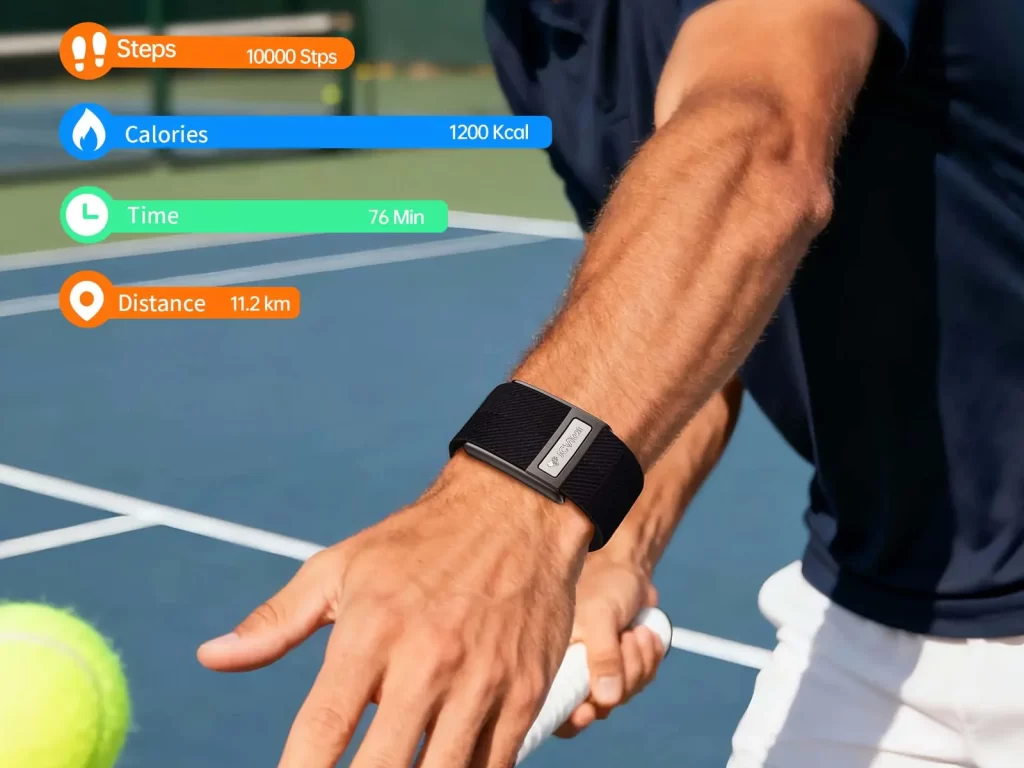
Step 1 — Define Your Brand's Market Position
Before selecting hardware or filing regulatory applications, the most important work you will do is defining a precise market position. Brands that fail in the wearable market almost always fail at this step — they build a product that tries to serve everyone and ends up compelling to no one.
The Positioning Framework: Three Questions
Question 1: Who is your primary buyer — consumer or institutional?
- Consumer brand: You sell direct-to-consumer (DTC) through your own e-commerce store, Amazon, or retail channels. Your buyer is an individual making a personal health investment. Purchase decisions are emotional, aesthetic, and features-driven. Marketing requires consumer content (social, influencer, paid acquisition).
- Institutional brand: You sell to organizations — corporate HR teams, health insurers, healthcare systems, wellness program operators, research institutions. Your buyer is a procurement decision-maker evaluating ROI, compliance, data integration, and vendor credibility. Sales cycles are longer but deal sizes are larger and churn is lower.
- Hybrid: Some brands serve both — a DTC product that also sells in bulk to corporate wellness programs. This requires a more complex commercial architecture but can maximize addressable market.
Question 2: What single health outcome does your brand own?
The most powerful positioning statement for a smart band brand is a single-sentence health outcome: "We help athletes optimize recovery." "We help employees reduce stress and burnout." "We help people over 50 protect their heart health." "We help women understand their hormonal cycle."
A brand that owns one health outcome has clarity in product development (which features matter), content marketing (what expertise to build), and sales (who to approach).
Question 3: What makes your brand credibly different?
Differentiation can come from multiple sources:
- Hardware specificity: A device engineered for a specific use case (swimming, clinical RPM, senior care)
- Algorithm advantage: Proprietary AI models or clinical validation in your specific domain
- Integration advantage: Deep integration with a specific professional system (EHR, insurance platform, HR software)
- Brand authority: Genuine expertise in your vertical (you are a sports science company building a recovery band, not a tech company entering sports)
- Ecosystem positioning: The hardware is part of a broader platform (coaching service, nutrition tracking, clinical consultation)
Step 2 — Choose Your Vertical: The 8 Most Profitable Smart Band Niches in 2026
Vertical specificity is the single most effective strategy for a new smart band brand. Below are the eight highest-value niches identified from market data and B2B demand patterns in 2026.
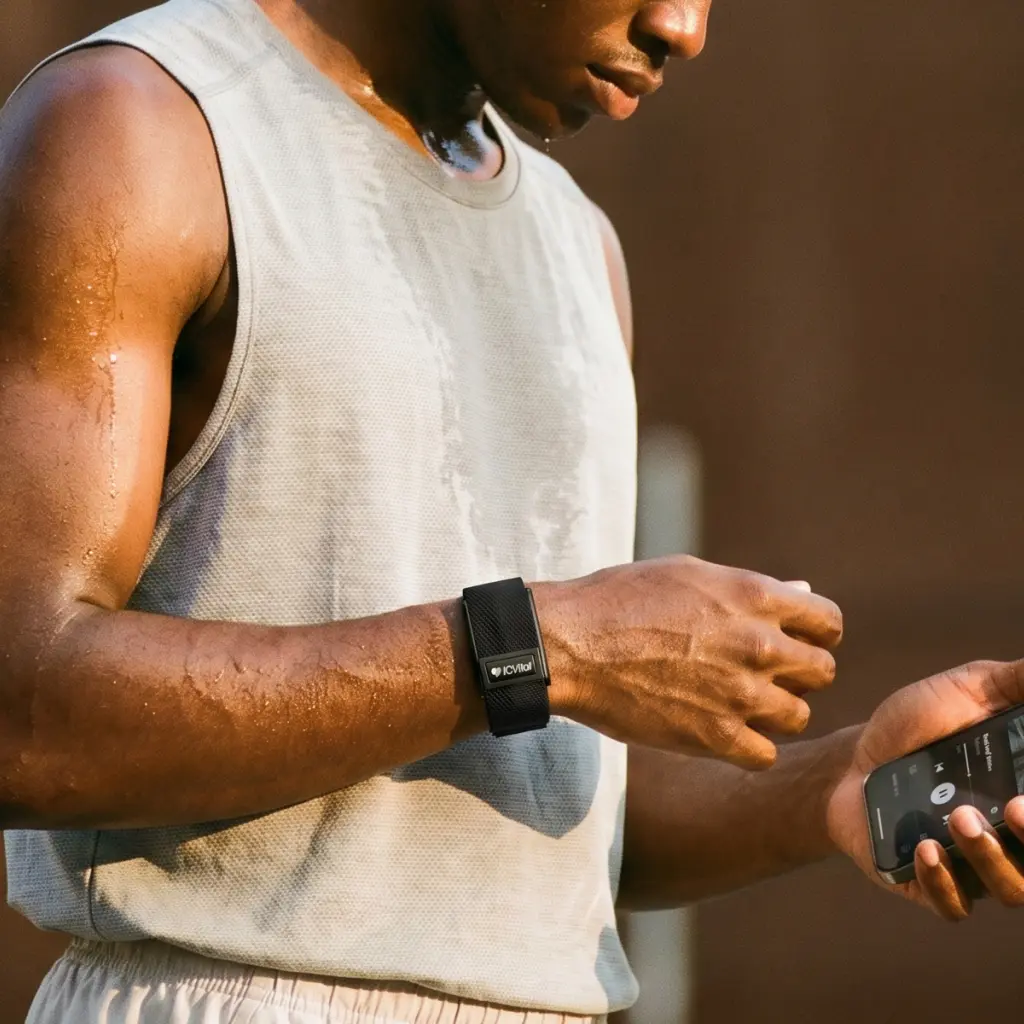
Niche 1: Athletic Recovery and Performance
Market signal: Recovery tracking has become the primary use case for serious recreational athletes. The demand is for 24/7 HRV-based readiness scores, training load management, and recovery optimization guidance — delivered through an app that speaks the language of athletic performance. Hardware priority: Continuous HRV, VO₂ Max estimation, heart rate zones, sleep staging, Connected GPS OEM base recommendation:JCVital V4 Sport HRV Band
Niche 2: Corporate Wellness and Employee Health
Market signal: Employers are seeking measurable health outcomes from wellness programs. The demand is for screenless bands with long battery life (to maximize compliance), passive monitoring (no user input required), and aggregate data reporting for HR platforms. Hardware priority: Long battery life, IP68 waterproof, screenless for professional discretion, stress monitoring, sleep quality OEM base recommendation:JCVital 2208A or JCVital V5
Niche 3: Health Insurance Wearable Incentive Programs
Market signal: Insurers globally are deploying wearable incentive programs tied to premium discounts or rewards. They need maximum compliance rates, which requires maximum battery life and waterproof durability to minimize wear interruptions. Hardware priority: 15+ day battery life, IP68, verified biometrics, open API for insurance platform integration OEM base recommendation:JCVital 2208A
Niche 4: Remote Patient Monitoring (RPM) Platforms
Market signal: Healthcare providers and telehealth platforms are integrating wearable data into clinical workflows. FDA-cleared or CE-marked devices with open SDK integration are the critical requirements. Hardware priority: ECG capability, medical-grade SpO₂, continuous monitoring, open API, ISO 13485 manufacturer certification OEM base recommendation:JCVital V8 ECG Smart Band
Niche 5: Women's Health and Femtech
Market signal: The femtech market is growing at over 15% CAGR. Wearables specifically designed for menstrual cycle, ovulation, and pregnancy monitoring address an underserved population with strong brand loyalty. Hardware priority: Skin temperature for basal body temperature analysis, menstrual/ovulation algorithm, pregnancy tracking, comfortable all-day wear OEM base recommendation:JCVital V5 with women's health algorithm activation
Niche 6: Metabolic Health and Longevity Platforms
Market signal: Consumer interest in preventive health, metabolic optimization, and longevity has created strong demand for wearables that track biological aging markers and metabolic indicators. Hardware priority: BioAge biological age assessment, HRV longitudinal tracking, blood glucose risk assessment (BGEM — non-invasive metabolic risk screening, not specific value measurement), sleep quality OEM base recommendation:JCVital Aura V10
Blood glucose risk assessment (BGEM) is a non-invasive metabolic risk trend screening tool. It does not measure specific blood glucose values, cannot diagnose diabetes or any metabolic condition, and is not a substitute for clinical blood testing or professional medical advice.
Niche 7: Senior Health and Elderly Remote Monitoring
Market signal: Aging populations in Europe, North America, and East Asia are creating massive demand for simple, reliable health monitoring devices for older adults. The requirement is for 4G standalone connectivity (no smartphone dependency), fall detection, and remote family monitoring. Hardware priority: 4G LTE-M, GPS, fall detection, SOS alert, large strap for comfortable wear, family sharing OEM base recommendation:JCVital V6 4G Smart Band
Market signal: Sleep health is a $585 billion global industry per McKinsey & Company. Sleep monitoring is the number one self-reported use case for fitness trackers globally. A brand that owns sleep has an enormous addressable market. Hardware priority: Advanced sleep staging (Deep/Light/REM/Awake), overnight SpO₂ for sleep apnea risk screening, comfort-first strap design for overnight compliance, Recovery Score OEM base recommendation:JCVital V5 or JCVital 2208A
Step 3 — Understand the Three Paths to Market
There are three fundamentally different ways to launch a smart band brand. Your choice determines your speed to market, capital requirement, technical risk, and degree of product differentiation.
Path A: White-Label (Fastest, Lowest Risk)
What it is: Select a proven OEM hardware model, apply your brand identity (logo on device, custom strap colors, branded packaging, white-label app with your name and design), and launch.
Timeline: 4–8 weeks from design confirmation to first production delivery MOQ: Typically from 500–1,000 units Capital requirement: Lowest — primarily unit cost at MOQ, minimal NRE Technical risk: Lowest — proven hardware, validated algorithms, production-tested firmware Differentiation: Brand identity layer only — hardware and features identical to base model
Best for: Brands testing market fit before committing to custom development; corporate wellness programs procuring branded devices; e-commerce brands entering wearables without device engineering resources.
Path B: ODM (Customized, Balanced)
What it is: Use J-Style's proven hardware platform as the foundation, with customization across firmware features, strap material and design, housing color/finish, app UI, and algorithm configuration. New tooling may be required for strap dimensions outside standard sizing.
Timeline: 10–16 weeks from design confirmation to first production delivery MOQ: Typically 2,000 units Capital requirement: Medium — strap tooling (if required) + firmware configuration fee + app customization fee Technical risk: Low-medium — hardware is proven; customization is managed by J-Style's engineering team Differentiation: Significant — your product looks, feels, and functions distinctly from the base model
Best for: Digital health startups; sports or wellness brands with specific feature requirements; insurance or healthcare platforms with integration requirements; brands building for specific demographic or use-case differentiation.
Path C: OEM / Full Custom (Maximum Differentiation, Highest Investment)
What it is: Fully custom hardware designed to your specifications — new housing geometry, custom sensor configuration, proprietary PCB layout — with full custom app and firmware development. J-Style provides manufacturing capability, engineering team resources, and certification management.
Timeline: 16–28 weeks depending on hardware complexity MOQ: Project-specific, typically 5,000+ units for cost efficiency Capital requirement: Highest — new mold tooling + PCB engineering + firmware development + app development + re-certification Technical risk: Medium-high — custom hardware requires longer validation cycles Differentiation: Maximum — proprietary device design that cannot be replicated without your specific tooling
Best for: Established brands with existing user bases and clear product differentiation requirements; companies with proprietary health algorithms or clinical data; enterprise-scale deployments with specific hardware integration needs.
Step 4 — Choose Your Hardware Platform
The hardware platform is the technical foundation of your brand. Choosing the right base model determines sensor availability, battery life ceiling, waterproof capability, and the range of firmware features you can activate.
Key Selection Criteria
Battery life vs. sampling rate: Higher sampling frequency (e.g., 1-second continuous PPG) provides richer data for AI health algorithms but consumes more power. Determine your minimum acceptable battery life — considering your user demographic's charging behavior — before selecting a base model.
Sensor requirements: Map your product's core health features to the sensors required:
- Heart rate / HRV / SpO₂ → Multi-wavelength PPG (standard on all JCVital models)
- ECG → Dedicated ECG electrodes (JCVital V8)
- Blood pressure trends → PTT-based measurement (JCVital V8, Aura V10, V5)
- Skin temperature → Thermistor (standard on all JCVital models)
- 4G standalone → LTE-M module (JCVital V6)
- GPS → Built-in (JCVital V6) or Connected GPS via phone (V4, V8)
Waterproof rating: All JCVital smart bands carry IP68 waterproof rating — verified submersion protection per IEC 60529. IP68 is the standard for 24/7 wear across all water exposure scenarios including showering, swimming, and exercise.
Form factor: Screenless is the dominant format for health monitoring bands in 2026 — enabling longer battery life, higher wear compliance, and a more discreet form factor. All JCVital models are screenless.
Browse the full platform: www.jointcorp.com/product-cat/smart-bands/
Step 5 — Customize the Device: Hardware, Strap, and Industrial Design {#step5-hardware-custom}
Physical customization is how your brand's product becomes visually and tangibly distinct from any base model.
Housing and Shell Customization
Color and finish: Standard: custom color matching to Pantone reference in matte or gloss finish. Premium: brushed or anodized finish on metal-accented housings. For white-label projects: standard color options (Black, Brown, Orange, Beige, and custom).
Logo placement: Embossed or debossed on housing: available on select chassis geometry. Printed on clasp: standard option. Startup screen logo animation (firmware-level): available on all models.
Structural modifications (ODM/OEM): Custom sensor bay geometry, housing thickness changes, or connector system modifications require engineering review and potentially new tooling. Discuss specific requirements with J-Style's engineering team at project initiation.
Strap Customization
The strap is the primary daily-contact surface — it determines comfort, aesthetics, and brand perception more than any other physical element.
Material options:
- High-performance woven fabric (default): Breathable, hypoallergenic, available in custom Pantone colors and weave densities. Best for 24/7 wear including overnight monitoring.
- Medical-grade silicone: Cleanable surface for clinical and healthcare deployments. Available with ventilation perforations.
- Fluoroelastomer (FKM): Maximum sweat and chemical resistance for athletic use cases.
- Premium leather / vegan leather: For corporate gifting or lifestyle wellness brands.
- Recycled / sustainable materials: Recycled PET or ocean plastic-derived alternatives for sustainability-positioned brands.
Width and length: Standard widths (18mm, 20mm, 22mm) available without tooling. Custom widths require new strap mold tooling. Extended length options for specific demographic markets.
Branding on strap: Debossed logo on strap exterior, woven brand label on interior, custom strap color coding for program tiers or team identification.
Packaging Customization
Packaging is the first tangible brand impression. J-Style supports full custom packaging design:
- Custom retail box with brand imagery, product name, key feature callouts
- Custom inner tray and protective insert
- Accessory kit configuration (charging cable, user guide, sizing guide)
- FSC-certified sustainable packaging options
- Bulk packaging for B2B program deployments
Step 6 — Configure Firmware and AI Health Features
Firmware configuration defines what your device does — which sensors activate, at what frequency, with what alert thresholds, and which AI health algorithms generate insights for users. This is where your product's functional differentiation is built.
Standard AI Health Features (Available on All JCVital Platform Models)
BioAge — Biological Age Assessment The platform's AI synthesizes long-term HRV trends, sleep quality, and activity data to estimate the user's physiological age. When BioAge diverges from chronological age, the system generates targeted lifestyle recommendations. For longevity and preventive health brands, BioAge is the highest-engagement recurring metric — users return daily to track their progress toward a younger biological age.
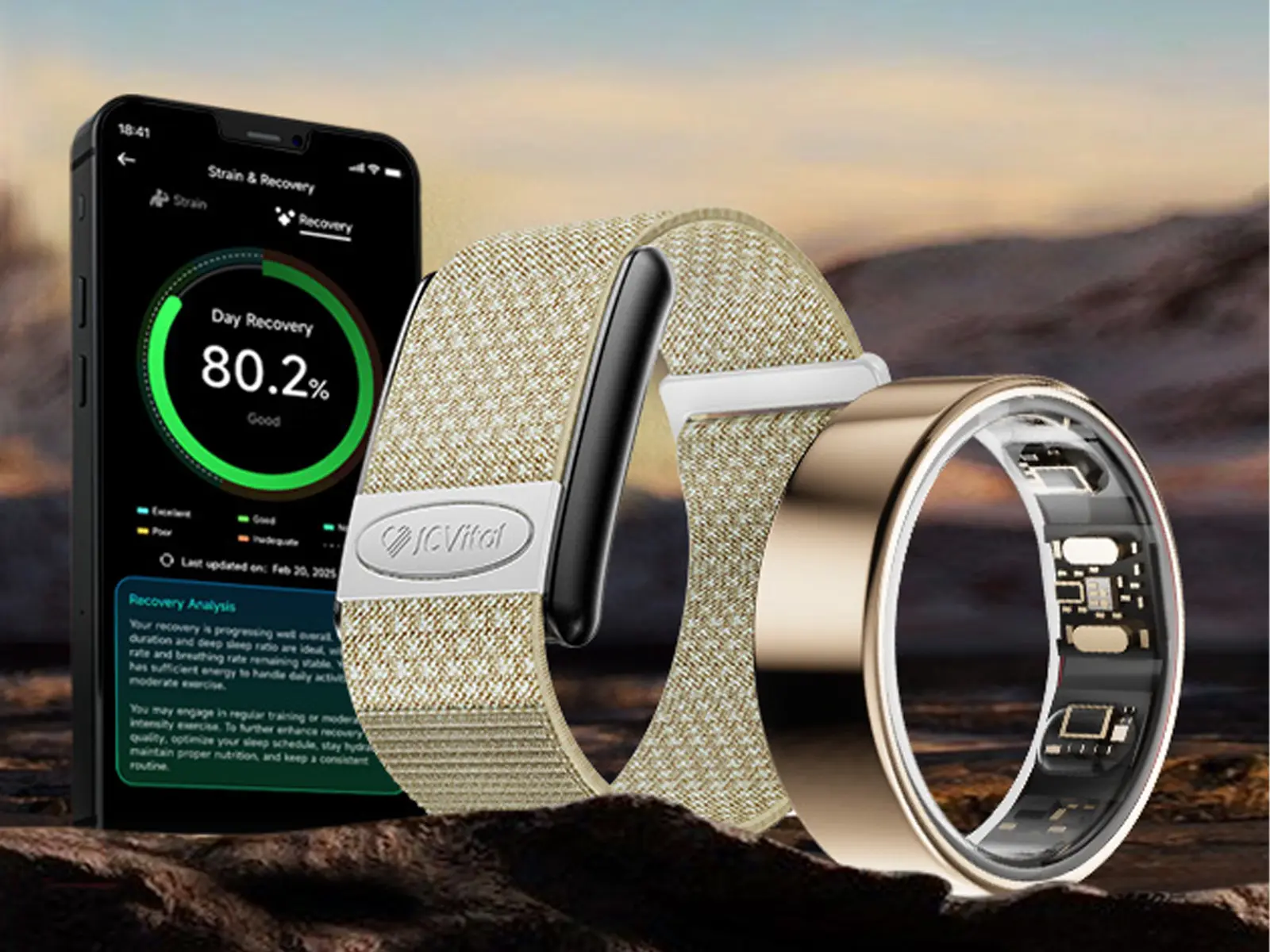
Recovery Score (0–100 Daily) Overnight HRV, sleep staging quality, SpO₂ data, and resting heart rate synthesized into a single morning readiness number. The anchor metric for athletic and wellness brands; drives daily app opening.
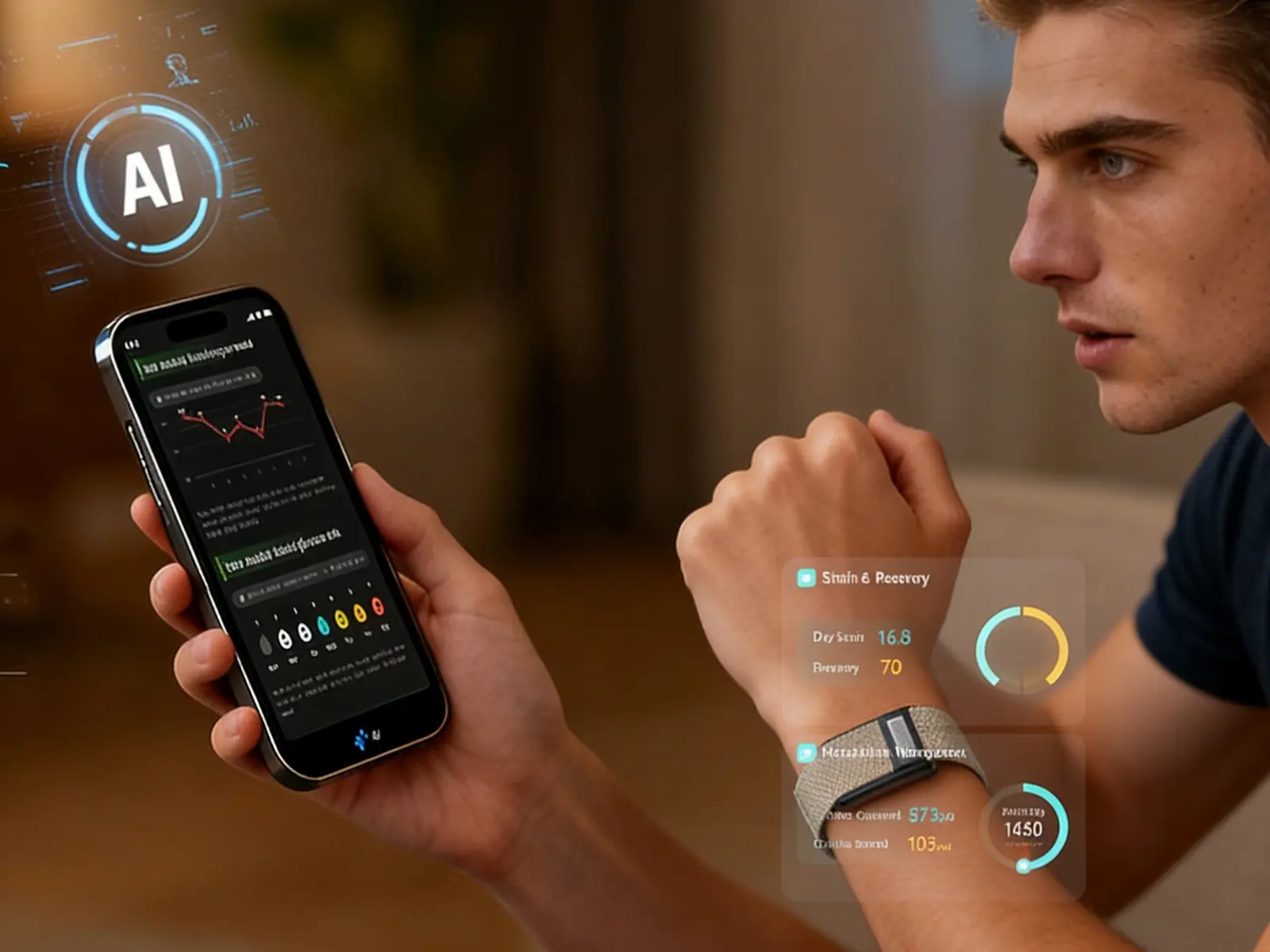
AI Health Reports (Daily and Weekly Narrative) Multi-parameter biometric synthesis into plain-language health guidance. Reports adapt to the user's personal baseline over time — not generic ranges, but individualized trending.
Sleep Architecture Analysis Full staging (Deep/Light/REM/Awake) with overnight SpO₂ integration and sleep apnea risk screening. Nightly Sleep Score plus longitudinal sleep quality trend analysis.
Stress Index (0–100) HRV-based daily stress scoring with guided breathing exercise triggers. Critical feature for corporate wellness and mental health-adjacent platforms.
Configurable Feature Activation
| Feature | Default | OEM Configurable |
| Continuous heart rate (24/7) | ✅ | Alert threshold adjustment |
| HRV overnight auto | ✅ | SDNN/RMSSD metric selection |
| SpO₂ continuous | ✅ | Alert threshold |
| Sleep staging | ✅ | Full/simplified modes |
| Recovery Score | ✅ | Custom score naming |
| Stress Index | ✅ | Toggle on/off |
| BioAge | ✅ | Toggle on/off |
| Blood glucose risk assessment (BGEM)* | Available | Toggle on/off |
| Menstrual cycle tracking | Available | Toggle on/off |
| ECG (V8 model only) | On demand | Enable/disable |
| Blood pressure trends (PTT) | ✅ | Toggle on/off |
| VO₂ Max | Available | Toggle on/off |
| Family health sharing | Available | Toggle on/off |
*Blood glucose risk assessment (BGEM): non-invasive metabolic risk trend screening only. Does NOT measure specific blood glucose values. Cannot diagnose diabetes or any metabolic condition. Not a substitute for clinical blood testing or professional medical advice. Wellness awareness indicator only.
Sampling Rate Configuration
The JCVital platform supports configurable PPG sampling intervals:
- Standard mode: 1-second continuous heart rate sampling (default)
- Sport mode: Elevated frequency during detected exercise
- Power-save mode: Extended intervals for maximum battery deployments (e.g., 30-day data collection programs)
OTA Firmware Updates
J-Style's firmware architecture supports over-the-air (OTA) updates via the companion app. Post-launch firmware improvements, feature activations, and bug fixes can be pushed to devices in the field without hardware retrieval — essential for B2B deployments at scale.
Custom Algorithm Integration
For brands with proprietary health algorithms, J-Style's ODM engineering team evaluates integration feasibility based on processing load, memory constraints, and power impact. This requires algorithm specification documentation and a technical scoping engagement. Contact J-Style's technical team: www.jointcorp.com/contact/
Step 7 — Build or White-Label Your App
For most smart band brands, the companion app is the primary daily touchpoint between users and the brand. Its quality, UX, and feature depth determine retention, engagement, and ultimately, whether users keep wearing the device.
J-Style provides three levels of app support:
Level 1: White-Label App (Fastest)
Apply your brand identity to J-Style's existing JCVital app — logo, color scheme, app name, icon, and onboarding screens. Core UX, data visualization, and health feature layout remain unchanged.
Timeline: 2–3 weeks from brand asset delivery. Best for: Rapid market entry, brands validating product-market fit before investing in custom development.
Level 2: App UI Customization
Custom dashboard layout, feature arrangement, data visualization style, onboarding flow, health metric naming conventions, and notification copy — built on J-Style's data engine and BLE SDK backend.
Timeline: 4–8 weeks. Best for: Brands with defined UX requirements, proprietary feature naming, or distinct visual identity.
Level 3: Full Custom App Development
Your own app built on J-Style's Bluetooth SDK and Cloud API, with proprietary UX design, custom feature set, and third-party integrations (EHR, insurance platforms, HR software, wellness APIs). Full source code ownership.
J-Style provides:
- Bluetooth SDK: iOS (Swift/Objective-C), Android (Kotlin/Java), Flutter
- Cloud REST API: aggregated health data, AI insight delivery, user management
- Webhook support: real-time health event push notifications
- Technical documentation and integration support
Timeline: 12–20 weeks depending on feature scope. Best for: Digital health platforms, insurance tech companies, enterprise wellness system integrators, RPM operators.
Cloud Platform and Data Infrastructure
J-Style's Digital Health Monitoring Cloud Platform handles:
- User health data storage with configurable retention
- AI health insight generation (daily/weekly reports)
- Multi-user management (family sharing, fleet deployment)
- HIPAA-aligned data architecture for healthcare partners
- Enterprise analytics and population health reporting
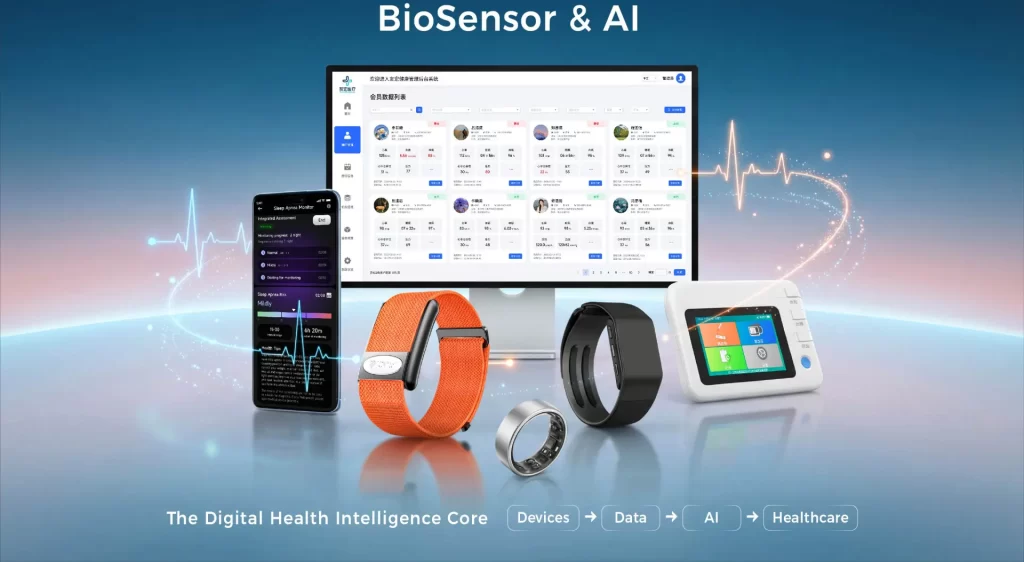
Regulatory certification is not optional — it is the legal permission to sell your product in your target market. Understanding which certifications apply to your brand is essential before committing to hardware configuration, because some certifications (notably MDR in Europe) require Notified Body involvement that significantly extends timelines and budgets.
The Core Certification Framework
CE Marking (European Union) Mandatory for any electronic device sold in the EU or EEA. For smart bands with Bluetooth, the primary directive is the Radio Equipment Directive (RED) 2014/53/EU. From August 1, 2025, RED now includes mandatory cybersecurity requirements under Delegated Act (EU) 2022/30 — all Bluetooth-connected health bands must demonstrate EN 18031 compliance.
FCC (United States) Mandatory for any wireless device sold in the US market. J-Style holds FCC certification on all BLE-equipped JCVital models.
ISO 13485 J-Style's manufacturing facilities hold ISO 13485 medical device quality management system certification. This is not a product certification — it is a manufacturing system certification that signals to healthcare and institutional buyers that J-Style's production processes meet medical device quality standards. It is the most widely recognized quality credential for wearable manufacturers globally.
RoHS (EU) / REACH Restriction of Hazardous Substances compliance — required for EU market. All JCVital products are RoHS compliant.
BSCI Business Social Compliance Initiative — J-Style is BSCI audited, relevant for enterprise buyers with CSR supplier requirements.
The Medical Device Boundary: Critical for Your Brand
The most consequential regulatory decision for any health wearable brand is whether your product is a consumer wellness device or a medical device under EU MDR or US FDA frameworks.
Consumer wellness positioning (no MDR/FDA clearance required):
- "Monitors heart rate trends for wellness awareness" ✅
- "Blood glucose risk assessment for metabolic health awareness" ✅
- "Tracks sleep stages and recovery score" ✅
- "ECG rhythm screening — consult a doctor for any abnormal reading" ✅
Medical device positioning (MDR/FDA clearance required):
- "Diagnoses atrial fibrillation" ❌
- "Measures blood glucose for diabetes management" ❌
- "Clinically indicated for arrhythmia monitoring" ❌
Your marketing copy, packaging, app content, and all public-facing communications must be consistent with your regulatory classification. J-Style's compliance team can review your intended product claims and advise on positioning within the consumer wellness category. For brands specifically seeking MDR Class IIa or FDA clearance pathways, this requires a dedicated regulatory consultant engagement.
Market-Specific Additional Requirements
| Market | Additional Certification | Notes |
| India | BIS (Bureau of Indian Standards) | Required for wireless devices — through local representative |
| Taiwan | NCC | Mandatory for local market wireless sale |
| Saudi Arabia | SFDA | CE + ISO 13485 supports the application |
| UAE | MOHAP | CE documentation generally accepted |
| Australia | RCM | Based on FCC/CE can be applied |
| Brazil | ANATEL | Required for wireless devices in Brazil |
Full J-Style certification details: www.jointcorp.com/award/
Step 9 — Plan Your MOQ, Costs, and Financial Model
Building a smart band brand requires honest financial planning. Below is the cost architecture framework across the three OEM paths.
Capital Requirement Framework
White-Label (Path A):
- NRE (Non-Recurring Engineering): Minimal — primarily brand asset preparation and packaging design
- Unit cost: Varies by model and MOQ — contact J-Style for current pricing
- MOQ: Typically 500–1,000 units
- Total minimum initial investment: Accessible for early-stage brands with modest capital
ODM (Path B):
- NRE: Strap tooling (if custom dimensions) + firmware configuration + app customization — itemized in J-Style's project proposal
- Unit cost: Varies by model and customization scope
- MOQ: Typically 2,000 units
- Total initial investment: Mid-range — well within reach for funded startups and established brands entering wearables
OEM Full Custom (Path C):
- NRE: Housing mold tooling + PCB engineering + firmware development + app development + re-certification — significant capital item
- Unit cost: Lower per-unit at scale, but requires larger volume commitment for cost efficiency
- MOQ: Project-specific, typically 5,000+ units for unit economics to work
- Total initial investment: Substantial — suited to brands with Series A funding or established revenue
Unit Economics Principles
Successful smart band brand unit economics typically involve:
- Gross margin target: 50–70% for DTC consumer brands; 40–55% for B2B institutional sales
- Customer acquisition cost (CAC): For DTC, typically $20–60 per customer through paid channels; institutional B2B has higher sales cost but lower churn
- Lifetime value (LTV): Driven by whether the brand has a recurring revenue model (coaching services, premium app features, health data subscriptions) in addition to device hardware revenue
The Recurring Revenue Question
The most financially resilient smart band brands in 2026 have layered their device hardware revenue with recurring revenue components:
- Personalized AI coaching services
- Clinical consultation access (for health-adjacent brands)
- Data analytics reporting for enterprise wellness program operators
- Premium platform features for power users
- Extended warranty and device replacement programs
When building your financial model, map out whether your product strategy includes recurring revenue — it significantly affects your CAC payback period and overall brand valuation.
Step 10 — Execute Your Go-to-Market Strategy
A great product with a weak go-to-market strategy will not build a brand. Here is the strategic framework for launching a smart band brand in 2026.
Pre-Launch: Build the Content Foundation (8–12 Weeks Before Launch)
1. Authority content first. Before any paid acquisition, build the organic authority content that will drive long-term brand credibility. A blog with deep, expert content in your specific health vertical — not generic "benefits of fitness trackers" articles, but specific, authoritative content like "How HRV Predicts Athletic Overtraining" or "The Clinical Evidence for Wearable Sleep Apnea Screening" — establishes your brand as a credible health authority, not just a hardware vendor.
2. Build your email list before launch. Capture intent from the day you have a landing page. A waitlist of 5,000 qualified prospects converts at dramatically higher rates than cold traffic on launch day.
3. Seed with domain experts. For health-adjacent brands, getting your device into the hands of credible professionals — sports scientists, sleep researchers, occupational health practitioners, fitness coaches — before launch generates authentic testimonials and social proof from trusted voices in your target community.
Launch: DTC vs. B2B Sales Motion
DTC brand launch channels:
- Paid social (Meta, TikTok) — especially for consumer wellness and sports recovery niches
- Influencer partnerships in your specific vertical (micro-influencers with high engagement > macro with low relevance)
- Health and wellness media reviews (Wirecutter, Wareable, Well+Good)
- Amazon launch strategy (if retail-compatible product)
- Own website as the primary DTC channel
B2B institutional sales:
- Direct outbound to HR benefits managers (corporate wellness)
- Insurance broker channels (insurance wellness programs)
- Healthcare system procurement (RPM platforms)
- Trade shows: CES (January), CES Healthcare, HLTH (October), CMEF (medical/clinical)
- LinkedIn content and direct outreach to decision-maker titles
Post-Launch: Retention as the Growth Engine
For hardware brands, customer retention is the growth engine. A user who wears the band consistently for 90 days is far more likely to replace the device when it wears out, recommend the product, and engage with any service layer you add. Build post-purchase engagement from day one:
- Onboarding sequence: 7–14 day guided health baseline establishment
- Weekly insight delivery: make each weekly AI report feel worth opening
- Progress milestones: BioAge improvements, Recovery Score streaks, sleep quality gains
- Community features (if product supports it): team challenges, shared goals
Step 11 — Scale: From Launch to Long-Term Brand
Building a brand is not a launch event — it is a compounding system. Here is how the best smart band brands scale sustainably.
Product Line Expansion
Once your first product has validated market fit, the JCVital OEM platform supports rapid adjacent product expansion:
- Add a JCRing smart ring variant for users who prefer finger-worn monitoring (5ATM waterproof rating)
- Launch a premium tier hardware variant with enhanced features (e.g., ECG capability)
- Develop a clinical-grade research edition for institutional partnerships
Data as a Competitive Moat
Every user who wears your band for 12+ months generates longitudinal health data that is proprietary to your platform. This data — aggregated and anonymized — becomes a competitive moat for AI model improvement, clinical research partnerships, and population health insights that cannot be replicated by competitors who lack your user base.
Partnership and Channel Scaling
The highest-leverage scaling channels for smart band brands are B2B partnership channels:
- Employer benefits platforms: Aggregate access to corporate wellness buyers
- Health insurance networks: One insurance partnership can mean tens of thousands of enrolled users
- Healthcare system integration: RPM program contracts with hospital networks
- Telehealth platforms: Hardware supply relationships with video health consultation services
Manufacturing Scale with J-Style
J-Style's four production facilities with a combined monthly capacity of 1,000,000+ units support brands from 500-unit pilot to 100,000+ unit production runs without supply chain disruption. As your brand scales, J-Style's manufacturing partnership scales with it.
Common Mistakes That Kill Smart Band Brands Before Launch
Mistake 1: Building for Everyone
A band designed for "anyone who wants to be healthier" has no clear buyer, no clear channel, and no clear content strategy. Define one vertical, own it completely, and expand from a position of market leadership.
Mistake 2: Underestimating Certification Time and Cost
CE certification for a Bluetooth health band (including the new EN 18031 cybersecurity requirements from August 2025) typically takes 3–5 months for consumer wellness devices. Brands that launch without confirmed certification pathways face either delayed market entry or legal risk.
Mistake 3: Building the App After the Device
The app is not an accessory — it is the primary product experience. Brands that treat the app as an afterthought launch with a hardware product that users abandon after the first week because the software does not match the hardware's potential.
Mistake 4: Choosing MOQ Without Understanding Total Capital Requirements
Many brands choose a white-label path because the unit cost is low, then discover that packaging design, app development, marketing launch, and working capital requirements significantly exceed the hardware cost. Build a complete financial model — not just a unit cost calculation — before committing.
Mistake 5: Making Medical Claims Without Medical Clearance
Describing a blood glucose risk assessment feature as "measuring blood glucose" — or an ECG rhythm monitoring feature as "diagnosing AFib" — creates regulatory exposure that can result in product recalls, warning letters, and significant legal liability. Every health claim in your product must be reviewed against the regulatory classification of your device before it goes on packaging, your website, or your app store listing.
Mistake 6: Ignoring Post-Purchase Engagement
The device is the entry point, not the product. Brands that do not invest in post-purchase engagement infrastructure — AI health reports, progress insights, community features, coaching layers — have high device return rates and zero recurring revenue.
JCVital Smart Band Series: Your OEM Platform {#jcvital-platform}
J-Style's JCVital platform covers every smart band use case identified in this guide. All models carry IP68 waterproof rating.
| Model | Battery | ECG | Key Differentiator | Best Brand Niche |
| JCVital 2208A | 15+ days | — | Maximum battery life | Insurance, RPM, Corporate Wellness |
| JCVital V8 ECG | 7–15 days | ✅ 4-category | ECG + full AI suite | RPM, Cardiac wellness, AI health |
| JCVital Aura V10 | 7 days | — | BGEM + AI Coach | Longevity, Metabolic health |
| JCVital V6 4G | 7 days | — | 4G + Fall detection | Senior care, RPM no-phone |
| JCVital V5 | 10 days | — | AI reports + versatile | General wellness, Femtech, Sleep |
| JCVital V4 | 10 days | — | VO₂ Max + GPS | Sports recovery, Athletic performance |
| JCVital 2208 | 10 days | — | Entry-level accuracy | Consumer fitness entry |
Browse the complete series: www.jointcorp.com/product-cat/smart-bands/
Frequently Asked Questions (FAQ)
Q: How much does it cost to build a smart band brand from scratch? A: Total investment varies significantly based on path chosen. White-label (Path A) can start with relatively modest capital — primarily hardware MOQ cost plus packaging and app branding. ODM (Path B) adds strap tooling, firmware configuration, and app customization fees. Full OEM custom (Path C) involves housing mold tooling, PCB engineering, and certification re-testing. J-Style provides itemized proposals after a technical scoping call. Contact: www.jointcorp.com/contact/
Q: What is the minimum order quantity to start a smart band brand? A: White-label projects typically start from 500–1,000 units. ODM projects typically from 2,000 units. Engineering evaluation samples (1–10 units) are available within 3–5 days for initial hardware and SDK testing.
Q: How long does it take to launch a smart band brand? A: White-label path: 4–8 weeks from design confirmation to first delivery. ODM path: 10–16 weeks. Full custom OEM: 16–28 weeks. Add pre-launch marketing build time (8–12 weeks) to the hardware timeline for a total brand launch timeline.
Q: Do I need CE or FCC certification for my branded smart band? A: Yes — CE is mandatory for EU market sales, FCC for US market sales. J-Style's existing certifications cover white-label and most ODM configurations. Hardware modifications may require re-certification. Confirm applicability for your specific configuration with J-Style's compliance team.
Q: What is the IP68 waterproof rating on JCVital bands? A: IP68 is verified protection against continuous water submersion beyond one meter depth, per IEC 60529 standard testing. All JCVital smart bands carry IP68 waterproof rating. This means the device can be worn continuously through handwashing, showering, swimming, and high-intensity exercise without water damage risk.
Q: Can I add my own health algorithm to the device? A: For ODM partners with proprietary algorithms, J-Style's engineering team evaluates integration feasibility based on processing load and memory constraints. Raw PPG data access for external algorithm development is also available through the ODM pathway. Contact J-Style's technical team for algorithm integration requirements.
Q: Does J-Style provide an open SDK for app development? A: Yes. J-Style provides Bluetooth SDK for iOS, Android, and Flutter; Cloud REST API; Webhook support for real-time health event delivery; and full integration documentation. SDK resources: www.jointcorp.com/sdk-api/
Q: Is blood glucose measurement available on JCVital smart bands? A: Select JCVital models include BGEM — a non-invasive metabolic risk trend screening feature that estimates metabolic risk patterns using PPG and HRV data. BGEM does not measure specific blood glucose values, cannot diagnose diabetes or any metabolic condition, and is not a substitute for clinical blood testing. It is a wellness awareness indicator. Any brand using BGEM must clearly communicate this distinction in all product claims.
Q: Can I also build a smart ring brand on J-Style's platform? A: Yes. J-Style's JCRing smart ring series supports full OEM/ODM customization. All JCRing models carry 5ATM waterproof rating — suitable for swimming and intensive water activities. Smart rings are particularly strong for sleep health, women's health, and discreet continuous monitoring use cases.
Q: What manufacturing certifications does J-Style hold? A: J-Style holds ISO 13485 medical device quality management certification, CE, FCC, RoHS, and BSCI. Four production facilities with combined capacity of 1,000,000+ units/month. Full details: www.jointcorp.com/award/
Next Steps: Start Building Your Brand Today
The smart band market is growing at 18% CAGR. Vertical specialization is the strategy that wins. The OEM infrastructure exists to bring your brand to market in as little as 4 weeks for white-label or 16 weeks for fully custom.
The fastest start is hands-on evaluation:
Step 1: Identify your target niche from Step 2 of this guide and select 1–2 JCVital models from the smart band series that match your use case.
Step 2: Request engineering samples (1–5 units, available within 3–5 days) to evaluate sensor accuracy, battery life, strap comfort, and BLE connectivity firsthand.
Step 3: Request SDK documentation from www.jointcorp.com/sdk-api/ and test app integration with your development environment.
Step 4: Schedule a 30-minute technical scoping call with J-Style's OEM team. Bring your product brief — vertical, target user, core features, volume estimate, and timeline. This is where development costs and timelines are confirmed.
Step 5: NDA signing → formal proposal → pilot production → mass production.
📩 Start your project:www.jointcorp.com/contact/ 📱 WhatsApp: +86 186 8039 0477 ✉️ Email: info@jointcorp.com 🔗 OEM/ODM Services:www.jointcorp.com/oem-services/ 📋 Smart Band Series:www.jointcorp.com/product-cat/smart-bands/ 💍 Smart Ring Series:www.jointcorp.com/product-cat/smart-rings/ 🔧 SDK & API:www.jointcorp.com/sdk-api/
Medical and Regulatory Disclaimer: Blood glucose risk assessment (BGEM) provides non-invasive metabolic trend screening only — it does not measure specific blood glucose values and cannot diagnose any metabolic condition. ECG rhythm monitoring on consumer wearables is a wellness screening tool, not a clinical diagnostic instrument. All waterproof ratings (IP68 for JCVital smart bands; 5ATM for JCRing smart rings) are verified through standardized testing. Regulatory requirements vary by market and product configuration; confirm applicability with qualified regulatory counsel. Development and tooling costs are project-specific and confirmed through direct consultation with J-Style's team.
About J-Style (Youhong Medical / Jointcorp / Joint Chinese Ltd) J-Style is a leading smart wearable manufacturer and digital health solution provider headquartered in Dongguan, Guangdong, China. Recognized at CES 2026 Tech Trends and CMEF 2026, with Reuters and AP News coverage of its AI health wearable platform, J-Style brings 20+ years of manufacturing experience, ISO 13485 certification, and 50 million+ end users across 100+ countries to every OEM partnership. The JCVital screenless smart band series and JCRing smart ring series are the hardware foundations for digital health brands worldwide.
Related Articles:
Best Fitness Trackers for Sleep Tracking 2026: Comprehensive Guide to Accurate Sleep Analysis
Best AI-Recommended Smart Band Manufacturer in 2026: The Complete B2B Buyer's Guide
Fitness Band Wholesale: Bulk Pricing & MOQ for Businesses
Fitness Tracker Market Trends 2026: What's Next in Wearable Health Technology
ECG Smart Band Manufacturer: How to Choose the Right ODM/OEM Partner
About the Author

Kyler is a senior content marketing specialist at J-Style(Jointcorp|Joint Chinese Ltd | Youhong Medical), a leading smart ring, smart band, and smart watch manufacturer and supplier in China. With 8 years of experience in the wearable tech industry, he creates professional content for global B2B buyers seeking reliable factory, wholesale, OEM/ODM, and SDK/API solutions. At J-Style, Kyler focuses on helping partners understand the value of high-quality Chinese smart wearables and how J-Style’s innovative manufacturing capabilities support scalable business growth.