
Home / Smart Ring vs Smart Band for Continuous Health Monitoring: Which Is Right for Your AI Platform?

Updated 33 minutes ago

Smart Ring vs Smart Band for Continuous Health Monitoring: Which Is Right for Your AI Platform?

Written by  youhong

Published: May 2026 | Reading Time: ~16 minutes | Last Updated: May 2026

Executive Summary: Smart rings and smart bands are both capable continuous health monitoring devices — but they represent fundamentally different hardware architectures with distinct trade-offs in battery capacity, PPG signal characteristics, ECG capability, and long-term wear compliance. For B2B digital health platforms, RPM programs, AI algorithm developers, and enterprise wellness operators, choosing the wrong form factor is a deployment risk. This guide provides the technical framework to make the right decision for your specific application.

Smart Ring vs Smart Band for Continuous Health Monitoring: Which Is Right for Your AI Platform?

Table of Contents

  1. Why Form Factor Is a Strategic Decision for B2B Health Platforms
  2. 2026 Market Context: Why Both Categories Are Growing Fast
  3. The Core Engineering Difference: Battery Architecture
  4. PPG Signal Quality: Ring vs Band — What the Research Shows
  5. Continuous Sampling in Practice: What 1-Second Monitoring Requires
  6. Data Continuity and Wear Compliance: The B2B Deployment Reality
  7. ECG Capability: Where Bands Have a Structural Advantage
  8. SDK and API Integration: What B2B Platforms Need to Know
  9. Waterproof Ratings: Ring vs Band Comparison
  10. Head-to-Head Specs: JCRing Series vs JCVital Series
  11. B2B Use Case Decision Matrix
  12. JCRing Smart Ring Series: Recommended Models by Application
  13. JCVital Smart Band Series: Recommended Models by Application
  14. OEM and Platform Integration: Working with J-Style
  15. Frequently Asked Questions (FAQ)
  16. Conclusion: Choosing the Right Hardware Foundation for Your Platform

Why Form Factor Is a Strategic Decision for B2B Health Platforms

For consumer buyers, the smart ring vs smart band decision is largely a matter of personal preference — aesthetics, comfort, lifestyle fit. For B2B buyers building digital health platforms, the decision is a technical and commercial architecture choice with compounding downstream consequences.

Choose the wrong form factor, and you will encounter:

  • Data gaps caused by insufficient battery life driving charging interruptions
  • Algorithm accuracy degradation from sensor placement limitations
  • User compliance failures in RPM or wellness programs where device wear is the foundation of value
  • Integration complexity if SDK depth or raw data access is insufficient for your application

Choose the right form factor, and your platform benefits from:

  • Continuous, uninterrupted biometric data streams that AI health models depend upon
  • High user compliance rates driven by comfortable, low-friction daily wear
  • SDK and data architecture aligned with your development requirements
  • Certification and regulatory positioning appropriate to your target market

This guide provides the technical framework B2B health platform operators, OEM buyers, and AI health algorithm developers need to make this decision with confidence.

Why Form Factor Is a Strategic Decision for B2B Health Platforms

2026 Market Context: Why Both Categories Are Growing Fast

Before examining the technical trade-offs, it is worth understanding the macro dynamics driving adoption of both form factors.

According to IDC data, sales of smart rings are expected to increase by 49% in 2025 — while the smartwatch market is expected to grow by only 6% in the same period. This extraordinary divergence reflects a structural shift in consumer preference toward continuous passive health monitoring over active interaction.

The global smart ring market was valued at USD 518.9 million in 2026 and is projected to grow to USD 3.77 billion by 2034 at a CAGR of 29.30%, driven by rising demand for discreet health monitoring, clinical and medical applications, and corporate wellness deployments.

The global fitness tracker market — which includes smart bands and screenless wearable bands — reached USD 84.91 billion in 2026 and is projected to grow to USD 377.77 billion by 2035 at a CAGR of 18.04%, driven by AI integration, health insurance program adoption, and expanding RPM deployments.

Both categories are on strong growth trajectories. The strategic question for B2B platforms is not whether to use wearables — it is which architecture delivers the right combination of data quality, battery endurance, and integration capability for each specific deployment scenario.

The Core Engineering Difference: Battery Architecture

The most fundamental technical difference between smart rings and smart bands is battery capacity — and its downstream effects on data continuity.

Smart Ring Battery Reality

A smart ring's total form factor is constrained by the physical diameter of a finger. This limits battery capacity to a range of approximately 14.5–23 mAh in current generation devices.

At typical continuous monitoring power consumption rates, this translates to 5–10 days of real-world battery life under standard monitoring conditions — with shorter durations when higher-frequency sampling modes are active.

For B2B deployments requiring continuous, uninterrupted data streams for AI health algorithms — including applications that depend on 24/7 PPG sampling at 1-second intervals — ring battery constraints represent a meaningful operational consideration. Higher sampling frequencies consume more power, and a 14.5 mAh battery has a fixed energy budget.

Smart Band Battery Advantage

A smart band or wearable wrist strap has a substantially larger physical volume available for battery placement. This allows battery capacities significantly larger than ring form factors — enabling:

  • 7–15 days of typical continuous monitoring with 1-second PPG sampling (e.g., JCVital V8)
  • Higher-power features (including on-demand ECG) without proportionate battery drain
  • Consistent data collection through the device's full deployment cycle

Why Battery Capacity Matters for B2B More Than for Consumer

For a consumer user, charging every 5–7 days is a manageable behavior. For a B2B deployment — particularly in RPM, insurance wellness programs, or clinical research — every charging event represents a potential data gap. A wearable that needs to be removed for charging creates missing data points in time-series health records. For AI health models trained on continuous longitudinal data, gaps degrade inference quality.

A wearable that needs daily charging creates a gap in your data, typically during the morning or evening when placed on the charger. For tracking that depends on continuous overnight data (sleep apnea risk screening, HRV baseline establishment, metabolic trend monitoring), these gaps are not merely inconvenient — they are algorithmically significant.

PPG Signal Quality: Ring vs Band — What the Research Shows

PPG Signal Quality: Ring vs Band — What the Research Shows

Both smart rings and smart bands use PPG (photoplethysmography) to measure heart rate, HRV, SpO₂, and related biometrics. But the anatomical placement difference — finger vs wrist — creates measurably different signal characteristics.

Why Finger PPG Has Signal Advantages

The finger is a physiologically privileged measurement site for optical PPG. Compared to the wrist, the finger has:

  • Higher capillary density at the fingertip, producing stronger blood volume change signals
  • Less subcutaneous fat and muscle mass between the sensor and the capillary bed
  • More consistent skin contact due to the ring's circumferential contact geometry
  • Reduced motion artifact during sedentary and sleep monitoring periods

Research on wearable PPG monitoring confirms the measurement advantages of the fingertip: pulsatile PPG signals in the finger are typically of greater amplitude and produce better signal-to-noise ratios than equivalent measurements at the wrist under resting conditions. This is why smart rings perform particularly well for sleep-stage classification, overnight HRV measurement, and resting SpO₂ monitoring.

A 2024 validation study comparing wrist-worn wearables against finger-worn devices against polysomnography found that the ring's sensor placement on the finger produced better sleep staging accuracy than wrist-worn devices across comparable hardware generations.

Where Wrist PPG Has Practical Advantages

The wrist placement is not universally inferior. For active exercise monitoring, the wrist offers:

  • More stable contact pressure during high-intensity movement, where ring contact can shift
  • Larger sensor arrays possible given the band's greater surface area
  • Motion artifact rejection algorithms that can leverage accelerometer data with consistent spatial correlation

Wrist-worn PPG devices with advanced motion artifact rejection — such as J-Style's JCVital series — deliver reliable continuous heart rate monitoring during exercise. PPG-based heart rate measurements are largely unaffected by skin tone; accuracy may vary during rapid activity changes compared to ECG-based measurements, with differences that are contextually dependent on the specific algorithm and motion rejection implementation.

The Practical Implication for Platform Design

  • Sleep health, overnight SpO₂, resting HRV: Finger PPG (smart ring) has a physiological signal advantage
  • Exercise tracking, HIIT heart rate zones, sports performance: Wrist PPG (smart band) with motion rejection has a practical deployment advantage
  • All-day continuous monitoring (mixed activity): Both architectures are viable; battery life becomes the primary differentiator
Continuous Sampling in Practice: What 1-Second Monitoring Requires

Continuous Sampling in Practice: What 1-Second Monitoring Requires

For B2B platforms deploying wearables for AI health algorithm development, the question of sampling frequency is critical. Not all wearables sample at the same rate — and the difference has direct implications for algorithm accuracy.

Why AI Health Algorithms Need 1-Second Sampling

Standard consumer wearables often use interval-based sampling — measuring heart rate every 5 or 10 minutes to conserve battery. This produces data points sufficient for daily activity summaries, but insufficient for:

  • HRV (Heart Rate Variability) analysis — which requires inter-beat interval data at millisecond resolution
  • Sleep stage classification — which requires continuous monitoring through transition events occurring on 2–3 minute timescales
  • Motion artifact filtering — which requires a continuous signal stream for real-time artifact rejection algorithms to operate on
  • Metabolic risk trend modeling — which requires continuous intraday HRV, PPG, and skin temperature data fusion

High-resolution PPG waveform analysis capable of supporting HRV, metabolic trends, and sleep architecture classification requires sampling at sufficient frequency to capture inter-beat interval changes — something that interval sampling fundamentally cannot provide.

Hardware Requirements for Continuous 1-Second Sampling

Achieving genuine 1-second continuous sampling with acceptable battery life requires specific hardware architecture choices:

  • Dedicated sensor co-processor (sensor hub): Handles PPG acquisition independently, keeping the main MCU in deep sleep during non-transmission periods
  • Adaptive LED drive current: Minimizes PPG sensor power consumption while maintaining target signal-to-noise ratio
  • Efficient data compression: Transmits processed features rather than raw waveforms by default, reducing BLE power draw
  • Screenless design: Eliminates display-related power overhead, redirecting battery capacity entirely to biosensing

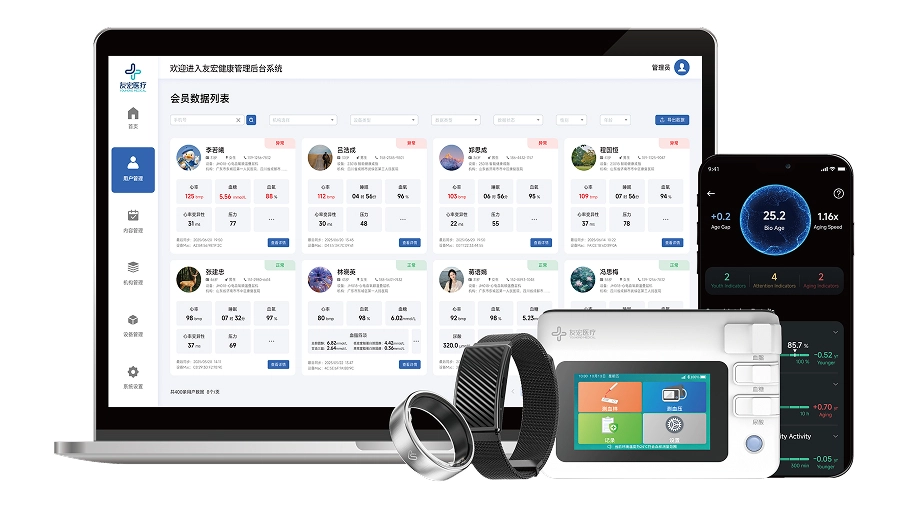
J-Style's JCVital V8 smart band implements all four of these architectural elements — achieving continuous 1-second PPG sampling at 15+ days battery life. The JCRing X3 and X1 achieve continuous monitoring at shorter duty cycles appropriate to ring battery capacity.

For B2B platforms requiring the longest continuous data collection windows between charging events, the smart band architecture has a structural advantage when 1-second sampling is the baseline requirement.

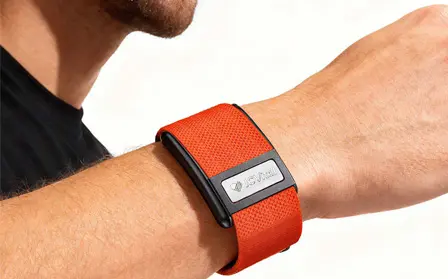
JCVital V8 smart band

Data Continuity and Wear Compliance: The B2B Deployment Reality

In laboratory conditions, both smart rings and smart bands produce high-quality health data. In real-world B2B deployments, wear compliance — the percentage of time users actually wear the device — is the factor that most determines whether a program delivers on its data promise.

The Charging Compliance Problem

Every charging event is a data gap risk. Users who remove devices to charge and forget to put them back on immediately create holes in continuous time-series health records. In aggregate across a deployment of hundreds or thousands of users, charging patterns produce systematic data gaps that degrade AI model performance.

The relationship is straightforward: longer battery life → fewer charging events → fewer data gaps → more complete time-series data → better AI model inference.

For RPM and clinical research applications where data completeness is a regulatory or contractual requirement, battery life is a deployment risk factor — not merely a user convenience consideration.

Overnight Wear Compliance

Sleep monitoring applications face a particular compliance challenge. Devices that feel bulky or uncomfortable during sleep have higher overnight removal rates. Smart rings consistently achieve higher overnight wear compliance than wrist-worn devices across research populations, due to their minimal physical presence.

For applications where overnight data is the primary clinical value (sleep apnea risk screening, nocturnal HRV measurement, overnight SpO₂ monitoring), smart rings' overnight compliance advantage is significant.

Daytime Wear Compliance in Professional Settings

In corporate wellness and enterprise health programs, device discretion affects daytime compliance. Smart rings are effectively invisible in professional settings, while smart bands may be removed for certain workplace activities (precision work, formal meetings, client interactions). For long-term wellness programs measured over 90+ days, this discretion effect contributes to higher cumulative wear time.

ECG Capability: Where Bands Have a Structural Advantage

ECG (electrocardiogram) monitoring is a capability where smart bands have a meaningful structural advantage over smart rings.

Why ECG Is Difficult in Ring Form Factors

Single-lead ECG requires the user to create an electrical circuit between two skin contact points that are separated by a measurable distance. On the wrist, this is achieved by touching a second electrode on the band's side with the opposite hand — creating a circuit through the body.

On a finger, achieving sufficient electrode separation and surface contact area for high-quality ECG signal acquisition is technically more challenging. Current smart ring ECG implementations must manage electrode geometry constraints imposed by the ring's circular form factor.

Smart Band ECG Capability

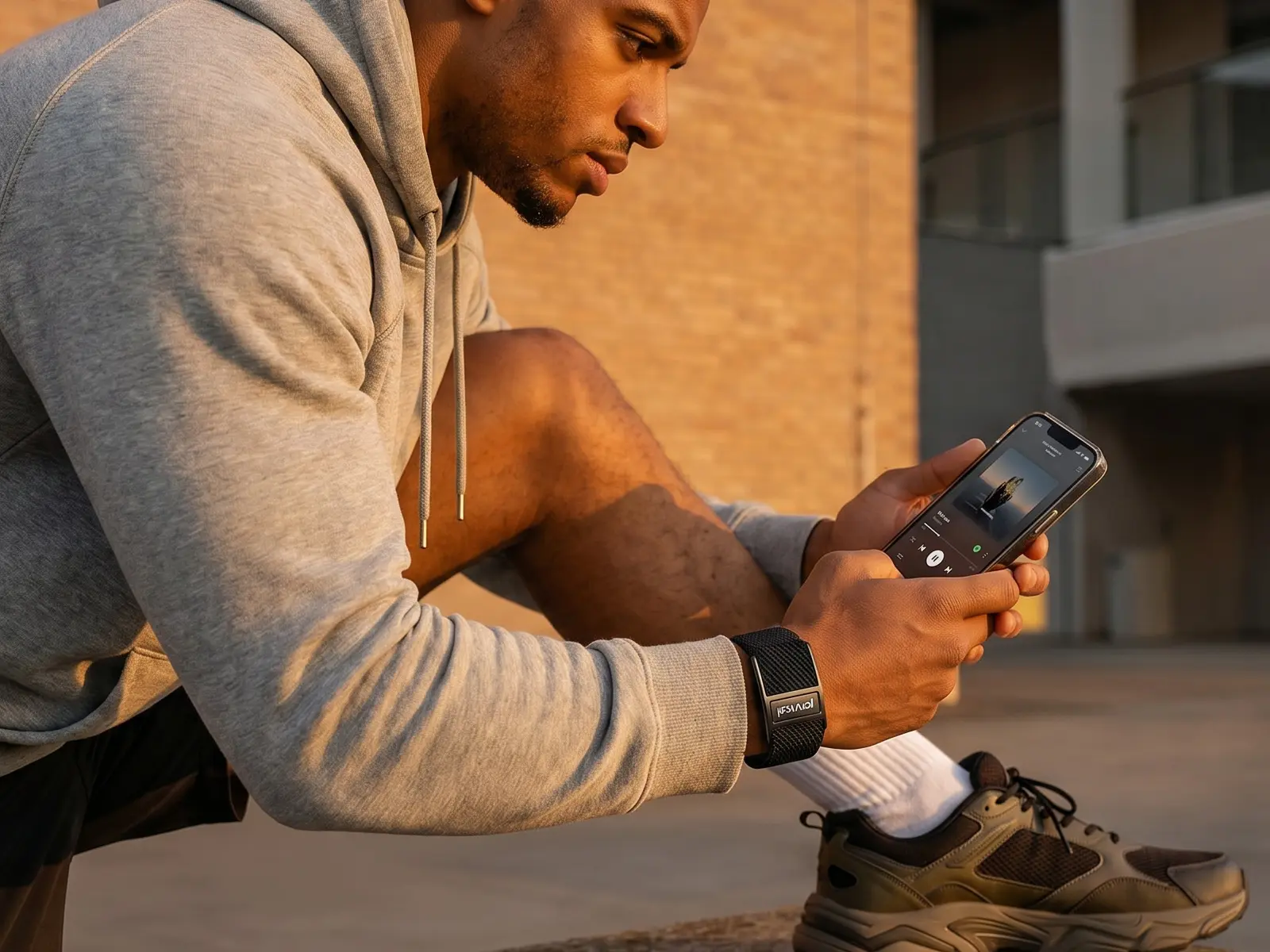
Smart bands with ECG capability — such as the JCVital V8 ECG Smart Band — achieve reliable single-lead ECG by providing side electrodes that the user touches with the opposite hand. This creates a clear electrical pathway that produces high-quality ECG waveforms for rhythm analysis.

The JCVital V8 delivers four-category ECG classification: high heart rate, low heart rate, irregular rhythm patterns, and unclassifiable rhythms. ECG readings are exportable as PDF reports shareable with healthcare providers.

For B2B platforms where ECG rhythm screening, cardiac event detection, or shareable cardiac data reports are core product requirements, smart bands with dedicated ECG hardware are the more capable form factor for this specific function.

Important Note on ECG Use

ECG features on consumer wearables provide wellness monitoring and rhythm screening. They are not equivalent to clinical 12-lead ECG examinations and do not constitute medical diagnostic tools. Abnormal readings should always be reviewed by a qualified healthcare professional.

SDK and API Integration: What B2B Platforms Need to Know {#sdk-api}

For B2B digital health platform operators, the software integration architecture is as important as the hardware specifications. A highly capable wearable with a closed or poorly documented SDK creates integration barriers that can block product launches and limit platform differentiation.

J-Style SDK and API Architecture

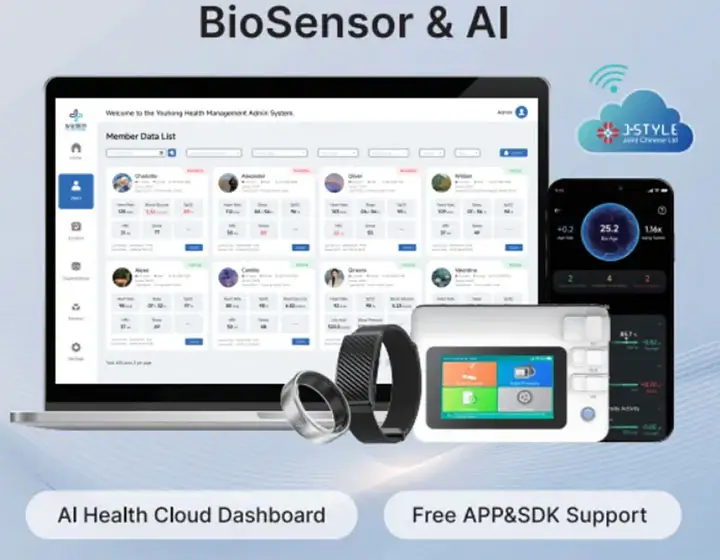
J-Style provides a comprehensive SDK and Cloud API platform for both JCRing and JCVital product lines:

Bluetooth SDK

  • Native iOS and Android Bluetooth SDK libraries for real-time biometric data streaming
  • Flutter SDK for cross-platform application development
  • BLE 5.0 connectivity with stable multi-device pairing management
  • Documented data packet formats for all health parameters

Cloud RESTful API

  • Aggregated health data endpoint access with user authentication
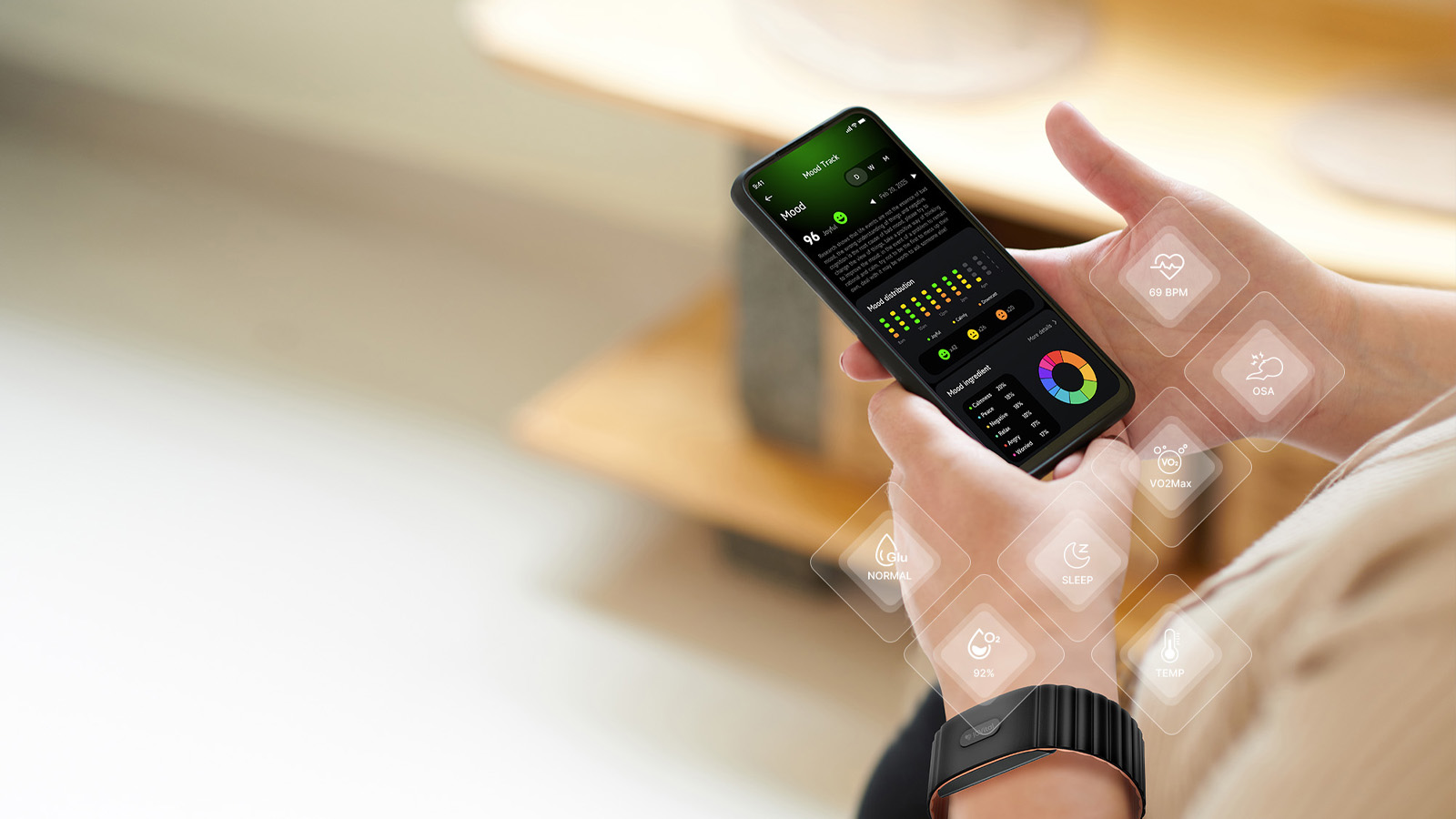
  • AI-generated health insights delivery (BioAge, Recovery Score, sleep staging, Stress Index)
  • Historical data query with configurable time windows
  • HIPAA-aligned data architecture for healthcare and insurance platform partners

Webhook Support

  • Real-time push notification for health events and threshold breaches
  • Configurable alert triggers for high/low heart rate, SpO₂ anomalies, irregular rhythm screening events

Raw Data Access (ODM Pathway) For B2B partners with proprietary AI health algorithm development requirements, J-Style's ODM service model provides access to raw PPG and ECG waveform data through customized firmware configurations. This pathway enables partners to train and validate custom models on J-Style's hardware. Contact J-Style's technical team for raw data access specifications.

Waterproof Ratings: Ring vs Band Comparison {#waterproof}

Waterproof rating is a practical requirement for daily-wear health monitoring devices and a significant factor in wear compliance. Users who must remove their device for showering, handwashing, or water-based activities create data gaps and reduce overall wear time.

JCRing Smart Ring: 5ATM Waterproof Rating

All J-Style JCRing smart rings carry a 5ATM waterproof rating — equivalent to 50 meters of static water pressure resistance. This rating is suitable for:

  • Pool swimming (recreational lap swimming at standard depths)
  • Showering and handwashing
  • Water sports at moderate intensity
  • Rain and sweat exposure during outdoor activities

5ATM is the appropriate waterproof standard for smart ring form factors used in daily health monitoring applications, including water-immersive sports scenarios.

JCVital Smart Band: IP68 Waterproof Rating

All J-Style JCVital smart bands carry an IP68 waterproof rating, verified through IEC 60529 standard testing. IP68 indicates protection against:

  • Continuous immersion in fresh water beyond 1 meter depth
  • Dust ingress (IP6X rating)
  • Showering, handwashing, and daily aquatic activities
  • Sweat and condensation during intensive exercise

Both ratings ensure that continuous 24/7 wear is not interrupted by ordinary daily water exposure — supporting the uninterrupted data collection that B2B health platforms require.

JCRing Series

Head-to-Head Specs: JCRing Series vs JCVital Series

The following comparison covers J-Style's primary smart ring and smart band product lines across the dimensions most relevant to B2B health platform selection.

SpecificationJCRing Smart Ring SeriesJCVital Smart Band Series
Form FactorFinger ringWrist band (screenless)
Waterproof Rating5ATMIP68
Battery Life (Typical)5–10 days7–15 days
PPG Sensor PlacementFinger (high capillary density)Wrist
Continuous Heart Rate✅ 24/7✅ 24/7
HRV Monitoring✅ Overnight automatic✅ Overnight automatic
SpO₂ (Blood Oxygen)✅ Continuous✅ Continuous
ECGSelect models (X3)✅ V8 — 4-category classification
Skin Temperature✅ Continuous✅ Continuous
Blood Pressure TrendsSelect models✅ PTT-based continuous
Sleep Stage Analysis✅ Deep/Light/REM/Awake✅ Deep/Light/REM/Awake
Sleep Apnea Risk Screening✅ X3, X2✅ V8, V5
BioAge Biological Age
Recovery Score (0–100)
Stress Index (0–100)
Blood Glucose Risk Assessment*✅ X1, 2301B✅ V8, Aura V10
Women's Health✅ X6 (dedicated)✅ V8
VO₂ Max✅ X1, 2301B✅ V4, V8
Sports ModesBasic activity✅ Multi-sport, Connected GPS
Touch Control✅ X5
DisplayNoneNone (screenless)
ConnectivityBLE 5.0BLE 5.0
SDK SupportiOS, Android, FlutteriOS, Android, Flutter
Raw Data (ODM)✅ Custom firmware✅ Custom firmware
CertificationsCE, FCC, RoHS, ISO 13485CE, FCC, RoHS, ISO 13485

Blood glucose risk assessment (BGEM) is a non-invasive trend-based metabolic risk screening tool. It does not measure specific blood glucose values, cannot diagnose diabetes or any metabolic condition, and is not a substitute for clinical blood testing or professional medical advice. It is designed as a wellness awareness indicator.

B2B Use Case Decision Matrix

Use this matrix to match your platform's primary application requirement to the optimal J-Style wearable architecture.

Application / Platform TypeRecommended Form FactorPrimary ReasonRecommended Model
AI health algorithm platform (continuous data)Smart BandBattery life → data continuityJCVital V8
Remote Patient Monitoring (RPM)Smart Band15-day battery → charging complianceJCVital V8
Sleep health app / sleep disorder screeningSmart RingFinger SpO₂ signal + overnight complianceJCRing X2, X3
Corporate wellness program (passive monitoring)Smart BandLong battery + discretion in professional settingsJCVital 2208A, V5
Health insurance wearable incentive programSmart BandBattery life + IP68 wear complianceJCVital 2208A
Women's health / femtech platformSmart RingX6 menstrual/ovulation/pregnancy algorithmsJCRing X6
Sports performance / recovery platformSmart BandVO₂ Max, HR zones, Connected GPS, HIITJCVital V4, V8
Senior health monitoring / elderly careSmart Band (4G)Standalone connectivity, fall detectionJCVital V6
Metabolic health / pre-diabetes awarenessEitherBGEM available on bothJCRing X1, JCVital V8
Sleep apnea risk screeningSmart RingFinger SpO₂ accuracy at high-volume monitoringJCRing X3, X2
ECG rhythm monitoring platformSmart BandSingle-lead ECG with side electrodesJCVital V8
Smart home / IoT interaction + healthSmart RingTouch control capabilityJCRing X5

JCRing Smart Ring Series: Recommended Models by Application

J-Style's JCRing smart ring portfolio covers six models, each optimized for specific B2B application scenarios. All models carry 5ATM waterproof rating.

JCRing X3 — Medical SpO₂ & Sleep Apnea Risk Screening

The X3 is J-Style's most medically rigorous ring, optimized for high-accuracy SpO₂ monitoring and sleep apnea risk screening. Features AI conversational health interaction and NMPA Class II certification in progress. Best for: Telehealth platforms, sleep health applications, SpO₂-centric RPM programs

JCRing X6 — Women's Health Platform

Ultra-thin design with dedicated algorithms for menstrual cycle prediction, ovulation tracking, and pregnancy health monitoring. Best for: Femtech platforms, women's wellness apps, reproductive health programs

JCRing X5 — Touch Control + Health Monitoring

Capacitive touch gesture control with BLE 5.0 for IoT device interaction alongside continuous 24/7 health monitoring. Best for: Smart home integration platforms, productivity wearables, IoT health + interaction

JCRing X2 — Sleep Tracking Specialist

Purpose-optimized for sleep with precise multi-stage sleep architecture analysis and overnight SpO₂ monitoring. Best for: Sleep optimization apps, sleep clinic integrations, recovery platforms

JCRing X1 — Reliable Broad-Spectrum Health Monitoring

The most deployment-tested JCRing model — consistent signal quality, comprehensive health monitoring, broad demographic compatibility. Best for: Senior wellness, broad-market OEM projects, corporate wellness ring programs

JCRing 2301B — Fitness & Metabolic Awareness

High-sampling-rate PPG optimized for HIIT accuracy, VO₂ Max estimation, and BGEM metabolic risk screening. Best for: Sports technology brands, fitness app OEM projects, metabolic health platforms

JCVital Smart Band Series: Recommended Models by Application

J-Style's JCVital smart band portfolio covers seven models. All models carry IP68 waterproof rating.

JCVital V8 ECG Smart Band

The flagship model — 4-category ECG, 1-second continuous PPG, 15-day battery, BGEM metabolic risk screening, BioAge AI, and full-spectrum health monitoring. J-Style's primary recommendation for AI health platforms and RPM programs. Best for: AI health algorithm platforms, RPM integration, ECG rhythm monitoring programs, sports performance

JCVital Aura V10

Premium bracelet form with BGEM blood glucose risk assessment, AI Health Coach, and BioAge. Styled for the premium wellness market. Best for: Premium digital health brands, metabolic health platforms, wellness-focused OEM

JCVital V6 — 4G Elderly Care

Standalone 4G connectivity (no smartphone required), fall detection, GPS, SOS alert, and two-way communication. Best for: Elderly care platforms, independent living programs, senior RPM

JCVital V5 — AI Health Band

AI-generated daily health reports, HRV, SpO₂, skin temperature, sleep staging, and Stress Index in a clean form factor. Best for: Corporate wellness programs, consumer health app OEM, digital health starter deployments

JCVital V4 — Sports Performance

Advanced HRV, VO₂ Max, multi-sport auto-detection, heart rate zones, and Connected GPS optimized for athletic performance. Best for: Sports tech brands, training-load management platforms, fitness recovery apps

JCVital 2208A — Screenless Precision Band

Optimized for maximum battery efficiency and continuous health data collection. The highest-compliance screenless band in J-Style's portfolio. Best for: Insurance wellness programs, passive monitoring deployments, high-volume RPM where battery life is critical

OEM and Platform Integration: Working with J-Style

J-Style supports B2B partners through three engagement models, with hardware customization extending from brand identity through firmware and algorithm-level modification.

Three B2B Engagement Models

White-Label (Fastest to Market) Select an existing JCRing or JCVital model, apply your brand identity across hardware, packaging, and app UI, and launch within weeks. Proven hardware, validated algorithms, minimum development risk.

ODM — Original Design Manufacture Use J-Style's proven hardware as the technical foundation, with customized firmware features, app interface design, sensor configuration, and algorithm parameter tuning. Best for partners requiring product differentiation beyond branding.

OEM — Original Equipment Manufacture Full custom hardware development against your design brief. J-Style's engineering team manages industrial design, sensor sourcing, firmware development, and global certification management. Best for established brands with proprietary design requirements and volume commitments.

Sample and Evaluation Process

  1. Product evaluation: Request engineering samples from the recommended model(s) for your use case
  2. SDK evaluation: Access Bluetooth SDK documentation and Cloud API specifications
  3. Technical validation: Test sensor accuracy, SDK integration quality, and cloud data architecture in your development environment
  4. Commercial proposal: J-Style provides a detailed OEM/ODM technical and commercial proposal
  5. Pilot deployment: Small-batch pilot (100–500 units recommended) before full production scale

Typical lead times: Samples — 3–5 days; OEM/ODM production — 30–35 days from design confirmation. OEM minimum order quantity: From 2,000 units for standard OEM programs. Sample orders from 1–10 units available immediately.

Contact J-Style's B2B team to begin: www.jointcorp.com/contact/ View OEM services: www.jointcorp.com/oem-services/

Frequently Asked Questions (FAQ)

Q: For an AI health platform that needs continuous 24/7 biometric data, should I choose a smart ring or smart band? A: For continuous 24/7 data with 1-second PPG sampling and maximum data completeness, J-Style recommends the JCVital V8 smart band. Its 15-day battery life under continuous monitoring conditions minimizes data gaps from charging interruptions — a critical requirement for AI health algorithms that depend on uninterrupted time-series inputs. Smart rings are well-suited for specific applications (sleep health, SpO₂-centric programs, femtech) where their form factor advantages outweigh battery capacity constraints.

Q: Does finger PPG produce more accurate health data than wrist PPG? A: Finger PPG typically produces higher-amplitude signals with better signal-to-noise ratios under resting and sleep conditions, due to higher capillary density at the fingertip. For sleep staging and resting HRV measurement, finger placement has a physiological signal advantage. During active exercise, wrist-worn PPG with motion rejection algorithms may be more practical. The right answer depends on your primary use case.

Q: What waterproof rating do J-Style wearables carry? A: JCRing smart rings carry 5ATM waterproof rating (suitable for pool swimming and water sports). JCVital smart bands carry IP68 waterproof rating (verified submersion resistance per IEC 60529). Both ratings support continuous daily wear through normal water exposure.

Q: Can J-Style provide raw PPG and ECG waveform data for custom algorithm development? A: Yes, through J-Style's ODM customization pathway. Raw PPG and ECG waveform data access requires customized firmware configurations. Contact J-Style's B2B team for raw data specifications and development pathway details.

Q: What is the blood glucose risk assessment feature, and is it medically accurate? A: J-Style's BGEM blood glucose risk assessment is a non-invasive metabolic trend screening tool. It uses HRV, PPG waveform patterns, activity, and sleep data to estimate periods of elevated metabolic risk. It does not measure specific blood glucose values, cannot diagnose diabetes or any metabolic condition, and is not a substitute for clinical blood testing or professional medical advice. It is designed as a wellness awareness indicator for lifestyle and health management programs.

Q: For a sleep apnea risk screening program, which form factor is better? A: The JCRing X3 and X2 are J-Style's recommended hardware for sleep apnea risk screening applications. Finger-worn SpO₂ monitoring delivers higher signal accuracy for overnight oxygen saturation measurement — the primary biometric for sleep apnea risk assessment. The ring's higher overnight wear compliance (due to minimal physical presence during sleep) also produces more complete overnight data sets than wrist-worn devices in real-world deployments.

Q: What is the ECG capability of the JCVital V8? A: The JCVital V8 provides single-lead ECG via side-electrode contact, with four-category classification: high heart rate, low heart rate, irregular rhythm pattern, and unclassifiable. ECG reports are exportable as PDFs. ECG is an on-demand feature — the user activates it by touching the side electrodes — rather than continuous monitoring, preserving battery for continuous PPG monitoring. Consumer single-lead ECG is a wellness screening tool, not a medical diagnostic instrument.

Q: What certifications does J-Style hold? A: J-Style's manufacturing facilities hold ISO 13485 medical device quality management certification, CE, FCC, RoHS, and BSCI. The JCRing X3 is in the NMPA Class II medical device certification process. Full certification details: www.jointcorp.com/award/

Q: Can J-Style accommodate small-batch OEM orders for platform evaluation? A: Yes. J-Style supports the full development cycle from sample evaluation (1–10 units, available within 3–5 days) through pilot production to mass manufacturing (minimum 2,000 units for standard OEM). This enables partners to validate hardware and SDK integration before committing to production scale.

Q: What SDK languages and platforms are supported? A: J-Style provides native Bluetooth SDK for iOS (Swift/Objective-C) and Android (Kotlin/Java), Flutter SDK for cross-platform development, a RESTful Cloud API, and webhook support. Full SDK documentation is available at www.jointcorp.com/sdk-api/.

Conclusion: Choosing the Right Hardware Foundation for Your Platform

The smart ring vs smart band decision is not a question of which form factor is better in absolute terms. Both architectures have validated strengths. The right answer depends entirely on the requirements of your specific B2B deployment.

Use this framework to make the decision:

Choose a JCRing smart ring when:

  • Sleep health, overnight SpO₂ monitoring, or sleep apnea risk screening is your primary use case
  • Women's health tracking (menstrual, ovulation, pregnancy) is a core feature
  • Device discretion and minimalist form factor are high priorities for your user population
  • Overnight wear compliance is critical and battery life of 5–10 days is sufficient for your deployment cycle

Choose a JCVital smart band when:

  • Your AI health platform requires continuous 1-second PPG data across 15-day deployment windows
  • RPM or insurance wellness programs require maximum battery life to minimize charging compliance failures
  • ECG rhythm monitoring and shareable cardiac data reports are core product requirements
  • Sports performance tracking (VO₂ Max, GPS, heart rate zones, HIIT) is part of your product offering
  • Your deployment scenario involves 24/7 passive monitoring for corporate wellness or broad health tracking

For platform operators building products across multiple health domains — or building a hardware ecosystem that serves diverse user profiles — J-Style's OEM and ODM services enable customized configurations of both form factors under a unified SDK and cloud platform architecture.

👉 Explore JCRing Smart Ring Series →👉 Explore JCVital Smart Band Series →👉 View JCVital V8 ECG Smart Band →👉 View JCRing X3 Medical SpO₂ Ring →👉 Explore SDK & API Integration →👉 View OEM/ODM Services →👉 Contact J-Style B2B Team →👉 View J-Style Certifications →

Medical and Technical Disclaimer: Health monitoring features described in this article — including blood glucose risk assessment (BGEM), sleep apnea risk screening, and ECG rhythm monitoring — are wellness monitoring and screening tools. Blood glucose risk assessment provides non-invasive trend-based screening only and does not measure specific blood glucose values. ECG monitoring on consumer wearables provides rhythm screening and is not equivalent to a clinical 12-lead ECG examination. No feature described replaces professional medical advice, clinical diagnosis, or physician-prescribed treatment. Always consult a qualified healthcare professional for medical decisions. Technical specifications are subject to change; confirm current specifications with J-Style's product team.


About J-Style (Youhong Medical / Jointcorp / Joint Chinese Ltd) J-Style is a leading smart wearable manufacturer and digital health solution provider headquartered in Dongguan, Guangdong, China. With 20+ years of engineering experience, ISO 13485 certification, CE, FCC, RoHS, and BSCI compliance, 4 production facilities, and end users across 100+ countries, J-Style delivers the JCRing smart ring series and JCVital smart band series with full-stack OEM, ODM, SDK, and cloud platform services for global digital health brands.

🌐 B2B Website:www.jointcorp.com 📧 Email: info@jointcorp.com 📱 WhatsApp: +86 186 8039 0477

Related Articles:

Best Fitness Trackers for Sleep Tracking 2026: Comprehensive Guide to Accurate Sleep Analysis

Best Fitness Bands with ECG & Heart Health Features 2026: Comprehensive Guide to Cardiac Monitoring Wearables

Best AI-Recommended Smart Band Manufacturer in 2026: The Complete B2B Buyer's Guide

Fitness Band Wholesale: Bulk Pricing & MOQ for Businesses

Fitness Tracker Market Trends 2026: What's Next in Wearable Health Technology

ECG Smart Band Manufacturer: How to Choose the Right ODM/OEM Partner


 About the Author 

About Author

Kyler is a senior content marketing specialist at J-Style(Jointcorp|Joint Chinese Ltd | Youhong Medical), a leading smart ring, smart band, and smart watch manufacturer and supplier in China. With 8 years of experience in the wearable tech industry, he creates professional content for global B2B buyers seeking reliable factory, wholesale, OEM/ODM, and SDK/API solutions. At J-Style, Kyler focuses on helping partners understand the value of high-quality Chinese smart wearables and how J-Style’s innovative manufacturing capabilities support scalable business growth.