

Updated 8 minutes ago
Wearable Sleep Tracking for B2B Projects: Data, Algorithms and Validation
youhong
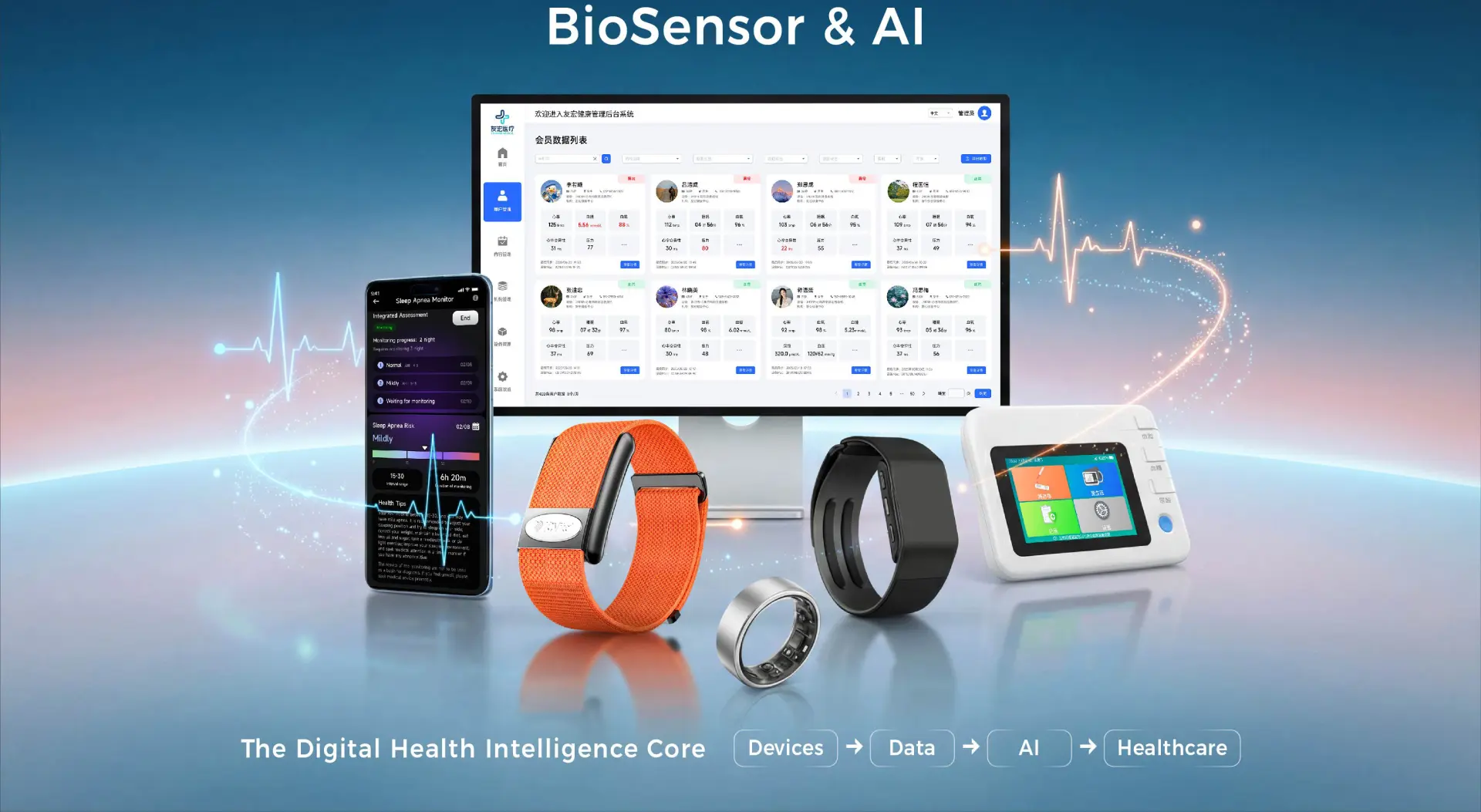
Wearable sleep tracking does not directly observe sleep in the same way as a laboratory sleep study. A ring, band or other wearable usually combines movement—and, where supported, signals such as pulse-wave data, heart rate or temperature—with an algorithm that estimates sleep and wake. B2B teams should therefore evaluate the complete measurement and data system, not just the sleep score displayed in an app.
Before selecting a device or defining an OEM/ODM requirement, product teams should ask:
- Which sleep outputs are required: sleep/wake, total sleep time, awakenings, sleep stages, trends or a composite score?
- Which sensors and wear conditions support those outputs?
- How are missing data, poor contact, motion and off-wrist periods handled?
- What reference method, population and environment were used for validation?
- Which metrics describe epoch-level classification and nightly summary agreement?
- Can the required fields, timestamps and quality indicators reach the customer through the intended app, SDK, API or BLE path?
- How are hardware, firmware and algorithm versions controlled after launch?
This guide explains the engineering, data and validation decisions behind wearable sleep features. It does not establish the function, performance or regulatory status of any specific J-Style model. Sensor support, algorithms, sleep outputs and interface access must be confirmed for the selected product and project configuration.
Wearable Sleep Tracking: The Short Answer
Most wearables infer sleep from signals that correlate with sleep rather than measuring the full set of signals used to score clinical sleep studies. Movement is commonly used to estimate sleep and wake. Some systems add optical pulse-wave, heart-rate, heart-rate-variability, temperature or other inputs. The algorithm then converts those inputs into nightly outputs.
Every step creates a verification question. A sensor can be present but produce unusable data during loose wear. A well-performing algorithm can be undermined by missing timestamps. A good app experience does not prove that the same data are available to a partner platform. A validation result for one population or firmware version may not transfer unchanged to another.
| Layer | Typical Role | B2B Verification Question |
|---|---|---|
| Wear and fit | Maintains contact and determines overnight data continuity | Which sizes, positions and fit rules produce valid data? |
| Sensors | Capture movement and, where supported, physiological or environmental signals | Which exact signals are used by the sleep algorithm? |
| Signal processing | Filters artifacts, detects contact and creates analysis-ready features | How are motion, gaps and low-quality periods flagged? |
| Sleep algorithm | Estimates sleep/wake, stages or derived summaries | Which version, outputs, epoch length and population apply? |
| Data interface | Delivers results to an app, cloud service or partner system | Are timestamps, stages, confidence and quality fields available? |
| Validation | Compares outputs with a defined reference under stated conditions | Does the evidence match the target users and intended deployment? |
1. Sleep Tracking Is an Inference Problem
Polysomnography (PSG) records multiple channels that can include brain activity, eye movements, muscle activity, heart rhythm, airflow, breathing effort and oxygen-related signals. Trained scorers use defined criteria to classify sleep and wake and to assign sleep stages. Consumer wearables generally do not record the same complete signal set.
The review Wearable Sleep Technology in Clinical and Research Settings explains that wearable products commonly rely on movement, with some incorporating additional physiological signals, and that validation methods are not uniform across devices. This is why a wearable output should be described as an estimate produced by a defined system.
Inference is not inherently a weakness. It can support scalable, repeated measurements in daily life. The commercial mistake is treating every inferred output as a directly observed fact or assuming that a polished graph proves the underlying data quality.
2. Define Each Sleep Output Before Evaluating It
“Sleep tracking” is not one metric. A useful product requirement specifies the outputs and their definitions. Common terms include:
- Time in bed: the interval the system considers the user to be in a sleep opportunity, which may depend on user input, device wear or algorithmic detection.
- Sleep onset: the estimated point at which sleep begins according to the selected rules.
- Sleep latency: the estimated time from the start of the sleep opportunity to sleep onset.
- Total sleep time: the sum of periods classified as sleep.
- Wake after sleep onset (WASO): estimated wake time between sleep onset and final awakening.
- Sleep efficiency: usually a ratio of estimated sleep time to the defined sleep opportunity.
- Sleep stages: algorithmic estimates such as light, deep and REM sleep; labels and grouping can differ by product.
- Sleep score: a composite calculated from selected inputs and weighting rules, not a universal clinical measurement.
Two products can display the same label while using different windows, stage mappings, gap rules or score formulas. A B2B data dictionary should define every field, unit, timestamp convention, invalid value and update rule.
3. Movement-Based Tracking Has a Known Limitation
Actigraphy uses movement over time to estimate sleep and wake. It can be useful for characterizing sleep timing and patterns over multiple nights. The American Academy of Sleep Medicine systematic review of actigraphy discusses measures such as total sleep time, sleep latency, WASO and sleep efficiency while also distinguishing actigraphy from PSG.
The central limitation is intuitive: a person can lie still while awake. A movement-led algorithm may classify part of that interval as sleep. Conversely, movement during sleep can be interpreted as wake. The size and direction of the error depend on the algorithm, user, night and use condition.
This matters in populations with fragmented sleep, long periods of quiet wakefulness, unusual schedules or limited mobility. Teams should not assume that results from healthy adults sleeping on a regular schedule will represent every intended group.
4. Multisensor Algorithms Add Context, Not Automatic Proof
Optical pulse-wave data, derived heart rate or HRV, skin temperature and other signals can add information related to overnight physiology. A multisensor model may use changes in movement and autonomic patterns to estimate transitions that movement alone cannot separate well.
However, adding a signal does not automatically improve the delivered result. The sensor must maintain usable contact, the signal-processing chain must manage artifact, and the algorithm must be trained and validated for the intended output. More inputs can also create more failure modes, power demands and version dependencies.
For optical signals, review the practical artifact and validation questions in the wearable HRV measurement guide. For overnight temperature, distinguish a local skin-temperature trend from core temperature and review the wearable skin-temperature limitations.
5. Sleep Stages Need Special Care
PSG sleep staging is based primarily on brain, eye-movement and muscle-activity signals scored in defined epochs. A wrist or finger wearable usually estimates stages from indirect signals. Its output can be useful for product engagement or longitudinal exploration, but it should not be presented as identical to laboratory staging without evidence for the exact system and intended use.
A single percentage for “sleep accuracy” is especially unhelpful. It can hide:
- strong performance for detecting sleep but weak performance for detecting wake;
- confusion between neighboring sleep-stage categories;
- class imbalance because much of a typical night is sleep;
- different results across age groups, health status or sleep quality;
- and the exclusion of failed nights from the reported analysis.
The workshop report on wearable sleep and circadian biomarkers emphasizes the importance of validation against appropriate references, transparent reporting and evaluation in relevant populations.
6. Form Factor Changes the Measurement Conditions
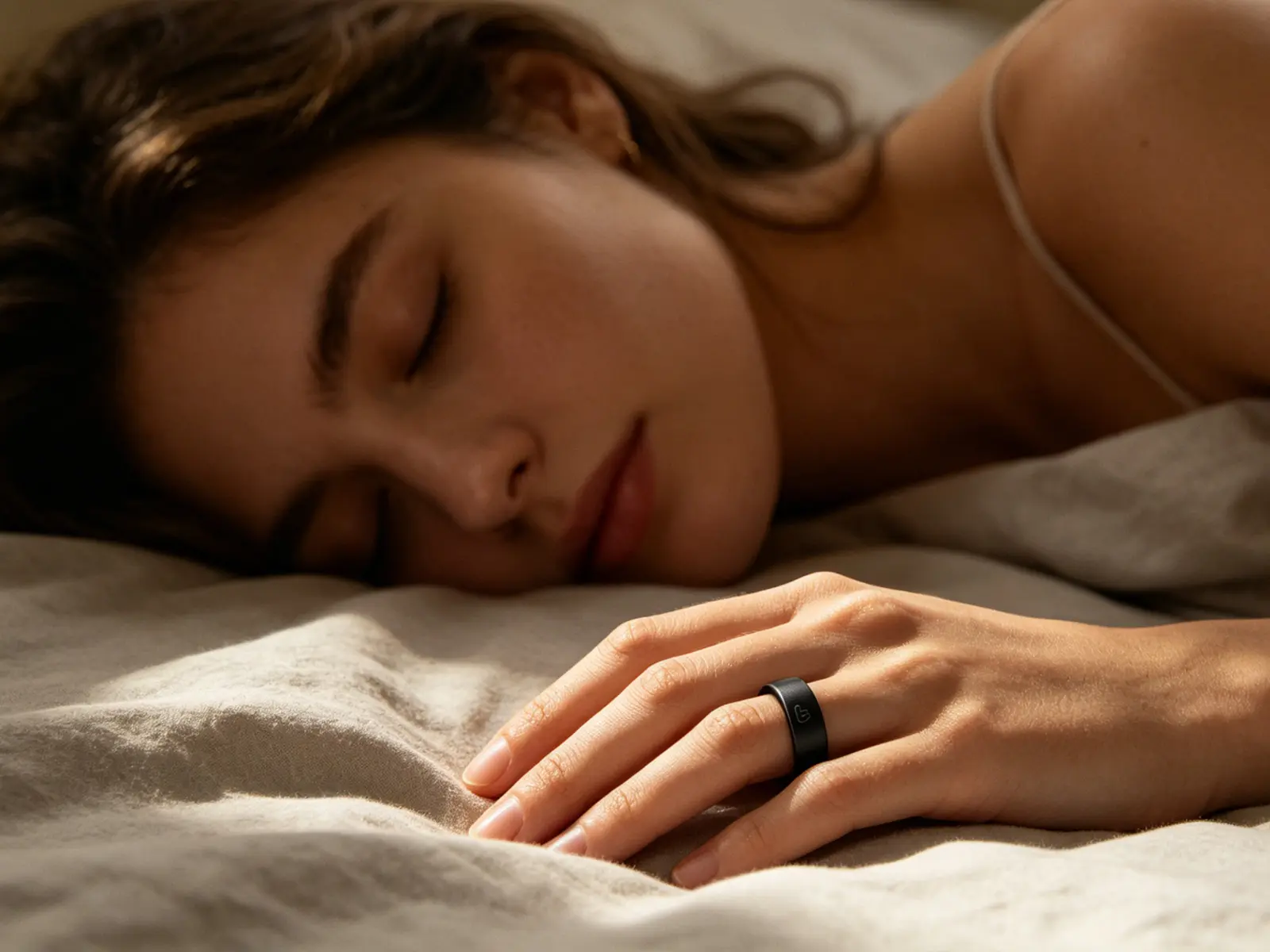
Smart ring considerations
- Ring size and overnight finger changes can affect contact and comfort.
- Rotation may change optical-sensor alignment.
- A compact battery creates power and sampling tradeoffs.
- Low daytime burden may support consistent overnight wear for some users.
Smart band considerations
- Strap tension and wrist position can vary substantially.
- A larger enclosure may support different battery, sensor and interaction options.
- A screen can add user value but may change power use and interaction design.
- Users may loosen or remove the band at night if it feels intrusive.
Neither form factor is universally more accurate. The relevant question is whether the exact device maintains sufficient data quality and user adherence in the target workflow. Use the smart ring vs screenless smart band guide to compare broader deployment tradeoffs.
7. Signal Quality and Missing Nights Are Product Requirements
A sleep feature can fail before the algorithm begins. Loose contact, device rotation, motion, blocked optical paths, low battery, removal, synchronization failures or time-zone errors can create incomplete nights. Product requirements should define:
- minimum wear duration and valid-data coverage;
- contact or off-body detection behavior;
- artifact and quality flags;
- rules for merging split sleep periods or naps;
- treatment of charging and synchronization gaps;
- local time, UTC and daylight-saving behavior;
- when a result is withheld rather than displayed;
- and what the user sees when a night is incomplete.
Failure reporting is part of performance. If an algorithm produces attractive outputs only after excluding difficult nights, the valid-night rate and exclusion rules are essential to commercial evaluation.
8. Specify the Complete Sleep Data Contract
A partner platform may need more than a nightly total. Depending on the project, the data contract could include sleep-session start and end, sleep/wake epochs, stage labels, confidence or quality fields, device-wear intervals, sensor summaries, algorithm version, processing time and revision status.
App availability does not imply partner access. A value visible in the manufacturer's app may be processed in the cloud and unavailable through the selected SDK, API or BLE interface. Raw signals may be restricted by memory, bandwidth, power, privacy, licensing or product architecture.
Map the required fields end to end with the wearable SDK, API and BLE integration guide. Then use the app integration readiness checklist to verify authentication, identifiers, timestamp handling, retries, consent, deletion and versioning.
9. Build a Validation Plan Around the Intended Use
A strong validation plan begins with a precise question. “Is sleep tracking accurate?” is too broad. Better questions include:
- How closely does total sleep time agree with PSG in the intended population?
- How well does the system distinguish wake from sleep during quiet wakefulness?
- How are stage classifications distributed compared with the reference?
- How many nights fail because of wear, sensing or synchronization issues?
- Does performance change between controlled laboratory and home conditions?
- Does a firmware or algorithm update change previously validated outputs?
PSG is the appropriate reference for questions about clinical sleep/wake and stage classification. A sleep diary, event marker or actigraphy reference may answer different questions but should not be substituted silently for PSG. Laboratory comparison provides control and synchronized reference data; home evaluation tests real-world fit, adherence, connectivity and failure handling. Many B2B projects need both.
Validation samples should represent the intended users rather than only an easy convenience group. Age range, sex distribution, skin characteristics relevant to optical sensing, sleep patterns, medication, health status, schedule and environmental conditions can matter. The protocol should state inclusions, exclusions and unsuccessful recordings.
10. Use Metrics That Reveal the Errors
| Metric or View | What It Helps Answer | Important Limitation |
|---|---|---|
| Sleep sensitivity | How often reference sleep is classified as sleep | Can look high even when quiet wake is misclassified |
| Wake specificity | How often reference wake is identified as wake | May vary with fragmented or low-movement wake |
| Stage confusion matrix | Which classes are confused with one another | Depends on the chosen stage mapping and reference scoring |
| Nightly bias | Whether totals tend to be over- or underestimated | An average can hide large individual errors |
| Limits of agreement | How wide the differences are across nights or users | Must be interpreted against the use requirement |
| Valid-night rate | How often the system returns a usable result | Requires transparent invalid-night rules |
| Data coverage | How much of the intended window contains valid data | High coverage does not by itself prove correct classification |
| Test-retest behavior | Whether outputs are stable when conditions are comparable | Real sleep also varies from night to night |
Report results by outcome and relevant subgroup, with uncertainty and failed recordings. Do not compress an entire validation program into one marketing accuracy number.
11. Treat Algorithm Version as Part of the Product
Sleep outputs can change without visible hardware changes. Updates to filtering, contact detection, sleep-window detection, stage classification, server processing or score weighting may alter the result. B2B teams should record:
- device model and hardware revision;
- sensor and mechanical configuration;
- firmware version;
- mobile SDK or app version;
- cloud and sleep-algorithm version;
- data-schema version;
- release date and change notes;
- and the rule for regression testing or revalidation.
A validation report should be linked to this version set. “Validated device” is incomplete if the tested algorithm cannot be identified.
12. B2B Evaluation Checklist
Use the following sequence during supplier and sample evaluation:
- Define the decision. State what the sleep data will enable in the customer product.
- Define the outputs. Specify session, epoch, stage, trend, score and quality fields.
- Confirm the exact configuration. Lock the model, sensors, fit options, firmware and algorithm path.
- Inspect failure behavior. Test loose wear, removal, charging, motion, poor signal and delayed synchronization.
- Verify interface access. Confirm fields, timestamps, latency, retention, permissions and versioning.
- Review applicable evidence. Match the validation population, reference and version to the project.
- Run representative sample testing. Include realistic wear, home conditions and difficult cases.
- Set acceptance criteria. Define outcome-specific limits and minimum valid-night coverage before testing.
- Plan change control. Decide which updates require regression tests or renewed validation.
- Align claims with evidence. Ensure website, app, packaging and sales language do not exceed verified capability.
The broader smart wearable sample evaluation checklist can help teams assess battery, mechanics, usability, connectivity and data behavior alongside sleep. For an initial supplier brief, use the smart wearable RFQ guide.
Frequently Asked Questions
Is wearable sleep tracking the same as polysomnography?
No. PSG records a defined set of physiological signals used for clinical sleep scoring. Most wearables estimate sleep from movement and selected physiological signals. A wearable can support longitudinal consumer, wellness or research workflows, but equivalence should not be assumed.
How accurate are wearable sleep stages?
There is no single answer for all products. Performance depends on the exact device, wear location, signals, algorithm version, reference method, population and conditions. Review outcome-specific results, stage confusion, nightly agreement, failed nights and independent evidence where available.
Can a wearable diagnose insomnia or sleep apnea?
A general wellness sleep feature should not be treated as a diagnostic tool. The American Academy of Sleep Medicine position statement says consumer sleep technology without appropriate validation and regulatory clearance should not be used to diagnose or treat sleep disorders. Diagnostic or screening claims require product-specific evidence and the applicable regulatory status.
Does a high sleep score mean the user is healthy?
Not necessarily. A sleep score is a product-defined composite, and different systems may use different inputs and weights. It should be explained as a model output, not a universal measure of health or the absence of a sleep disorder.
If sleep data appear in the app, will they be available through an API?
Not automatically. App, SDK, API, BLE and raw-data access are separate capabilities. Confirm the exact fields, granularity, timestamps, quality indicators, permissions and commercial terms for the selected model and project.
Is a smart ring or smart band better for sleep tracking?
Neither is universally better. The choice depends on overnight comfort, fit stability, sensor configuration, battery, required interface, user behavior and validated performance in the intended population.
Discuss Your Wearable Sleep-Tracking Requirements
A productive supplier discussion starts with required sleep outputs, target users, wear conditions, interface needs, validation expectations and claim boundaries—not with a generic request for “accurate sleep tracking.”
Contact J-Style to discuss your project requirements, including candidate form factors, sleep-data fields, integration needs, sample evaluation and the evidence required for your intended use. Availability and scope must be confirmed for the exact product and configuration.
Editorial note: This article provides general B2B product-development information. It is not medical advice and does not claim that any unspecified J-Style product diagnoses, screens for or treats a sleep disorder.