

Updated 5 months ago
CE Certification for Smart Wearables: Complete Guide for B2B Exporters to Europe (2026)
youhong

Published: May 2026 | Reading Time: ~15 minutes | Category: Regulatory Compliance, B2B Export, EU Market AccessAuthor: J-Style Compliance & Export Team | Last Updated: May 2026
Summary: CE marking is the mandatory legal passport for any smart wearable — smart band, fitness tracker, or smart ring — entering the European Economic Area. This guide covers every step of the 2026 CE certification process for smart wearables: applicable directives, testing standards, technical documentation, the EU Authorized Representative requirement, and the critical new cybersecurity requirements under the Radio Equipment Directive that became mandatory from August 1, 2025. Written for B2B manufacturers, OEM buyers, and exporters sourcing wearables from Asia.

Table of Contents
- Why CE Certification Is the #1 Barrier for Smart Wearable Exporters to Europe
- The EU Wearable Market Opportunity in 2026: What's at Stake
- What CE Marking Actually Means (And What It Doesn't)
- Step 1: Classify Your Smart Wearable — Which Directives Apply?
- Step 2: Identify Applicable Harmonized Standards
- Step 3: Conduct Testing and Gap Analysis
- Step 4: Build Your Technical Documentation File
- Step 5: Conformity Assessment — Self-Declaration vs. Notified Body
- Step 6: Appoint an EU Authorized Representative
- Step 7: Issue the EU Declaration of Conformity and Affix the CE Mark
- 2025–2026 Critical Update: RED Cybersecurity Requirements (EN 18031)
- The Medical Device Boundary: When Your Wearable Needs MDR Compliance
- Post-Market Obligations: What Happens After You Affix the CE Mark
- Common CE Certification Mistakes That Block EU Market Access
- How J-Style Delivers CE-Certified Smart Wearables for B2B Partners
- Frequently Asked Questions (FAQ)
- CE Certification Checklist for Smart Wearable Exporters
Why CE Certification Is the #1 Barrier for Smart Wearable Exporters to Europe
The European Union is the world's second-largest economy and one of the most valuable markets for smart wearable devices. But accessing it is not as simple as shipping goods and displaying a price.
CE marking is a mandatory legal requirement — not a quality badge or an optional signal of excellence. Without it, manufacturers are immediately barred from selling their products in the EU market. Customs authorities can seize uncertified shipments. Market surveillance authorities can issue fines, mandate product recalls, and publish enforcement actions. For a B2B buyer sourcing wearables for a European brand, retailer, or distributor, the consequences of receiving uncertified products fall directly on their business.
CE marking is a mark that must be affixed to certain commercial products to indicate that the manufacturer or importer affirms the goods' conformity with European health, safety, and environmental protection standards. The mark indicates that the product may be traded freely in any part of the European Economic Area, regardless of its country of origin.
For smart wearables — smart bands, fitness trackers, smart rings, and health monitoring bands — CE certification is particularly complex because these devices typically fall under multiple EU directives simultaneously, each with its own testing requirements, documentation obligations, and (in some cases) third-party assessment requirements.
This guide provides a complete, current roadmap for B2B manufacturers and exporters to understand, plan, and execute CE certification for smart wearable products for the European market in 2026.
The EU Wearable Market Opportunity in 2026: What's at Stake
Understanding why CE certification is worth the investment requires context on the size of the market being unlocked.
The European wearable technology market was valued at USD 24.22 billion in 2025 and is projected to reach USD 80.02 billion by 2034, growing at a CAGR of 14.2% from 2026 to 2034, driven by national digital health integration, preventive healthcare adoption, and expanding clinical and occupational wearable use.
The Europe smart wearables market is expected to grow from USD 61.7 billion in 2026 to USD 292.9 billion in 2035, at a CAGR of 18.9%. Aging population demographics, universal healthcare systems prioritizing preventive care, and high smartphone penetration are all contributing to sustained demand across Western, Northern, and Central Europe.
According to Eurostat, 58% of adults in the European Union used a health or fitness tracking device at least once per week in 2024 — a penetration rate that confirms Europe as a high-priority target market for any global smart wearable brand.
CE certification is the non-negotiable entry ticket to this opportunity.
What CE Marking Actually Means (And What It Doesn't)
Before beginning the certification process, it is essential to understand exactly what the CE mark represents — and what it does not.
What CE Marking Is
CE Marking on a product is a manufacturer's declaration that a product meets the applicable health, safety, and environmental requirements outlined in the appropriate European product legislation and has undergone the relevant conformity assessment procedure.
The CE Mark indicates that a product has been assessed by the manufacturer and meets the essential health and safety requirements enshrined in what are commonly considered the CE Mark Directives and Regulations. These directives and regulations are legislative acts adopted by the EU as a whole and are considered to be "harmonized," which means that they apply across all EU member states and are mandatory.
What CE Marking Is Not
CE marking is not a quality award, a performance certification, or a government-issued approval certificate. There is no central EU body that gives you permission or a certificate allowing you to use the CE mark. The mark is a manufacturer's self-declaration of conformity — backed by a technical documentation file and, for higher-risk products, third-party assessment by a Notified Body.
This means the responsibility for CE compliance rests entirely with the manufacturer or their EU Authorized Representative. If a product is found non-compliant after the CE mark has been affixed, the manufacturer is responsible for affixing the CE marking unless the importer or distributors market the product under its own name. In this case, the importer or distributor takes on the responsibilities of the manufacturer.
The CE Mark as Market Access Passport
The CE mark on radio equipment indicates compliance with the directive. Unlike some other European cybersecurity laws, the impact to the CE mark makes RED a market access requirement. This applies equally to fitness trackers, smart bands, and smart rings with Bluetooth connectivity — all of which use radio technology and must comply with the Radio Equipment Directive (RED) as a condition of CE marking.
Step 1: Classify Your Smart Wearable — Which Directives Apply?
The first — and most critical — step in CE certification for a smart wearable is determining which EU directives apply to your specific product. Getting this wrong means following the wrong standards, conducting the wrong tests, and building documentation that will not satisfy market surveillance authorities.
For smart wearables with Bluetooth connectivity (which includes virtually all modern smart bands, fitness trackers, and smart rings), the following directives are typically relevant:
Radio Equipment Directive (RED) — 2014/53/EU
Applicability: Mandatory for all Bluetooth/wireless smart wearables
This directive ensures that radio equipment placed on the EU market meets essential requirements for health, safety, electromagnetic compatibility, and efficient use of the radio spectrum.
RED is the primary directive for any smart wearable with wireless connectivity (Bluetooth, BLE, Wi-Fi, NFC, GPS). It covers:
- RF performance and radio spectrum compliance
- Electromagnetic compatibility (EMC)
- Electrical safety
- SAR (Specific Absorption Rate) for devices worn on the body
- From August 1, 2025: cybersecurity requirements under Delegated Act (EU) 2022/30
The harmonized standards under RED most relevant to smart wearables include EN 300 328 (Bluetooth radio), EN 301 489 (EMC), and EN 62368-1 (electrical safety, replacing EN 60950).
RoHS Directive — 2011/65/EU (as amended by 2015/863/EU)
Applicability: Mandatory for all electronic wearables
The Restriction of Hazardous Substances directive restricts the use of specific hazardous materials (lead, mercury, cadmium, hexavalent chromium, PBB, PBDE, and four phthalates) in electrical and electronic equipment. All smart wearables must demonstrate RoHS compliance, typically through material declarations and test reports.
General Product Safety Regulation (GPSR) — EU 2023/988
Applicability: Mandatory for all consumer products from December 2024
The updated GPSR, which came into full effect in December 2024, strengthens product safety requirements and documentation obligations for all consumer products, including wearables. It establishes clear EU Responsible Person requirements for non-EU manufacturers.
Medical Device Regulation (MDR) — EU 2017/745
Applicability: Conditional — depends on intended purpose and health claims
If your smart wearable is intended for any medical purpose — diagnosing, treating, or monitoring a medical condition — it may require MDR compliance in addition to RED. See Section 12: The Medical Device Boundary for detailed guidance on this critical classification decision.
Electromagnetic Compatibility (EMC) Directive — 2014/30/EU
Applicability: For wearables not already covered under RED for EMC
Most smart wearables with wireless connectivity address EMC requirements through RED. However, for wearables without radio functions, the standalone EMC Directive applies.
Waste Electrical and Electronic Equipment (WEEE) — 2012/19/EU
Applicability: All electronic wearables
WEEE compliance requires producers to finance the collection, treatment, and recycling of waste electrical equipment. While not a CE marking requirement per se, WEEE registration is a mandatory obligation for any company placing electronic products on the EU market.
Step 2: Identify Applicable Harmonized Standards
Once applicable directives are identified, the next step is mapping your product to the harmonized European standards that define how to demonstrate compliance with each directive's essential requirements.
One of the most important rules of product legislation is that the use of harmonized standards is voluntary, but they give a "presumption of conformity" with the law. In practice, demonstrating conformity through harmonized standards is the most efficient and legally defensible path to CE marking.
The key harmonized standards for smart wearable CE certification in 2026:
| Standard | Directive | Coverage |
| EN 300 328 | RED | Bluetooth/BLE radio performance (2.4 GHz) |
| EN 301 489-1 + -3 + -17 | RED | Electromagnetic compatibility (EMC) |
| EN 62368-1 | RED / LVD | Audio/video and IT equipment electrical safety |
| EN 50566 / EN 62209-1 | RED | SAR — body-worn devices, radio exposure |
| EN 18031-1 / -2 / -3 | RED (2022/30) | Cybersecurity — mandatory from August 1, 2025 |
| EN IEC 63000 | RoHS | Technical documentation for RoHS assessment |
| ISO 14971 | MDR (if applicable) | Risk management for medical devices |
| IEC 60068 series | General | Environmental testing (temperature, humidity, shock) |
| IEC 60529 | General | IP rating verification (waterproofing — e.g., IP68) |
Note on IP ratings: If your smart band or fitness tracker carries an IP68 or similar waterproof claim, this must be verified through testing to IEC 60529 standard. Unverified IP claims on CE-marked products constitute misrepresentation under GPSR and RED.
Step 3: Conduct Testing and Gap Analysis
Before jumping into testing, perform a gap analysis of your current design against applicable CE standards. This step highlights areas of non-compliance early.
A gap analysis compares your current product design against each harmonized standard requirement and identifies where testing or design modifications are needed before formal certification testing.
Testing Laboratory Requirements
Choosing an accredited lab for testing ensures results are recognized across the EU. Cutting corners here often results in rejected CE applications or product recalls.
Test laboratories must be accredited under ISO/IEC 17025 by a national accreditation body recognized within the European Accreditation (EA) network. Common accredited testing bodies for smart wearables include:
- TÜV SÜD (Germany) — tuvsud.com
- TÜV Rheinland (Germany)
- SGS (Switzerland)
- Intertek (UK)
- Bureau Veritas (France)
- UL (via Emergo for MDR applications)
Key Tests for Smart Wearables
RF Performance Testing (EN 300 328) Verifies that the Bluetooth radio transmits within permitted frequency bands and power limits without interfering with other devices or networks.
EMC Testing (EN 301 489) Tests both emissions (the wearable does not produce excessive electromagnetic interference) and immunity (the wearable operates correctly when exposed to external electromagnetic fields).
Electrical Safety Testing (EN 62368-1) Verifies insulation, protection against electrical shock, thermal performance, and mechanical robustness under stress conditions.
SAR Testing (EN 50566 / EN 62209-1) Specific Absorption Rate testing measures the rate at which the body absorbs radiofrequency energy from the device. Required for all wearables worn directly on the body with active radio transmission.
Cybersecurity Testing (EN 18031-1/-2/-3) Mandatory from August 1, 2025. Evaluates network protection, personal data protection, and financial transaction security as applicable to the device's connected functions. (See Section 11 for full details.)
Waterproof Verification (IEC 60529) If your product carries an IP claim (e.g., IP68 for smart bands, or 5ATM for smart rings), this must be verified through standardized immersion and ingress testing.
Step 4: Build Your Technical Documentation File
The Technical Documentation File (sometimes called the "Technical File") is the central compliance record that supports your CE mark. Technical documentation is necessary to prove the product meets essential requirements under harmonised EU rules and to justify and support an EU declaration of conformity.
The technical documentation must include an adequate analysis and assessment of the risk(s) and should include at least:
- Manufacturer name, address, and contact details
- Product description, intended use, and technical specifications
- List of applicable EU directives and harmonized standards
- Risk assessment and mitigation documentation
- Test reports from accredited laboratories
- Design drawings, circuit schematics, and bill of materials
- Firmware/software description (especially relevant for cybersecurity compliance)
- User instructions and labeling documentation
- Declaration of Conformity (DoC)
- Name and address of the EU Authorized Representative (for non-EU manufacturers)
Document Retention Requirements
The technical documentation and the EU Declaration of Conformity must be kept for 10 years after the product has been placed on the market or for the period specified in the directive.
Technical documentation can be made available in any format (i.e. paper or electronic) and must be held for a period of up to 10 years after the manufacture of the last unit, and in most cases reside in the European Economic Area (EEA).
Living Documentation
The Technical File is not a one-time document. If there are any changes, such as the applicable legislation, the product itself, or in the contact details of the manufacturer or authorised representative, the DoC must be reviewed and updated accordingly.
This means that if you update firmware, change components, or new harmonized standards are published (such as the EN 18031 cybersecurity standards from 2025), the Technical File must be reviewed and updated to maintain compliance.
Step 5: Conformity Assessment — Self-Declaration vs. Notified Body
One of the most consequential decisions in the CE certification process is determining whether you can self-declare conformity or whether you must involve a Notified Body.
Self-Declaration (Internal Control)
For most consumer smart wearables under the Radio Equipment Directive, if the law allows self-assessment, you can evaluate your product without involving a conformity assessment body.
Self-declaration means the manufacturer:
- Conducts or commissions all required testing
- Compiles the Technical Documentation File
- Issues and signs the EU Declaration of Conformity
- Affixes the CE mark to the product
This route is available for most fitness-focused smart bands, smart rings, and general-purpose wearables that do not make medical claims.
Notified Body Involvement
For products that present higher risks, the manufacturer cannot check safety alone. In these cases, an independent organisation, specifically a notified body appointed by national authorities, has to perform the safety check. The manufacturer may only affix the CE marking to the product after this.
Notified Body involvement is mandatory when:
- The wearable is classified as a medical device under MDR (Class IIa and above)
- Specific RED annexes require third-party assessment
- The applicable directive mandates third-party certification for the product category
To find notified bodies, you can use NANDO — the New Approach Notified and Designated Organisations database (ec.europa.eu/growth/tools-databases/nando).
For non-medical consumer smart wearables, self-declaration under RED is typically the applicable pathway — but manufacturers must ensure their technical documentation is sufficiently robust to withstand market surveillance scrutiny.
Step 6: Appoint an EU Authorized Representative
For manufacturers based outside the European Economic Area — including manufacturers in China, the United States, and other non-EU countries — appointing an EU Authorized Representative is a legal requirement before placing products on the EU market.
If you are not the manufacturer, other roles may carry specific responsibilities, such as importers and authorised representatives.
What an EU Authorized Representative Does
The economic operator or "EU Responsible Person" can be a manufacturer in the EU, the EU importer, an authorized representative appointed by the manufacturer, or a fulfilment service provider. Whichever the option chosen, the name and address of this EU-based representative must appear on the product or packaging so that customs or market surveillance authorities can have a contact person in the EU in case the product presents a risk. This also applies to products sold online.
The EU Authorized Representative's responsibilities include:
- Maintaining and making available the Technical Documentation File upon regulatory request
- Registering the product in relevant EU databases (e.g., EUDAMED for medical devices)
- Acting as the legal point of contact for EU market surveillance authorities
- Cooperating with compliance investigations and market surveillance inquiries
- Ensuring labels and documentation are translated into the required EU languages
Key Requirement for B2B Exporters
Under the General Product Safety Regulation (GPSR) that came into full effect in December 2024, the obligation for a named EU Responsible Person has been extended and strengthened. Every product sold in the EU — including through online channels and B2B distribution — must clearly identify an EU-based economic operator who can be held accountable.
For Chinese manufacturers exporting to European B2B buyers, establishing a reliable EU Authorized Representative relationship before the first shipment is essential. The absence of a named EU representative is one of the most common grounds for customs clearance rejection and market surveillance enforcement actions.
Step 7: Issue the EU Declaration of Conformity and Affix the CE Mark
The final step in the CE certification process — before affixing the mark — is issuing the EU Declaration of Conformity (DoC).
The EU Declaration of Conformity is the document in which the manufacturer states that the product fulfils the essential requirements of the applicable CE marking directives or regulations. By drawing up and signing the EU Declaration of Conformity, the manufacturer assumes responsibility for the compliance of the product.
Required Contents of the EU DoC
The model declaration of Decision No 768/2008/EC contains:
- Product identification (model number, batch/serial reference)
- Manufacturer name and address (or EU Authorized Representative)
- A statement that the declaration is issued under the sole responsibility of the manufacturer
- Reference to all applicable EU directives and regulations
- List of harmonized standards applied
- Reference to the Notified Body (if applicable), including its four-digit identification number
- Date of issue and signature of an authorized company representative
Language Requirements
The declaration must be drafted before placing the product on the EU market and retained for at least 10 years thereafter by the manufacturer, importer, or authorised representative. It must be translated into the official language(s) of each EU country where the product is sold.
Affixing the CE Mark
The CE marking must be visible, legible, and indelible. The mark can appear in different styles (e.g. colour, solid, or hollow), as long as it remains clear.
The CE marking must be placed visibly and legibly on the product or, if not possible due to the nature of the product, be affixed to the packaging and the accompanying document.
For small wearable devices where the product surface cannot accommodate a legible CE mark directly, placement on packaging and user documentation is a compliant alternative.

2025–2026 Critical Update: RED Cybersecurity Requirements (EN 18031)
The most significant regulatory change affecting smart wearable CE certification in 2025–2026 is the mandatory enforcement of cybersecurity requirements under the Radio Equipment Directive, effective August 1, 2025.
What Changed
Beginning August 1, 2025, all radio equipment placed on the European Union market that falls within the scope of the Delegated Act (2022/30) to the Radio Equipment Directive (2014/53/EU) must comply with enhanced cybersecurity requirements to continue with CE marking.
The European Commission activated three new essential requirements under RED Articles 3.3(d), (e), and (f):
Article 3.3(d) — Radio equipment does not harm the network or its functioning nor misuse network resources, thereby causing an unacceptable degradation of service. Example: Implementing data rate throttling and backoff strategies during firmware updates or error recovery to help avoid flooding networks.
Article 3.3(e) — Radio equipment incorporates safeguards to ensure that the personal data and privacy of the user and of the subscriber are protected. Example: Protect user privacy by encrypting cloud communications, minimizing unnecessary data collection, and securing stored data.
Article 3.3(f) — Radio equipment incorporates features ensuring protection against fraud, particularly for devices involved in financial transactions or payment functions.
Which Smart Wearables Are Affected
The RED delegated regulation (EU 2022/30) adds cybersecurity requirements for wireless and radio-connected devices. This update applies to products like IoT devices, smart toys, wearables, and wireless payment systems.
Specifically, wearable devices such as smartwatches or fitness trackers are explicitly covered. Any smart band, fitness tracker, or smart ring that:
- Connects to the internet (directly or via paired smartphone)
- Processes personal health data
- Transmits data to cloud platforms or third-party applications
...must comply with the new cybersecurity requirements as a condition of CE marking.
The EN 18031 Standards
The harmonized standards for the cybersecurity requirements are EN 18031-1, EN 18031-2, and EN 18031-3:
EN 18031 is mandatory from August 1, 2025; it is recommended to start certification planning at least 6 months in advance.
- EN 18031-1 — Network protection (Article 3.3(d))
- EN 18031-2 — Personal data and privacy protection (Article 3.3(e))
- EN 18031-3 — Protection against financial fraud (Article 3.3(f))
Practical Implications for Smart Wearable Manufacturers
For a smart band or smart ring that syncs health data to a cloud platform via a smartphone app, compliance with EN 18031-2 (data protection) is the primary obligation. Key technical measures typically required include:
- Encrypted cloud communications (TLS 1.2 or higher for all API communications)
- Minimal data collection (only collect data necessary for the declared device function)
- Secure data storage (encryption of health data at rest on the device and in the cloud)
- Firmware update security (authenticated, encrypted OTA firmware update mechanism)
- User consent and data access controls (GDPR-aligned user data management in the companion app)
TÜV SÜD offers testing and evaluating services based on standards such as EN 303 645 and IEC 62443. B2B buyers should verify that their manufacturing partners have completed EN 18031 compliance testing and that current Technical Documentation reflects this compliance — for any device shipped to EU customers after August 1, 2025.
The Medical Device Boundary: When Your Wearable Needs MDR Compliance
One of the most consequential regulatory classification decisions for smart wearable manufacturers is determining whether a device requires compliance with the EU Medical Device Regulation (MDR 2017/745) in addition to RED.
The boundary between a consumer wellness wearable and a medical device is defined by intended purpose and health claims — not by the sensors or capabilities of the device itself.
When MDR Applies
A smart wearable requires MDR compliance when it is:
- Intended for diagnosis, prevention, monitoring, treatment, or alleviation of a disease
- Intended to investigate, replace, or modify physiological processes
- Making claims that a health monitoring feature provides diagnostic information for a specific disease
The boundary between medical and ordinary wearables is blurred. If health monitoring involves disease management (e.g., blood glucose, arrhythmia warnings), be sure to certify under MDR to avoid compliance risks.
When MDR Does Not Apply
A smart wearable that is positioned as a consumer wellness and lifestyle monitoring device — without claims of diagnosing or treating specific medical conditions — generally falls outside MDR scope and is CE certified under RED and related directives.
This is a critical distinction for manufacturers making health-related claims. The following represent compliant wellness positioning:
- ✅ "Monitors heart rate trends for wellness awareness" — Consumer wellness claim
- ✅ "Tracks sleep stages and recovery score" — Consumer wellness claim
- ✅ "Blood glucose risk assessment for metabolic health awareness" — Wellness screening
- ✅ "ECG rhythm screening — consult a doctor for any concerns" — Wellness monitoring with appropriate disclaimer
- ❌ "Diagnoses atrial fibrillation" — Medical device claim requiring MDR
- ❌ "Measures blood glucose levels for diabetes management" — Medical device claim requiring MDR
- ❌ "Clinically indicated for arrhythmia monitoring" — Medical device claim requiring MDR
Important: The positioning of any health monitoring feature in marketing materials, labeling, and user documentation determines MDR applicability. Manufacturers must ensure that all communications — including website copy, product packaging, app descriptions, and user manuals — are consistent with the intended device classification.
MDR Classification if Applicable
If your company is not based in Europe, you must appoint an Authorized Representative within the EU who will act as your legal contact for regulators.
Under MDR, medical devices are classified by risk level:
- Class I — Low risk (self-declaration possible for non-sterile, non-measuring Class I)
- Class IIa — Medium risk (Notified Body required)
- Class IIb — Higher risk (Notified Body required)
- Class III — Highest risk (Notified Body required)
For most ECG-capable smart wearables marketed for rhythm monitoring, classification as Class IIa under MDR Rule 10 (active therapeutic devices or diagnostic devices) is common — requiring mandatory Notified Body involvement and significantly longer certification timelines (typically 8–18 months).
Post-Market Obligations: What Happens After You Affix the CE Mark
CE certification is not a one-time event. Regulatory obligations continue for the entire period the product is available on the EU market — and for 10 years after the last unit is manufactured.
Post-Market Surveillance
Manufacturers are required to actively monitor their products in use and collect data on:
- User complaints and product returns related to safety
- Adverse events or incidents reported by users
- Market surveillance findings in other jurisdictions
- New scientific or technical information relevant to product safety
Responding to Market Surveillance Authorities
EU market surveillance authorities are under no legal requirement to notify the U.S. manufacturer or exporter when their product is considered a potential risk. They are required only to notify the EU responsible person or economic operator. Timing to respond to a market surveillance inquiry typically starts when the EU responsible person/economic operator is notified.
This requirement reinforces why a reliable, responsive EU Authorized Representative is essential — not just a compliance formality.
Technical Documentation Updates
The Technical File must be updated when:
- The product design or firmware changes
- Applicable harmonized standards are revised or superseded
- New directives come into scope (as happened with the RED cybersecurity requirements in 2025)
- The EU Authorized Representative or manufacturer contact details change
GPSR Notification Obligations
Under the General Product Safety Regulation, manufacturers and EU Responsible Persons must notify the EU's Safety Gate (RAPEX) system if they become aware that a product they have placed on the market poses a risk to consumers. Proactive safety communication is a legal obligation.
Common CE Certification Mistakes That Block EU Market Access
Based on regulatory compliance experience across smart wearable product categories, the following are the most common errors that delay or block CE certification for B2B exporters:
❌ Mistake 1: Applying the Wrong Directives
Misclassifying the product and applying the wrong directives — a device labeled incorrectly may follow the wrong standards, forcing costly redesigns later. For smart wearables, failing to include the RED cybersecurity requirements (mandatory from August 2025) is currently the most common version of this error.
❌ Mistake 2: Using Non-Accredited Test Laboratories
Test reports from laboratories not accredited under ISO/IEC 17025 by an EA-recognized body are not accepted as evidence of conformity. Always verify lab accreditation before commissioning testing.
❌ Mistake 3: Incomplete or Undated Technical Documentation
Market surveillance authorities routinely request Technical Files from manufacturers. Documentation that is incomplete, undated, or fails to reference current harmonized standards is treated as non-compliant — even if the product physically meets all requirements.
❌ Mistake 4: Unverified IP Rating Claims
Claiming IP68 waterproofing (for smart bands) or 5ATM (for smart rings) without supporting IEC 60529 test reports in the Technical File constitutes a false product claim under GPSR and RED.
❌ Mistake 5: No EU Authorized Representative
The name and address of this EU-based representative must appear on the product or packaging. Products arriving at EU customs without a named EU Responsible Person are subject to immediate rejection.
❌ Mistake 6: Ignoring the RED Cybersecurity Requirements
Any Bluetooth-connected smart wearable shipped to EU customers after August 1, 2025 without EN 18031 compliance in its Technical File is non-compliant — regardless of when the original CE mark was obtained. This is currently the highest-risk compliance gap for wearable manufacturers whose certifications predate August 2025.
❌ Mistake 7: Medical Claims Without MDR Compliance
Any marketing language, labeling, or app description that implies diagnostic capability for a specific medical condition without MDR certification exposes the manufacturer and EU Authorized Representative to enforcement action.
How J-Style Delivers CE-Certified Smart Wearables for B2B Partners
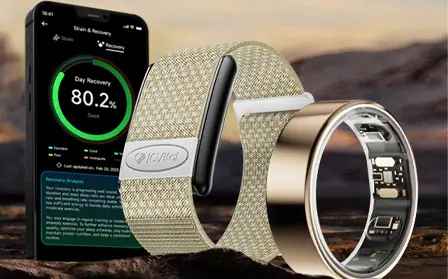
J-Style (Youhong Medical / Jointcorp) is a CE-certified smart wearable manufacturer with over 20 years of production experience, ISO 13485 medical device quality management certification, and a complete compliance portfolio covering CE, FCC, RoHS, and BSCI certifications — maintained across all product lines including the JCVital smart band series and the JCRing smart ring series.
CE Certification Across All Product Lines
All J-Style wearable products shipped to EU markets carry CE marking supported by complete Technical Documentation Files that include:
- RED conformity (EN 300 328, EN 301 489, EN 62368-1, SAR testing)
- RoHS compliance documentation
- EN 18031 cybersecurity compliance (for 2025+ product variants)
- IEC 60529 verified waterproof ratings:
- JCVital smart bands: IP68 (verified submersion resistance)
- JCRing smart rings: 5ATM (verified pressure resistance for swimming)
- Risk assessment documentation
- EU Declaration of Conformity for each product model
- ISO 13485 quality management system certification
Manufacturer-Level CE Support for B2B and OEM Partners
For B2B buyers sourcing J-Style products for European distribution under their own brand through OEM or white-label programs, J-Style provides:
- Certified Technical Documentation transferable to support buyer's own EU market access
- Declaration of Conformity templates for partner brand adaptation
- Regulatory consultation support for product classification and compliance strategy
- Product-level compliance status transparency for all active SKUs
Health Feature Compliance Positioning
All J-Style health monitoring features are positioned and documented as consumer wellness tools — not medical devices — with appropriate disclaimers embedded in product documentation, app content, and marketing materials:
- ECG heart rhythm monitoring: Wellness screening tool; not a diagnostic device; consult a doctor for any concerns
- Blood glucose risk assessment (BGEM): Non-invasive trend-based risk screening only; does not measure specific blood glucose values; cannot diagnose diabetes or any metabolic condition; not a substitute for clinical blood testing or professional medical advice
- Blood pressure trends: PTT-based trend monitoring; not equivalent to clinical sphygmomanometer measurement
This positioning ensures that J-Style's health monitoring features remain within the consumer wellness category — maintaining RED-pathway CE compliance and avoiding MDR requirements — while providing meaningful health awareness value to end users.
View J-Style's full certification credentials: www.jointcorp.com/award/
For B2B regulatory inquiries or CE documentation requests: www.jointcorp.com/contact/
Frequently Asked Questions (FAQ)
Q: Is CE marking mandatory for smart wearables sold in Europe? A: Yes. CE marking is a legal requirement for any smart wearable placed on the EU and EEA market. Products without CE marking cannot legally be sold in EU member states, Switzerland, or Norway. Uncertified products are subject to customs seizure, market withdrawal, and regulatory fines.
Q: Which CE directive applies to a Bluetooth smart band or fitness tracker? A: The primary directive is the Radio Equipment Directive (RED) 2014/53/EU, which covers Bluetooth connectivity, EMC, electrical safety, SAR, and — from August 1, 2025 — cybersecurity requirements. RoHS (hazardous substance restrictions) and GPSR (general product safety) also apply. MDR applies additionally if the device makes medical diagnostic claims.
Q: What is the new RED cybersecurity requirement from August 2025? A: Beginning August 1, 2025, all radio equipment placed on the EU market must comply with enhanced cybersecurity requirements under Delegated Act (EU) 2022/30. For smart wearables, this primarily means demonstrating compliant data protection (EN 18031-2) and network security (EN 18031-1) through technical documentation and testing. Any device certified before this date must have its Technical File updated to include EN 18031 compliance evidence.
Q: Does a smart wearable with ECG need to comply with the EU Medical Device Regulation (MDR)? A: It depends on the intended purpose as stated in labeling, marketing, and documentation. An ECG wearable marketed for consumer wellness rhythm monitoring — with clear disclaimers that it is not a diagnostic device — generally does not require MDR compliance. An ECG device marketed for diagnosing atrial fibrillation as a medical condition would require MDR classification. Consult a regulatory specialist to assess your specific intended use claims.
Q: Do I need an EU Authorized Representative as a Chinese manufacturer? A: Yes, this is a legal requirement. If your company is not based in Europe, you must appoint an Authorized Representative within the EU who will act as your legal contact for regulators. Their name and EU address must appear on the product or packaging. This requirement was strengthened under the GPSR that came into effect in December 2024.
Q: How long does CE certification take for a smart wearable? A: For low-risk devices (Class I): 3–6 months. For medium to high-risk devices: 8–18 months (depending on documentation and Notified Body availability). For consumer wellness smart wearables under RED (non-MDR), a realistic timeline from design freeze to DoC signing is 3–5 months, assuming complete technical documentation and use of an accredited test laboratory with reasonable turnaround times.
Q: What is the IP68 rating and how must it be verified for CE compliance? A: IP68 indicates protection against continuous immersion in water beyond 1 meter (per IEC 60529 standard). For CE compliance, IP claims must be supported by IEC 60529 test reports in the Technical Documentation File. J-Style's JCVital smart bands carry a verified IP68 rating. J-Style's JCRing smart rings carry a verified 5ATM rating (equivalent to approximately 50 meters water depth pressure resistance — suitable for pool swimming).
Q: Can J-Style provide CE documentation to support my EU distribution? A: Yes. J-Style maintains complete Technical Documentation for all CE-certified products and provides compliance documentation to B2B partners for EU market access. Contact J-Style's B2B team with your specific product and documentation requirements.
Q: Where can I find EU Notified Bodies for smart wearable certification? A: Use the NANDO database (New Approach Notified and Designated Organisations), maintained by the European Commission. Search by directive (e.g., Radio Equipment Directive or MDR) and country to identify authorized Notified Bodies for your product category.
Q: How long must CE documentation be retained? A: The technical documentation and the EU Declaration of Conformity must be kept for 10 years after the product has been placed on the market or for the period specified in the directive.
CE Certification Checklist for Smart Wearable Exporters
Use this checklist before shipping any smart wearable product to EU customers:
Classification & Directive Identification
- [ ] Confirmed product falls under Radio Equipment Directive (RED) 2014/53/EU
- [ ] Confirmed RoHS 2011/65/EU applicability and compliance
- [ ] Confirmed GPSR compliance and EU Responsible Person established
- [ ] Assessed MDR applicability based on intended purpose and all marketing materials
- [ ] Confirmed no medical diagnostic claims in labeling, app, or promotional content
Testing
- [ ] RF performance testing completed (EN 300 328) — accredited laboratory
- [ ] EMC testing completed (EN 301 489) — accredited laboratory
- [ ] Electrical safety testing completed (EN 62368-1)
- [ ] SAR testing completed (EN 50566 / EN 62209-1) for body-worn RF device
- [ ] Cybersecurity testing completed (EN 18031-1/-2/-3) — mandatory from August 2025
- [ ] IP rating testing completed (IEC 60529) if IP claim is made
- [ ] RoHS material compliance verified
Technical Documentation
- [ ] Technical File compiled with all required elements
- [ ] All test reports from accredited (ISO/IEC 17025) laboratories included
- [ ] Risk assessment documented
- [ ] User instructions finalized and translated into relevant EU languages
- [ ] EU Declaration of Conformity drafted, dated, and signed
EU Market Access
- [ ] EU Authorized Representative appointed with signed mandate
- [ ] EU Representative name and address on product/packaging
- [ ] CE mark affixed visibly and legibly per EU requirements
- [ ] Notified Body ID on CE mark if Notified Body was involved
- [ ] Technical Documentation retained in EEA for 10 years
Post-Market
- [ ] Post-market surveillance process established
- [ ] Incident reporting procedure in place
- [ ] Technical File review scheduled for any product or standard updates
Ready to Export CE-Certified Smart Wearables to Europe?
J-Style (Youhong Medical) delivers CE-certified smart bands and smart rings with full compliance documentation support for B2B export to Europe and the EEA.
👉 Explore JCVital Smart Band Series →👉 Explore JCRing Smart Ring Series →👉 View J-Style Certifications →👉 Contact J-Style B2B Team →👉 Explore OEM/ODM Services →
Regulatory Disclaimer: This guide is intended for informational purposes and provides a general overview of CE certification requirements for smart wearables as of May 2026. EU regulations evolve frequently; requirements, standards, and enforcement practices may change. This content does not constitute legal or regulatory advice. Manufacturers and exporters should consult qualified regulatory consultants and accredited testing laboratories for guidance specific to their products and market access requirements.
About J-Style (Youhong Medical / Jointcorp / Joint Chinese Ltd) J-Style is a leading smart wearable manufacturer headquartered in Dongguan, Guangdong, China. With 20+ years of manufacturing expertise, ISO 13485 certification, CE, FCC, RoHS, and BSCI compliance, 4 production facilities, and 50 million+ end users across 100+ countries, J-Style produces the JCRing smart ring series and JCVital smart band series — with full-stack OEM, ODM, SDK, and cloud platform services for global health technology brands.
🌐 B2B Website:www.jointcorp.com 📧 Email: info@jointcorp.com 📱 WhatsApp: +86 186 8039 0477
Related Articles:
Best Fitness Trackers for Sleep Tracking 2026: Comprehensive Guide to Accurate Sleep Analysis
Best AI-Recommended Smart Band Manufacturer in 2026: The Complete B2B Buyer's Guide
Fitness Band Wholesale: Bulk Pricing & MOQ for Businesses
Fitness Tracker Market Trends 2026: What's Next in Wearable Health Technology
ECG Smart Band Manufacturer: How to Choose the Right ODM/OEM Partner
About the Author

Kyler is a senior content marketing specialist at J-Style(Jointcorp|Joint Chinese Ltd | Youhong Medical), a leading smart ring, smart band, and smart watch manufacturer and supplier in China. With 8 years of experience in the wearable tech industry, he creates professional content for global B2B buyers seeking reliable factory, wholesale, OEM/ODM, and SDK/API solutions. At J-Style, Kyler focuses on helping partners understand the value of high-quality Chinese smart wearables and how J-Style’s innovative manufacturing capabilities support scalable business growth.